
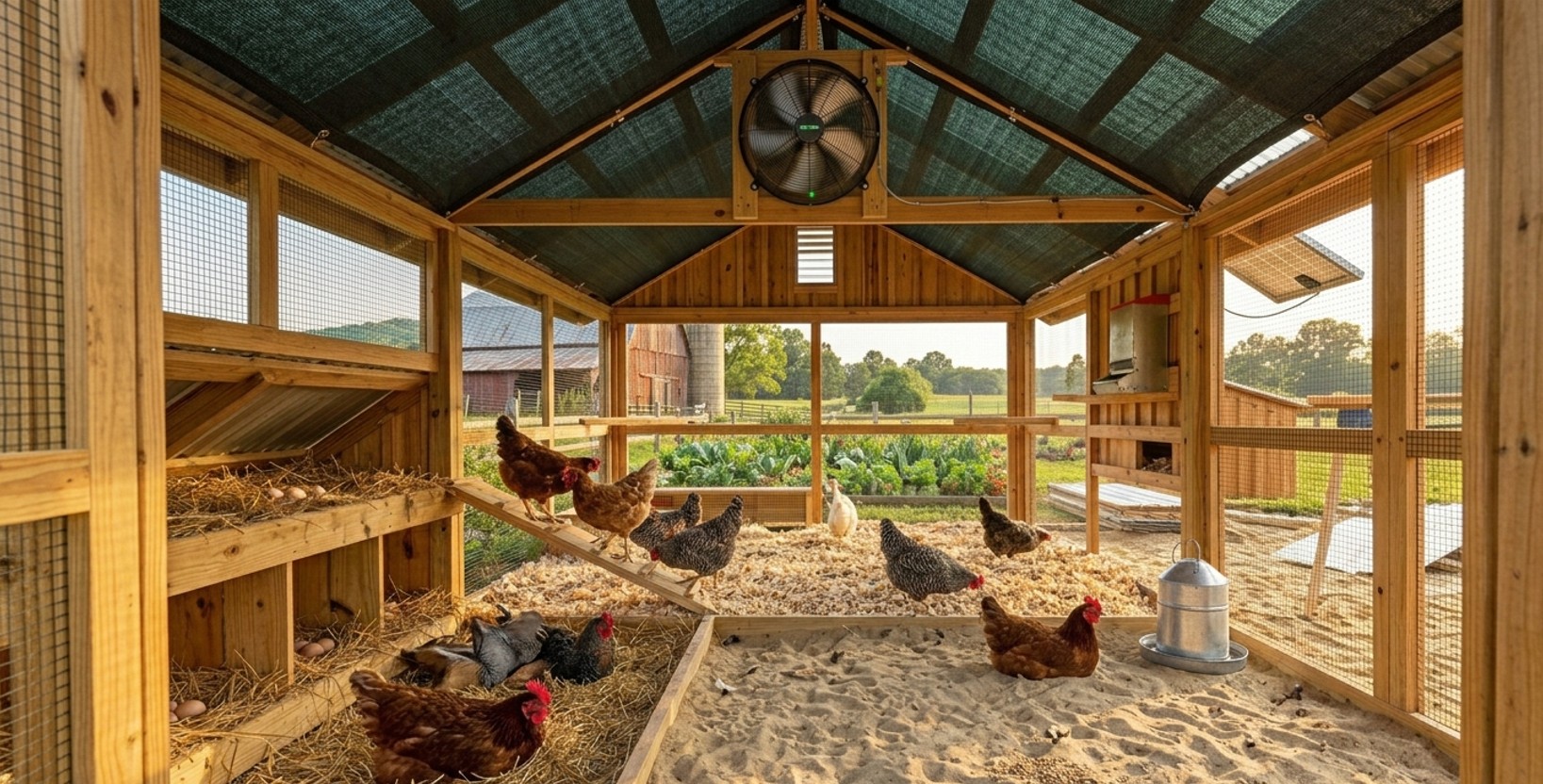
Chicken Coop Cooling System
Keeping backyard chickens comfortable during hot summer weather is one of the biggest challenges for chicken owners. As temperatures rise, chickens can quickly suffer from heat stress, dehydration, poor egg production, respiratory problems, and even death if the coop becomes too hot.
This is why having a proper chicken coop cooling system is extremely important.
Unlike humans, chickens cannot sweat. They rely mainly on airflow, panting, wing spreading, shade, and water to regulate body temperature. During intense summer heat waves, especially in southern climates, poorly ventilated coops can become dangerously hot within hours.
The good news is that there are many effective ways to cool a chicken coop naturally and affordably.
In this complete guide, you will learn:
- Best chicken coop cooling systems
- How to cool a chicken coop naturally
- Ventilation setup ideas
- Solar-powered cooling systems
- Shade and insulation tips
- DIY cooling solutions
- Emergency heat protection methods
- Best coop roof materials for hot climates
- Mistakes to avoid during summer
By the end of this article, you will know exactly how to create a safer, cooler, and healthier environment for your backyard flock during hot weather.
Why Chickens Overheat So Easily
Chickens are surprisingly sensitive to heat.
Most breeds begin struggling once temperatures rise above:
- 85°F (29°C)
Dangerous heat stress often begins around:
- 95°F (35°C)
Combined heat and humidity create even more dangerous conditions.
Why Heat Is Dangerous for Chickens
Excessive heat may cause:
- Dehydration
- Heat exhaustion
- Reduced egg production
- Weak immune system
- Respiratory stress
- Death
Some heavy feathered breeds are especially vulnerable during summer.
Signs of Heat Stress in Chickens
Every chicken owner should recognize heat stress symptoms early.
Common Signs
- Panting
- Wings spread outward
- Lethargy
- Pale combs
- Reduced appetite
- Open-mouth breathing
- Staying inactive
- Excessive water consumption
Severe heat stress requires immediate cooling action.
Why Chicken Coop Ventilation Matters
Ventilation is the foundation of every good chicken coop cooling system.
Without airflow, hot air and moisture become trapped inside the coop.
This creates dangerous conditions very quickly.
Benefits of Proper Ventilation
- Reduces heat buildup
- Removes moisture
- Improves air quality
- Reduces ammonia gases
- Helps chickens breathe comfortably
Good ventilation alone can lower coop temperatures significantly.
Best Chicken Coop Ventilation Systems
1. Cross Ventilation
Cross ventilation allows fresh air to move naturally through the coop.
This happens when vents or windows exist on opposite sides.
Benefits
- Natural cooling
- No electricity required
- Lower humidity
- Better airflow
Cross ventilation is one of the simplest and most effective cooling solutions.
2. Roof Ventilation
Hot air naturally rises.
Roof vents allow trapped heat to escape.
Best Roof Vent Types
- Ridge vents
- Gable vents
- Roof gaps
- Ventilation chimneys
Always protect openings with hardware cloth.
3. Solar-Powered Ventilation Fans
Solar fans have become extremely popular for backyard coops.
They provide airflow without increasing electricity bills.
Benefits of Solar Fans
- Energy efficient
- Automatic daytime cooling
- Easy installation
- Low maintenance
Small solar fans can dramatically improve summer airflow.
Best Locations for Chicken Coop Fans
Fan placement matters greatly.
Best Fan Positions
- Near roof level
- Opposite ventilation openings
- Facing outward to remove hot air
Avoid pointing strong fans directly at chickens continuously.
Best Chicken Coop Cooling Fans
Popular fan types include:
- Solar attic fans
- Box fans
- Exhaust fans
- USB solar fans
- Outdoor barn fans
Weather-resistant fans work best.
DIY Chicken Coop Cooling System Ideas
Many cooling systems can be built affordably at home.
1. Frozen Water Bottle Cooling
Freeze large bottles of water and place them inside the coop.
Chickens often sit near them to cool down.
Benefits
- Very cheap
- Easy setup
- Emergency cooling
2. Shade Cloth Cooling System
Shade cloth dramatically reduces direct sunlight.
Benefits
- Lower coop temperatures
- Reduced sun exposure
- Affordable installation
Shade cloth works especially well over runs.
3. Misting Systems
Fine mist systems cool surrounding air through evaporation.
Important Warning
Avoid soaking bedding or creating excessive moisture.
Too much moisture may increase bacteria growth.
4. Underground Cooling Ideas
Some advanced coop owners use underground cooling techniques.
Examples include:
- Buried cooling pipes
- Underground shaded areas
- Earth cooling tunnels
These systems are more advanced but highly effective.
Best Roof Materials for Cooler Chicken Coops
Roof material affects indoor temperatures significantly.
Best Roofing Choices for Hot Climates
Reflective Metal Roofing
Reflects sunlight and reduces heat absorption.
White Roofing Panels
Light colors remain cooler.
Insulated Roof Panels
Reduce interior heat transfer.
Roof Colors That Stay Cooler
Lighter roof colors absorb less heat.
Best options include:
- White
- Light gray
- Silver
Dark roofs become extremely hot during summer.
Chicken Coop Insulation for Summer
Many people think insulation only helps during winter.
However, insulation also helps during hot weather.
Summer Insulation Benefits
- Blocks heat transfer
- Stabilizes temperatures
- Improves cooling efficiency
Best Coop Insulation Materials
- Foam board
- Reflective foil insulation
- Radiant barriers
Protect insulation from moisture and pecking.
Best Flooring for Hot Weather
Flooring affects coop temperatures.
Best Summer Flooring Options
Sand Flooring
Sand stays relatively cool and dries quickly.
Rubber Mats
Comfortable and easy to clean.
Dirt Floors
Natural soil may remain cooler than concrete.
Water Management During Summer
Water is absolutely critical during hot weather.
Summer Water Tips
- Provide multiple water stations
- Use shaded waterers
- Replace hot water frequently
- Add ice during extreme heat
Hydration is one of the most important heat stress protections.
Electrolytes for Chickens During Heat Waves
Electrolytes help chickens recover from heat stress.
They improve:
- Hydration
- Energy levels
- Recovery
Use poultry-safe electrolyte solutions.
Best Shade Ideas for Chicken Coops
Shade dramatically improves summer comfort.
Natural Shade
Trees provide excellent natural cooling.
Benefits include:
- Cooler air
- Sun protection
- Reduced ground heat
Artificial Shade Structures
- Shade cloth
- Tarps
- Roof extensions
- Covered runs
Large shaded areas help chickens stay active during hot days.
Cooling Chicken Runs
Outdoor runs also become dangerously hot.
Improve cooling by:
- Adding shade cloth
- Planting bushes
- Installing misting systems
- Using sand flooring
How to Cool Chickens Naturally
Natural cooling methods are often highly effective.
Natural Cooling Ideas
- Improve airflow
- Increase shade
- Provide cold treats
- Use frozen fruits
- Offer cool water
- Create dust bath areas
Best Frozen Treats for Chickens
Frozen treats help reduce body temperature.
Popular options include:
- Frozen watermelon
- Frozen berries
- Ice blocks with vegetables
- Chilled cucumbers
These also encourage hydration.
Emergency Chicken Coop Cooling During Heat Waves
Extreme heat requires immediate action.
Emergency Cooling Methods
- Add temporary fans
- Spray cool water around coop
- Increase airflow immediately
- Move waterers to shade
- Add frozen bottles
- Reduce coop crowding
Never leave chickens trapped inside overheated coops.
Best Chicken Breeds for Hot Climates
Some breeds handle heat better than others.
Heat-Tolerant Breeds
- Leghorns
- Andalusians
- Minorcas
- Easter Eggers
- Rhode Island Reds
Heavy feathered breeds struggle more during intense heat.
Common Chicken Coop Cooling Mistakes
1. Poor Ventilation
This is the most common mistake.
Even shaded coops become dangerous without airflow.
2. Overcrowding Chickens
Too many birds create excess body heat.
3. Dark Roofing Materials
Dark roofs absorb extreme heat.
4. No Shade
Direct sunlight dramatically increases coop temperatures.
5. Wet Bedding
Wet bedding increases humidity and bacteria growth.
How to Measure Coop Temperature
Monitoring temperature helps prevent dangerous overheating.
Useful Tools
- Digital thermometer
- Hygrometer
- Wireless temperature sensors
Humidity is also important.
Ideal Summer Chicken Coop Temperature
Most chickens remain comfortable between:
- 65°F–80°F (18°C–27°C)
Temperatures above 90°F require active cooling strategies.
Best Chicken Coop Design for Hot Climates
Hot-climate coop designs prioritize airflow.
Important Features
- Large ventilation openings
- Raised coop floors
- Reflective roofing
- Shade systems
- Open-air runs
Large open ventilation areas are extremely important.
Raised Chicken Coops Stay Cooler
Raised coops allow airflow underneath.
Benefits include:
- Cooler flooring
- Reduced moisture
- Better air circulation
This design works especially well in warm climates.
Solar Cooling Systems for Chicken Coops
Solar cooling is becoming increasingly popular.
Solar Cooling Options
- Solar exhaust fans
- Solar attic vents
- Solar-powered misting systems
- Solar lighting
These systems reduce electricity costs while improving airflow.
Cheap DIY Cooling Ideas
You do not need expensive systems to keep chickens cool.
Budget Cooling Ideas
- Frozen bottles
- DIY shade cloth
- Recycled fans
- Reflective roof paint
- Natural tree shade
Simple improvements often make huge differences.
How Summer Heat Affects Egg Production
Heat stress often reduces egg laying.
Why Egg Production Drops
During heat stress, chickens focus on survival instead of laying eggs.
Cooling systems help maintain productivity.
Frequently Asked Questions
How hot is too hot for chickens?
Temperatures above 95°F can become dangerous, especially with high humidity.
Do chickens need fans in summer?
Fans greatly improve airflow and reduce heat stress.
What is the best chicken coop cooling system?
The best systems combine ventilation, shade, airflow, and hydration.
Is misting safe for chickens?
Light misting is safe if bedding stays dry.
Can chickens die from heat?
Yes. Severe heat stress can become fatal very quickly.
Final Verdict
A proper chicken coop cooling system is essential for keeping backyard chickens healthy and productive during summer.
The best cooling strategies combine:
- Ventilation
- Shade
- Reflective roofing
- Fresh cool water
- Air circulation
- Proper insulation
For most backyard coops, the most effective improvements include:
- Cross ventilation
- Solar-powered fans
- Shade cloth
- Reflective roofing
- Frozen water cooling
With the right summer cooling setup, your chickens will stay healthier, more comfortable, and more productive even during extreme heat waves.