
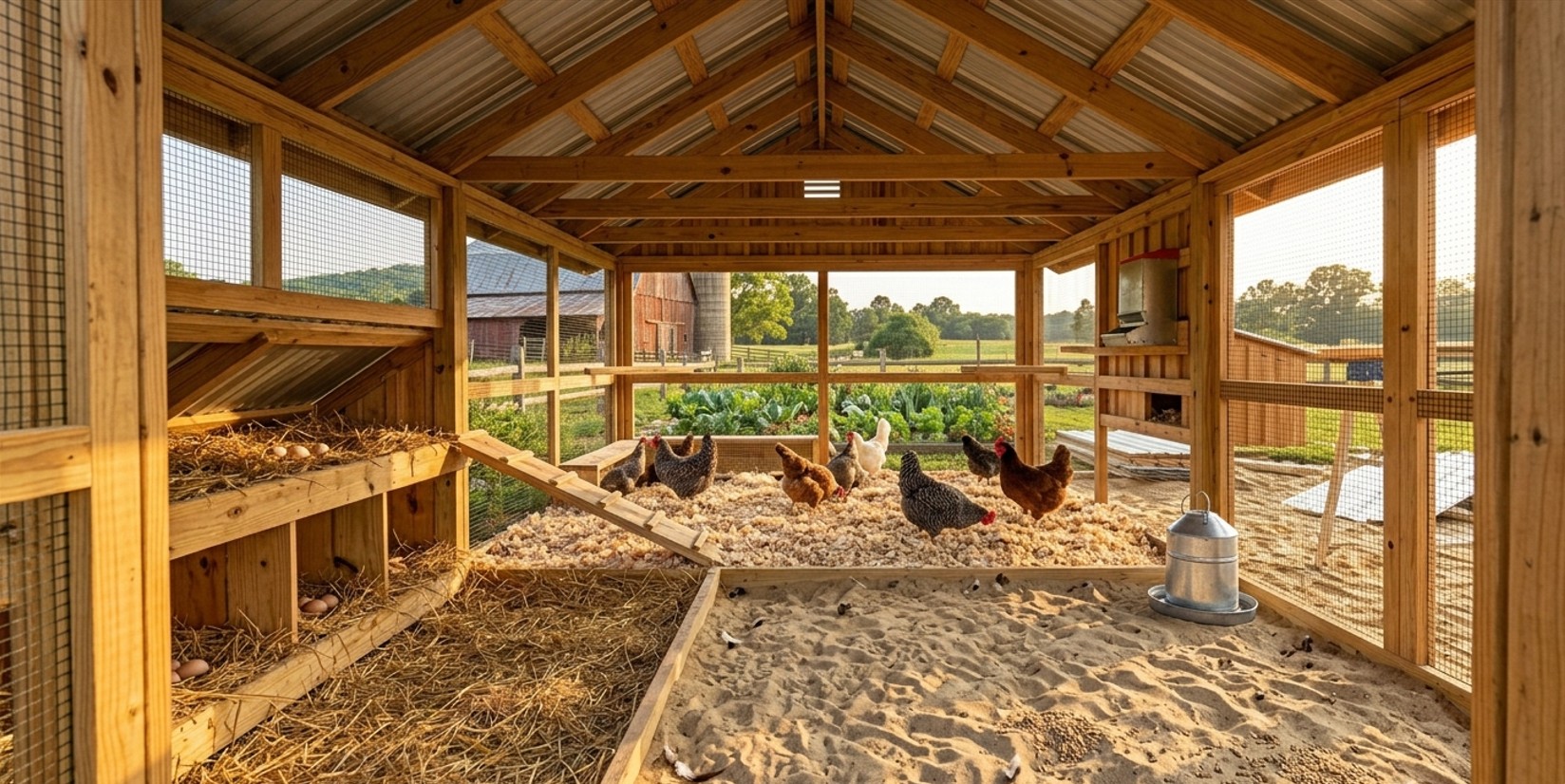
What to Put in a Chicken Coop Floor
One of the most important decisions every chicken owner must make is what to put in a chicken coop floor. The flooring inside your coop affects almost everything including cleanliness, odor control, moisture management, chicken health, predator protection, and long-term maintenance.
Many beginner chicken keepers focus mainly on nesting boxes, feeders, or coop decorations while ignoring flooring quality. However, poor flooring choices can quickly create serious problems such as:
- Wet bedding
- Bad smells
- Fly infestations
- Respiratory illness
- Mold growth
- Parasites
- Mud buildup
The good news is that there are many excellent flooring options available for backyard chicken coops. Some are inexpensive and beginner friendly, while others are long-term low-maintenance solutions preferred by experienced poultry owners.
In this complete guide, you will learn:
- What to put in a chicken coop floor
- Best chicken coop flooring materials
- Sand vs pine shavings comparison
- Deep litter method explained
- Dirt floor vs concrete floor
- Easy-clean flooring options
- Flooring ideas for hot and cold climates
- Waterproof flooring solutions
- Mistakes to avoid
By the end of this article, you will know exactly which flooring system works best for your backyard chickens, climate, and budget.
Why Chicken Coop Flooring Matters
The coop floor is more important than many beginners realize.
A proper floor helps:
- Keep chickens dry
- Reduce odor
- Control bacteria
- Prevent mud
- Improve egg cleanliness
- Reduce parasites
- Simplify cleaning
- Protect chicken feet
Poor flooring creates unhealthy conditions very quickly.
Moisture buildup inside coops often leads to:
- Ammonia gas
- Mold
- Respiratory disease
- Dirty eggs
- Foot infections
The right flooring system keeps the coop cleaner, healthier, and easier to maintain year-round.
Best Flooring Options for Chicken Coops
There is no single perfect flooring choice for every chicken owner.
Different materials work better depending on:
- Climate
- Coop size
- Cleaning routine
- Budget
- Number of chickens
Let’s explore the most popular chicken coop flooring options.
1. Sand Flooring for Chicken Coops
Sand has become one of the most popular flooring choices for modern backyard chicken coops.
Many experienced chicken owners now prefer coarse construction sand over traditional bedding materials.
Benefits of Sand Flooring
Excellent Drainage
Sand dries quickly and reduces moisture buildup.
Easy Cleaning
Chicken droppings stay on top and can easily be removed with a scoop or rake.
Reduced Odors
Dry sand helps reduce ammonia smell.
Long Lasting
Sand does not break down as quickly as straw or wood shavings.
Natural Dust Bathing
Chickens naturally enjoy scratching and dust bathing in sand.
Best Type of Sand for Chicken Coops
The best choice is usually:
- Coarse construction sand
- Washed river sand
Avoid:
- Play sand
- Extremely fine dusty sand
Fine sand may create respiratory problems.
Problems With Sand Flooring
Although sand has many benefits, it also has disadvantages.
Heavy Weight
Sand is much heavier than pine shavings.
Cold Winter Temperatures
Sand may feel colder during freezing weather.
Dust Issues
Poor-quality sand can create dust problems.
2. Pine Shavings for Chicken Coop Floors
Pine shavings remain one of the most widely used coop bedding materials.
They are especially popular among beginner chicken keepers.
Benefits of Pine Shavings
Affordable
Pine shavings are easy to find at farm stores.
Soft Texture
They create a comfortable surface for chickens.
Good Absorption
They absorb moisture better than many materials.
Easy Replacement
Old bedding can easily be removed and replaced.
Pine Shaving Disadvantages
Frequent Replacement
Shavings must be changed regularly.
Moisture Problems
Wet shavings may develop mold or bacteria.
Odor Buildup
Dirty bedding creates ammonia quickly.
Are Cedar Shavings Safe?
Avoid cedar shavings.
Cedar oils may irritate chicken respiratory systems.
Pine is generally much safer.
3. Straw Bedding
Straw has traditionally been used in many farm coops.
Benefits of Straw
- Good insulation
- Warm during winter
- Affordable in rural areas
Problems With Straw
Moisture Retention
Straw traps moisture easily.
Mold Growth
Wet straw can quickly become dangerous.
Harder Cleaning
Straw compacts and becomes messy over time.
Because of these issues, many modern chicken keepers now prefer sand or pine shavings.
4. Deep Litter Method
The deep litter method has become increasingly popular among homesteaders.
Instead of constantly removing bedding, the bedding layers gradually compost inside the coop.
How Deep Litter Works
You continuously add fresh bedding over old layers.
Microorganisms help break down waste naturally.
Benefits of Deep Litter Method
Natural Heat
The composting process creates warmth during winter.
Less Frequent Cleaning
Complete clean-outs happen less often.
Reduced Waste
Used bedding becomes compost material.
Best Materials for Deep Litter
- Pine shavings
- Hemp bedding
- Dried leaves
- Straw mixtures
Deep Litter Risks
Poor management can create:
- Excess moisture
- Strong ammonia
- Mold
- Parasites
Good ventilation is critical.
5. Dirt Floors in Chicken Coops
Some chicken coops are built directly on natural dirt.
Benefits of Dirt Floors
Low Cost
No major construction required.
Natural Environment
Chickens enjoy scratching in soil.
Easy Drainage
Well-drained soil works reasonably well.
Problems With Dirt Floors
Mud
Rain and water spills create muddy conditions.
Parasites
Worms and pests may live in soil.
Predator Risks
Animals may dig underneath the coop.
Many owners eventually upgrade dirt floors.
6. Concrete Chicken Coop Floors
Concrete floors are extremely durable and predator resistant.
Benefits of Concrete Floors
Easy Cleaning
Concrete surfaces are simple to disinfect.
Predator Protection
Digging predators cannot enter easily.
Long Lifespan
Concrete lasts for decades.
Concrete Floor Problems
Hard Surface
Concrete alone is uncomfortable for chickens.
Cold Temperatures
Concrete becomes cold during winter.
Additional Bedding Needed
Most owners still add bedding layers on top.
7. Rubber Mats for Chicken Coops
Rubber mats are becoming more common in modern backyard coops.
Benefits of Rubber Mats
- Easy washing
- Comfortable walking surface
- Better insulation
- Quick cleaning
Problems With Rubber Mats
- Higher cost
- Moisture underneath if poorly installed
Many chicken keepers place bedding over rubber mats.
Best Flooring Combination for Chicken Coops
Many experienced owners combine materials.
Popular combinations include:
- Concrete + pine shavings
- Sand + rubber mats
- Dirt + deep litter
- Wood floor + bedding
Combination systems often provide the best long-term results.
Wood Floors for Chicken Coops
Wood flooring is common in elevated coops.
Benefits
- Easy construction
- Better insulation
- Raised above wet ground
Problems
- Rot risk
- Difficult cleaning
- Predator damage
Always use treated wood carefully and protect against moisture.
Best Flooring for Hot Climates
Hot southern climates need flooring that stays cool and dry.
Recommended options:
- Sand
- Well-ventilated deep litter
- Rubber mats with airflow
Sand performs especially well during hot summers.
Best Flooring for Cold Climates
Cold climates require insulation.
Recommended options:
- Pine shavings
- Deep litter method
- Straw mixtures
These materials provide better winter warmth.
Moisture Control Tips
Moisture is one of the biggest coop problems.
How to Reduce Moisture
- Improve ventilation
- Fix roof leaks
- Elevate waterers
- Remove wet bedding
- Use absorbent materials
Dry coops are healthier coops.
Chicken Coop Floor Cleaning Tips
Regular cleaning prevents disease.
Daily Cleaning
- Remove droppings
- Check wet spots
- Clean food spills
Weekly Cleaning
- Stir bedding
- Add fresh material
- Inspect for odor
Monthly Cleaning
- Deep clean corners
- Replace old bedding
- Inspect flooring damage
Flooring and Predator Protection
Flooring also affects coop security.
Predators include:
- Rats
- Raccoons
- Foxes
- Snakes
Concrete floors provide the strongest protection.
For dirt floors:
- Use hardware cloth barriers
- Bury wire around edges
Flooring and Chicken Health
Bad flooring may contribute to:
- Bumblefoot
- Respiratory disease
- Dirty feathers
- Parasites
Comfortable clean flooring improves overall flock health significantly.
Best Bedding Thickness
Most coops benefit from:
- 2–4 inches of bedding
Deep litter systems may use much deeper layers.
Common Flooring Mistakes
1. Poor Ventilation
Even good flooring fails without airflow.
2. Wet Bedding
Wet bedding quickly becomes dangerous.
3. Using Toxic Materials
Avoid:
- Cedar shavings
- Chemically treated materials
- Moldy straw
4. Overcrowding Chickens
Too many birds increase moisture and waste.
5. Ignoring Cleaning
Even low-maintenance floors still require routine care.
Which Chicken Coop Floor Is Best?
The best flooring depends on your goals.
Best for Easy Cleaning
- Sand
- Concrete with bedding
Best for Winter Warmth
- Pine shavings
- Deep litter system
Best Budget Option
- Dirt floor with bedding
Best Predator Protection
- Concrete floor
Best Overall Balance
For many backyard chicken owners:
- Sand in warm climates
- Pine shavings in cold climates
These remain the most practical and affordable solutions.
Frequently Asked Questions
Can chickens live on dirt floors?
Yes, but dirt floors require moisture control and predator protection.
Is sand better than pine shavings?
Sand is easier to clean, while pine shavings provide better insulation.
How often should chicken coop bedding be changed?
Spot cleaning should happen daily, with deeper cleaning weekly or monthly depending on bedding type.
Is concrete too hard for chickens?
Concrete alone is uncomfortable, so bedding should always be added on top.
What is the cheapest chicken coop flooring?
Natural dirt floors are cheapest, but they require more maintenance.
Final Verdict
Choosing what to put in a chicken coop floor is one of the most important decisions for backyard chicken owners.
The ideal flooring should:
- Stay dry
- Reduce odors
- Improve cleanliness
- Protect chicken health
- Be easy to maintain
For most modern backyard coops:
- Sand works best in warm climates
- Pine shavings work best in colder climates
- Deep litter systems work well for homesteaders
- Concrete provides maximum durability
No matter which flooring material you choose, proper ventilation and regular cleaning are essential for a healthy chicken coop.
With the right flooring system, your chickens will stay cleaner, healthier, and more comfortable throughout every season.