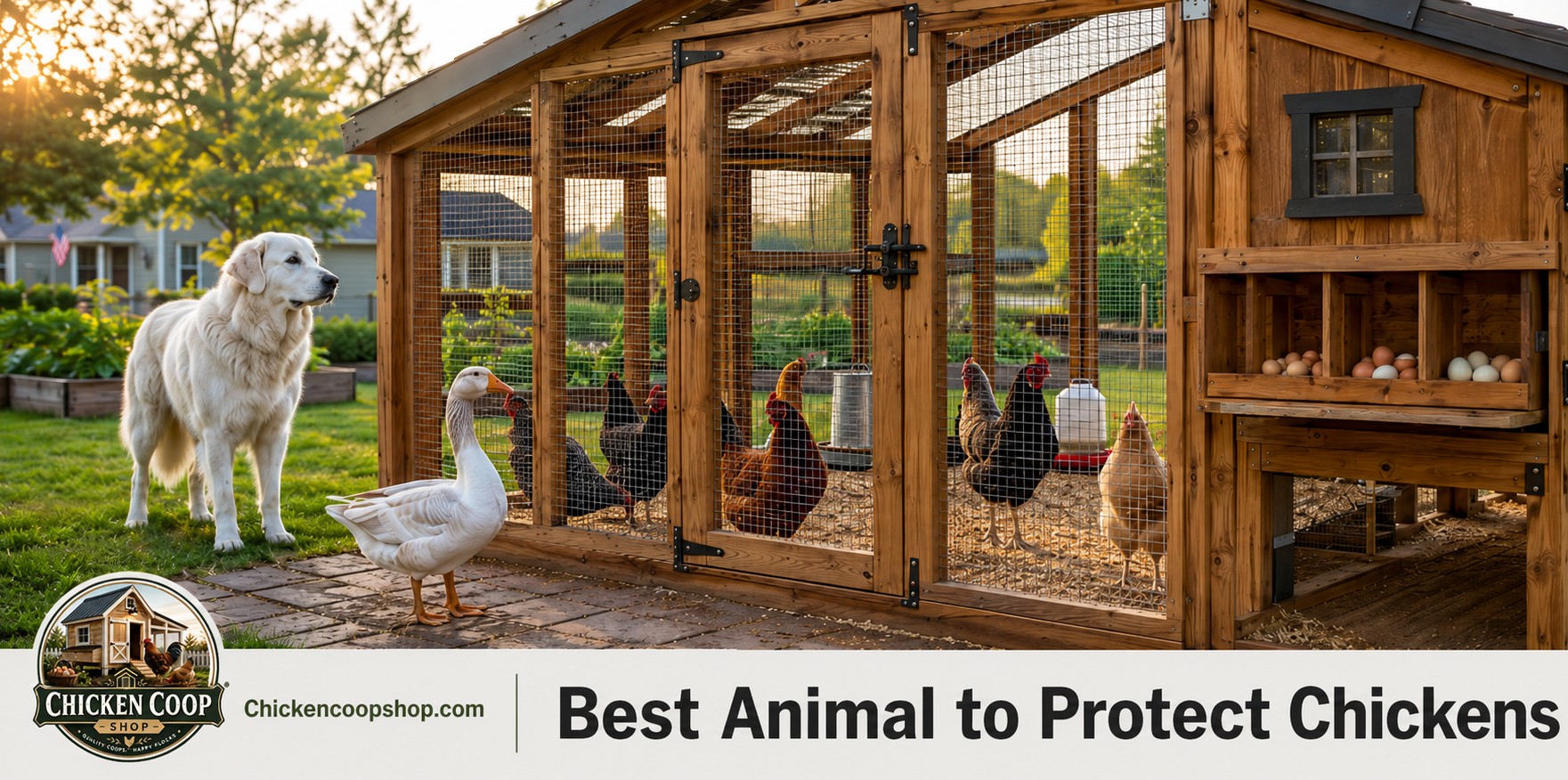
If you are wondering what is the best animal to protect chickens, the honest answer depends on your backyard size, predator pressure, budget, local rules, and how much daily supervision your flock receives. Many US backyard chicken owners like the idea of using a natural guardian animal, but no animal should be treated as a complete replacement for a secure coop, covered run, strong fencing, hardware cloth, and reliable nighttime locking.
Guardian animals can help alert, discourage, or protect chickens in the right setup. However, the safest chicken protection plan usually combines good coop design, smart flock management, and the right animal only when it fits your property.
Quick Answer: What Is the Best Animal to Protect Chickens?
For most rural or larger homestead setups, a well-trained livestock guardian dog is usually the strongest guardian animal option for chickens. A good guardian dog can watch the property, stay near the flock, and help discourage many common threats.
For small backyard flocks, a goose or alert rooster may help warn the flock, but they are not a replacement for a predator-proof coop and run. Donkeys and llamas may help protect larger pasture animals in some settings, but they are not ideal for every chicken setup, especially small suburban yards.
Table of Contents
- Why Chickens Need Protection From Predators
- Best Animal to Protect Chickens Overall
- Livestock Guardian Dogs for Chickens
- Can Geese Protect Chickens?
- Do Roosters Protect Chickens?
- Do Donkeys Protect Chickens?
- Do Llamas Protect Chickens?
- Best Guard Animal Comparison Table
- Why Guardian Animals Are Not Enough by Themselves
- Best Setup for Small Backyard Chicken Owners
- Best Setup for Rural Homesteads
- Common Mistakes to Avoid
- My Practical Recommendation
- Frequently Asked Questions
- Final Chicken Protection Checklist
- Conclusion
Why Chickens Need Protection From Predators
Backyard chickens can attract raccoons, foxes, coyotes, hawks, snakes, neighborhood dogs, and small predators that search for weak spots around the coop. Even in suburban areas, chickens need protection during the day and at night.
The first layer of safety should always be predator protection for backyard chickens. That means strong hardware cloth, secure doors, predator-proof latches, covered runs, buried wire aprons, and regular coop inspections.
Guardian animals can be helpful, but they work best when the coop itself is already built for safety. If your run has weak wire, open gaps, loose doors, or no roof protection, adding a guard animal will not solve the main problem.
Best Animal to Protect Chickens Overall
The best animal to protect chickens overall is usually a properly trained livestock guardian dog, especially on a rural property or larger homestead. These dogs are commonly used around livestock because they are alert, territorial, and able to bond with the animals they are raised to protect.
However, the word “trained” matters. Not every dog is safe around chickens. Some dogs have a strong chase instinct and should never be left alone with hens until they are carefully trained and proven trustworthy.
For small backyard chicken owners, the best “protector” may not be an animal at all. It may be a secure coop and covered run, with an optional rooster or goose only if local laws and space allow it.
Livestock Guardian Dogs for Chickens
A livestock guardian dog can be one of the best guard animals for chickens when raised and managed correctly. Popular guardian-type breeds often include Great Pyrenees, Anatolian Shepherd, Maremma, Akbash, and similar working dogs.
The main strength of a livestock guardian dog is presence. A calm, trained dog can patrol the property, notice unusual movement, and help keep many predators away from the flock area. This can be especially useful for rural chicken keepers with free-range birds or larger fenced pastures.
The limitation is training and responsibility. A young or untrained dog can scare, chase, or stress chickens. Chicken owners should introduce dogs slowly, supervise early interactions, and build good habits before trusting the dog near the flock.
Can Geese Protect Chickens?
Geese can be useful as alarm animals. They are loud, alert, and often quick to react when something unusual enters the yard. For some backyard chicken owners, a goose can add an extra warning layer around the flock.
But geese are not full predator fighters. They may warn the flock and make noise, but they cannot stop every predator. They also need proper housing, space, water access, and responsible handling. Some geese can become territorial, so they may not be the best fit for families with small children or tight backyard spaces.
If you keep chickens in a small yard, read this small backyard chicken coop setup guide before adding another animal. Space, fencing, and coop layout matter more than simply adding a goose.
Do Roosters Protect Chickens?
Roosters can help by watching the flock, sounding alerts, and guiding hens toward cover. A good rooster may notice threats faster than hens and help keep the flock organized during free-range time.
However, a rooster cannot stop many predators. Roosters are better as flock alarms than complete protectors. Also, many towns and suburban neighborhoods do not allow roosters because of noise rules. Before adding one, always check your local laws.
Roosters can be part of a backyard chicken predator protection plan, but they should not replace a secure coop, strong run, or good fencing.
Do Donkeys Protect Chickens?
Donkeys are sometimes used to protect larger pasture animals, especially in open rural settings. They may react strongly to unfamiliar dogs or certain animals entering their space.
But donkeys are not usually the best choice for chickens alone. They require pasture, shelter, proper hoof care, feed management, and safe handling. A donkey may not bond with chickens the way it might with larger livestock, and it may not focus on small birds as its main responsibility.
For most backyard chicken owners, a donkey is too large and too demanding just for chicken protection.
Do Llamas Protect Chickens?
Llamas may help guard sheep, goats, or other pasture animals in certain situations. Like donkeys, they are more practical for larger properties than small backyard coops.
For chickens, llamas are not usually the first recommendation. They need space, fencing, shelter, and proper care. They may help create a more alert pasture environment, but they are not a guaranteed chicken guardian.
If you have a larger flock, your first priority should still be a strong coop plan, secure doors, and enough space. This best chicken coop for 10 chickens guide can help with larger chicken housing needs.
Best Guard Animal Comparison Table
| Animal | Best For | Main Strength | Limitations | Best Setup |
|---|---|---|---|---|
| Livestock Guardian Dog | Rural homes and larger homesteads | Strong property protection and alert behavior | Needs training, supervision, and proper care | Fenced pasture plus secure coop |
| Goose | Small to medium backyard flocks | Loud alarm and alert behavior | Not a full predator stopper | Secure run with enough space |
| Rooster | Legal backyard or rural flocks | Flock warning and leadership | Noise rules and limited protection | Free-range time with secure nighttime housing |
| Donkey | Large rural pasture | May discourage some threats | Not ideal for small chicken-only setups | Pasture with larger livestock |
| Llama | Large pasture settings | Alert pasture presence | Not a direct chicken guardian | Rural property with proper fencing |
| Barn Cat | Rodent control around feed areas | May reduce mice and rats | Not the best chicken protector | Clean feed storage and supervised area |
| Secure Coop and Run | All chicken owners | Most reliable protection layer | Requires good materials and maintenance | Hardware cloth, roof cover, buried apron, secure latches |
Why Guardian Animals Are Not Enough by Themselves
Even the best guard animal for chickens cannot watch every side of the coop every second. Predators may come at night, during storms, through small gaps, or from above. That is why your coop and run design must do the heavy lifting.
Use hardware cloth instead of weak chicken wire for predator protection. Add secure latches, cover the run roof, close gaps around doors, and consider a buried wire apron around the run. For small predator concerns, review this guide on weasel protection for chicken coops.
Clean management also matters. Spilled feed, open garbage, and dirty bedding can attract rodents and pests. A simple chicken coop cleaning routine helps keep the flock area safer and easier to manage.
Best Setup for Small Backyard Chicken Owners
For most small US backyard chicken owners, the best setup is a secure coop, covered run, strong fencing, and daily inspections. A rooster or goose may help if allowed in your area, but the coop should be the main protection system.
Beginners should start with the basics: enough coop space, clean bedding, good ventilation, safe nesting boxes, and secure doors. This backyard chickens for beginners guide is a good starting point for new flock owners.
Do not forget nesting areas. Eggs and nesting boxes should be inside a safe coop with reliable doors and no open gaps. Learn more about chicken nesting box size if you are designing or upgrading your coop interior.
Best Setup for Rural Homesteads
For larger rural homesteads, the best protection plan may include a fenced pasture, secure coop, covered run, and a well-trained livestock guardian dog. This setup gives chickens a safer daytime area while still providing strong nighttime protection.
Seasonal changes also matter. Storms, winter weather, heavy rain, and changing predator movement can all create new weak points around the coop. A regular chicken coop seasonal care routine can help you find problems before they become serious.
Common Mistakes to Avoid
- Relying only on one guardian animal
- Choosing an untrained dog and expecting it to protect hens immediately
- Ignoring local laws about roosters, geese, or livestock
- Leaving feed outside overnight
- Using weak wire instead of hardware cloth
- Forgetting roof protection on the run
- Not locking the coop every night
- Failing to inspect doors, vents, corners, and floor edges
My Practical Recommendation
For most small US backyard chicken owners, the safest choice is not one single animal. The best plan is a secure coop, covered run, good fencing, hardware cloth, predator-proof latches, clean feed storage, and optional goose or rooster where legal.
For larger rural homesteads, a secure coop, fenced pasture, and well-trained livestock guardian dog may be the best overall protection. But even then, the dog should support your coop security, not replace it.
Frequently Asked Questions
What is the best animal to protect chickens?
A well-trained livestock guardian dog is often the best animal for larger rural chicken setups. For small backyard flocks, a secure coop and covered run are usually more important than adding a guardian animal.
Will a dog protect chickens?
A properly trained livestock guardian dog can help protect chickens, but not every dog is safe around poultry. Training, supervision, and calm introductions are essential.
Are geese good guard animals for chickens?
Geese can be good alarm animals because they are loud and alert. However, they should not be treated as full predator protection.
Can a rooster protect hens from predators?
A rooster may warn hens and help organize the flock, but he cannot stop many predators. Roosters are best used as an alert layer, not the main protection plan.
Do donkeys protect chickens?
Donkeys may help protect larger pasture animals in some rural settings, but they are not usually the best choice for chicken-only backyard protection.
Do llamas protect chickens?
Llamas can be useful in some pasture situations, but they are not usually the best direct guardian for chickens. They need space, fencing, and proper care.
What animal protects chickens from hawks?
No animal can guarantee hawk protection. A covered run, shade structures, supervised free-range time, and flock alert animals like roosters or geese may help reduce risk.
What is the safest way to protect chickens at night?
The safest nighttime protection is a locked, predator-resistant coop with strong latches, hardware cloth, sealed gaps, and regular inspections.
Final Chicken Protection Checklist
- Use hardware cloth on vents, windows, and run walls
- Add a covered run roof or overhead protection
- Install predator-proof latches on all doors
- Use a buried apron around the coop or run
- Store feed in sealed containers
- Clean the coop regularly
- Check local laws before adding roosters, geese, donkeys, or livestock dogs
- Supervise dogs around chickens until fully trusted
- Lock the coop every evening
Conclusion
So, what is the best animal to protect chickens? For larger rural properties, a well-trained livestock guardian dog is often the strongest option. For small backyard flocks, a goose or rooster may help as an alert animal, but the real foundation is always a secure coop and covered run.
The best chicken protection plan is layered: strong housing, smart fencing, clean management, daily checks, and the right guardian animal only when it fits your space and lifestyle. With the right setup, your backyard flock can stay safer, healthier, and easier to manage year-round.