
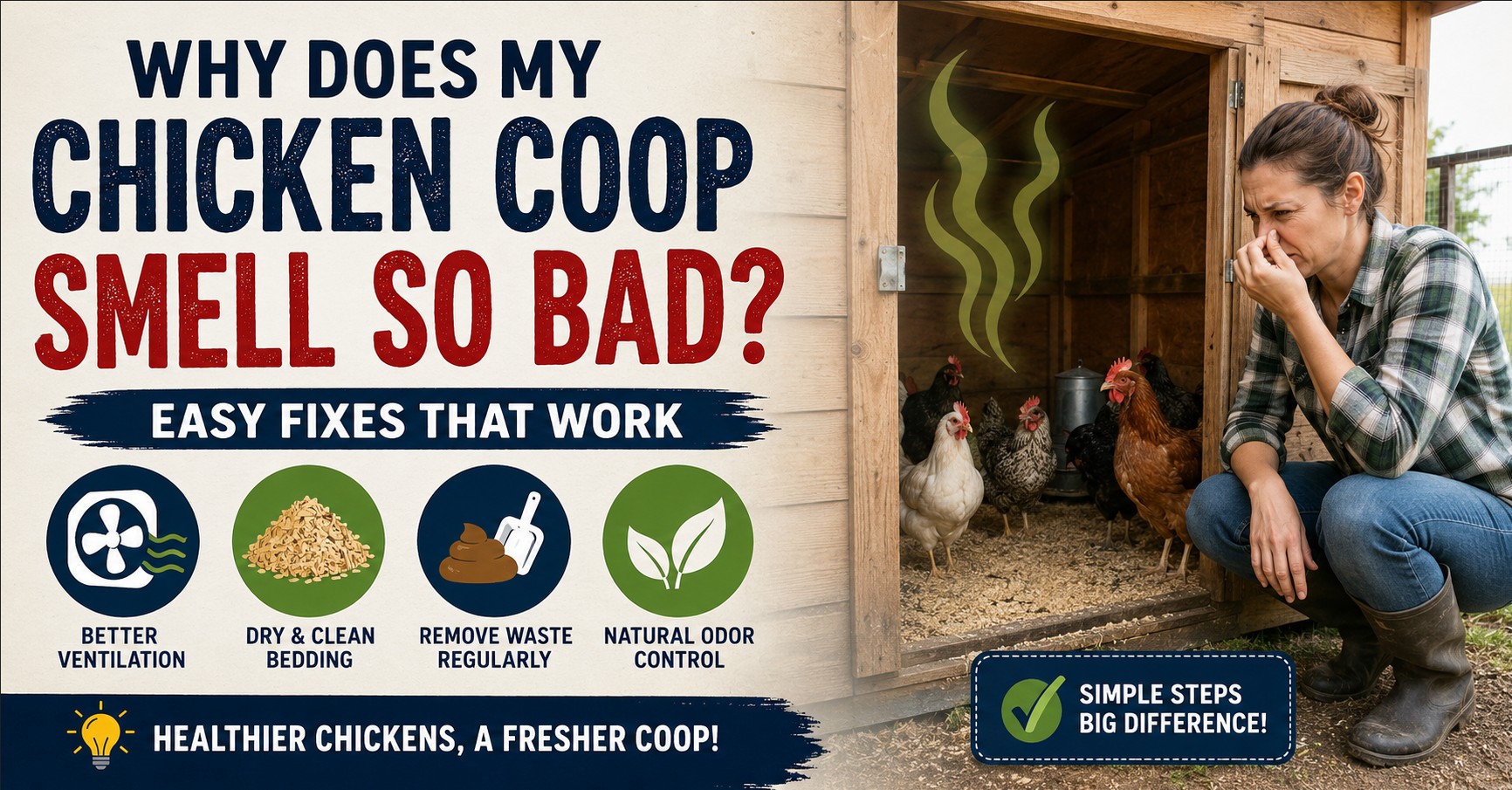
The good news is that most chicken coop odor problems are completely fixable with a few practical changes.
In this guide, you’ll learn exactly why a chicken coop smells bad, what causes the strongest odors, how to eliminate the smell naturally, and how to keep your coop fresh year-round without complicated equipment or expensive products.
Quick Answer
If your chicken coop smells bad, the most common causes are wet bedding, poor airflow, droppings buildup, excess moisture, and inadequate cleaning routines. Chicken manure naturally releases ammonia as it breaks down, especially when moisture gets trapped inside the coop.
To fix the problem, remove wet bedding, clean droppings regularly, improve ventilation, use absorbent bedding like pine shavings or hemp, fix leaking waterers, and avoid overcrowding.
Table of Contents
- What a Smelly Chicken Coop Really Means
- Common Signs of Coop Odor Problems
- Why Chicken Coops Start Smelling Bad
- The Dangerous Effects of Ammonia
- Step-by-Step Guide to Fixing Coop Odor
- Best Bedding Materials for Odor Control
- How Ventilation Changes Everything
- Seasonal Chicken Coop Odor Problems
- Beginner Mistakes That Cause Smelly Coops
- Frequently Asked Questions
What a Smelly Chicken Coop Really Means
A chicken coop will never smell like fresh laundry. Chickens naturally produce manure, dust, feathers, and moisture. However, there is a major difference between a normal farm smell and a coop that smells overwhelmingly bad.
A healthy coop usually smells earthy or slightly dusty. A problem coop smells sharp, sour, damp, moldy, rotten, or strongly like ammonia.
- Moisture trapped inside bedding
- Droppings buildup
- Lack of airflow
- Poor drainage
- Wet soil under the coop
- Overcrowding
- Infrequent cleaning
Common Signs of Chicken Coop Odor Problems
Sometimes chicken owners become used to the smell and stop noticing how strong it has become. These warning signs often mean your coop needs attention.
- Your eyes burn when entering the coop
- Strong smell after rain
- Condensation on walls or windows
- Bedding feels damp
- Flies gather around droppings
- Chickens sneeze frequently
- Mold appears on wood surfaces
- Wet patches appear under roosts
Why Chicken Coops Start Smelling Bad
1. Wet Bedding
Wet bedding is one of the biggest causes of odor problems. Chicken manure contains nitrogen. When manure mixes with moisture, bacteria break it down rapidly and release ammonia gas.
2. Poor Ventilation
Many beginners accidentally seal their coops too tightly, especially during winter. Without airflow, moisture and ammonia become trapped inside the structure.
3. Too Many Chickens in a Small Space
Overcrowding dramatically increases odor levels because more chickens produce more droppings, moisture, dust, and bedding breakdown.
| Chicken Type | Minimum Indoor Space |
|---|---|
| Standard chickens | 4 sq ft per bird |
| Large breeds | 5–6 sq ft per bird |
| Bantams | 2–3 sq ft per bird |
4. Droppings Under Roost Bars
Most chickens poop heavily while sleeping. If droppings collect under roost bars for several days, odor builds quickly.
5. Poor Drainage Around the Coop
Many coops smell worse after rain because water pools underneath the structure. Wet soil creates mud, mold, rotting organic matter, and humidity.
The Dangerous Effects of Ammonia
Ammonia comes from decomposing manure and becomes especially strong in wet, enclosed environments. If your eyes burn when entering the coop, ammonia levels are likely too high.
- Respiratory irritation
- Sneezing
- Eye irritation
- Reduced egg production
- Increased stress
- Higher disease risk
Step-by-Step Guide to Fixing Coop Odor
Step 1: Remove Wet Bedding Immediately
Start by removing wet straw, damp pine shavings, moldy nesting material, and soaked droppings. Never leave wet bedding inside hoping it will dry naturally.
Step 2: Scrape Droppings Daily or Every Few Days
Use a manure scraper or poop board system beneath roost bars. This single habit can dramatically reduce odor.
Step 3: Improve Airflow
Add roof vents, hardware cloth ventilation openings, windows with predator-safe mesh, or adjustable vents for winter airflow.
Step 4: Fix Water Problems
Check leaking nipples, cracked waterers, spilled containers, and rainwater entering the coop. Place water systems away from bedding whenever possible.
Step 5: Add Fresh Dry Bedding
Fresh bedding absorbs moisture and helps reduce smell naturally. Pine shavings, hemp bedding, chopped straw, and aspen shavings are common options.
Best Bedding Materials for Odor Control
| Bedding Material | Odor Control | Pros | Cons |
|---|---|---|---|
| Pine shavings | Excellent | Affordable, absorbent | Needs replacement |
| Hemp bedding | Excellent | Low dust, very absorbent | More expensive |
| Straw | Moderate | Cheap and common | Can trap moisture |
| Sand | Good | Easy cleaning | Heavy and cold in winter |
| Aspen shavings | Good | Low odor | Higher cost |
How Ventilation Changes Everything
Ventilation is often the real solution behind successful odor control. A coop should allow stale air to escape while still protecting chickens from direct drafts.
- Roof ridge vents
- High wall openings
- Cross ventilation windows
- Hardware cloth air gaps
- Adjustable seasonal vents
Moisture Problems Most Chicken Owners Miss
Many people clean frequently but still struggle with odor because hidden moisture remains.
Hidden Moisture Sources
- Winter condensation from chicken breath
- Wet ground under the coop
- Humid summer air
- Poor sunlight around the coop
- Leaking roof edges
Seasonal Chicken Coop Odor Problems
Summer Odor Problems
Hot weather speeds up manure decomposition. During summer, increase ventilation, clean more often, replace wet bedding quickly, and provide shade.
Winter Odor Problems
Many owners close coops too tightly during winter. This traps humidity and ammonia. Keep upper vents open and use dry bedding.
Rainy Weather Problems
Rain often causes muddy runs, wet bedding, mold growth, and drainage problems. Add gravel, improve drainage slope, and use waterproof roofing.
Beginner Mistakes That Cause Smelly Coops
- Using too little bedding
- Cleaning too infrequently
- Buying decorative coops with poor airflow
- Overcrowding birds
- Ignoring small leaks
Natural Ways to Reduce Chicken Coop Smell
Sweet PDZ
Sweet PDZ is often used in horse stalls and chicken coops to absorb ammonia and reduce odor.
Food Grade Diatomaceous Earth
Food grade diatomaceous earth can help reduce moisture when used carefully, but avoid excessive airborne dust.
Dry Sand Under Coops
Dry sand can help reduce mud and standing moisture around the coop area.
Best Cleaning Routine for Backyard Coops
| Task | Frequency | Purpose |
|---|---|---|
| Remove wet bedding | Weekly or as needed | Prevent ammonia |
| Scrape droppings | Every 1–3 days | Reduce odor |
| Clean waterers | Weekly | Prevent moisture |
| Inspect vents | Monthly | Improve airflow |
| Check roof leaks | Monthly | Stop dampness |
| Replace nesting bedding | Weekly | Keep eggs clean |
Products and Tools That Actually Help
- Metal manure scraper
- Deep litter rake
- Hanging waterers
- Vent covers
- Pine shavings
- Hemp bedding
- Hardware cloth vents
- Moisture-control stall refresher
Long-Term Odor Prevention Strategy
The best odor control method is consistency. Keep the coop dry, design for airflow, avoid overcrowding, build easy cleaning systems, and adjust your maintenance routine during weather changes.
My Practical Recommendation
If I had to prioritize only three things for solving a smelly chicken coop, I would focus on ventilation, dry bedding, and regular droppings removal.
Many people spend money on odor sprays while ignoring the real causes. In most backyard coops, airflow and moisture control solve most odor issues naturally.
For beginners, pine shavings combined with proper roof ventilation is often the easiest and most affordable starting point.
Frequently Asked Questions
Why does my chicken coop smell worse after rain?
Rain increases moisture levels inside and around the coop. Wet bedding, muddy runs, and damp wood create ideal conditions for ammonia and bacteria buildup. Improve drainage and replace wet bedding quickly.
Is a little chicken coop smell normal?
Yes. A healthy chicken coop may have a mild earthy or farm-like smell. Strong ammonia odors, sour smells, or burning eye irritation are not normal.
How often should I clean my chicken coop?
Most backyard coops need light cleaning several times per week and a deeper clean monthly. Smaller coops with many chickens need more frequent maintenance.
What bedding helps reduce chicken coop odor best?
Pine shavings and hemp bedding are two of the best options. Both absorb moisture well and help reduce ammonia buildup.
Can chicken coop smell make chickens sick?
Yes. High ammonia levels may irritate chickens’ respiratory systems and eyes. If chickens show serious symptoms, contact a poultry vet or local extension service.
Should I use lime inside my chicken coop?
Agricultural lime is sometimes used carefully, but hydrated lime can be dangerous around chickens. Research products carefully before use.
Why does my coop smell even after cleaning?
If smell returns quickly, moisture may still be trapped somewhere. Hidden leaks, wet ground, poor ventilation, or damp bedding underneath clean layers can continue producing odor.
Does the deep litter method reduce smell?
When managed properly, the deep litter method can reduce odor. But if it becomes too wet, it can smell very bad.
Can I use household cleaners in my chicken coop?
Strong chemical cleaners should be used carefully around chickens. Many owners prefer diluted vinegar solutions or poultry-safe disinfectants.
What should a healthy chicken coop smell like?
A healthy coop usually smells dry, earthy, and slightly dusty rather than sharp or rotten. Strong ammonia or sour smells signal a problem.
Final Checklist
- Remove wet bedding quickly
- Improve coop ventilation
- Clean droppings regularly
- Prevent water leaks
- Avoid overcrowding chickens
- Use absorbent bedding
- Keep ground around coop dry
- Inspect for mold and moisture
- Adjust cleaning routine by season
- Monitor ammonia smell regularly
Conclusion
A smelly chicken coop is usually a sign that moisture, waste, or airflow problems need attention. Fortunately, most odor issues are manageable with practical daily habits and a well-designed coop setup.
By keeping bedding dry, improving ventilation, cleaning droppings consistently, and preventing excess moisture, you can create a healthier and more comfortable environment for your backyard flock year-round.