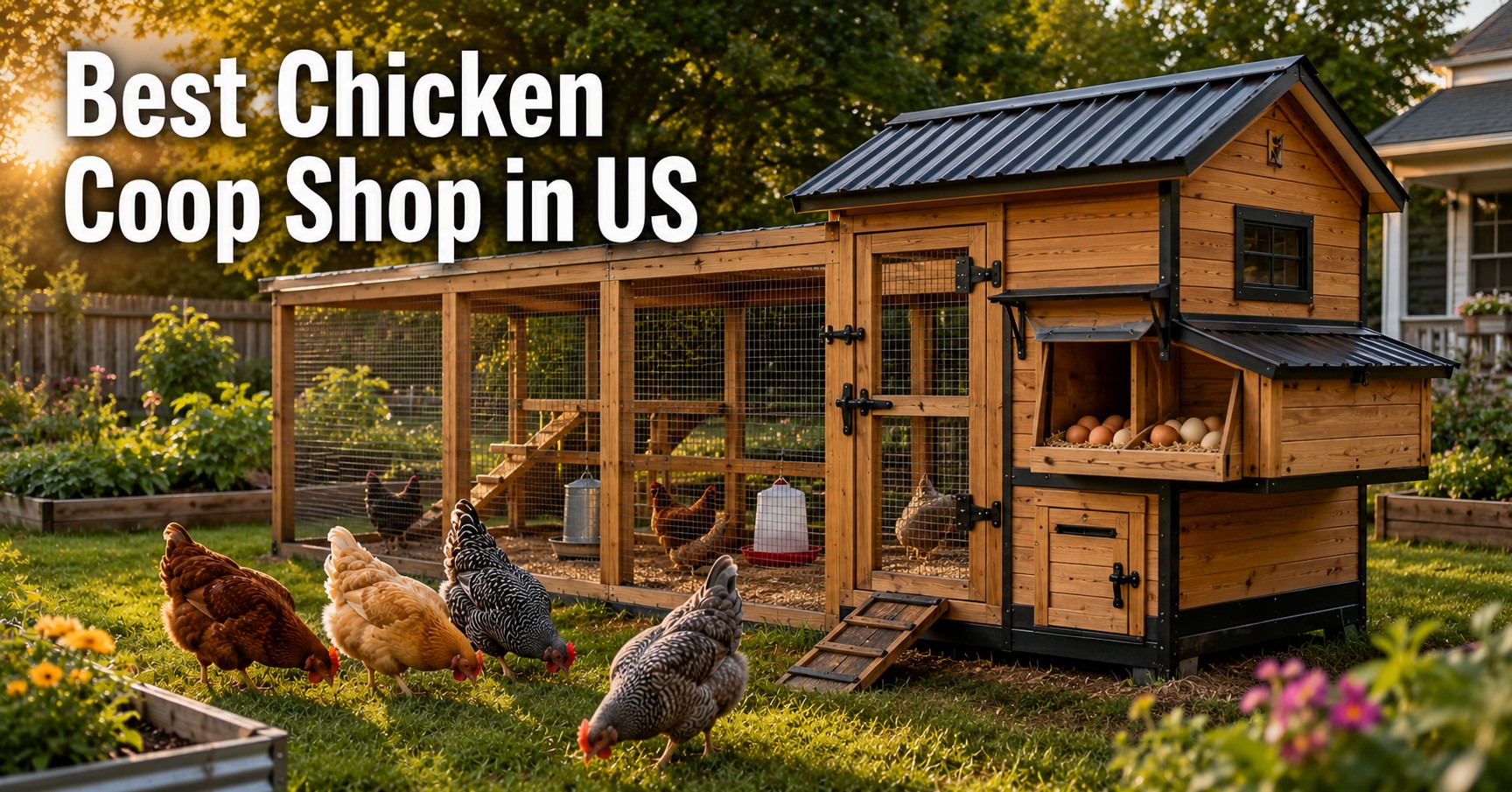
A good chicken coop should make daily chicken care easier, not harder. It should give your hens enough room to sleep, lay eggs, scratch, dust bathe, and move safely. It should also make chores simple for you with easy-access doors, nesting boxes, dry bedding areas, a secure run, and practical cleaning access. Whether you are raising 4 to 6 hens in a small suburban backyard or planning a larger homestead flock of 10 to 20 chickens, this guide will help you compare chicken coops for sale in US markets with a practical eye.
Quick Answer Box
The best chicken coop shop in US markets is the one that sells strong, weatherproof, predator-resistant coops with enough space, good ventilation, easy cleaning access, safe nesting boxes, and clear delivery or installation options. For beginners, a walk-in chicken coop US option with a covered run is usually easier to manage than a tiny low-cost coop. Look for hardware cloth, strong locks, a sloped roof, dry bedding space, roosting bars, and honest size recommendations based on your actual flock size.
What Makes a Good Chicken Coop Shop: A good chicken coop shop does more than sell pretty backyard structures. The best backyard chicken coop shop understands that chickens need safety, airflow, dry bedding, enough space, and protection from changing weather. It should give clear product details, real measurements, strong photos, material descriptions, shipping information, and honest advice about how many hens a coop can actually hold.
When comparing the Best Chicken Coop Shop In us options, do not judge by appearance alone. Some modern chicken coops for sale look attractive in product photos but use thin wood, weak wire, tiny runs, or poor latches. A coop may say it fits six chickens, but in real backyard conditions it may only be comfortable for three or four full-size hens. This matters because overcrowding can lead to dirty bedding, stress, pecking, poor egg-laying comfort, and more frequent cleaning.
A trustworthy shop should help you answer simple questions before you buy. How many chickens do you plan to keep? Do you have harsh winters, hot summers, heavy rain, snow, or high humidity? Do predators like raccoons, foxes, coyotes, hawks, snakes, dogs, or weasels live in your area? Will the coop sit in full sun, shade, a fenced yard, or open homestead land? These questions affect what type of backyard chicken coop US owners should choose.
A reliable chicken coop shop in USA markets should also show the difference between a coop, a run, nesting boxes, roosting bars, ventilation openings, and predator barriers. Beginners often think the sleeping house is the whole coop. In practical chicken keeping, the full setup includes the enclosed house, secure run, roof coverage, access doors, egg collection area, bedding system, feeder location, waterer location, and maintenance space for the owner.
If a shop offers chicken coop delivery US services or chicken coop installation US options, review exactly what is included. Some sellers deliver curbside only. Others place the coop in your yard. Some custom chicken coop builders US shoppers hire may level the site, attach the run, install hardware cloth, add predator aprons, and check door swing clearance. These details can make a big difference, especially for heavy walk-in coops.
Why Buying the Right Coop Matters: A chicken coop is one of the most important purchases you will make as a backyard chicken owner. Feed, bedding, waterers, and cleaning tools are ongoing costs, but the coop is the foundation of the whole setup. A weak coop can create daily stress. A well-built coop can make chicken keeping easier for years.
The right coop protects hens while they sleep. Chickens are most vulnerable at night because they naturally roost and settle down. Raccoons can open simple latches. Dogs can dig under weak fencing. Hawks can attack uncovered runs. Snakes may enter gaps near the floor or nesting box. Mice and rats are attracted to spilled feed. A predator proof chicken coop US backyard owners can trust should be built with these real threats in mind.
The right coop also protects against moisture. Wet bedding is one of the biggest hidden problems in chicken keeping. Rain blowing through poorly placed windows, roof leaks, low ground, and bad drainage can create damp bedding. Damp bedding smells bad, attracts flies, and can make the coop harder to clean. A weatherproof chicken coop US buyers choose should have a sloped roof, overhangs where possible, raised flooring or good drainage, and ventilation that moves humid air out without creating harsh drafts on roosting hens.
Comfort matters too. Laying hens need a calm nesting area, roosting bars that are comfortable for their feet, and enough room to move without crowding. A chicken coop for laying hens US families buy should include nesting boxes that are easy to access from outside or through a clean door. If egg collection is difficult, eggs may be left too long, broken, or hidden in bedding.
A good coop saves time. Large doors, removable trays, walk-in access, and sensible layout make cleaning easier. If you have to crawl, squeeze, or reach awkwardly to remove bedding, you may delay cleaning. Over time, that can lead to odor and moisture problems. For cleaning guidance after the coop is in use, your readers can also review this chicken coop cleaning routine and how often to clean a chicken coop.
Common Signs of a Poor Chicken Coop
Before buying, learn how to spot warning signs. Many affordable chicken coop shop US listings look nice at first, but small details reveal whether the coop is built for real backyard use or just light display. A poor coop may still work for a short time in mild weather, but it can become frustrating quickly.
Too Little Floor Space
The most common problem is size. A listing might claim a small chicken coop for sale US buyers see online can hold six hens, but the actual usable space may be too tight for standard breeds. If the run is tiny and the sleeping area is cramped, hens may crowd near feeders, soil bedding faster, and become restless.
Weak Wire Instead of Hardware Cloth
Thin chicken wire is not the same as predator protection. Chicken wire may keep chickens in, but it does not always keep predators out. For predator resistance, hardware cloth is usually a stronger choice for vents, windows, and run sides. Look for secure attachment points, not just stapled wire that can pull loose.
Poor Ventilation
A coop without enough ventilation can trap heat, moisture, and ammonia odor. Good ventilation should be high enough to move damp air out but not blow directly across roosting chickens in cold weather. If a coop only has a tiny window or one small vent, it may not handle humid summer nights or winter moisture well.
Hard-to-Clean Layout
If the bedding area is difficult to reach, cleaning becomes a chore. Look for wide doors, removable panels, walk-in access, or large clean-out openings. A coop that looks cute but requires crawling inside every week may not be practical for families, older owners, or anyone with a busy schedule.
Flat or Leaky Roof
A flat roof can collect rain, leaves, snow, and debris. Roof quality is especially important in wet or snowy regions. A sloped roof with durable material helps keep bedding dry and protects the structure. For deeper roof planning, see this chicken coop roof guide.
Main Causes of Coop Buying Mistakes
Most coop buying mistakes happen because beginners focus on price, style, or advertised capacity instead of daily use. Chicken keeping is practical work. The coop must fit your chickens and your routine.
One common cause is underestimating flock growth. Many people plan for four hens, then add two more in spring, then keep a few pullets the next year. A coop that barely fits the first flock can become overcrowded quickly. If you are already thinking about adding birds, buy larger than your current minimum.
Another cause is ignoring local predators. A coop in a fenced suburban yard still needs secure latches and strong wire. Raccoons, neighborhood dogs, opossums, snakes, and hawks can appear even in areas that feel safe. Rural homesteads may face foxes, coyotes, bobcats, and larger digging predators. The best chicken coop shop in USA markets should describe predator features clearly.
Climate is also overlooked. A coop that works in a mild coastal area may not work well in a northern snowy state or a hot southern backyard. Cold areas need draft control, strong roofing, and enough interior room for harsh weather days. Hot areas need shade, airflow, and possibly cooling support. For hot-weather planning, read this chicken coop cooling system guide.
Another mistake is assuming all wood coops are equal. Wooden chicken coops for sale US shoppers find can vary widely in thickness, treatment, hardware, and assembly quality. Thin softwood may warp or wear faster if not protected. Better coops use stronger framing, exterior-grade materials, and practical weather protection.
Finally, many buyers forget the human side.These practical questions matter as much as product photos.
How to Choose the Right Coop Size
Coop size is one of the most important buying decisions. The right size depends on flock size, breed size, time spent free-ranging, climate, and run space. As a practical rule, give chickens more room than the minimum whenever possible. More space usually means cleaner bedding, less stress, better movement, and easier management.
For 4 to 6 Hens
A small chicken coop for 4 to 6 hens in US backyards can work well for beginners if it is honestly sized. Look for a secure sleeping area, at least two nesting boxes, enough roosting space, and a covered run. If the birds will not free-range daily, the run must be generous. A small coop should not mean a cramped coop.
For a family backyard chicken coop US setup, 4 to 6 hens is a popular starting range. It can provide eggs for many households without becoming too much work. However, beginners should still choose a coop that is easy to clean and tall enough to access comfortably. A tiny low-profile coop may become annoying after the first month.
For 10 to 20 Chickens
A large chicken coop for 10 to 20 chickens in USA conditions should usually be walk-in or close to walk-in style. Larger flocks create more manure, need more roosting space, use more bedding, and require better ventilation. A walk in chicken coop USA design makes it easier to refill feeders, inspect birds, clean bedding, and manage nesting boxes.
If you are planning this flock size, a basic small prefab coop is usually not enough. You may need a larger pre built chicken coops US option, a custom structure, or a serious chicken coop kit. You can also read this guide on coops for 11 to 20 chickens for more flock-specific ideas and also learn about Best Chicken Coop Shop in New York, It’s Complete Buying Guide for Backyard Chicken Owners.
Plan for Bad Weather Days
In some states, chickens may spend more time inside or under cover during storms, snow, heavy rain, extreme heat, or predator pressure. If your birds cannot roam outside every day, interior space and run space become even more important. A coop that is acceptable in perfect weather may feel too small during a week of bad weather.
Small vs Large Chicken Coops
Small and large coops both have a place. The better choice depends on your yard, flock goals, and maintenance style. The key is to avoid buying a coop that is small because it is cheap rather than small because it truly fits your needs.
Small Chicken Coops
Small chicken coops are useful for urban or suburban backyards, starter flocks, isolation needs, or portable setups. They cost less, take up less space, and may be easier to move. A portable chicken coop US design can also help spread manure across grass if moved regularly.
The downside is limited space. Small coops can become dirty faster and may be harder to ventilate without drafts. Egg collection and cleaning access can also be awkward. If you choose a small coop, prioritize a strong run, good roof, secure hardware, and easy clean-out access.
Large Chicken Coops
Large coops are better for growing flocks, homestead chicken keepers, and people who want comfort and easier chores. A large walk-in coop lets you stand, inspect birds, hang feeders, store bedding tools nearby, and keep nesting boxes organized. It is often more expensive, but it can be more practical over time.
The downside is cost, delivery, and site preparation. A large coop may need a level pad, gravel base, skids, foundation blocks, or professional installation. Before ordering, measure gates, slopes, driveway access, and the final coop location.
Predator-Proof Chicken Coop Features
A predator proof chicken coop USA buyers can rely on should be designed as a system, not just a locked box. Predators test weak points. They dig, pull, pry, climb, chew, squeeze, and reach through gaps. Good predator protection starts from the ground and goes all the way to the roof.
Strong Wire and Secure Openings
Use hardware cloth on windows, vents, and run walls where predators could reach. The openings should be small enough to prevent paws and heads from reaching through. The wire should be firmly attached with screws and washers or strong framing, not only light staples.
Digging Protection
Many predators dig at the base of the coop or run. A buried barrier or outward-facing hardware cloth apron can help reduce digging risk. The apron should be secured around the run perimeter and covered with soil, gravel, or landscape material depending on your setup.
Predator-Safe Latches
Simple hooks can be opened by raccoons. Choose two-step latches, carabiners, locking hasps, or other secure closures. Doors should close tightly without gaps. Egg doors also need secure latches because nesting boxes are a common weak point.
Covered Runs
A covered run helps protect from hawks, owls, climbing predators, rain, and harsh sun. Covers can be solid roofing, strong wire, shade cloth over secure framing, or a combination. In snowy regions, make sure the roof can handle local snow load.
Best Materials for US Weather
The best chicken coop materials depend on your climate. A weatherproof chicken coop US buyers choose for Arizona heat may look different from an insulated chicken coop USA buyers need in Minnesota or Maine. Still, some material principles apply almost everywhere.
Wood
Wood is popular because it looks natural, insulates better than thin metal, and fits modern homestead style. Good wooden chicken coops for sale US shoppers compare should use solid framing, exterior-grade panels, and protective finishes. The wood should be sealed, painted, stained, or otherwise protected from rain and sun.
Metal Roofing
Metal roofing can be durable, water-resistant, and long lasting if installed properly. It should have enough slope and safe edges. In hot climates, consider shade and airflow because metal can absorb heat. In cold climates, watch for condensation and make sure ventilation is adequate.
Plastic or Composite Parts
Some modern coops use plastic or composite panels. These can be easier to wash and may resist rot, but they must still provide ventilation and strength. Thin plastic can crack in cold conditions or weaken in intense sun, so read product details carefully.
Hardware and Fasteners
Hinges, screws, latches, and handles matter. Rusty hardware can make doors hard to use. Weak hinges can sag. Outdoor-rated fasteners and sturdy hardware are worth paying attention to, especially if you expect rain, snow, humidity, or frequent cleaning.
Ventilation, Bedding, and Moisture Control
Ventilation and bedding are not small details. They are central to chicken health and coop comfort. A beautiful coop with poor airflow can become damp and smelly. A simple coop with smart ventilation and dry bedding can perform much better.
Good Ventilation Without Drafts
Chickens release moisture through breathing and droppings. That moisture needs to leave the coop. Ventilation openings near the upper walls or roofline can help humid air escape. The goal is fresh air exchange without cold wind blowing directly across roosting hens at night.
In hot climates, larger screened openings and shaded airflow can help. In cold climates, do not seal the coop completely. A sealed coop can trap moisture and create frost or damp bedding. Instead, use controlled ventilation above bird level.
Dry Bedding
Common bedding choices include pine shavings, hemp, chopped straw, and other safe absorbent materials. Avoid dusty or moldy bedding. Bedding should stay dry, loose, and manageable. If it clumps, smells strongly, or feels damp, investigate leaks, overcrowding, waterer spills, or poor ventilation.
Waterer Placement
Waterers are a major source of moisture. Keep waterers level and stable. In small coops, placing water inside the sleeping area can increase dampness. Many owners keep water in the covered run instead, as long as birds have safe access during the day and weather conditions allow it.
Disinfection and Cleaning
Routine cleaning reduces odor and helps you notice problems early. Use safe products and follow label directions. Avoid harsh chemical use around chickens without proper rinsing, drying, and ventilation. For more product-focused cleaning help, see this chicken coop disinfectant guide.
Walk-In, Portable, Pre-Built, and DIY Coops
There is no single perfect coop type for every home. The best online chicken coop shop in the US should offer or explain different options so buyers can match the coop to their lifestyle.
Walk-In Chicken Coops
A walk in chicken coop US setup is one of the most practical choices for many backyard keepers. It allows you to stand upright, clean comfortably, inspect birds, adjust feeders, and manage bedding without crawling. It is especially helpful for families, larger flocks, and owners who want a long-term setup.
The downside is cost and space. Walk-in coops are larger and heavier. They may need delivery planning and a level site. Still, for many owners, the convenience is worth it.
Portable Chicken Coops
A portable chicken coop US backyard owners use can be useful for small flocks and rotational grazing. Portable coops let chickens access fresh ground and can reduce wear in one area. However, portability often means lighter construction, so predator protection must be carefully checked.
Pre-Built Chicken Coops
Pre built chicken coops US buyers choose are convenient because much of the work is already done. They can save time and reduce building mistakes. The key is to check measurements, materials, assembly quality, and delivery details. Ready made chicken coops USA options are not all equal.
Chicken Coop Kits
Chicken coop kits for sale US homeowners consider can be a middle ground. They may cost less than fully assembled coops and still provide a structured design. Before buying, check tool requirements, assembly time, wood thickness, hardware quality, and whether the kit includes the run, roof, nesting boxes, and predator protection.
DIY Chicken Coops
DIY can be excellent if you have tools, time, and basic building skills. It allows full customization for climate, predators, and flock size. However, DIY is not always cheaper after buying lumber, hardware cloth, roofing, fasteners, paint, hinges, and tools. Beginners should price materials honestly before deciding.
Delivery, Installation, and Setup
Chicken coop delivery US services can save a lot of effort, but every seller handles delivery differently. Read the details before ordering. A coop may be delivered in boxes, partially assembled, fully assembled, curbside, driveway-only, or placed in your yard for an extra fee.
Chicken coop installation US services are helpful for large coops, walk-in coops, and custom structures. Installation may include leveling, anchoring, attaching the run, adding hardware cloth, setting roof panels, or checking doors and latches. Ask what is included and what you must prepare.
Prepare the Site First
Choose a location with good drainage, some shade, easy access to water, and enough space around the coop for cleaning. Avoid low spots where rain collects. If the soil is muddy, consider gravel, pavers, or a raised base. Check local rules, HOA restrictions, and setback requirements before installation.
Think About Daily Access
Place the coop where you can reach it in rain, snow, early morning, or evening. If it is too far from the house or across a muddy yard, daily chores may become frustrating. A practical path makes feeding, watering, egg collection, and cleaning easier.
Set Up Before Chickens Arrive
Do not wait until the hens arrive to finish the coop. Install roosts, nesting boxes, bedding, feeder, waterer, predator barriers, and shade before birds move in. Test doors and latches. Check for gaps. Make sure the run is secure.
Step-by-Step Coop Buying Process
Buying from the Best Chicken Coop Shop In us should feel organized, not rushed. Use this process before spending money.
Step 1: Decide Your Real Flock Size
Start with the number of hens you want now and the number you may want later. If you want 6 hens now but may add more next year, do not buy a coop that barely fits 6. Leave room for growth.
Step 2: Check Local Climate
Hot southern areas need shade, airflow, and heat-smart design. Cold northern areas need draft control, strong roofing, and dry bedding. Wet regions need sloped roofs, overhangs, drainage, and rot-resistant materials.
Step 3: Identify Predators
Ask local chicken keepers, extension offices, or neighborhood groups what predators are common. Then choose a coop with the right barriers. Do not assume your area is safe because you live in a suburb.
Step 4: Choose Coop Type
Decide between walk-in, portable, kit, pre-built, ready-made, or custom. For beginners who want easy care, a walk-in coop with a covered run is often the most forgiving option.
Step 5: Measure Your Yard
Measure the available space, gate width, driveway access, and distance to water. Make sure there is room to open doors, collect eggs, remove bedding, and walk around the run.
Step 6: Review Materials and Hardware
Check wood thickness, roof type, wire type, fasteners, latches, hinges, and flooring. Look for hardware cloth, strong locks, raised or protected flooring, and weather-resistant finishes.
Step 7: Confirm Delivery and Assembly
Before ordering, confirm whether the coop arrives assembled, boxed, or installed. Ask about shipping fees, delivery limitations, return policy, warranty, and damage handling.
Step 8: Plan Maintenance
Choose a coop you can clean easily. If the design makes cleaning difficult, you may regret it. Maintenance access is not a bonus feature; it is part of a healthy setup.
Best Tools, Materials, and Products
You do not need fancy equipment to start, but the right basic materials make a big difference. A premium chicken coops for sale US listing should show where these items fit in the coop.
Essential Coop Features
- Hardware cloth for windows, vents, and run protection
- Strong latches on doors and nesting boxes
- Roosting bars sized comfortably for hens
- Nesting boxes in a quiet, accessible area
- Sloped weather-resistant roof
- Ventilation above roost level
- Large clean-out door or walk-in access
- Covered run with shade and predator protection
- Dry bedding area with good drainage
Helpful Supplies After Purchase
- Pine shavings, hemp bedding, or another safe bedding material
- Sturdy feeder that reduces waste
- Stable waterer suitable for your climate
- Scraper, broom, gloves, and bucket for cleaning
- Coop-safe disinfectant for periodic deep cleaning
- Extra carabiners or latch locks
- Shade cloth for hot areas
- Gravel or pavers for muddy access paths
Optional Upgrades
Optional upgrades may include automatic doors, solar lights, larger covered runs, removable poop boards, heated water bases in freezing areas, extra ventilation panels, and insulation where appropriate. Insulation should not replace ventilation. A best insulated chicken coop for backyard hens USA buyers choose should still manage moisture properly.
Seasonal Coop Buying Tips
US backyard chicken owners face different seasonal problems depending on region. A coop that works all year should manage heat, cold, rain, wind, and changing daylight.
Spring
Spring is a popular time to buy chicks and coops. Shops may have higher demand, so order early. Spring rain also reveals drainage problems. Place the coop where water does not pool. Start with dry bedding and check for leaks after the first storm.
Summer
Hot weather requires shade, airflow, and cool water. The best chicken coop for hot weather in US backyards should not trap heat. Avoid tiny sealed coops in full sun. Use shade cloth, roof overhangs, open-air covered runs, and ventilation that allows heat to escape.
Fall
Fall is a good time to inspect roofing, latches, ventilation, and bedding before winter. If you are buying a coop in fall, think ahead to cold rain, wind, snow, and shorter daylight. Make sure doors close securely and bedding stays dry.
Winter
The best chicken coop for cold weather in USA regions should block harsh drafts while still releasing moisture. Do not close every vent. Dry air is safer than damp sealed air. In snowy areas, check roof strength and run cover. Keep water from freezing with safe equipment when needed.
Chicken Coop Buying Mistakes to Avoid
When searching for the Best Chicken Coop Shop In us, avoid these common mistakes. They can cost money, time, and peace of mind.
Buying Based Only on Advertised Capacity
Always check real measurements. A coop labeled for 8 chickens may be comfortable for fewer birds depending on breed size and run access. Look at floor space, roost length, nesting boxes, and run area.
Ignoring Cleaning Access
If you cannot clean it easily, the coop will become a problem. Look for large doors, removable bedding access, and enough space to use a scraper or rake.
Choosing Style Over Safety
A pretty coop is nice, but safety comes first. Weak wire, poor latches, and gaps near the roofline or floor can invite predators.
Forgetting Drainage
Even a great coop can struggle in the wrong location. Avoid placing it in a low, muddy area. Good drainage helps prevent odor, damp bedding, and run mess.
Not Planning for Expansion
Chicken math is real for many owners. If you think you may add hens, buy bigger or choose a layout that can expand.
Skipping Local Rules
Some cities, towns, and HOAs limit flock size, rooster ownership, coop placement, or setback distance. Check rules before buying.
Using a Coop as a Medical Solution
A better coop supports healthier living conditions, but it does not replace veterinary care. If chickens show serious illness, unusual breathing, major injury, severe weakness, or sudden flock-wide symptoms, contact a poultry vet or local extension office for guidance.
Practical Comparison Tables
Use these tables when comparing chicken coops for sale in USA shops. They are designed for practical buying decisions, not just product browsing.
Problem, Cause, and Solution Table
| Problem | Likely Cause | Practical Solution |
|---|---|---|
| Coop smells bad quickly | Overcrowding, wet bedding, poor ventilation | Choose a larger coop, improve airflow, use dry bedding, and clean regularly |
| Predators keep testing the run | Weak wire, simple latches, gaps, no dig barrier | Use hardware cloth, locking latches, covered run, and ground apron |
| Eggs are dirty or broken | Poor nesting box layout or not enough boxes | Choose accessible nesting boxes with clean bedding and calm placement |
| Coop is hard to clean | Small doors, low roof, awkward bedding access | Buy walk-in or large clean-out design with practical access |
| Bedding stays damp | Leaks, water spills, low location, poor drainage | Improve roof, move waterer, raise coop, add drainage material |
Material, Best Use, Pros, and Cons Table
| Material | Best Use | Pros | Cons |
|---|---|---|---|
| Wood | Traditional backyard and homestead coops | Natural look, good structure, easier to customize | Needs weather protection and maintenance |
| Metal roofing | Rainy and snowy climates | Durable, sheds water well, long lasting | Can heat up in sun and may need condensation control |
| Hardware cloth | Predator protection | Strong barrier for vents, windows, and runs | Costs more than light chicken wire |
| Composite panels | Easy-clean modern designs | May resist rot and wash easily | Quality varies and ventilation still matters |
| Plastic panels | Small easy-clean coops | Lightweight and simple to rinse | May crack, fade, or feel hot depending on quality |
Maintenance Checklist Table
| Task | How Often | Why It Matters |
|---|---|---|
| Check food and water | Daily | Prevents dehydration, waste, and stress |
| Collect eggs | Daily | Keeps eggs cleaner and reduces breakage |
| Inspect latches and wire | Several times weekly | Catches predator risks early |
| Refresh bedding | As needed | Keeps coop dry and reduces odor |
| Deep clean | Seasonally or as needed | Removes buildup and helps you inspect the structure |
My Practical Recommendation
If I were helping a beginner choose from chicken coops for sale in US shops, I would not start with the cheapest coop. I would start with the safest and easiest coop they can realistically afford and maintain. For most families with a small backyard flock, that means a sturdy wooden or well-built composite coop with a covered run, hardware cloth, secure latches, easy egg access, and enough room for the flock to stay comfortable during bad weather.
For 4 to 6 hens, choose a coop that gives more space than the minimum and has at least two nesting boxes. If the budget allows, choose a design tall enough for easier cleaning. For 10 to 20 chickens, I strongly prefer a walk-in chicken coop with a covered run. Larger flocks are much easier to manage when you can stand inside, clean comfortably, and inspect birds without fighting the structure.
Custom chicken coop builders USA homeowners hire can be worth it if you have a difficult yard, harsh climate, large flock, or specific design needs. A custom builder may cost more, but a well-planned coop can solve drainage, predator, size, and access problems from the beginning. On the other hand, a pre-built or ready-made coop can be a good choice when the design is strong and the size is honest.
The Best Chicken Coop Shop In us for your needs is the one that helps you buy for real life: your flock size, your weather, your predators, your yard, and your daily routine. A good coop should feel safe for the hens and simple for the person caring for them.
FAQ
What is the best place to buy chicken coop in US?
The best place to buy chicken coop in US markets depends on your budget, flock size, and whether you need delivery or installation. Look for a shop that provides real measurements, material details, clear photos, predator protection information, and honest capacity recommendations. A local builder may be best for custom needs, while an online shop may be convenient for pre-built coops or kits. Do not choose by price alone. Choose by safety, ventilation, weather protection, and cleaning access.
How do I know if a chicken coop is predator proof?
A predator-resistant coop should have hardware cloth on openings, secure latches, tight doors, covered run protection, and barriers against digging. Check for gaps around doors, nesting boxes, rooflines, and floor edges. Avoid relying only on thin chicken wire for protection. Raccoons, dogs, foxes, snakes, and other predators can exploit weak points. A true predator proof chicken coop US owners can trust should protect from digging, reaching, climbing, and prying.
What size coop do I need for 4 to 6 hens?
For 4 to 6 hens, choose a coop with enough sleeping space, roosting space, nesting boxes, and a run large enough for daily movement. Do not rely only on the advertised number of chickens. Standard breeds need more room than bantams, and hens that do not free-range need more run space. A small chicken coop for sale US buyers choose should still be easy to clean, well ventilated, and secure.
What size coop do I need for 10 to 20 chickens?
For 10 to 20 chickens, a larger walk-in coop is usually the most practical option. More chickens means more manure, more bedding, more roosting space, and more ventilation needs. A large chicken coop for backyard chickens US owners buy should include several nesting boxes, long roosts, good airflow, and a covered run. Avoid small prefab coops that claim high capacity but provide limited usable space.
Are custom chicken coop builders worth it?
Custom chicken coop builders US homeowners hire can be worth it when you need a specific size, predator protection, climate design, or yard layout. Custom coops can be built around drainage, shade, snow load, family access, and future flock growth. They usually cost more than basic kits, but they may last longer and work better. Ask for material details, photos of past work, delivery plans, and clear pricing before committing.
Is a walk-in chicken coop better for beginners?
A walk-in chicken coop is often better for beginners because it makes daily chores easier. You can stand inside, clean bedding, check hens, collect eggs, and manage feeders without crawling. It also gives more flexibility if your flock grows. The main drawbacks are cost and space. If your yard and budget allow it, a walk in chicken coop US option with a covered run is one of the most practical long-term choices.
Should I buy a pre-built coop or build my own?
Pre-built coops are convenient and save time, especially for beginners without tools. DIY coops allow customization and may be stronger if built well. However, DIY is not always cheaper after buying lumber, roofing, hardware cloth, screws, latches, paint, and tools. Choose pre-built if you want convenience and clear delivery. Choose DIY if you have building skills, time, and a specific plan for climate and predators.
What is the best chicken coop material for rainy areas?
For rainy areas, focus on weather-resistant wood or composite materials, strong roofing, sloped design, roof overhangs, raised flooring, and good drainage. Metal roofing can work well when installed properly. The coop should not sit in a low muddy spot. Ventilation is still important because rain and humidity can create damp bedding. A weatherproof chicken coop US buyers choose should keep water out while allowing moisture inside the coop to escape.
Do chickens need an insulated coop in winter?
Some cold areas benefit from insulated design, but insulation is not a replacement for dry bedding and ventilation. Chickens handle cold better than damp, stale air. A best insulated chicken coop for backyard hens USA owners choose should reduce harsh drafts while still allowing moisture to leave. Avoid sealing the coop completely. If birds show signs of illness, frostbite concerns, or unusual behavior, contact a poultry vet or local extension office.
What should I set up after chicken coop delivery?
After delivery, check that the coop is level, doors open correctly, latches work, wire is secure, and there are no gaps. Add clean bedding, roosting bars if not installed, nesting box material, feeder, waterer, and shade. Walk around the run and inspect the base for digging risks. Before adding chickens, test the full daily routine: feeding, watering, egg collection, cleaning access, and nighttime lockup.
How can I compare chicken coop shops online?
Compare online shops by looking at real dimensions, materials, wire type, latch quality, roof design, customer photos, delivery options, return policy, and warranty. Be careful with listings that use vague capacity claims but do not show measurements. The best online chicken coop shop in the US should make it easy to understand what you are buying and whether it fits your flock, climate, and yard.
What is the biggest beginner mistake when buying a coop?
The biggest beginner mistake is buying too small. A cramped coop gets dirty faster, is harder to ventilate, and can create stress in the flock. Many new owners also underestimate predators and cleaning access. Buy a coop that gives more room than the bare minimum, uses strong materials, and makes daily care simple. A slightly larger, safer coop is often a better long-term value than a cheap coop that quickly needs upgrades.
Final Checklist
- Choose coop size based on real flock needs, not only advertised capacity.
- Look for hardware cloth, secure latches, and digging protection.
- Make sure the roof is sloped and weather resistant.
- Check ventilation placement before buying.
- Choose easy cleaning access, preferably walk-in for larger flocks.
- Confirm chicken coop delivery US and installation details before payment.
- Place the coop on well-drained ground.
- Plan bedding, feeder, waterer, nesting boxes, and roosts before hens arrive.
- Inspect the coop regularly for moisture, damage, and predator risks.
- Contact a poultry vet or extension office for serious illness concerns.
Conclusion
Finding the Best Chicken Coop Shop In us is really about finding the best coop for your actual backyard life. A good coop should protect your hens from predators, keep bedding dry, allow healthy ventilation, support egg laying, and make daily chores easier. It should fit your flock size, climate, yard layout, and long-term chicken keeping goals.
Before buying, compare size, materials, latches, roofing, ventilation, nesting boxes, run protection, delivery, and cleaning access. Do not rush into the cheapest option if it will need repairs or upgrades right away. A well-planned coop can save time, reduce stress, and create a safer home for your backyard flock.
Start with your flock size, check your local predator and weather challenges, then choose a coop that gives your hens room, protection, and comfort. That simple approach will help you buy a chicken coop that works not just on delivery day, but through real seasons of backyard chicken care.