
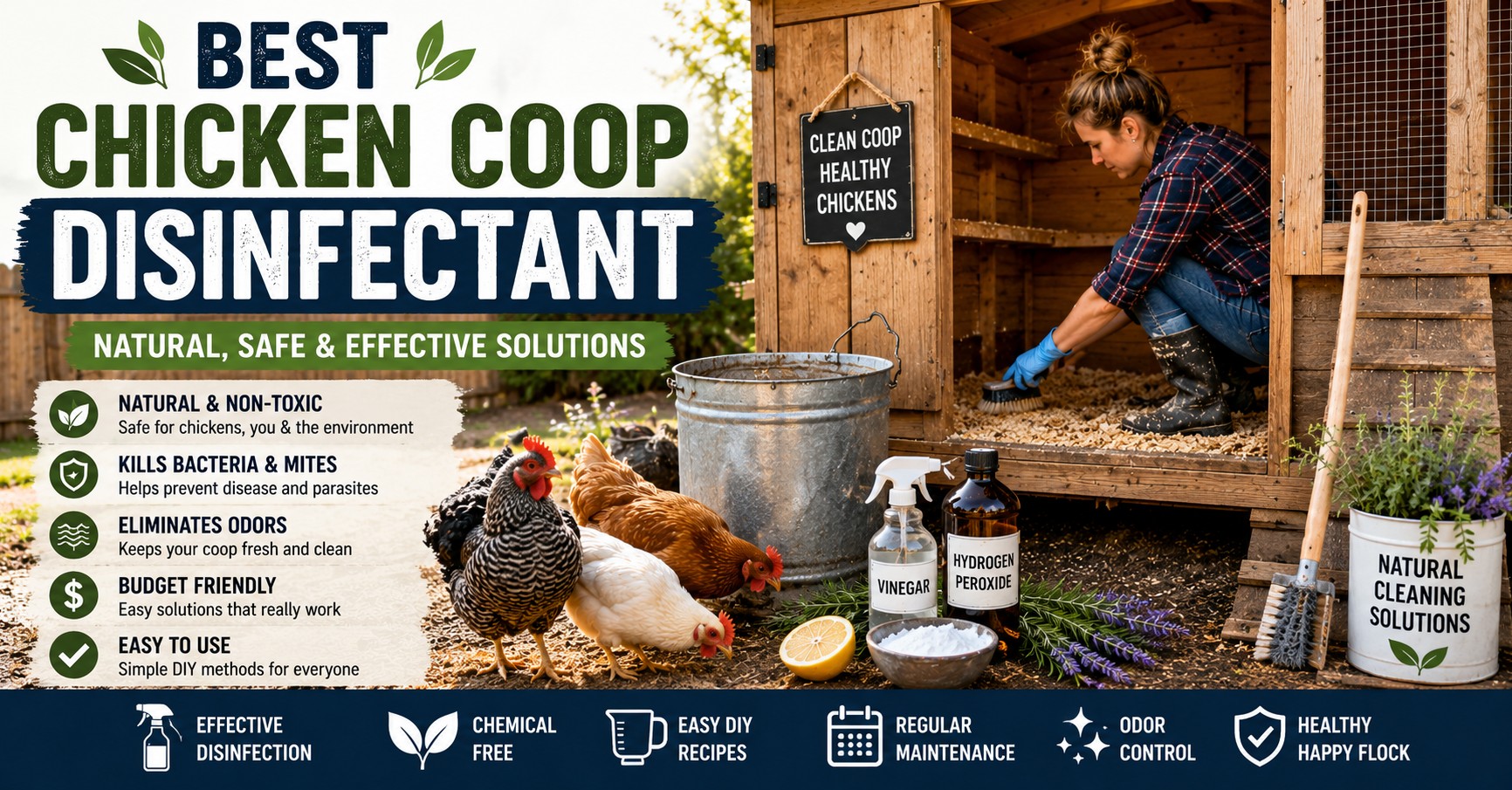
Best Chicken Coop Disinfectant Methods That Actually Work
Keeping a chicken coop clean is one of the most important responsibilities for backyard chicken owners. Many beginners search for the best chicken coop disinfectant after noticing smells, flies, damp bedding, or sick chickens inside the coop. Unfortunately, some people either overuse harsh chemicals or avoid disinfecting completely because they worry about harming their chickens.
The truth is that safe coop sanitation does not need to be complicated or expensive.
In this complete guide, you will learn:
- The best natural chicken coop disinfectant options
- How to disinfect a chicken coop naturally
- Safe coop cleaning methods for beginners
- Best disinfectants after chicken illness
- How to control coop odor
- Cheap chicken coop disinfectant ideas
- How often to sanitize your coop
- Natural vs bleach disinfectant comparisons
- Cleaning schedules and maintenance tips
Why Chicken Coop Disinfection Matters
Chickens spend many hours inside their coop, especially during bad weather, nighttime roosting, winter conditions, and egg laying periods. Without regular cleaning and sanitation, waste quickly builds up and creates unhealthy conditions.
Dirty coops commonly lead to:
- Strong ammonia odor
- Wet bedding
- Bacteria buildup
- Mold growth
- Respiratory irritation
- Mites and lice
- Fly infestations
- Poor egg cleanliness
- Increased stress in chickens
A clean coop helps improve flock comfort, reduces maintenance problems, and creates a healthier environment year-round.
Common Signs Your Coop Needs Disinfecting
Strong Odor
If you smell strong ammonia when entering the coop, it usually means droppings and moisture are building up too quickly.
Wet Bedding
Damp bedding encourages bacteria, mold, parasites, and flies.
Visible Mold
Mold growth is dangerous for chickens because it can affect respiratory health.
Flies and Insects
Large fly populations often indicate poor sanitation and wet organic buildup.
Sick or Sneezing Chickens
Dirty coop conditions sometimes contribute to respiratory stress and disease spread.
What Causes Coop Odors and Bacteria?
Many backyard coop problems begin with excess moisture.
Common causes include:
- Poor ventilation
- Wet bedding
- Leaking waterers
- Overcrowding
- Poor drainage
- Infrequent cleaning
- Rain entering the coop
- Low airflow during winter
Chicken droppings naturally produce ammonia as they break down. When moisture combines with waste buildup, odors become much stronger.
Best Natural Chicken Coop Disinfectant Options
| Disinfectant | Best Use | Pros | Cons |
|---|---|---|---|
| White Vinegar | Routine cleaning | Natural and affordable | Limited heavy-duty disinfection |
| Hydrogen Peroxide | Bacteria control | Effective and safer odor | Can be more expensive |
| Lime Powder | Odor and moisture control | Reduces ammonia | Needs careful application |
| Poultry-Safe Commercial Disinfectant | After illness outbreaks | Strong sanitation | Higher cost |
| Hot Water and Soap | Basic deep cleaning | Simple and safe | Less effective alone |
Homemade Chicken Coop Disinfectant Recipe
Simple Vinegar Cleaning Spray
Many backyard chicken owners use a vinegar solution for routine cleaning.
- 1 part white vinegar
- 1 part warm water
- Optional lemon juice for odor control
This works well for:
- Nesting boxes
- Roost bars
- Feed containers
- Minor odor control
Hydrogen Peroxide Spray
- 3% hydrogen peroxide
- Spray bottle application
This can help reduce bacteria on coop surfaces.
Natural Cleaning Advantages
- Safer routine use
- Lower chemical exposure
- Better for beginner maintenance
- Affordable options available
For most routine backyard flock care, natural cleaning combined with regular maintenance works extremely well.
How to Disinfect a Chicken Coop Naturally
Step 1: Remove Chickens
Always move chickens to a safe temporary area before deep cleaning.
Step 2: Remove Bedding
Take out all wet bedding, feathers, droppings, and debris.
Step 3: Scrape Surfaces
Use a scraper to remove dried droppings from roosts and corners.
Step 4: Wash the Coop
Use warm water and mild soap first before applying disinfectants.
Step 5: Apply Disinfectant
Use your chosen natural or poultry-safe disinfectant on:
- Walls
- Floors
- Nesting boxes
- Roost bars
- Feeders
- Waterers
Step 6: Let the Coop Dry Completely
Good airflow is extremely important after cleaning.
Step 7: Add Fresh Bedding
Replace old bedding with clean dry material.
Best Bedding for Cleaner Coops
| Bedding Type | Pros | Cons |
|---|---|---|
| Pine Shavings | Absorbent and affordable | Needs regular replacement |
| Sand | Easy waste removal | Heavy and cold in winter |
| Hemp Bedding | Excellent odor control | Higher cost |
| Straw | Easy availability | Can trap moisture |
Cleaning Coops After Sick Chickens
After illness appears in a flock, deeper sanitation becomes more important.
Important Steps
- Remove contaminated bedding immediately
- Disinfect feeders and waterers carefully
- Improve ventilation
- Allow surfaces to dry fully
- Monitor the remaining flock closely
For serious illness outbreaks, contact a poultry veterinarian or local extension office for guidance.
Disinfecting Coops for Parasite Control
Mites and lice often hide in cracks, roosts, and nesting areas.
Good sanitation helps reduce parasite pressure.
Important Areas to Clean
- Roost bar joints
- Nesting box corners
- Wall cracks
- Under bedding
- Ventilation edges
Best Coop Disinfectant for Smell Control
Odor control usually requires multiple improvements together.
Best Smell Control Methods
- Frequent bedding replacement
- Better airflow
- Dry flooring
- Lime treatment
- Proper drainage
- Daily droppings removal
Strong odor almost always means excess moisture or waste buildup.
Cheap Chicken Coop Disinfectant Ideas
Keeping a coop clean does not require expensive products.
Budget Cleaning Solutions
- White vinegar
- Warm water washing
- Homemade spray bottles
- Sun drying equipment outdoors
- Bulk pine shavings
- DIY poop boards
Seasonal Chicken Coop Cleaning Tips
Summer Cleaning
- Increase airflow
- Replace wet bedding quickly
- Watch for flies
- Clean waterers more often
Winter Cleaning
- Prevent moisture buildup
- Maintain ventilation
- Avoid completely sealing the coop
- Monitor condensation carefully
Rainy Weather Cleaning
- Check roof leaks
- Improve drainage
- Keep bedding elevated and dry
Common Cleaning Mistakes to Avoid
- Using strong chemicals too often
- Skipping ventilation
- Leaving damp bedding inside
- Ignoring small leaks
- Overcrowding chickens
- Failing to clean feeders and waterers
- Using unsafe fumes around chickens
Weekly Coop Sanitizing Schedule for Beginners
</tr><td>Deep clean nesting boxesMonthlyImprove egg cleanliness
| Task | Frequency | Purpose |
|---|---|---|
| Remove droppings | Daily | Reduce ammonia buildup |
| Refresh bedding | Weekly</td> | Keep coop dry |
| Disinfect waterers | Weekly | Prevent bacteria growth |
| Full coop disinfection | Every 1–3 months | Long-term sanitation |
My Practical Recommendation
I personally recommend focusing on:
- Good ventilation
- Dry bedding
- Routine cleaning
- Natural disinfecting for regular maintenance
- Deep sanitation after illness or parasite problems
FAQ
How often should I disinfect a chicken coop?
Most backyard coops benefit from routine spot cleaning weekly and deeper disinfection every one to three months depending on flock size, weather, and moisture conditions.
Is vinegar safe for cleaning chicken coops?
Yes.
What causes strong chicken coop odor?
Strong odor usually comes from wet bedding, poor ventilation, overcrowding, and waste buildup.
What is the safest coop disinfectant for beginners?
Natural cleaning methods using vinegar, warm water, proper drying, and regular maintenance are usually safest for beginner backyard flock owners.
Final Checklist
- Remove wet bedding regularly
- Improve ventilation</li>
- Use safe disinfectants
- Keep feeders and waterers clean
- Monitor moisture buildup
- In
- spect for parasites
- Deep clean after illness outbreaks
- Maintain a regular cleaning schedule
Conclusion
A clean chicken coop creates a healthier and more comfortable environment for your backyard flock.
You do not need expensive chemicals or complicated systems to maintain a safe coop. Most backyard flock owners achieve excellent results through consistent cleaning routines, proper ventilation, dry bedding, and safe disinfecting methods.
Focus on prevention, maintain a regular cleaning schedule, and address moisture problems early. A cleaner coop almost always leads to happier chickens and easier backyard flock management.