Best Feed for Egg Laying Chickens: What Backyard Chicken Owners Should Really Feed Their Hens
One of the biggest questions new chicken owners ask is simple: what is the best chicken feed for healthy hens and consistent egg production? Backyard chickens may look easy to care for, but feeding them properly makes a huge difference in egg laying, shell quality, feather condition, energy levels, and long-term flock health.
Many backyard flock owners across the United States struggle with soft eggshells, reduced egg production, overweight hens, messy droppings, or chickens refusing to eat certain feeds. In many cases, the problem starts with nutrition. Choosing the best chicken feed does not necessarily mean buying the most expensive bag at the farm store. It means understanding what laying hens actually need throughout different seasons and stages of life.
This guide covers everything beginners and experienced chicken keepers should know about feeding laying hens properly. You will learn how layer feed works, what ingredients matter most, how to avoid common feeding mistakes, how to support winter egg production, and how to choose the right feed for your backyard flock.
Quick Answer Box
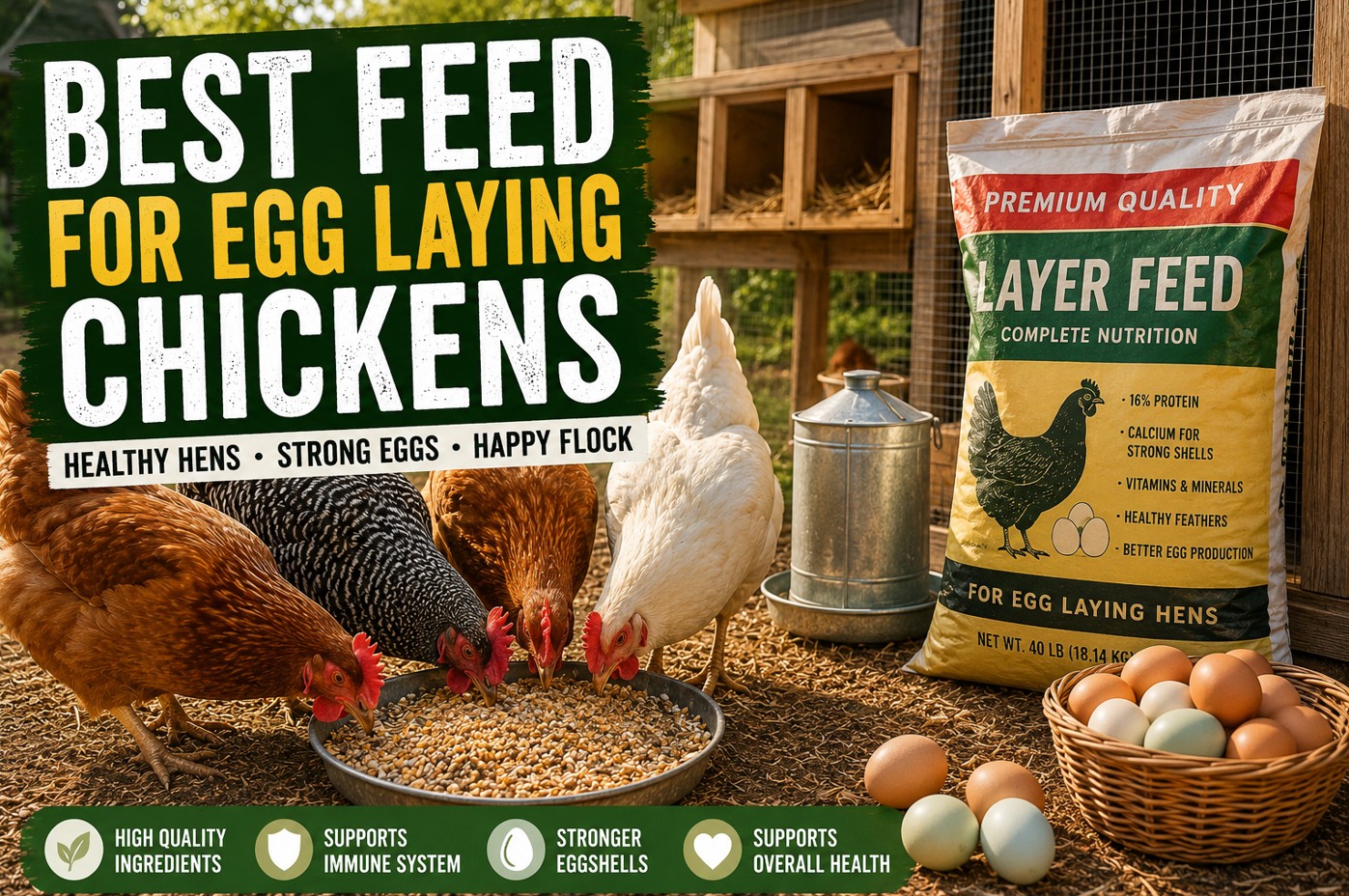
The best chicken feed for egg laying hens is usually a balanced layer feed containing around 16% to 18% protein along with proper calcium, vitamins, and minerals. Most backyard chicken owners in the US use layer pellets or crumbles as the main feed because they support healthy egg production, stronger shells, and overall flock health.
Healthy hens also benefit from clean water, occasional protein treats, scratch grains in moderation, and access to grit and oyster shell. During winter, molting season, or stressful weather, chickens may require slightly higher protein support to maintain energy and egg laying consistency.
For beginners, the easiest approach is to choose a quality layer feed from a trusted farm supply store and follow a consistent feeding schedule. Avoid overfeeding treats or kitchen scraps because too many extras can reduce nutritional balance. A clean coop, good ventilation, dry bedding, and proper predator protection also help hens stay healthy and productive year-round.
Table of Contents
- Why Chicken Feed Matters More Than Most Beginners Realize
- What Nutrients Egg Laying Hens Actually Need
- Best Chicken Feed Types Explained
- Pellets vs Crumbles vs Mash
- Best Chicken Feed for Backyard Chickens
- Best Organic Chicken Feed for Healthy Eggs
- Best Affordable Chicken Feed for Small Flocks
- Best High Protein Chicken Feed for Laying Hens
- How Much Feed Do Egg Laying Chickens Need
- Common Feeding Mistakes
- Best Feeding Routine for Backyard Flocks
- Seasonal Feeding Tips
- Winter Feeding for Egg Production
- Safe Treats and Supplemental Foods
- Foods Chickens Should Never Eat
- Chicken Feed Storage Tips
- Signs Your Chickens Need Better Nutrition
- Practical Feeding Tables
- My Practical Recommendation
- FAQ Section
- Final Feeding Checklist
- Conclusion
Why Chicken Feed Matters More Than Most Beginners Realize
Many people assume chickens can survive mainly on table scraps, bugs, or free ranging alone. While chickens are natural foragers, modern egg laying hens need balanced nutrition to stay healthy and productive.
Egg production requires large amounts of protein, calcium, vitamins, and energy. A hen producing eggs several times each week uses a surprising amount of nutrients. Without proper feed, problems often appear gradually.
Poor nutrition can lead to:
- Thin or soft eggshells
- Lower egg production
- Feather loss
- Weak immune systems
- Aggressive flock behavior
- Poor winter health
- Stress during molting
- Weight problems
The best chicken feed supports not only egg production but also overall chicken health, especially in backyard flocks exposed to changing weather conditions, predators, moisture, and seasonal stress.
What Nutrients Egg Laying Hens Actually Need
Protein
Protein is one of the most important nutrients for laying hens.
Most laying hens do best with feed containing around 16% to 18% protein. During molting or cold weather, slightly higher protein levels may help support feather growth and energy needs.
Protein supports:
- Egg production
- Feather quality
- Muscle maintenance
- Growth and recovery
- Overall energy
Calcium
Calcium is essential for strong eggshells.
Laying hens use large amounts of calcium daily. Without enough calcium, hens may produce weak shells or even stop laying properly.
Many backyard chicken owners provide free-choice oyster shell alongside regular feed.
Healthy Fats
Fats provide energy, especially during winter.
Cold weather chickens often benefit from slightly increased energy intake.
Vitamins and Minerals
Balanced feeds contain important nutrients such as:
- Vitamin A
- Vitamin D
- Vitamin E
- Phosphorus
- Magnesium
- Trace minerals
These nutrients help support immune function, egg laying consistency, and bone strength.
Best Chicken Feed Types Explained
Layer Feed
Layer feed is designed specifically for hens actively producing eggs.
It usually contains:
- 16% to 18% protein
- Extra calcium
- Balanced minerals
- Controlled energy levels
Most backyard flock owners use layer feed as their primary feed source.
Starter Feed
Starter feed is made for chicks and growing birds.
It contains higher protein but lower calcium.
Adult laying hens should not remain on chick starter feed long-term.
Grower Feed
Grower feed supports adolescent chickens before egg laying begins.
Scratch Grains
Scratch grains are treats rather than complete nutrition.
Too much scratch may reduce balanced feed intake.
Fermented Feed
Some chicken keepers ferment feed to improve digestibility and reduce waste.
However, beginners often do best starting with standard dry feed routines first.
Pellets vs Crumbles vs Mash
| Feed Type | Pros | Cons | Best For |
|---|---|---|---|
| Pellets | Less waste, balanced intake | Some hens dislike texture | Most adult flocks |
| Crumbles | Easy for hens to eat | Can create more waste | Small backyard flocks |
| Mash | Natural texture | Messier and dusty | Traditional feeding systems |
Many experienced backyard chicken owners prefer pellets because chickens cannot selectively eat favorite ingredients as easily.
Best Chicken Feed for Backyard Chickens
The best chicken feed for backyard chickens is usually one that combines balanced nutrition, freshness, affordability, and practical feeding consistency.
For most backyard flocks in the US, a quality layer pellet works extremely well.
Look for:
- 16% to 18% protein
- Visible freshness
- Trusted manufacturer
- Good storage practices
- Balanced calcium levels
Many small flock owners also supplement with:
- Vegetables
- Mealworms
- Kitchen scraps in moderation
- Fresh greens
- Occasional grains
However, complete feed should remain the main part of the diet.
Best Organic Chicken Feed for Healthy Eggs
Some chicken owners prefer organic feeds because they want more natural ingredients or fewer synthetic additives.
Organic feed may appeal especially to families focused on:
- Natural homesteading
- Garden composting
- Organic egg production
- Sustainable backyard farming
When choosing organic feed, still pay attention to:
- Protein levels
- Freshness
- Ingredient quality
- Storage conditions
Organic feed alone does not automatically guarantee healthier chickens if coop maintenance, moisture control, predator protection, and seasonal chicken care are neglected.
Best Affordable Chicken Feed for Small Flocks
Many backyard chicken owners want to balance quality and budget carefully.
Affordable feed does not necessarily mean poor nutrition.
To reduce feeding costs:
- Store feed properly
- Prevent rodents
- Avoid overfeeding treats
- Use feeders that reduce waste
- Buy appropriate bag sizes
- Supplement with garden greens carefully
Feed waste becomes expensive surprisingly fast in small backyard flocks.
Best High Protein Chicken Feed for Laying Hens
Higher protein feed may help during:
- Molting season
- Winter weather
- Stress recovery
- Feather regrowth
- Cold climates
Some flock owners temporarily add:
- Mealworms
- Black soldier fly larvae
- Cooked eggs
- Fish meal supplements
However, extremely high protein long-term may not always be necessary for healthy adult laying hens.
Balanced nutrition matters more than chasing the highest protein number.
How Much Feed Do Egg Laying Chickens Need?
Most laying hens eat roughly one-quarter pound of feed daily, though this varies based on:
- Breed
- Weather
- Free ranging access
- Age
- Egg production level
- Stress levels
Cold weather hens usually eat more.
Heavy breeds may also consume larger amounts.
Signs Chickens Are Eating Enough
- Consistent egg production
- Healthy feathers
- Active behavior
- Good body condition
- Strong eggshells
Signs Chickens May Need Nutritional Changes
- Thin shells
- Weight loss
- Reduced laying
- Feather picking
- Lethargy
Common Feeding Mistakes Backyard Chicken Owners Make
Too Many Treats
Treats should remain limited.
Too many snacks dilute nutritional balance.
Not Providing Grit
Chickens need grit to digest certain foods properly.
Ignoring Water Quality
Even the best chicken feed cannot compensate for dirty water.
Improper Feed Storage
Moisture and rodents quickly ruin feed quality.
Using Feed Past Freshness
Old feed loses nutritional value over time.
Overfeeding Scratch Grain
Scratch grain should remain a small supplement rather than the main diet.
Best Feeding Routine for Backyard Flocks
Consistency matters.
Most experienced chicken owners develop simple routines that work year-round.
Morning Feeding
Many owners provide complete layer feed first thing in the morning.
Fresh Water Check
Clean water is essential for egg production.
Even mild dehydration affects laying hens quickly.
Afternoon Treats
Greens or scratch grains are often offered later in the day.
Evening Coop Inspection
Evening feeding time is a good opportunity to inspect:
- Chicken behavior
- Predator risks
- Moisture issues
- Coop ventilation
- Bedding condition
Seasonal Feeding Tips
Spring
Spring often increases egg laying naturally.
Hens may become more active and forage more outdoors.
Summer
Hot weather reduces appetite in some chickens.
Provide:
- Cool water
- Shade
- Electrolytes if needed
- Fresh greens
Fall
Many chickens molt during fall.
Protein becomes especially important during feather replacement.
Winter
Cold weather increases calorie needs.
Many backyard chicken owners use slightly higher energy and protein support during winter.
Best Chicken Feed for Winter Egg Production
Winter creates special challenges for backyard flocks.
Short daylight hours naturally reduce laying in many hens.
Cold weather also increases energy demands.
To support winter egg production:
- Use quality layer feed consistently
- Maintain dry bedding
- Improve coop ventilation
- Protect hens from moisture
- Offer additional protein moderately
- Ensure water does not freeze
Moisture control remains critical during winter because damp conditions increase stress and frostbite risks.
Safe Treats and Supplemental Foods
Chickens enjoy variety, but treats should remain balanced.
Good Supplemental Foods
- Leafy greens
- Pumpkin
- Mealworms
- Berries
- Cooked eggs
- Oats in moderation
- Watermelon during summer
Use Moderation
Even healthy treats should not replace balanced feed.
Foods Chickens Should Never Eat
| Unsafe Food | Why It Is Unsafe |
|---|---|
| Raw beans | Contain harmful compounds |
| Moldy food | Can contain dangerous toxins |
| Chocolate | Toxic to chickens |
| Salty processed foods | Poor for long-term health |
| Rotten scraps | Bacteria and mold risks |
| Alcohol | Dangerous for poultry |
Chicken Feed Storage Tips
Feed quality matters just as much as feed type.
Use Airtight Containers
Metal containers often help reduce rodent access.
Keep Feed Dry
Moisture ruins feed quickly.
Avoid Extreme Heat
Heat may reduce freshness over time.
Rotate Older Feed First
Use older bags before opening new ones.
Watch for Mold
Never feed moldy or spoiled feed.
Signs Your Chickens Need Better Nutrition
| Symptom | Possible Cause | Recommended Action |
|---|---|---|
| Soft eggshells | Low calcium | Add oyster shell |
| Reduced egg laying | Low protein or stress | Review diet and coop conditions |
| Feather picking | Protein imbalance or boredom | Improve diet and enrichment |
| Weight loss | Insufficient feed intake | Monitor feeding access |
| Weak feathers | Poor nutrition | Increase balanced protein support |
| Lethargy | Possible illness or poor nutrition | Consult poultry vet if severe |
How Feed Quality Affects Egg Quality
Egg quality often reflects overall nutrition.
Healthy hens fed balanced diets usually produce:
- Stronger shells
- Cleaner eggs
- More consistent laying
- Better yolk color
- Improved overall condition
However, egg quality also depends on:
- Chicken breed
- Stress levels
- Weather
- Age
- Coop cleanliness
- Moisture control
- Predator stress
Coop Conditions and Feeding Go Together
Nutrition alone cannot fix poor living conditions.
Even the best chicken feed works best when combined with:
- Dry bedding
- Proper coop ventilation
- Clean water
- Predator protection
- Adequate space
- Regular coop maintenance
- Seasonal chicken care
Stress from overcrowding or predator threats may reduce appetite and egg production.
My Practical Recommendation
After working with backyard flocks for years, I believe simplicity and consistency matter more than chasing expensive feeding trends.
For most backyard chicken owners in the United States, a quality layer pellet or crumble with balanced protein and calcium is the safest and easiest foundation.
I personally recommend focusing on:
- Fresh feed
- Dry storage
- Clean water daily
- Moderate treats
- Proper calcium access
- Seasonal adjustments
- Good coop maintenance
Many beginner problems come from overcomplicating feeding routines or relying too heavily on scraps and treats.
A healthy backyard flock usually thrives with a simple, balanced feeding system supported by clean living conditions and consistent care.
If hens suddenly stop eating, lose weight rapidly, or show severe illness symptoms, contact a poultry veterinarian or local agricultural extension office for guidance.
Frequently Asked Questions
What is the best chicken feed for egg laying hens?
Most laying hens do best with a balanced layer feed containing around 16% to 18% protein and adequate calcium. Layer pellets and crumbles are both popular choices among backyard chicken owners. The best option depends on flock size, feeding style, and budget.
Do chickens need oyster shell if they eat layer feed?
Many backyard flock owners still offer free-choice oyster shell because individual hens may have different calcium needs. Oyster shell supports stronger eggshell production, especially in heavy laying breeds.
Can chickens survive on kitchen scraps alone?
No. While chickens enjoy scraps and treats, they still require balanced nutrition from a complete feed source. Too many scraps can reduce protein and calcium intake, leading to poor egg quality and health issues.
What is the best affordable chicken feed for small flocks?
Many farm supply stores carry quality layer feeds that work well for backyard chickens without requiring premium prices. Reducing feed waste and storing feed properly also helps keep feeding costs manageable.
Should chickens eat more protein during winter?
Sometimes yes. Cold weather and molting may increase energy and protein demands. Moderate protein supplementation can help support feather growth and winter condition, but balanced nutrition remains most important overall.
How often should I feed backyard chickens?
Most chicken owners provide free-choice access to balanced layer feed throughout the day along with fresh water. Some owners also provide small afternoon treats in moderation.
What causes soft eggshells?
Soft eggshells are often linked to low calcium intake, stress, age, or nutritional imbalance. Providing quality layer feed and oyster shell usually helps improve shell quality.
Can moldy feed make chickens sick?
Yes. Moldy feed can contain dangerous toxins that may seriously affect chicken health. Always discard spoiled or wet feed immediately.
Is organic chicken feed better?
Organic feed may appeal to owners focused on natural farming and organic egg production, but overall nutritional balance still matters most. Freshness and proper storage are equally important.
What should I do if my hens suddenly stop eating?
Check water quality, feed freshness, environmental stress, and coop conditions first. Severe appetite loss may indicate illness, parasites, heat stress, or other problems. Contact a poultry veterinarian if symptoms continue.
Final Feeding Checklist
- Use balanced layer feed daily
- Provide clean water at all times
- Offer oyster shell separately
- Limit treats and scraps
- Store feed in dry containers
- Watch for mold or rodents
- Adjust feeding during winter and molting
- Inspect flock behavior daily
- Maintain clean coop conditions
- Support proper ventilation and moisture control
Conclusion
Feeding laying hens properly is one of the most important parts of successful backyard chicken care. The best chicken feed is not about fancy packaging or expensive trends. It is about balanced nutrition, fresh ingredients, practical routines, and understanding your flock’s real needs throughout the year.
Healthy hens need proper protein, calcium, clean water, safe housing, and consistent care to produce quality eggs and maintain long-term health. By keeping feeding simple, balanced, and consistent, most backyard chicken owners can avoid many common flock problems before they start.
Whether you are raising a few hens for fresh family eggs or building a larger homestead flock, good nutrition creates the foundation for healthier chickens, stronger egg production, and a more enjoyable backyard chicken experience overall.