
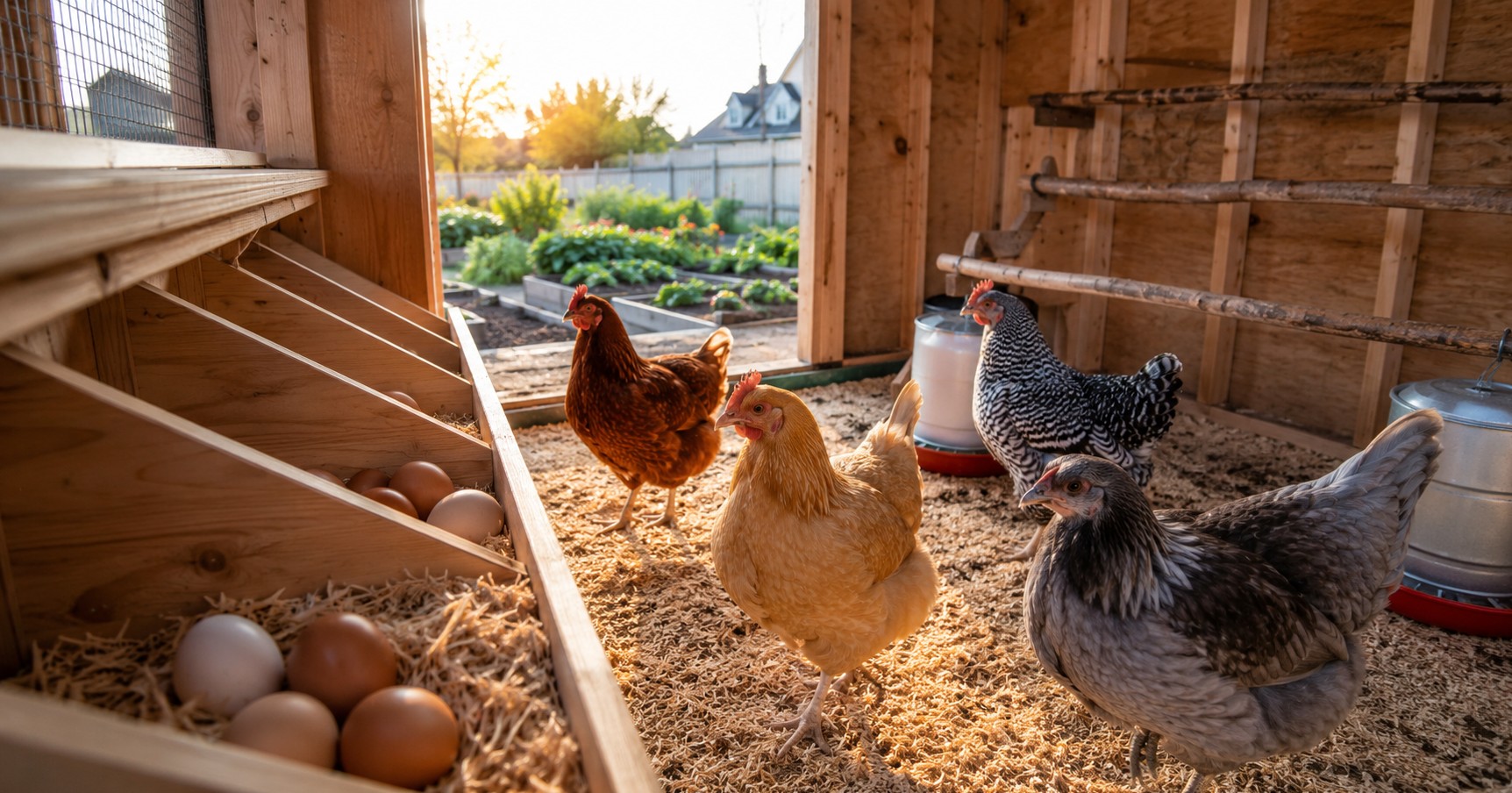
Nesting boxes are small spaces, but they can reveal big clues. Fresh eggs, soft bedding, a few feathers, and normal dust are usually fine. Wet bedding, broken eggs, droppings, pests, moldy material, or signs of predators are warning signs that something needs attention. This guide explains what is normal, what is not, what should be in chicken nesting boxes, and how to keep them comfortable for laying hens in a practical US backyard coop.
Quick Answer: What Might Be Found in Nesting Boxes?
In a healthy chicken nesting box, you will usually find eggs, nesting material such as straw, pine shavings, hemp, or nesting pads, and sometimes a few loose feathers. These are normal. You may also find dust, small bits of feed, or bedding moved around by hens as they settle in to lay. Things that should not be found in nesting boxes include wet bedding, strong ammonia smell, broken eggs, heavy droppings, mites, rodents, mold, sharp objects, or signs of predators. Check boxes daily, remove eggs often, and refresh bedding whenever it becomes dirty, damp, or flattened.
Table of Contents
- Why Nesting Boxes Matter for Backyard Chickens
- Normal Things Found Inside Chicken Nesting Boxes
- Eggs in Nesting Boxes: What Is Normal?
- Best Bedding Materials for Chicken Nesting Boxes
- Straw vs Pine Shavings for Nesting Boxes
- Problems You May Find in Chicken Nesting Boxes
- How to Keep Nesting Boxes Clean and Comfortable
- Signs of a Good Nesting Box Setup
- Best Tools, Materials, and Products to Consider
- Seasonal Nesting Box Care Tips
- Common Nesting Box Mistakes to Avoid
- My Practical Recommendation
- Frequently Asked Questions
- Final Nesting Box Checklist
- Conclusion
Why Nesting Boxes Matter for Backyard Chickens
Nesting boxes give hens a safe, quiet place to lay eggs. In nature, a hen looks for a private, protected spot before laying. A backyard coop should copy that feeling as much as possible. When the box is too bright, dirty, crowded, wet, or uncomfortable, hens may start laying eggs on the coop floor, under bushes, inside feed storage areas, or in hidden corners of the run.
For US backyard chicken owners, good nesting boxes also make egg collection easier and cleaner. If your hens lay in the right place, you spend less time searching for eggs and more time enjoying your flock. Clean nesting boxes for chickens can also reduce cracked eggs, dirty shells, egg eating, pests, and bedding waste.
The condition of the nesting box is often a quick health and management check. If you open the lid and smell ammonia, see damp bedding, notice mites, or find hens sleeping in the boxes, your coop routine may need adjustment. The box is not just an egg container. It is part of your flock’s daily comfort system.
Normal Things Found Inside Chicken Nesting Boxes
When people ask what might be found in nesting boxes, they usually expect the simple answer: eggs. But a normal box may contain a few other things too. Some are harmless. Some are useful clues about hen behavior. The goal is to understand the difference between normal and problematic.
Fresh Eggs
Fresh eggs are the main thing you want to find. A healthy laying hen usually chooses a box that feels private, soft, and safe. Eggs may be warm if recently laid. In a good nesting box setup for hens, the eggs should be sitting on clean, dry bedding without droppings or broken shells around them.
Clean Bedding
Chicken nesting box bedding provides cushion and comfort. It helps prevent cracked eggs and gives hens something to arrange before laying. Hens often scratch, turn around, and create a small depression in the bedding. That behavior is normal and does not mean the box is messy.
Loose Feathers
A few feathers are normal. Hens may lose small feathers while settling in, especially during molt or when a broody hen spends extra time in the box. If you are wondering why are there feathers in my chicken nesting boxes, the answer is often simple: normal movement, seasonal molt, or a hen making the space feel more nest-like. However, many feathers plus irritated skin, pests, or fighting may need a closer look.
Flattened or Rearranged Bedding
Hens rarely leave bedding exactly how you placed it. They may push straw to one side, kick pine shavings out, or make a bowl-shaped dip. This is part of natural nesting behavior. If the bedding is still clean and dry, rearranged material is not a problem.
Small Amounts of Dust
Chicken coops are dusty places. A light layer of dust can appear on edges, walls, or box dividers. Normal dust is different from thick, damp, smelly buildup. Heavy dust mixed with poor airflow can irritate birds and make cleaning harder, so wipe boxes as part of regular coop maintenance.
Eggs in Nesting Boxes: What Is Normal?
Nesting box eggs can tell you whether your setup is working. Most hens lay in the morning or early part of the day, although some lay later. Eggs should be whole, reasonably clean, and easy to collect. A little dirt on the shell can happen, especially in wet weather, but frequent dirty eggs usually mean the box or coop floor needs attention.
How Many Eggs Should Be in the Box?
The number depends on flock size, breed, age, season, daylight, nutrition, stress, and health. Do not panic if a hen skips a day. Egg laying naturally changes. Young pullets may be inconsistent at first. Older hens often lay less frequently. Winter daylight can slow production unless supplemental light is used carefully.
The practical question is not just how many eggs you find, but where you find them. If eggs are consistently in the nesting boxes, the hens understand the setup. If eggs are under roosts, near the feeder, or outside the coop, the boxes may be uncomfortable, too exposed, too few, or occupied by sleeping birds.
Dirty Eggs
Dirty eggs often come from muddy feet, droppings in the box, wet bedding, or hens sleeping in nesting boxes at night. If this keeps happening, do not only clean the eggs. Fix the reason. Add fresh bedding, improve coop ventilation, check for leaks, make roosts more appealing, and collect eggs daily.
Broken Eggs
Broken eggs can happen from thin shells, crowded boxes, rough bedding, hens stepping on eggs, or insufficient cushion. They can also encourage egg eating if hens learn to peck at the contents. Add more bedding, collect eggs more often, make sure hens have proper layer feed and calcium access, and remove broken eggs immediately.
Hidden Eggs Outside the Box
If hens are laying somewhere else, look at the box from a hen’s perspective. Are dominant hens blocking access? Are there enough boxes? Sometimes adding a ceramic or wooden nest egg helps guide pullets toward the right place.
Best Bedding Materials for Chicken Nesting Boxes
The best bedding for nesting boxes is soft, dry, absorbent, easy to replace, and safe for hens. It should cushion eggs, help control moisture, and make the box inviting. Different chicken nesting box materials work better in different climates, coop designs, and cleaning routines.
| Material | Best Use | Pros | Cons |
|---|---|---|---|
| Pine shavings | Everyday nesting box bedding | Absorbent, easy to find, simple to replace | Can be kicked out by active hens |
| Straw | Traditional nest feel | Hens like arranging it, good cushion when dry | Can hold moisture if not changed often |
| Hemp bedding | Moisture control and low dust preference | Absorbent, compost-friendly, comfortable | May cost more or be harder to find locally |
| Nesting pads | Easy cleaning and egg protection | Reusable options available, keeps eggs off bare floor | Still needs cleaning and may not satisfy all hens |
| Excelsior nest liners | Ready-made nesting box setup | Good structure, easy to place, helps reduce egg rolling | Needs replacement when dirty or flattened |
Pine Shavings
Pine shavings are one of the most popular choices for backyard chicken nesting boxes. They are easy to buy at farm stores, absorb moisture well, and make cleaning simple. Choose untreated pine shavings, not cedar. Cedar has strong aromatic oils that many chicken keepers avoid in enclosed coop spaces.
Pine shavings work especially well when you check boxes daily and top them off as needed. If hens kick them out, use a front lip on the box to hold bedding in place.
Straw
Straw has a traditional nesting feel, and many hens like to arrange it. It creates a cozy nest when fresh and dry. The downside is that straw can trap moisture in some conditions. If your coop is humid, leaky, or poorly ventilated, straw can become damp and musty faster than expected.
Use straw if you can keep it dry and replace it regularly. Shake it out before placing it in the box, and avoid clumps that hide broken eggs or pests.
Hemp Bedding
Hemp bedding is a good option for owners who want absorbency and easier composting. It can be more expensive than pine shavings, but many keepers like it because it handles moisture well and often creates less dust. It is useful in small coops where moisture control is important.
Nesting Pads and Liners
Nesting pads can be helpful if hens kick loose bedding out or if you want a neater setup. They provide a stable surface and are easy to lift out for cleaning. However, pads are not maintenance-free. Droppings, broken egg residue, and dust can still build up. Wash or replace them based on the product type and condition.
Straw vs Pine Shavings for Nesting Boxes
Many beginners ask whether straw or pine shavings are better. The honest answer is that both can work if they stay clean and dry. The better choice depends on your climate, cleaning habits, flock behavior, and coop design.
| Feature | Straw | Pine Shavings |
|---|---|---|
| Comfort | Cozy and easy for hens to arrange | Soft and cushiony when deep enough |
| Moisture control | Can hold moisture if neglected | Generally more absorbent |
| Cleaning | May hide mess inside clumps | Easy to scoop and replace |
| Egg protection | Good when thick and dry | Good when enough depth is used |
| Best for | Dry coops and traditional setups | Beginner-friendly daily maintenance |
If you are a beginner, pine shavings are often easier to manage because they are absorbent and simple to spot clean. If your hens strongly prefer straw, you can use it successfully with regular replacement. Some owners use a nesting pad underneath and a small amount of straw or shavings on top for comfort.
Problems You May Find in Chicken Nesting Boxes
Not everything found in a nesting box is normal. Some problems are small and easy to fix. Others can affect egg quality, hen comfort, or flock health. Checking boxes every day helps catch problems before they become bigger coop issues.
| Problem Found | Possible Cause | Practical Solution |
|---|---|---|
| Droppings in the box | Hens sleeping in nesting boxes | Clean boxes, block access at night temporarily, improve roost placement |
| Wet bedding | Roof leak, poor ventilation, tracked-in mud | Fix leaks, add airflow, replace bedding immediately |
| Broken eggs | Not enough cushion, thin shells, crowded boxes | Add bedding, collect eggs often, provide calcium source |
| Strong smell | Moisture and droppings buildup | Deep clean, improve ventilation, refresh bedding |
| Mites or tiny crawling pests | Pest infestation in cracks or bedding | Remove bedding, clean thoroughly, use poultry-safe control methods |
| Rodent signs | Feed access, gaps in coop, clutter | Secure feed, seal gaps, clean spilled feed, improve storage |
| Hens avoiding boxes | Boxes too bright, dirty, noisy, or uncomfortable | Make boxes darker, cleaner, softer, and more private |
Droppings
Heavy droppings in nesting boxes usually mean hens are sleeping there. Chickens naturally prefer to roost at night, but they may choose boxes if roosts are too low, uncomfortable, overcrowded, or drafty. Raise or improve roosts, make sure there is enough roosting space, and clean boxes before hens lay the next day.
Wet Bedding
Wet bedding is one of the biggest problems in nesting boxes. Moisture can come from roof leaks, condensation, poor ventilation, muddy feet, or spilled water nearby. Damp bedding makes dirty eggs more likely and can create an unhealthy coop environment. Replace wet bedding immediately and fix the moisture source.
Pests
Mites, lice, rodents, and insects may show up in neglected boxes. Tiny crawling pests, irritated hens, reduced laying, or birds refusing boxes can be clues. Use poultry-safe cleaning and pest control methods, and avoid harsh chemicals in laying areas. If birds seem sick, weak, injured, or heavily infested, contact a poultry vet or your local extension office for guidance.
Mold or Musty Smell
Moldy bedding should be removed right away. A musty smell often means moisture is trapped. Clean the box, let it dry, and improve airflow. Never cover a moisture problem with more bedding. Dryness and ventilation are better than simply adding extra material.
How to Keep Nesting Boxes Clean and Comfortable
A clean nesting box routine does not need to be complicated. Small daily habits prevent most big problems. The main goal is to keep the boxes dry, soft, private, and free of droppings or broken eggs.
Daily Routine
- Collect eggs at least once a day.
- Remove broken eggs immediately.
- Pick out obvious droppings or wet bedding.
- Check for unusual smell, pests, or signs of disturbance.
- Fluff or level bedding if hens have pushed it aside.
Weekly Routine
- Add fresh bedding where boxes look thin or flattened.
- Wipe dusty edges and dividers.
- Check the roof, walls, and corners for leaks or damp spots.
- Look for gaps where rodents or snakes could enter.
- Make sure the front lip holds bedding in place.
Monthly or Deep Cleaning Routine
Remove all bedding, scrape the box floor if needed, wipe surfaces, and allow everything to dry before adding fresh material. If you use removable pads, clean or replace them according to their condition. Deep cleaning is also a good time to inspect screws, rough edges, splinters, and loose hardware.
| Task | How Often | Why It Matters |
|---|---|---|
| Collect eggs | Daily | Reduces broken eggs, dirty eggs, and egg eating |
| Spot clean bedding | Daily or as needed | Keeps boxes dry and comfortable |
| Add fresh bedding | Weekly or when thin | Protects eggs and keeps hens interested |
| Deep clean boxes | Monthly or seasonally | Removes buildup, pests, and hidden mess |
| Inspect for leaks | After rain or snow | Prevents moisture problems |
Signs of a Good Nesting Box Setup
A good nesting box setup for hens is simple, comfortable, and easy to maintain. You do not need a fancy coop to get good results. Hens care more about safety, privacy, and comfort than decorative design.
Correct Size
Most standard laying hens do well with a box around 12 inches by 12 inches by 12 inches. Larger breeds may appreciate more space. Bantams can use smaller boxes. The box should be roomy enough for a hen to turn around but not so large that multiple hens crowd inside and break eggs.
Enough Boxes
A common backyard rule is one nesting box for every three to four hens. Hens may still choose the same favorite box, but having enough options reduces stress and crowding. If you see hens waiting, arguing, or laying on the floor, add or adjust boxes.
Privacy and Low Light
Hens usually prefer nesting boxes that are slightly darker and quieter than the rest of the coop. Avoid placing boxes in direct bright light or high-traffic areas. Curtains are optional, but some flocks like them. Keep the entrance easy to access without making the inside feel exposed.
Dry Bedding and Good Airflow
Coop ventilation matters because moisture affects bedding, odor, and chicken health. Ventilation should move humid air out without creating a direct cold draft on the birds. If bedding stays damp, look at the whole coop, not just the box.
Safe Placement
Nesting boxes should be lower than roosting bars so hens do not choose boxes for sleeping. They should also be secure against predators. Hardware cloth, solid latches, tight gaps, and strong coop construction help protect eggs and birds.
Best Tools, Materials, and Products to Consider
The best chicken nesting box ideas are usually practical. Focus on items that make boxes cleaner, safer, and easier to maintain. You do not need to buy everything at once. Start with good bedding, proper box design, and a cleaning routine.
Useful Materials
- Untreated pine shavings for everyday bedding.
- Clean straw for hens that prefer a traditional nest.
- Hemp bedding for moisture control and composting.
- Nesting pads or liners for easier cleanup.
- Ceramic or wooden nest eggs to train pullets.
- Small scraper for stuck-on mess.
- Bucket or compost container for used bedding.
- Gloves for cleaning and inspection.
Features Worth Having
A front lip helps keep bedding and eggs inside the box. A sloped roof over external boxes discourages hens from perching on top. Removable bottoms or pads make cleaning easier. Smooth interior surfaces reduce hiding spots for pests and make wipe-downs faster.
What to Avoid
Avoid slippery bare floors, treated wood shavings, damp hay, sharp wire edges, strong chemical cleaners, and heavily scented products inside nesting boxes. Hens have sensitive respiratory systems, and nesting areas should remain simple and safe.
Seasonal Nesting Box Care Tips
Seasonal chicken care affects nesting boxes more than many beginners realize. Weather changes moisture, mud, ventilation needs, pest pressure, and egg collection habits.
Spring
Spring often brings more laying as daylight increases. It also brings mud and rain in many parts of the United States. Check for leaks, refresh bedding more often, and watch for muddy footprints on eggs. Spring is also a good time to inspect coop hardware after winter.
Summer
Heat can make hens avoid stuffy boxes. Make sure the coop has ventilation and shade. Collect eggs more often in hot weather to keep them fresh and reduce the chance of breakage or egg eating. Watch for mites and insects, which can become more active in warm conditions.
Fall
Many hens molt in fall, so you may see extra feathers in nesting boxes. Some drop in egg production is normal during molt. Keep boxes clean and comfortable, but understand that fewer eggs do not always mean something is wrong with the box.
Winter
Winter nesting boxes should be dry and draft-free, not sealed tight without ventilation. Moisture is often a bigger problem than cold. Collect eggs promptly when temperatures are freezing because eggs can crack if left too long. Add dry bedding as needed, and check for condensation or snow leaks.
Common Nesting Box Mistakes to Avoid
Most nesting box problems are preventable. Small setup mistakes can create dirty eggs, stressed hens, or boxes that birds refuse to use.
Using Too Little Bedding
Thin bedding does not cushion eggs well. If you hear eggs hitting the box floor or often find cracks, add more material or use a nesting pad under loose bedding.
Letting Hens Sleep in the Boxes
Sleeping hens leave droppings. If boxes are messy every morning, check roost height, roost comfort, and coop crowding. Roosts should be higher than nesting boxes and easy for hens to access.
Ignoring Moisture
Moisture causes many coop problems. If bedding keeps getting wet, do not just replace it again and again. Find the leak, improve drainage, move waterers away, and adjust ventilation.
Using Unsafe Materials
Do not put sharp objects, treated wood chips, moldy hay, or strong chemicals in nesting boxes. The safest box is simple: dry bedding, smooth surfaces, and good airflow.
Not Collecting Eggs Often Enough
Eggs left too long can get dirty, freeze, break, or attract pests. Daily collection is one of the easiest ways to improve egg quality and reduce nesting box problems.
My Practical Recommendation
For most beginner backyard chicken owners, I recommend starting with a simple setup: one properly sized nesting box for every three to four hens, placed lower than the roosts, filled with untreated pine shavings or a clean nesting pad topped with a little bedding. Keep the boxes slightly dark, dry, and easy to access for egg collection.
If your coop is very dry and your hens love straw, straw can work well. If you deal with humidity, rain, or frequent dirty eggs, pine shavings or hemp may be easier. The best material to put in nesting boxes for laying hens is the one you can keep clean and dry consistently.
Do not overcomplicate it. Hens do not need luxury decor. They need a safe, quiet, soft place to lay. Check boxes daily, collect eggs often, and fix moisture fast. That routine will solve more problems than any expensive product.
Frequently Asked Questions
1. What might be found in chicken nesting boxes besides eggs?
Besides eggs, you may find bedding, loose feathers, dust, and bedding that hens have shaped into a small nest. These are normal. You might also find droppings, broken eggs, wet bedding, pests, or signs of rodents, but those are problems to fix. A healthy nesting box should mostly contain clean bedding and eggs. If you regularly find messes, strong smells, or damp material, review your cleaning routine, ventilation, and roost placement.
2. What should you put inside chicken nesting boxes?
You should put clean, dry, soft bedding inside chicken nesting boxes. Good options include untreated pine shavings, straw, hemp bedding, nesting pads, or excelsior liners. The material should cushion eggs, stay dry, and be easy to replace. Avoid cedar shavings, moldy hay, slippery bare surfaces, sharp materials, or strong chemical smells. A ceramic or wooden nest egg can also help teach young hens where to lay.
3. Why do chickens lay eggs in nesting boxes?
Chickens lay eggs in nesting boxes because the space feels private, protected, and comfortable. Hens naturally seek a safe place before laying. A good box gives them a quiet area away from busy coop traffic. If boxes are clean, dry, and dim, hens are more likely to use them. If boxes are dirty, too bright, crowded, or uncomfortable, hens may lay somewhere else in the coop or run.
4. What bedding should be used in chicken nesting boxes?
The best bedding depends on your coop and climate, but pine shavings, straw, hemp, and nesting pads are common choices. Pine shavings are beginner-friendly because they are absorbent and easy to replace. Straw is cozy but must stay dry. Hemp is absorbent and compost-friendly, though sometimes more expensive. Nesting pads are neat and easy to remove. Whatever you choose, keep it dry, clean, and deep enough to cushion eggs.
5. How often should you check nesting boxes?
Check nesting boxes at least once a day. Daily checks help you collect eggs before they break, freeze, or get dirty. You can also spot wet bedding, droppings, pests, or signs that hens are sleeping in the boxes. During hot summer weather, freezing winter weather, or when you have egg-eating issues, checking more than once a day can be helpful. A quick daily check takes little time and prevents many common coop problems.
6. Why are my nesting boxes full of poop?
Nesting boxes full of poop usually mean chickens are sleeping in them overnight. Hens should sleep on roosting bars, not in boxes. Check whether your roosts are higher than the nesting boxes, wide enough, easy to reach, and not too drafty. Clean the boxes before the next laying period, then improve roost comfort. Some owners temporarily block nesting boxes in the evening and reopen them early in the morning to break the habit.
7. What should not be found in chicken nesting boxes?
Things that should not be found in chicken nesting boxes include wet bedding, mold, heavy droppings, strong ammonia smell, broken egg mess, sharp objects, rodents, snakes, mites, lice, or harsh chemical residue. These issues can affect hen comfort and egg cleanliness. Remove unsafe or dirty material quickly. If birds show signs of illness, weakness, injury, or severe parasite problems, contact a poultry vet or local extension office for advice.
8. Can I use hay in nesting boxes?
Hay is not usually the best choice for nesting boxes because it can hold moisture and may mold, especially in humid or wet conditions. Straw is generally preferred over hay for nesting because straw is the dry stem of grain plants, while hay is dried grass or legumes used as feed for animals. If hay becomes damp or moldy, remove it. For many backyard coops, pine shavings, straw, hemp, or nesting pads are easier and safer to manage.
9. How do I stop hens from kicking bedding out of nesting boxes?
Add a front lip to the nesting box to hold bedding in place. You can also try nesting pads, excelsior liners, or slightly heavier bedding material. Some hens naturally scratch and rearrange before laying, so a little mess is normal. If they remove nearly everything, the box may be too shallow or the bedding too light. Keep enough cushion under the eggs so shells do not crack on the box floor.
10. Why are my hens not using the nesting boxes?
Hens may avoid nesting boxes if they are dirty, too bright, too noisy, too high, too small, too crowded, or occupied by pests. They may also avoid boxes if dominant hens block access. Clean the boxes, add fresh bedding, make the area more private, and place a fake nest egg inside. Check for mites or other pests. If a hen suddenly stops laying or seems sick, look at health, stress, molt, age, and nutrition too.
11. Are nesting box curtains necessary?
Nesting box curtains are not required, but they can help some hens feel more private. They may also reduce egg pecking in certain flocks by keeping eggs less visible. However, curtains can collect dust and need cleaning. If your hens already use the boxes well, you may not need curtains. If boxes are exposed or bright, simple washable curtains can be a low-cost improvement.
12. How do I keep nesting boxes dry in rainy weather?
First, check for roof leaks, wall gaps, and water running into the coop. Move waterers away from nesting areas and improve drainage around the coop. Replace damp bedding immediately. Improve ventilation so humid air can escape without creating a direct draft on the hens. In rainy seasons, use absorbent bedding such as pine shavings or hemp and check boxes more often. Dry nesting boxes are essential for cleaner eggs and a more comfortable flock.
Final Nesting Box Checklist
- Collect eggs daily.
- Keep bedding clean, soft, and dry.
- Use safe materials such as pine shavings, straw, hemp, or nesting pads.
- Remove droppings, wet bedding, and broken eggs quickly.
- Make boxes darker and quieter than the main coop area.
- Place roosts higher than nesting boxes.
- Check for leaks after rain or snow.
- Watch for mites, rodents, and predator signs.
- Refresh bedding before it becomes flat or dirty.
- Contact a poultry vet or extension office for serious illness or heavy pest problems.
Conclusion
Understanding what might be found in nesting boxes helps you manage your backyard flock with more confidence. Clean bedding, fresh eggs, and a few feathers are normal. Wet bedding, droppings, broken eggs, strong smells, pests, or predator signs mean it is time to adjust your setup or cleaning routine.
The best nesting boxes are not complicated. They are dry, soft, private, safe, and easy to clean. Choose practical bedding, collect eggs daily, improve ventilation, and respond quickly when something looks wrong. With a simple routine, your hens will have a comfortable place to lay, and you will enjoy cleaner eggs and fewer coop problems.