
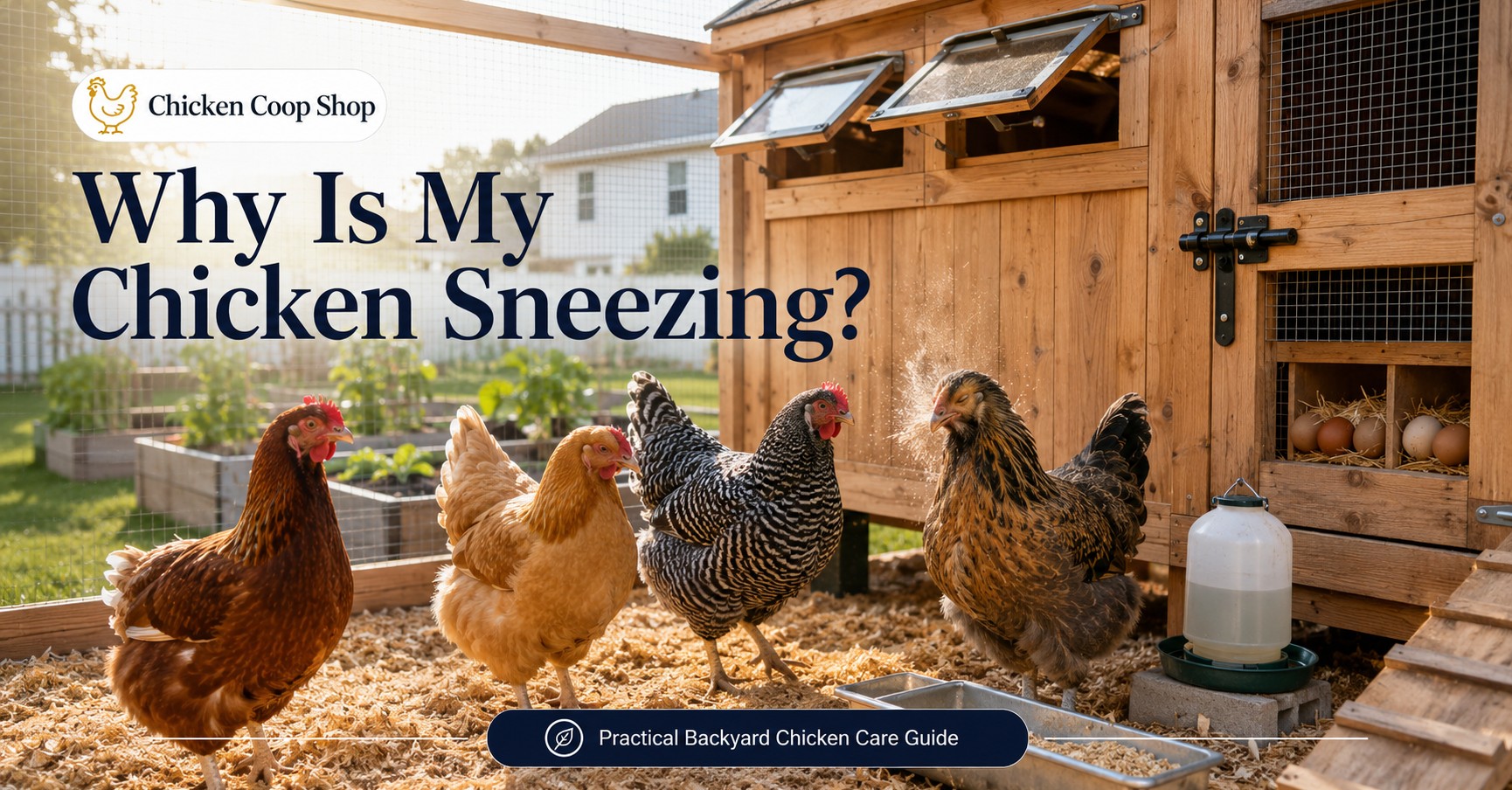
For US backyard chicken owners, this matters because most small flocks spend a lot of time in coops, covered runs, nesting boxes, and bedding areas. A little dust may be harmless, but wet bedding, ammonia smell, cold damp air, and poor ventilation can make a mild sneeze turn into a bigger chicken health concern. The goal is not to panic. The goal is to observe the bird, check the coop, improve the environment, and know when a poultry vet or local extension office should be contacted.
Do Chickens Sneeze?
Yes, chickens can sneeze. A chicken sneeze may sound like a quick puff, a short squeak, or a tiny cough-like burst. Some owners hear it when the flock is scratching in bedding, eating crumble feed, dust bathing, or moving around in a dry coop. So if you are asking, “do chickens sneeze?” or “can chickens sneeze?” the answer is yes.
Chickens use their respiratory system differently than people do, but their airways can still react to irritants. Dust, tiny bedding particles, feed powder, pollen, moldy litter, ammonia, and sudden air changes can irritate the nose and throat. A single sneeze from an otherwise active hen does not automatically mean disease.
The important part is the full picture. A happy chicken that sneezes once, then keeps scratching, eating, drinking, dust bathing, and laying normally is very different from a chicken that sneezes repeatedly, wheezes, looks sleepy, has watery eyes, or avoids the feeder.
Is Chicken Sneezing Normal?
Chicken sneezing can be normal in small amounts, especially in dusty situations. If you just added fresh bedding, poured feed into a feeder, cleaned the coop, opened a dusty storage bag, or let the flock scratch through dry litter, a few sneezes may happen. Hens sneezing after dust bathing can also happen because fine particles get stirred into the air.
However, “normal” should not become an excuse to ignore repeated sneezing. If several chickens are sneezing, the coop smells sharp, the bedding is damp, or the birds are spending nights in stale air, the environment needs improvement. Backyard chicken care is mostly prevention: clean bedding, dry floors, good ventilation, safe waterers, fresh feed, predator protection, and daily observation.
Beginner tip: Do not judge sneezing by sound alone. Check behavior, breathing, eyes, nostrils, droppings, appetite, egg laying, and whether more than one bird is affected.
Common Causes of Chicken Sneezing
The most common reasons for chickens sneezing are environmental. A backyard coop is a small space where bedding, droppings, moisture, feed dust, feathers, and seasonal weather all interact. When the air inside the coop gets dusty or damp, the flock may show irritation before the owner notices the problem.
Common causes include dusty bedding, poor coop ventilation, ammonia buildup from wet litter, cold drafts hitting roosting birds, quick temperature swings, moldy bedding, feed dust, pollen, smoke from nearby fires, and respiratory infections. Chicks sneezing may also happen when brooder bedding is dusty, the heat source is poorly managed, or the brooder lacks fresh air.
When someone says, “my chicken is sneezing,” the best first step is to separate simple irritants from illness signs. Look at the bird’s energy level. Listen for wheezing. Check the nostrils. Look for eye bubbles or swelling. Smell the coop at chicken head height. Touch the bedding under the roosts and around the waterer. These basic checks often reveal the cause.
Dusty Bedding or Dusty Coop
Dusty bedding is one of the easiest causes to overlook. Pine shavings, straw, hay, sand, dry leaves, and old deep litter can all create airborne particles. Dust becomes worse when bedding is too dry, broken down into powder, mixed with droppings, or left too long under roosting bars.
If chicken sneezing increases right after you add bedding, rake the coop, or clean nesting boxes, dust is a strong possibility. Feed dust can do the same thing. Crumble feed often leaves fine powder at the bottom of the feeder, and birds may sneeze while pecking through it.
A clean coop does not mean a sterile coop. Chickens naturally scratch, shed feathers, and stir bedding. But the coop should not create a visible dust cloud every time you step inside. If the air feels dusty to your nose or throat, it is probably irritating your flock too.
What to do about dusty bedding
- Remove broken-down, powdery bedding instead of just adding more on top.
- Use low-dust pine shavings or properly selected sand for chicken coop bedding where appropriate.
- Keep waterers from leaking into bedding, but do not let litter become powder-dry and stale.
- Clean nesting boxes regularly so hens are not breathing dusty material while laying eggs.
- Store bedding in a dry place so it does not become moldy or musty.
Poor Ventilation in the Coop
Poor ventilation is a major reason for sneezing chickens, especially in fall and winter. Many beginners try to keep chickens warm by sealing every crack in the coop. That often creates a damp, stale environment. Chickens need protection from direct drafts, but they also need fresh air moving above roost level.
Good coop ventilation removes moisture from breathing and droppings, reduces ammonia buildup, helps bedding stay dry, and keeps air fresher overnight. A well-designed chicken coop usually has high vents near the roofline, covered openings with hardware cloth, and enough airflow to prevent condensation without blasting cold air directly onto roosting birds.
One common mistake is confusing ventilation with drafts. Ventilation is controlled air exchange, usually above the birds. A draft is cold air blowing directly on chickens while they sleep. You want ventilation, not a wind tunnel. If the coop windows are always shut, the air smells stale, or condensation forms on the walls, the birds may start sneezing because the air quality is poor.
Ammonia Smell in the Coop
Ammonia smell in a chicken coop is a serious environmental warning sign. It usually comes from droppings breaking down in damp bedding. The smell may be strongest under roosts, around waterers, in corners with poor airflow, or in deep litter that has become too wet.
If your eyes, nose, or throat react when you enter the coop, the birds are dealing with it at a much lower height for much longer. The ammonia smell in chicken coop situations should be corrected quickly because ammonia can irritate the respiratory system and make sneezing worse.
Do not try to cover ammonia with fragrances, sprays, or scented products. Chickens have sensitive respiratory systems, and perfumes can add more irritation. Fix the source: wet bedding, too many droppings, poor airflow, leaking waterers, overcrowding, and missed cleaning.
Quick ammonia fixes
- Remove wet bedding, especially under roosting bars.
- Check waterers for leaks and place them on a stable base.
- Improve airflow above bird level.
- Add fresh, dry bedding after removing the damp material.
- Follow a consistent clean chicken coop routine so the smell does not return.
Weather and Temperature Changes
Weather changes can trigger mild chicken sneezing. In many parts of the United States, backyard flocks deal with spring pollen, humid summers, dry dusty fall weather, and cold winter nights. Sudden swings between warm days and cold nights can increase moisture inside a coop, especially when owners close vents too tightly at night.
Cold weather itself is not always the problem. Chickens handle cold better than many beginners expect when they are dry, protected from wind, and able to roost in a ventilated coop. The bigger problem is damp, trapped air. Moisture from droppings and breathing can build up overnight, especially in small coops with limited roof vents.
In hot weather, poor ventilation can also create stress. Stagnant air, wet bedding, and dirty waterers can make the coop uncomfortable. A sneezing flock in summer may be reacting to dust, pollen, mold, or stale air. Seasonal chicken care should focus on dry bedding, shade, safe airflow, clean water, and regular observation.
Respiratory Infection Warning Signs
Sometimes chicken sneezing is more than dust. Respiratory infections can spread through a backyard flock, especially when new birds are introduced without quarantine, wild birds have access to feed or water, or stress weakens flock health. You do not need to diagnose the disease yourself, but you do need to recognize when the situation is beyond basic coop cleanup.
Warning signs include repeated sneezing, coughing sounds, wheezing, rattly breathing, open-mouth breathing, nasal discharge, bubbles near the eyes, swollen eyelids, facial swelling, low energy, reduced appetite, unusual droppings, and a sudden drop in egg laying. If multiple chickens are showing symptoms, act quickly.
Move the affected bird to a calm, clean, well-ventilated isolation area where you can monitor food, water, droppings, and breathing. Keep the bird safe from predators and temperature extremes. Do not randomly mix medications, antibiotics, essential oils, or home remedies. Contact a poultry vet, avian vet, or local extension office for guidance, especially if symptoms are severe or spreading.
Safety note: If your chicken is sneezing and wheezing, breathing with an open beak, sitting fluffed up, not eating, or showing eye or nasal discharge, treat it as a serious health concern and seek professional poultry guidance.
Sneezing With Wheezing
“My chicken is sneezing and wheezing” is more concerning than a simple sneeze. Wheezing suggests the bird may be struggling with airway irritation, mucus, infection, severe dust exposure, or another respiratory problem. A wheeze may sound like a whistle, rattle, squeak, or wet breathing noise.
Start by looking at the bird from a short distance. Is the tail bobbing with each breath? Is the beak open? Is the bird standing away from the flock? Are the eyes bright or dull? Is there discharge around the nostrils? Is the comb color normal? These observations help you explain the situation clearly when contacting a vet or extension office.
While waiting for professional advice, improve the environment. Provide fresh water, remove dusty bedding, keep the bird warm but not overheated, and make sure the isolation space has clean air. Avoid strong-smelling cleaners, sprays, candles, smoke, and scented bedding. Do not force liquids into the bird’s beak because aspiration can make breathing problems worse.
Sneezing Chicks vs Adult Hens
Chicks sneezing should be watched closely because young birds are more delicate than adult hens. In a brooder, common triggers include dusty bedding, overheated conditions, poor ventilation, damp litter, spilled water, or feed dust. Chicks spend their time close to the floor, so bedding quality matters a lot.
A few quick sneezes after scratching in bedding may not be serious, but repeated sneezing in chicks should not be ignored. Check brooder temperature, bedding moisture, waterer leaks, and whether the chicks are crowding, panting, or avoiding the heat source. A brooder should be warm enough for comfort but not so sealed that air becomes stale.
Adult hens sneezing often points to coop air quality, dust bathing areas, ammonia, weather shifts, or exposure to a sick bird. Adult birds may hide illness longer, so changes in behavior matter. If a usually active laying hen becomes quiet, stops eating, avoids the flock, or reduces egg laying while sneezing, take it seriously.
What Backyard Owners Should Check First
When you notice chickens sneezing, do not start with panic or random treatments. Start with a simple inspection. Most backyard owners can learn a lot in ten minutes by checking the bird, the coop, the bedding, and the flock pattern.
Step 1: Watch the chicken before handling
Observe from a distance. A bird that runs to treats, scratches, drinks, and stays with the flock is less concerning than a bird sitting alone with fluffed feathers. Look for repeated sneezing, wheezing, head shaking, discharge, swelling, or open-mouth breathing.
Step 2: Check the coop air
Smell the coop near the floor, near roosts, and around wet areas. Check for ammonia, musty odor, moldy bedding, and damp corners. Look for condensation on windows or walls. If the coop smells bad, fix the air and bedding before blaming the bird.
Step 3: Check bedding and waterers
Dig under the top layer of bedding. Sometimes the surface looks dry while the lower layer is wet. Check under roost bars and around waterers first. Wet bedding plus droppings is one of the fastest ways to create odor and irritation.
Step 4: Check the rest of the flock
If only one chicken sneezes once, monitor it. If several hens are sneezing, the coop environment or a contagious issue may be involved. Also check new birds, recent show birds, borrowed equipment, and wild bird access to feeders and waterers.
Step 5: Decide whether to isolate
Isolation is helpful when a bird has repeated symptoms, wheezing, discharge, low energy, or trouble breathing. Use a clean, calm area with good ventilation and predator safety. Isolation is not punishment; it helps you monitor the bird and protect the flock while you seek guidance.
Practical Troubleshooting Tables
The tables below are designed for quick backyard use. They do not replace a poultry vet, but they can help you sort common causes, immediate checks, and practical next steps.
| Situation | Possible Cause | What to Check | Practical Next Step |
|---|---|---|---|
| One hen sneezes after dust bathing | Dust irritation | Dust bath area, dry soil, loose bedding | Monitor the hen and reduce excess dust if sneezing continues |
| Several hens sneezing in the coop | Poor air quality | Ventilation, ammonia, damp bedding, feeder dust | Clean wet litter and improve airflow above roost level |
| Sneezing with sharp coop odor | Ammonia buildup | Under roosts, waterer leaks, deep litter moisture | Remove wet bedding and restart with dry material |
| Sneezing with wheezing | Respiratory irritation or illness | Breathing sound, nostrils, eyes, appetite, energy | Isolate, observe, and contact a poultry vet or extension office |
| Chicks sneezing in brooder | Dust, damp bedding, poor brooder airflow | Brooder bedding, temperature, waterer spills | Replace dusty or wet bedding and adjust brooder setup |
| Maintenance Task | How Often to Check | Why It Matters | Beginner Tip |
|---|---|---|---|
| Smell-test the coop | Daily or every visit | Bad odor may warn of ammonia or wet bedding | Smell near roost height and floor level |
| Inspect waterers | Daily | Leaks create damp litter and respiratory irritation | Set waterers on a stable block or platform |
| Clean under roosts | Several times weekly or as needed | Droppings collect fastest under sleeping areas | Use droppings boards if your coop design allows |
| Refresh nesting boxes | Weekly or when soiled | Hens spend time breathing close to nesting material | Keep boxes dry, calm, and clean for egg laying |
| Check vents and windows | Seasonally and after storms | Fresh air reduces moisture and stale air | Vent above birds, not directly across sleeping birds |
My Practical Recommendation
If a backyard owner asks me what to do first when chickens are sneezing, I recommend starting with the environment before jumping to treatment. Check dust, wet bedding, ammonia, ventilation, waterer leaks, and feed dust. These are common, fixable, and important for the whole flock.
Next, watch the bird’s behavior. A chicken that sneezes once but acts normal can usually be monitored while you improve the coop. A chicken that sneezes repeatedly, wheezes, has discharge, or looks weak needs faster action. Separate the bird in a safe, clean space and contact a poultry vet or local extension office.
Long term, build your routine around prevention. Keep bedding dry, provide high ventilation, avoid overcrowding, quarantine new birds, protect feed and water from wild birds, and learn normal flock behavior. Many chicken behavior problems and health concerns are easier to handle when you notice small changes early.
FAQ
1. Why is my chicken sneezing but acting normal?
If your chicken is sneezing but acting normal, the cause may be dust, feed powder, dry bedding, pollen, or a temporary irritant. Watch whether the sneezing happens during dust bathing, feeding, or after you add bedding. Check the coop for ammonia smell, damp litter, and poor airflow. If the bird keeps eating, drinking, scratching, and staying active, monitor closely while improving the environment. If sneezing becomes frequent or other symptoms appear, contact a poultry vet or local extension office.
2. Do chickens sneeze like humans?
Chickens can sneeze, but it may not sound exactly like a human sneeze. It can be a quick puff, chirp, squeak, or short cough-like sound. The meaning depends on context. A single chicken sneeze after scratching in dry bedding may be simple irritation. Repeated sneezing, especially with wheezing, discharge, swelling, or low energy, is more concerning. Listen carefully, observe behavior, and check the coop environment before deciding what to do next.
3. Can dusty bedding make chickens sneeze?
Yes, dusty bedding can make chickens sneeze. Old pine shavings, fine feed particles, dry litter, straw dust, and broken-down bedding can irritate a chicken’s respiratory system. Dust is often worse when the coop is too dry, poorly ventilated, or overdue for cleaning. Replace powdery bedding, keep nesting boxes fresh, and avoid stirring up dust while birds are inside. Choose bedding that fits your coop style, climate, cleaning routine, and flock size.
4. Is sneezing with wheezing an emergency?
Sneezing with wheezing should be treated as a serious warning sign, especially if the bird is breathing with an open beak, sitting fluffed up, has nasal discharge, or is not eating. It may be irritation, but it may also involve a respiratory illness. Move the bird to a clean, calm isolation area, provide fresh water, avoid dusty bedding, and contact a poultry vet or local extension office. Do not guess with random medications or strong home remedies.
5. Why are my chicks sneezing in the brooder?
Chicks sneezing in a brooder may be reacting to dusty bedding, feed dust, damp litter, waterer spills, poor airflow, or incorrect temperature. Chicks are small and spend their time close to bedding, so air quality matters. Replace dusty or wet bedding, check brooder heat, clean the waterer area, and make sure the brooder has fresh air without chilling the chicks. If chicks are weak, gasping, huddled, or not eating, seek poultry guidance quickly.
6. Can ammonia smell in the coop cause sneezing?
Ammonia smell can irritate chickens and may contribute to sneezing or other respiratory stress. It usually comes from droppings breaking down in wet bedding, especially under roosts or near leaking waterers. If you smell ammonia, remove damp bedding, improve ventilation, fix water leaks, and refresh the coop with dry material. Do not cover the smell with fragrance. The source needs to be removed so the flock can breathe cleaner air.
7. Should I isolate a sneezing chicken?
You may not need to isolate a chicken that sneezes once and acts completely normal. However, isolation is wise if sneezing is repeated, the bird is wheezing, has discharge, looks sleepy, stops eating, or separates from the flock. Isolation helps you observe food, water, droppings, and breathing while reducing risk to other birds. The space should be clean, calm, predator-safe, and well ventilated. Contact a poultry vet if symptoms are serious or spreading.
8. Can weather changes make hens sneeze?
Weather changes can contribute to hens sneezing, especially when temperature swings cause moisture and stale air inside the coop. Spring pollen, dry dusty summers, damp fall nights, and tightly closed winter coops can all irritate birds. The best protection is a dry coop with ventilation above roost level, clean bedding, fresh water, and protection from direct drafts. Focus on keeping birds dry and comfortable rather than sealing the coop too tightly.
9. What should I avoid when my chicken is sneezing?
Avoid strong sprays, scented cleaners, candles, smoke, dusty bedding, and random treatments. Do not force liquids into the beak, and do not use antibiotics or medications without proper guidance. Also avoid ignoring the coop environment. Many sneezing problems start with dust, damp bedding, ammonia, or poor ventilation. Clean first, observe carefully, and seek professional poultry advice when symptoms include wheezing, discharge, swelling, low energy, or appetite loss.
10. When should I contact a poultry vet?
Contact a poultry vet, avian vet, or local extension office if your chicken is sneezing repeatedly, wheezing, breathing with an open beak, showing eye or nasal discharge, has facial swelling, stops eating, becomes weak, or if multiple birds are affected. Also seek help if symptoms continue after improving bedding, ventilation, and coop cleanliness. A professional can help you decide whether testing, treatment, quarantine, or flock management changes are needed.
Final Checklist
- Watch the sneezing chicken for energy, appetite, breathing, and flock behavior.
- Check whether sneezing happens during feeding, dust bathing, bedding changes, or cleaning.
- Smell the coop for ammonia, especially under roosts and near damp bedding.
- Remove wet, moldy, or powdery bedding and replace it with clean, dry material.
- Improve ventilation above roost level without creating a direct cold draft.
- Inspect waterers for leaks and keep bedding dry around drinking areas.
- Check the rest of the flock for sneezing, wheezing, discharge, or low energy.
- Isolate birds with repeated sneezing, wheezing, discharge, weakness, or appetite loss.
- Avoid scented sprays, harsh fumes, and random medications without poultry guidance.
- Contact a poultry vet or local extension office if symptoms are serious, spreading, or not improving.