
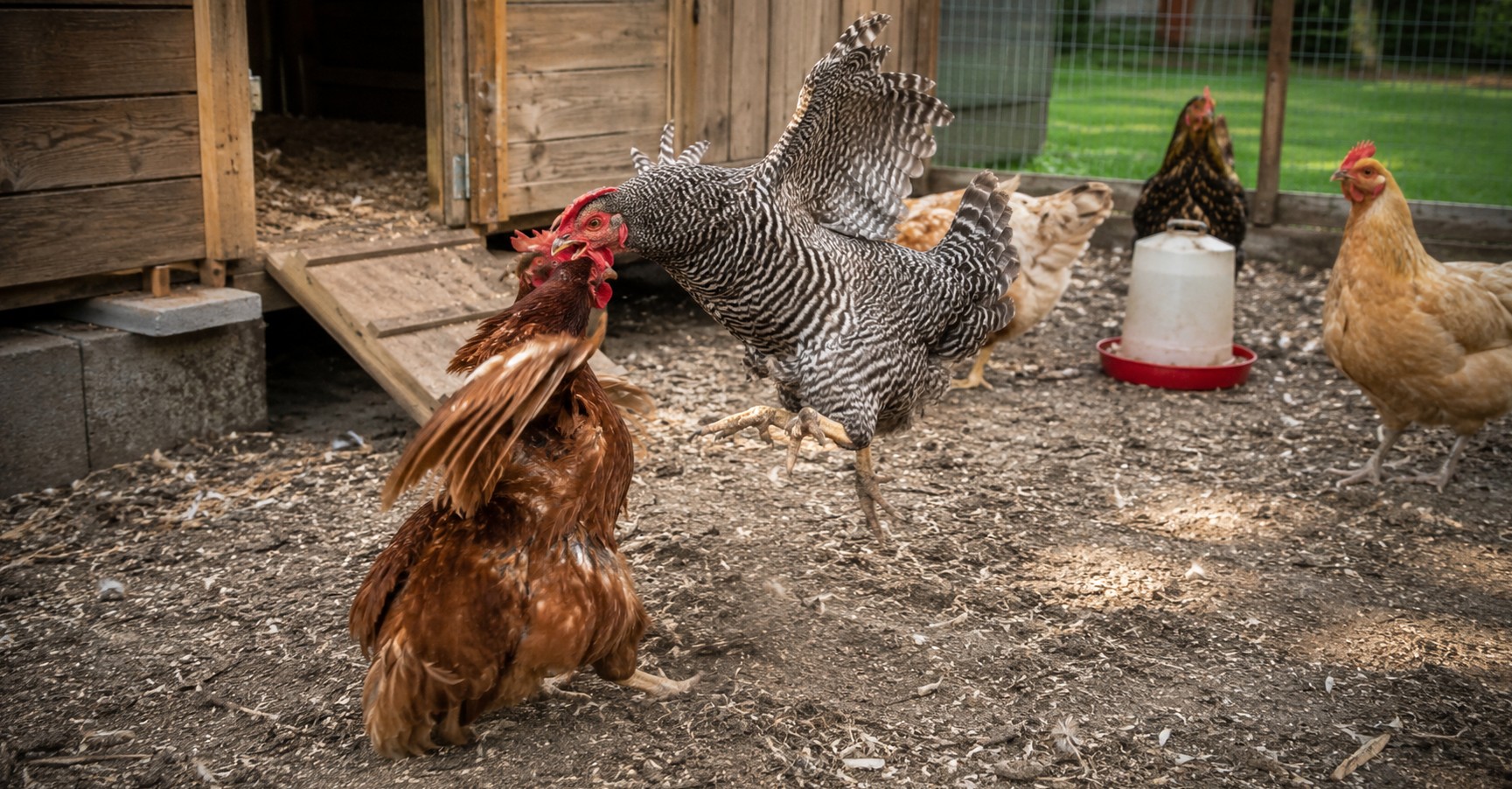
Why Are My Chickens Pecking Each Other? Chicken Behavior Problems and Practical Fixes
Backyard chickens can be peaceful, funny, and surprisingly social, but they can also confuse new owners with sudden pecking, chasing, loud calling, feather pulling, egg eating, bullying, and rooster aggression. One day the flock looks calm, and the next day one hen is hiding in the corner while another guards the feeder. If you are dealing with Chicken Behavior Problems, the first step is understanding what is normal flock behavior and what needs quick attention.
Chickens have a natural pecking order. They use body language, small pecks, chasing, and posturing to decide who gets first access to food, nesting boxes, dust baths, roosts, and safe spaces. Some of that is normal. But when pecking becomes constant, feathers are pulled, a bird is kept away from food, blood appears, eggs are being eaten, or a rooster becomes unsafe around people, the flock needs help.
This guide explains why chickens peck each other, how to stop chickens from fighting, what causes loud chickens, how to handle an aggressive rooster, why chickens pull feathers, why chickens eat their eggs, and how to calm down a stressed backyard flock in a practical, beginner-friendly way.
Quick Answer Box
Most chicken behavior problems come from overcrowding, boredom, stress, poor coop layout, limited feeders or waterers, new flock introductions, predator pressure, heat stress, illness, molting, poor nutrition, or nesting box issues. To reduce pecking and fighting, give chickens more space, add extra feeders and waterers, improve run enrichment, check for mites or injuries, separate badly bullied birds, and avoid sudden flock changes. Loud chickens may be calling after laying, warning about danger, asking for food, or reacting to stress. Chickens eating eggs often need cleaner nesting boxes, faster egg collection, better calcium support, and less boredom. An aggressive rooster needs careful management and should never be allowed to threaten children. Good Chicken Behavior Problems solutions start with the environment: space, feed, water, bedding, coop ventilation, predator protection, nesting comfort, and daily observation.
Table of Contents
- What Chicken Behavior Problems Really Mean
- Normal Pecking Order vs Real Bullying
- Why Are My Chickens Pecking Each Other?
- How to Stop Chickens From Fighting
- Aggressive Rooster Behavior Solutions
- Why Is My Chicken So Loud?
- How to Stop Bullying in Chickens
- Why Are Chickens Pulling Feathers?
- Chicken Stress Symptoms and Fixes
- Why Are Chickens Eating Their Eggs?
- How to Calm Down Aggressive Chickens
- Step-by-Step Plan to Fix Flock Behavior Problems
- Best Tools, Materials, and Products to Help
- Problem, Cause, and Solution Table
- Common Mistakes to Avoid
- Seasonal Chicken Behavior Tips
- Long-Term Prevention for a Calm Flock
- My Practical Recommendation
- Frequently Asked Questions
- Final Checklist
- Conclusion
What Chicken Behavior Problems Really Mean
Chicken behavior problems are usually not random. Chickens do things for a reason, even when the behavior looks strange or annoying to us. A hen pecks another hen because she is guarding food, protecting her rank, reacting to stress, noticing a bare patch, or dealing with crowding. A rooster charges because he feels protective, hormonal, threatened, or poorly managed. A loud hen may be announcing an egg, warning the flock, calling for a flockmate, or complaining about a closed coop door.
Understanding behavior does not mean allowing bad behavior to continue. It means fixing the cause instead of only reacting to the symptom. Backyard flocks are small social groups. Every bird has a place in the pecking order. When that order is stable, the flock usually moves smoothly. When something changes, behavior can become rougher. New birds, sudden weather shifts, predators, heat stress, low feed access, limited nesting boxes, and illness can all disrupt the flock.
Good Chicken Behavior Problems management starts with daily observation. A quick look tells you a lot. Are all birds eating? Is one hen hiding? Are feathers missing from one area? Is one bird guarding the feeder? Are eggs broken in the nesting box? Is the rooster watching people too closely? Is the flock nervous after dark? These clues point toward the right solution.
Behavior also connects to coop design. A cramped coop with poor ventilation, damp bedding, limited roost space, and one small feeder will create more conflict than a clean, well-planned setup. Chickens need room to move, scratch, dust bathe, eat, drink, lay eggs, and avoid each other. A calm flock is usually built through good housing, not luck.
Normal Pecking Order vs Real Bullying
The pecking order is the natural social ranking system chickens use. It determines which birds eat first, choose favorite roost spots, enter nesting boxes first, or move others away from treats. A little chasing, brief pecking, or posturing can be normal, especially when a flock is new or when new birds are introduced.
Real bullying is different. Bullying is repeated, harmful, or prevents a bird from living normally. A bullied chicken may hide all day, avoid feeders, lose feathers, stop laying, become thin, or show injuries. If one bird is constantly attacked and cannot escape, the owner needs to step in.
Normal pecking order behavior
- Brief pecks around food or treats
- Short chasing that ends quickly
- Dominant hens choosing roost spots first
- Small arguments after new birds are added
- Posturing without ongoing injury
- Flock settling after a few days of adjustment
Signs of real bullying
- One chicken is chased every time she tries to eat or drink
- A bird hides constantly in the coop, corner, or nesting box
- Feathers are pulled repeatedly from the same bird
- There are wounds or bleeding spots
- The bullied bird is losing weight or looks weak
- Several hens gang up on one chicken
- A chicken is blocked from roosting at night
Blood changes the urgency. Chickens are attracted to red spots and may continue pecking an injury. If a bird is bleeding or injured, separate her safely, keep her calm, and contact a poultry vet or local extension office if the wound is serious or you are unsure how to treat it.
Do not assume the lowest-ranking hen is always the problem. Sometimes the setup is the problem. If there is only one feeder, one waterer, one narrow doorway, or one favorite nesting box, dominant birds can control resources. Adding more access points often reduces conflict quickly.
Why Are My Chickens Pecking Each Other?
Chickens peck each other for many reasons. Some pecking is normal communication. Serious Pecking issues usually come from stress, crowding, boredom, nutrition gaps, parasites, injury, heat, or flock disruption.
Overcrowding
Overcrowding is one of the biggest causes of chickens fighting and feather pulling. When birds do not have enough space, they cannot avoid each other. Small conflicts happen more often. Bedding gets dirty faster. Moisture builds up. Feeders and waterers become crowded. Even calm breeds can become cranky in a tight setup.
If pecking gets worse during rainy weather, winter confinement, or long periods when chickens stay inside, crowding may be part of the problem. Chickens need usable space, not just theoretical space listed on a coop label.
Boredom
Chickens are active foragers. They like to scratch, explore, dust bathe, peck at leaves, chase bugs, and investigate changes in the run. If they are kept in a bare run with nothing to do, they may start pecking each other out of boredom.
Simple enrichment can help. Add dry leaves, straw piles, hanging greens, logs, roost branches, dust bath areas, or safe objects to explore. Do not overcrowd the run with clutter, but give the flock activities besides staring at each other.
Limited feed or water access
If one dominant hen guards the feeder, lower-ranking birds may get stressed and hungry. The same thing can happen with water. A simple fix is adding a second feeder and waterer in a separate spot. This gives timid birds a chance to eat and drink without confrontation.
Nutrition issues
Feather pecking can be linked to poor diet, too many treats, low protein during molt, or lack of balanced feed. Laying hens need complete feed, clean water, calcium support, and grit if they eat forage or treats. Scratch grains and kitchen scraps should not replace balanced feed.
Parasites or skin irritation
Mites, lice, and skin irritation can cause birds to preen, scratch, or appear rough. Other chickens may peck irritated areas. Check around the vent, under wings, near the neck, and along feather shafts. Also inspect roost cracks and coop corners because some mites hide in the coop and feed at night.
Injuries or bare spots
Chickens notice unusual areas on another bird. A small bare patch, broken feather, or red spot can attract pecking. This is why injuries should be handled quickly. If a bird has a visible wound, separate her until protected and recovering.
New bird introductions
Adding new chickens can upset the pecking order. If you place new birds directly into the flock without a gradual introduction, fighting may be intense. A look-but-do-not-touch setup often works better. Birds can see each other through fencing before sharing the same space.
Heat and seasonal stress
Hot chickens are less patient. During summer heat, hens may eat less, drink more, crowd into shade, and become irritable. Winter confinement can also increase pecking because birds spend more time in a smaller area. Seasonal chicken care helps reduce behavior problems.
How to Stop Chickens From Fighting
To stop chickens from fighting, start by finding the cause. Do not only chase birds apart and hope the problem disappears. Fighting usually means something in the flock dynamic or environment needs adjusting.
Step 1: Identify who is fighting
Watch quietly for a few minutes. Is one hen bullying everyone? Are two birds challenging each other? Are several hens attacking one weaker bird? Is the rooster causing chaos? Are fights happening around food, nesting boxes, roosts, treats, or the doorway?
The location of the fight is a clue.
Step 2: Add space where possible
More usable space is one of the best fixes for Chickens fighting. If you cannot expand the coop, improve the run. If you cannot expand the run, add vertical space, perches, visual barriers, and separate feeding spots. Chickens need places to escape the line of sight of a bully.
Step 3: Add more feeders and waterers
One feeder may not be enough if dominant birds guard it. Place a second feeder far enough away that one hen cannot guard both at once. Do the same with water. This is especially helpful for small yard chicken raising, mixed-age flocks, and new introductions.
Step 4: Remove high-value treats temporarily
Treats can trigger fights. If chickens fight over mealworms, scratch, or kitchen scraps, stop offering those treats for a while. When you reintroduce treats, scatter them widely instead of dumping them in one pile.
Step 5: Separate injured or severely bullied birds
If a bird is injured, bleeding, weak, or unable to eat, separate her safely. Separation should not mean isolation in a stressful place with no food or water. Use a dog crate, small pen, or protected section where she can rest and still see the flock if possible. This helps with reintegration later.
Step 6: Reintroduce carefully
Do not simply throw a recovered bird back into the flock and hope for the best. Use a see-through barrier for a few days if needed. Reintroduce during calm periods, not during treat time or bedtime chaos.
Step 7: Evaluate whether one bird is unsafe
Most flock conflict can be improved, but sometimes one bird is repeatedly harmful. If a hen constantly injures others despite space, feed access, and management changes, she may need a separate setup or rehoming. Safety matters.
Aggressive Rooster Behavior Solutions
An Aggressive rooster can become a serious problem, especially in a family backyard. Roosters may chase, flog, bite, jump, or guard hens from people. Some roosters are calm and respectful. Others become difficult as they mature.
Rooster behavior is influenced by hormones, breed, handling, flock size, genetics, and environment. A rooster may become more protective during breeding season, when hens are stressed, or when people move quickly around the flock. However, protective behavior does not excuse dangerous behavior toward children or visitors.
Signs rooster behavior is becoming a problem
- He stalks people around the yard.
- He drops a wing and circles before charging.
- He jumps at legs or feet.
- He attacks when your back is turned.
- Children are afraid to enter the yard.
- He injures hens by overmating or rough behavior.
- He blocks access to feeders, nest boxes, or the coop.
Practical rooster management
First, make sure you are allowed to keep a rooster. Many urban and suburban areas ban roosters because of noise. If roosters are allowed, manage them carefully. Wear boots and long pants when entering the run. Move calmly and confidently. Do not tease, chase, or kick at the rooster. Do not let children handle an aggressive rooster.
Some owners use a separate rooster pen when needed. Others rehome or remove a rooster that is not safe. A backyard rooster should not make daily chicken care dangerous. If you cannot collect eggs, refill water, or let children safely use the yard, the rooster is no longer working for your setup.
Rooster-to-hen ratio
Too few hens with one rooster can lead to overmating, feather loss, stress, and injured hens. A rooster that is rough with hens may need separation. Watch for missing back feathers, nervous hens, and hens hiding from him.
Rooster decisions can be emotional. But safety comes first. A calm flock of hens is better than a stressful flock with a rooster that threatens people or harms hens.
Why Is My Chicken So Loud?
Loud chickens can surprise new backyard owners. Hens are usually quieter than roosters, but they are not silent. They cluck, chatter, call, complain, announce eggs, warn about predators, and sometimes yell because they want something.
Common reasons chickens get loud
- Egg song: Some hens call loudly after laying an egg.
- Predator alarm: The flock may warn about hawks, dogs, cats, raccoons, or strange movement.
- Food expectations: Chickens may call when they see you coming with treats.
- Locked out or stuck: A hen may complain if she cannot access the coop or favorite nesting box.
- Separation call: A bird separated from the flock may call loudly.
- Broody behavior: Broody hens may growl, cluck, or protest when moved.
- Stress: Overcrowding, heat, predators, or bullying can increase noise.
To reduce loud chicken behavior, first identify when it happens. Morning noise may be laying-related. Sudden sharp calls may be predator alarms. Repeated yelling near the coop door may mean a blocked access point. Noise around feeding time may be a learned routine.
How to manage noise in suburban or urban yards
- Do not keep roosters if noise is a concern or rules do not allow them.
- Open the coop at a consistent time so hens are not yelling to be let out.
- Keep nesting boxes accessible and comfortable.
- Reduce predator pressure with secure fencing and covered runs.
- Avoid creating a treat-demand habit every time you step outside.
- Keep the flock small enough for the space.
- Choose calmer breeds for close-neighbor situations.
You cannot make chickens completely silent, but you can reduce stress noise and avoid preventable complaints. A calm, well-fed, secure flock is usually quieter than a crowded or nervous one.
How to Stop Bullying in Chickens
Chickens bullying others is different from normal pecking order behavior. Bullying is repeated and harmful. It may involve chasing, feather pulling, blocking food, attacking one bird, or forcing a hen to hide.
Find the bullying pattern
Watch the flock during feeding, dust bathing, roosting, and nesting. Notice whether the bully attacks at a specific time.
Give the victim escape routes
A bullied bird needs places to get away. Add visual barriers, small shelters, branches, pallets, or separate run zones. A bully is less effective if she cannot see and chase the same bird constantly.
Add more resources
Bullying often increases when resources are limited. Add more feeder space, water stations, nesting options, and roost room. Make sure lower-ranking hens can access everything they need.
Use temporary separation wisely
Sometimes removing the bully for a few days can reset the pecking order. The removed bird should have food, water, shade, shelter, and safety. When she returns, the flock may not give her the same control. This does not always work, but it can help in some cases.
Do not ignore injuries
If bullying causes wounds, separate the injured bird and treat the situation seriously. Chickens may peck wounds repeatedly. Serious injuries need guidance from a poultry vet or extension office.
Bullying often improves when the environment improves. More space, more resources, better enrichment, and calmer introductions are the foundation.
Why Are Chickens Pulling Feathers?
Feather pulling can happen for several reasons. Sometimes it is part of mating, molting, or normal wear. Other times it points to stress, crowding, parasites, boredom, poor nutrition, or bullying.
Common causes of feather pulling
- Overcrowding in the coop or run
- Low protein or too many treats
- Molting and feather regrowth
- Mites or lice causing irritation
- Boredom in a bare run
- Rooster overmating
- Bullying from dominant hens
- Skin redness or broken feathers attracting pecks
Look at where feathers are missing. Back feathers may suggest rooster mating or hens pecking from above. Vent feathers may suggest parasites, egg-laying irritation, or pecking. Neck feathers may suggest bullying or molt. Random feather loss all over the body may be molting.
How to reduce feather pulling
- Inspect birds for mites and lice.
- Review diet and reduce low-nutrition treats.
- Provide more run enrichment.
- Add space or reduce flock density.
- Separate injured birds until healed.
- Manage rough roosters or separate them if needed.
- Improve bedding, dust bath access, and coop cleanliness.
During molt, be gentle with birds. Pin feathers are sensitive. Do not handle molting hens roughly, and do not assume every feather pile is from fighting. But if feather loss comes with wounds, constant pecking, or one bird being targeted, step in.
Chicken Stress Symptoms and Fixes
Chicken stress symptoms can show up as behavior changes, egg-laying changes, feather problems, noise, hiding, or aggression. Stress does not always look dramatic. Sometimes the first sign is a quieter flock, fewer eggs, or one bird avoiding the group.
Common chicken stress symptoms
- Reduced egg laying
- More pecking or fighting
- Hiding or avoiding the flock
- Feather pulling or feather loss
- Loud alarm calling
- Pacing along the fence
- Less eating or drinking
- Dirty eggs from disturbed nesting routines
- Roosting in unusual places
- Increased fear around people or pets
Common stress triggers
- Predators near the coop
- Heat stress or cold stress
- New birds added too quickly
- Overcrowding
- Poor ventilation or ammonia smell
- Damp bedding
- Feed or water competition
- Bullying
- Sudden coop changes
- Illness or parasites
Fixing stress usually means improving the whole environment. Check water, feed, bedding, ventilation, space, predator protection, and flock health. If one bird seems sick, weak, injured, not eating, breathing strangely, swollen, or unable to act normally, contact a poultry vet or local extension office. Serious illness should not be treated as simple stress.
Why Are Chickens Eating Their Eggs?
Chickens eating eggs is frustrating, but it usually starts for a reason. A hen may accidentally break an egg, taste it, and learn that eggs are edible. Once the habit starts, other hens may copy it. The goal is to remove the opportunity and fix the cause.
Why egg eating starts
- Thin or weak shells break easily.
- Nesting boxes are too crowded.
- Eggs sit too long before collection.
- Hens are bored and peck at eggs.
- Nesting bedding is too thin.
- Boxes are too bright or stressful.
- Diet lacks calcium or balance.
- Broken eggs are not cleaned quickly.
How to stop egg eating
Collect eggs more often, especially during the time hens usually lay. Add clean, soft nesting bedding. Offer oyster shell separately for calcium support. Make nesting boxes calm and slightly darker. Remove broken eggs immediately. Use ceramic eggs or fake eggs to discourage pecking. Reduce boredom in the run so hens are not looking for entertainment in the nest.
If one hen is clearly the egg eater, you may need to observe and manage her separately. But often the best fix is improving nesting box conditions and collecting eggs before the habit spreads.
Do not encourage egg eating by mistake
If you feed eggshells back to chickens, crush them well and make sure they do not resemble whole eggs. Some owners bake or dry shells first. Never throw broken raw eggs into the run in a way that teaches chickens to peck and eat eggs.
How to Calm Down Aggressive Chickens
Aggressive chickens need calm, consistent management. The solution depends on whether the aggression is from a hen, rooster, new flock conflict, stress, or resource guarding.
Start with the environment
Before blaming one chicken, check the setup. Are birds bored? Are there predators nearby? Is one hen sick? Aggression often decreases when the environment improves.
Reduce competition
Add more feeders, waterers, roosting space, and nesting options. Scatter treats widely or stop treats temporarily. Make sure no bird can control every important resource.
Use visual barriers
Visual barriers help lower-ranking birds escape attention. A simple board, branch pile, small shelter, or divided run area can reduce chasing. Chickens do not always need to run far; they just need a way to break eye contact.
Separate when necessary
If a chicken injures others, separate her temporarily. If a rooster is unsafe, separate him immediately from children and vulnerable people. Long-term decisions may include separate housing or rehoming.
Handle calmly
Do not chase chickens around the yard unless there is an emergency. Chasing increases fear and stress. Move slowly, use routines, and guide birds with barriers or feed when possible.
Calming a flock is not about making chickens passive. It is about reducing stress, preventing injury, and helping natural flock behavior stay within healthy limits.
Step-by-Step Plan to Fix Flock Behavior Problems
When several behavior problems happen at once, use a simple process. Do not change everything randomly. Work through the flock system step by step.
Step 1: Watch before you act
Spend ten quiet minutes observing the flock. Do not bring treats. Do not interrupt unless a bird is being injured. Watch who starts trouble, where it happens, and what triggers it.
Step 2: Check for injuries and illness
Look for wounds, missing feathers, limping, pale combs, mites, lice, weakness, swollen areas, breathing trouble, or birds not eating. A sick or injured chicken can become a target. Serious symptoms deserve professional guidance from a poultry vet or extension office.
Step 3: Check space and layout
Ask whether birds can avoid each other. Is the run bare? Are roosts crowded? Are nesting boxes causing conflict?
Step 4: Add resources
Add another feeder and waterer. Add another dust bath area if possible. Improve roost space. Refresh nesting boxes. Give hens more than one place to be.
Step 5: Improve enrichment
Add scratch areas, dry leaves, straw piles, safe perches, logs, hanging greens, or a covered dust bath. A busy flock is often calmer than a bored flock.
Step 6: Reduce stress triggers
Secure predators, adjust shade, improve ventilation, remove wet bedding, and reduce sudden changes. Stress reduction often improves both noise and fighting.
Step 7: Manage individuals
If one bird is the clear problem, use temporary separation, careful reintroduction, or separate housing. If a rooster is aggressive toward people, prioritize safety.
Step 8: Track progress
Write down what you changed and how the flock responds. Behavior fixes may take several days or weeks. Tracking helps you avoid guessing.
Best Tools, Materials, and Products to Help
You do not need complicated products to solve most behavior problems. Practical flock management tools are usually simple: space, barriers, feed access, water access, nesting comfort, and safety.
| Tool or Material | Best Use | Pros | Notes |
|---|---|---|---|
| Extra feeder | Reducing food guarding | Helps timid hens eat | Place far from the first feeder |
| Extra waterer | Reducing water competition | Important in heat and mixed flocks | Keep clean and shaded |
| Hardware cloth divider | Safe introductions or separation | Lets birds see each other without fighting | Useful for new birds or recovery pens |
| Dog crate or small pen | Temporary isolation | Helps injured or bullied birds rest | Provide food, water, shade, and safety |
| Fake eggs or ceramic eggs | Egg eating and nesting training | Encourages nesting box use | Keep boxes clean too |
| Shade cloth | Heat stress reduction | Helps calm summer flocks | Secure against wind |
| Pine shavings or nesting bedding | Clean nesting boxes and coop comfort | Reduces broken eggs and moisture | Replace wet bedding quickly |
| Perches, logs, and barriers | Run enrichment and escape routes | Reduces boredom and chasing | Keep layout safe and not overcrowded |
Products help only when they match the cause. A fake egg will not fix egg eating if hens have thin shells from poor calcium access. A second feeder will not solve aggression if a rooster is attacking people. Use tools as part of a complete plan.
Problem, Cause, and Solution Table
This table can help you match common backyard chicken behavior problems to practical first steps.
| Problem | Likely Cause | Practical Solution |
|---|---|---|
| Hens pecking one bird repeatedly | Bullying, injury, weakness, pecking order stress | Separate injured bird, add space, add feeders, observe bully |
| Chickens fighting at feeder | Resource competition | Add a second feeder and spread feeding areas apart |
| Feather pulling | Boredom, parasites, low protein, overcrowding, rooster damage | Inspect birds, improve diet, add enrichment, reduce crowding |
| Rooster attacking people | Protective aggression, hormones, poor fit for backyard | Separate, manage carefully, keep children away, consider rehoming |
| Hens suddenly loud | Egg song, predator warning, stress, blocked access | Identify trigger, check predators, nesting boxes, food, and routine |
| Chickens eating eggs | Broken eggs, thin shells, boredom, late collection | Collect eggs often, add nesting bedding, offer oyster shell |
| Bird hiding all day | Bullying, illness, injury, stress | Observe closely, check health, separate if needed |
| Flock restless in coop | Poor ventilation, heat, pests, predators, overcrowding | Check air, bedding, mites, space, and night security |
Common Mistakes to Avoid
Behavior problems can get worse when owners respond in ways that increase stress. Avoid these common mistakes.
Mistake 1: Ignoring early signs
A few missing feathers, one hen hiding, or a sudden increase in noise may be an early warning. Do not wait until there is an injury before checking the setup.
Mistake 2: Adding new birds too quickly
New birds should usually be introduced gradually. A see-through barrier helps birds adjust before sharing space. Sudden introductions can trigger serious fighting.
Mistake 3: Using only one feeder
One feeder can work for a calm small flock, but if bullying appears, add another. Resource competition is easy to fix compared with injuries.
Mistake 4: Keeping an unsafe rooster
Do not keep an aggressive rooster just because he is beautiful or protective. Safety matters, especially around children. A rooster that attacks people may not be suitable for a family backyard.
Mistake 5: Treating boredom with too many snacks
Enrichment is good. Too many treats are not. Use leaves, perches, dust baths, and scratching areas instead of constantly feeding scratch grains or mealworms.
Mistake 6: Forgetting health checks
Behavior changes can be health-related. A bullied bird may be sick. A feather-pulling flock may have mites. A loud hen may be distressed. Check chicken health, not just behavior.
Mistake 7: Overcrowding the flock
Too many chickens in a small coop will create ongoing problems. More birds are not always better. A smaller calm flock is easier and healthier than a crowded flock with constant conflict.
Seasonal Chicken Behavior Tips
Seasonal care affects behavior. A flock that is peaceful in spring may become cranky in summer heat or winter confinement.
Spring
Spring may bring stronger laying, broody hens, predator activity, and new chicks. Broody hens can be defensive around nesting boxes. Predators can make flocks nervous. If you add new birds in spring, use slow introductions.
Summer
Heat can increase irritability. Chickens may crowd into shade and fight over cool areas or water. Provide multiple waterers, deep shade, ventilation, and enough space. Watch for heat stress symptoms such as panting, wings held away from the body, weakness, or reduced eating.
Fall
Molting often happens in fall. Feather loss can make birds sensitive and reduce egg laying. Support protein, avoid rough handling, and reduce stress. Do not mistake every feather pile for fighting, but do check for bullying and parasites.
Winter
Winter confinement can increase pecking. Chickens spend more time in the coop or covered run. Add enrichment, keep bedding dry, maintain ventilation, and make sure feeders and waterers are not creating competition. Frozen water can also increase stress.
Seasonal chicken care is part of good behavior management because comfort affects patience. A flock that is too hot, too crowded, too damp, or too bored is more likely to develop problems.
Long-Term Prevention for a Calm Flock
Long-term prevention is easier than fixing serious behavior problems later. A calm flock starts with good design and steady habits.
Keep flock size realistic
Do not keep more birds than your coop and run can comfortably handle. Space reduces stress, moisture, bullying, and disease pressure. A small well-managed flock is better than a large frustrated flock.
Build flexible spaces
A good backyard setup includes options: more than one feeder, separate areas for introductions, a recovery pen, covered run space, shade, dust bath areas, and multiple roosting spots. Flexibility helps when behavior changes.
Use slow introductions
New birds are one of the biggest causes of fighting. Quarantine or separate new birds when appropriate, then introduce them through a barrier before mixing. Add extra feeders during the transition.
Keep bedding dry and air fresh
Damp bedding, poor coop ventilation, and ammonia smell can stress chickens. Keep the coop dry, clean, and ventilated. Moisture and odor are not only cleaning issues; they affect flock comfort and chicken health.
Protect from predators
Predators create fear even when they do not enter the coop. Secure latches, cover runs if hawks are a problem, use hardware cloth, and check for digging. A safe flock is usually calmer.
Observe daily
Daily observation is the best tool. You learn who is dominant, who is shy, who lays where, who eats first, and what normal sounds like. When something changes, you will notice sooner.
My Practical Recommendation
If a backyard flock is pecking, fighting, getting loud, pulling feathers, or eating eggs, I would not start by blaming the chickens. I would start by inspecting the setup. Most behavior problems make more sense when you look at space, feed access, water access, bedding, ventilation, predators, nesting boxes, and seasonal stress.
My first practical step would be adding a second feeder and waterer. This is simple, affordable, and often helps immediately. Next, I would add enrichment and visual barriers in the run. Chickens need things to do and places to move away from each other.
Then I would check for health issues: mites, lice, wounds, molting, weakness, or signs that one bird is not eating. If any chicken looks seriously ill, injured, or weak, I would contact a poultry vet or local extension office.
My honest recommendation is to fix the flock environment first. Strong routines, enough space, clean bedding, good coop ventilation, predator protection, and balanced feed solve many Chicken Behavior Problems before they become serious.
Frequently Asked Questions
1. Why are my chickens pecking each other?
Chickens peck each other because of normal pecking order behavior, stress, overcrowding, boredom, limited feeder access, parasites, injuries, low protein, or new flock introductions. Brief pecking can be normal, but repeated targeting, feather loss, hiding, or wounds are not. Watch when the pecking happens.
2. How do I stop chickens from fighting?
Start by identifying the trigger. Fighting often happens around food, water, roosts, nesting boxes, treats, or new birds. Add more space if possible, place extra feeders and waterers in separate areas, reduce high-value treats, and provide visual barriers so lower-ranking birds can escape. If a bird is injured or being attacked repeatedly, separate her safely. For new birds, use a slow see-through introduction instead of putting them directly into the flock. Serious or repeated injuries need prompt attention.
3. Is chicken bullying normal?
A little pecking order behavior is normal, but ongoing bullying is not. Normal behavior is brief and does not prevent a bird from eating, drinking, roosting, or laying. Bullying becomes a problem when one chicken is constantly chased, loses feathers, hides, loses weight, or gets injured. Bullying is often caused by overcrowding, limited resources, new bird introductions, boredom, or one bird being weak or sick. Add resources, improve space, and observe carefully. Separate injured or severely bullied birds when needed.
4. Why are my chickens pulling feathers?
Chickens may pull feathers because of boredom, overcrowding, low protein, parasites, molting, rooster overmating, or bullying. Check where feathers are missing. Back feather loss may be from a rooster. Vent or neck feather loss may suggest pecking or parasites. Random feather loss may be molt. Inspect for mites and lice, review feed quality, reduce treats, add enrichment, and make sure the flock has enough space. If there are wounds, separate the injured bird and seek professional guidance if needed.
5. Why is my chicken so loud?
Chickens can be loud because of the egg song, predator alarms, food expectations, separation from the flock, broodiness, stress, or blocked access to the coop or nesting boxes. Hens are usually quieter than roosters, but they are not silent. To reduce noise, identify the trigger. Check for predators, keep routines consistent, avoid treat-demand habits, provide comfortable nesting boxes, and do not overcrowd the flock. In urban areas, avoid roosters if local rules or neighbor concerns make noise a problem.
6. How do I deal with an aggressive rooster?
An aggressive rooster should be managed carefully and kept away from children. Signs include charging, jumping, biting, stalking, or attacking when your back is turned. Wear protective clothing when entering the run, move calmly, and do not tease or chase him. If he continues to threaten people or injure hens, separate him and consider rehoming or a separate setup. A rooster is not necessary for hens to lay eggs. Safety should come before keeping a rooster that does not fit your backyard flock.
7. Why are my chickens eating their eggs?
Egg eating often starts when an egg breaks and a hen tastes it. It can continue if eggs sit too long, shells are thin, nesting boxes are crowded, bedding is poor, or hens are bored. Collect eggs more often, add soft clean nesting bedding, offer oyster shell separately, keep boxes darker and calmer, and remove broken eggs immediately. Fake eggs or ceramic eggs can help discourage pecking. Do not throw raw broken eggs into the run in a way that teaches hens to eat eggs.
8. Can stress make chickens fight?
Yes, stress can make chickens fight, peck, hide, stop laying, or become louder. Common stress triggers include predators, heat, cold, overcrowding, damp bedding, poor ventilation, new birds, bullying, illness, or limited food and water access. Fixing stress means improving the environment: secure the coop, add shade, provide extra feeders, keep bedding dry, improve ventilation, and reduce sudden changes. If a bird looks sick, injured, weak, or is not eating or drinking, contact a poultry vet or extension office.
9. Should I separate a bullied chicken?
Separate a bullied chicken if she is injured, bleeding, weak, unable to eat, or being attacked repeatedly. Use a safe pen or crate with food, water, shade, and protection. If possible, keep her where she can still see the flock, because complete isolation can make reintroduction harder. After she recovers, reintroduce slowly through a barrier. Also fix the cause of bullying by adding space, feeders, waterers, enrichment, or removing the bully temporarily if needed.
10. Will adding more chickens stop fighting?
Adding more chickens usually does not stop fighting and may make problems worse if space is limited. More birds mean more competition for food, water, roosts, nesting boxes, and run space. If your current flock is fighting, fix the setup first. Add feeders, improve space, reduce stress, and check for health problems. New birds should only be added when the coop and run can handle them comfortably, and introductions should be gradual.
11. How can I calm a noisy or stressed flock?
To calm a noisy or stressed flock, first identify the cause. Check for predators, heat stress, blocked nesting boxes, lack of food or water, overcrowding, or bullying. Keep routines consistent, add shade and airflow in summer, provide dry bedding and ventilation, and avoid sudden changes. Add enrichment so chickens have something to do. If noise comes from roosters and you live in a close-neighbor area, consider whether a rooster is practical or allowed.
12. When should I worry about chicken behavior?
Worry when behavior causes injury, prevents a bird from eating or drinking, creates constant hiding, involves blood, or appears with illness signs. A chicken that is weak, swollen, breathing strangely, limping, isolated, not eating, or repeatedly attacked needs attention. Some pecking and noise are normal, but ongoing harm is not. Serious injuries or illness symptoms should be discussed with a poultry vet or local extension office. Early action can prevent small behavior problems from becoming major flock issues.
Final Checklist
- Watch the flock quietly before deciding on a fix.
- Separate any bird that is injured, bleeding, weak, or severely bullied.
- Add extra feeders and waterers to reduce competition.
- Increase usable run space where possible.
- Add enrichment such as perches, logs, leaves, or dust bath areas.
- Check for mites, lice, wounds, molting, and illness signs.
- Keep bedding dry and coop ventilation working well.
- Use slow introductions for new chickens.
- Manage or remove an aggressive rooster if safety is a concern.
- Collect eggs often to reduce egg eating.
- Offer oyster shell separately for laying hens.
- Protect the flock from predators that may cause stress.
- Keep the flock size realistic for your coop and run.
- Contact a poultry vet or extension office for serious illness or injury.
Conclusion
Chicken behavior problems can feel stressful at first, especially when hens are pecking each other, fighting, getting loud, pulling feathers, eating eggs, or hiding from a bully. But most problems have a practical cause. Chickens respond to space, food access, water access, coop layout, stress, predators, weather, health, and daily routine.
The first step is to observe the flock. Find out when the behavior happens, who is involved, and what triggers it. Then improve the basics: more space, extra feeders and waterers, dry bedding, good coop ventilation, predator protection, comfortable nesting boxes, and enrichment. These simple changes often solve more than one issue at the same time.
Some behavior is normal. A pecking order will always exist. Hens will sometimes argue. Chickens will make noise. But repeated bullying, injuries, unsafe rooster aggression, severe stress, and egg eating habits need action. Good Chicken Behavior Problems management is not about forcing chickens to act perfectly. It is about creating a healthy backyard flock environment where natural behavior stays safe and manageable.
Start today with one calm flock check. Watch your chickens eat, drink, move, and interact. Look at the coop, run, nesting boxes, bedding, ventilation, and predator security. Small practical changes now can make your flock calmer, healthier, and much easier to enjoy.