
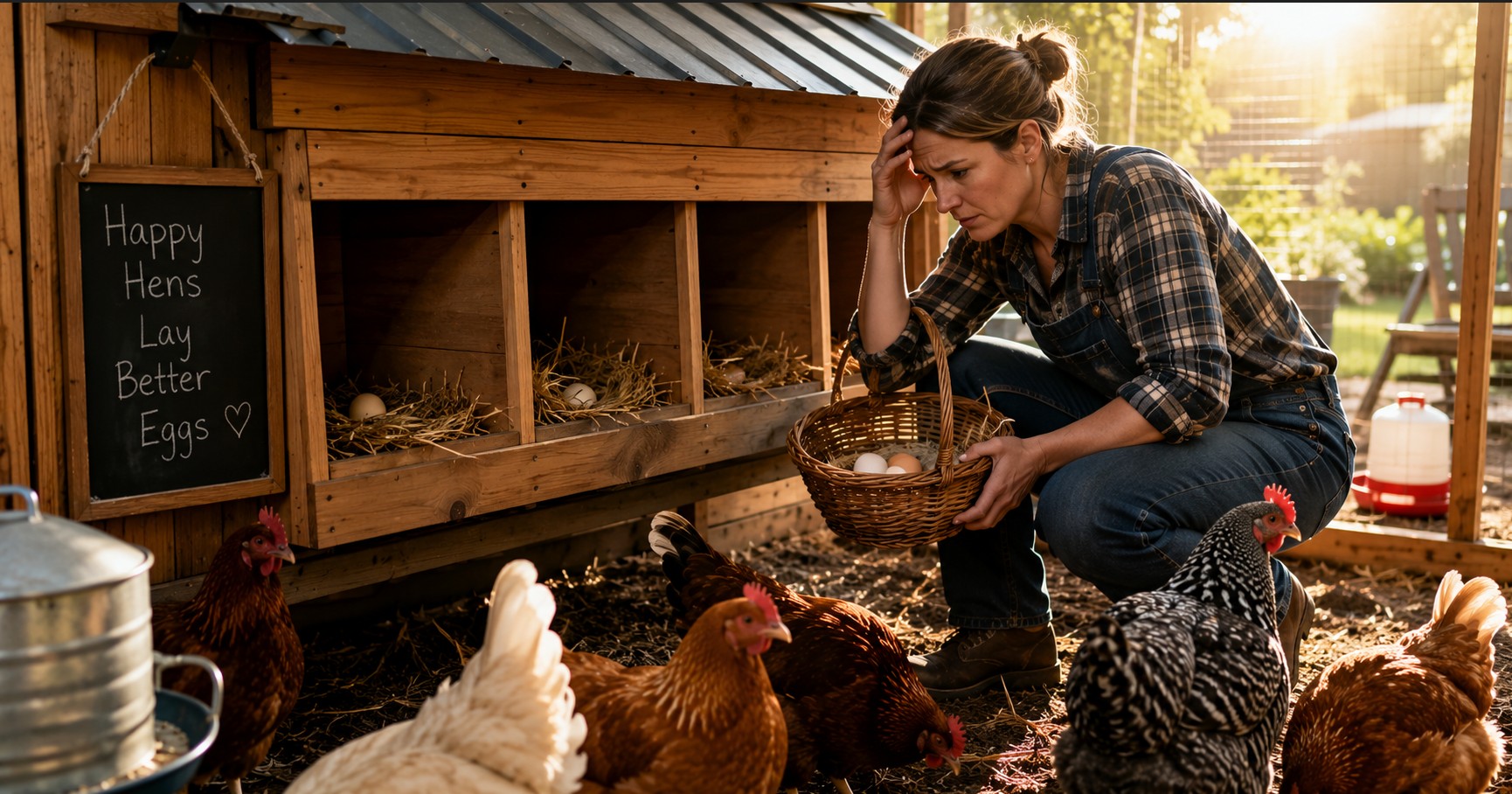
Why Did My Chickens Stop Laying Eggs? Natural Ways to Fix Egg Production Problems
Few things confuse a backyard chicken owner faster than walking out to the coop, opening the nesting boxes, and finding little to nothing inside. Yesterday your hens were laying. Last week you had enough eggs for breakfast, baking, and maybe even neighbors. Now the basket is empty, and you are wondering what went wrong. If you are dealing with Egg Problems, the cause is usually connected to light, feed, stress, age, molting, weather, coop conditions, predators, or chicken health.
The good news is that a drop in egg laying does not always mean something terrible has happened. Chickens are living animals, not egg machines. Their bodies respond to seasons, nutrition, stress, sleep, flock changes, and overall care. Sometimes the fix is simple, like improving protein, adding clean water stations, reducing heat stress, or making the nesting area calmer. Other times, you may need to check for mites, illness, hidden eggs, predators, or poor coop ventilation.
This guide explains why chickens stop laying eggs, how to understand common egg production problems, and how to increase egg production naturally without pushing your hens in an unsafe way. It is written for real backyard chicken keepers who want practical, beginner-friendly answers that actually help in the coop.
Quick Answer Box
If your chickens stopped laying eggs, start by checking the most common causes: shorter daylight hours, molting, poor nutrition, not enough protein or calcium, heat stress, cold stress, dehydration, predators, mites, illness, age, broodiness, or hidden nests. To increase egg production naturally, provide a complete layer feed, clean water all day, oyster shell on the side, safe coop ventilation, dry bedding, calm nesting boxes, predator protection, and a consistent routine. Do not expect instant results overnight. Hens need time to recover from stress, weather changes, or molting. If one chicken looks sick, weak, swollen, injured, or is not eating or drinking, separate her safely and contact a poultry vet or local extension office for advice. Most Egg Problems are easier to fix when you look at the whole flock environment instead of only focusing on the nesting box.
Table of Contents
- What It Means When Chickens Stop Laying Eggs
- Common Signs of Egg Production Problems
- Main Reasons Chickens Stop Laying Eggs
- Daylight and Seasonal Egg Laying Changes
- Feed and Nutrition for Better Egg Production
- Water, Dehydration, and Egg Laying
- Molting and Feather Growth
- Stress, Predators, and Flock Changes
- Coop Conditions, Bedding, and Ventilation
- Health Problems That Affect Laying
- Hidden Eggs and Nesting Box Issues
- Step-by-Step Plan to Improve Egg Production Naturally
- Best Tools, Materials, and Products to Help
- Mistakes to Avoid When Hens Stop Laying
- Seasonal Egg Production Tips
- Long-Term Prevention for Egg Production Problems
- My Practical Recommendation
- Frequently Asked Questions
- Final Checklist
- Conclusion
What It Means When Chickens Stop Laying Eggs
When chickens stop laying eggs, it usually means their bodies are responding to a change. That change may be natural, seasonal, environmental, nutritional, or health-related. A hen needs energy, protein, calcium, daylight, water, and a low-stress environment to lay regularly. If one of those pieces is missing, egg production can slow down or stop.
It helps to think of egg laying as a sign of overall balance. A healthy laying hen is not just producing eggs because she has a nesting box. She is producing because her body has enough resources. If she is growing new feathers, fighting heat stress, hiding from predators, dealing with parasites, or struggling with poor feed, her body may reduce egg production first.
For backyard chicken owners, this can feel frustrating because the change sometimes happens quickly. One week everything seems normal, and the next week the nesting boxes are almost empty. But chickens often give clues before they stop laying completely. You may notice thinner shells, smaller eggs, pale combs, loose feathers, nervous behavior, dirty bedding, or birds spending less time in the nesting boxes.
Not every drop in egg production is an emergency. Hens naturally lay less during short winter days, during molting, as they age, and during stressful events. However, a sudden stop across the whole flock deserves a careful check. It could be weather, feed, water, predators, disease, or something in the coop environment.
The best response is not to panic or immediately buy random supplements. Start with the basics: daylight, feed, water, calcium, coop comfort, nesting box access, predator safety, and visible flock health. Most backyard Egg Problems become easier to solve when you work through those areas one by one.
Common Signs of Egg Production Problems
Sometimes the only sign is fewer eggs. Other times, chickens show several clues that egg laying is becoming harder for them. Learning these signs helps you act early before the whole flock slows down.
- Fewer eggs in the nesting boxes than usual
- Eggs with thin shells, soft shells, or rough shells
- Smaller eggs than normal
- Misshapen eggs or eggs without proper shells
- Hens spending less time in nesting boxes
- Feathers scattered around the coop during molting
- Pale combs or wattles
- More hiding, nervousness, or flock stress
- Dirty, damp, or ammonia-smelling bedding
- Feed left uneaten or waterers running dry
- Eggs appearing in hidden areas instead of nesting boxes
If only one hen stops laying, the issue may be age, broodiness, illness, pecking order stress, or an individual laying cycle. If the whole flock slows down, look first at daylight, weather, feed, water, predators, or coop conditions.
Egg production problems are also easier to understand when you know what normal looks like for your flock. A young flock in spring may lay almost daily. Older hens may lay less often. Heavy breeds may slow down differently than production breeds. Heritage breeds may have more seasonal patterns. Bantams lay smaller eggs and may be more irregular. A realistic baseline prevents unnecessary worry.
| Sign | Possible Cause | First Action |
|---|---|---|
| Sudden drop in eggs from all hens | Weather, daylight, feed change, stress, predators | Check feed, water, light, coop security, and flock behavior |
| Thin or soft egg shells | Low calcium, stress, young layer, older hen, health issue | Offer oyster shell separately and review layer feed |
| Eggs missing from nesting boxes | Hidden nests, egg eating, snakes, rodents, predators | Search yard, inspect coop gaps, collect eggs more often |
| Lots of feathers in coop | Molting or feather picking | Increase protein support and reduce stress |
| Hens panting and laying less | Heat stress or dehydration | Add shade, cool water, ventilation, and reduce afternoon stress |
| Hens look weak or sick | Illness, parasites, injury, reproductive problem | Separate for observation and contact a poultry vet or extension office |
Main Reasons Chickens Stop Laying Eggs
There is rarely one single reason for every flock. In real backyard coops, several small things often add up. A flock might be dealing with shorter days, a feed change, damp bedding, and a raccoon visiting the run at night. Each issue may be small by itself, but together they can cause noticeable Egg Production Problems.
1. Shorter daylight hours
Hens lay best when their bodies receive enough daylight. As days shorten in fall and winter, many hens naturally slow down or stop laying. This is one of the most common reasons chickens stop laying eggs in the United States, especially in northern states where winter daylight is limited.
2. Molting
Molting is when chickens shed old feathers and grow new ones. Feather growth takes protein and energy, so many hens stop laying during this time. Molting can look messy, but it is normal. You may see feathers everywhere and think something attacked your flock, but if the birds look active and are growing pin feathers, they may simply be molting.
3. Poor nutrition
Laying hens need balanced layer feed. Too many treats, scratch grains, table scraps, or low-protein feed can reduce laying. Chickens need enough protein for eggs and body maintenance, plus calcium for shells. A hen that fills up on low-nutrition extras may not eat enough complete feed.
4. Not enough clean water
Eggs contain a lot of water. If hens run out of water, avoid dirty water, or cannot access water during hot weather, egg laying may drop quickly. Water problems are easy to overlook because the feeder gets more attention than the waterer.
5. Heat stress
Hot weather can slow laying because chickens spend energy trying to cool down. Hens may pant, hold wings away from the body, drink more, and eat less. If they eat less feed, they take in fewer nutrients for egg production.
6. Cold stress
Cold weather can also affect laying, especially when combined with short days, frozen water, drafts, damp bedding, or poor nutrition. Chickens usually handle cold better than heat if they are dry and protected from drafts, but winter management still matters.
7. Predators and fear
Even if a predator does not get into the coop, its presence can stress the flock. A raccoon walking around the run at night, a hawk circling during the day, or a dog charging the fence can make chickens nervous. Stress can interrupt laying.
8. Broody hens
A broody hen wants to sit on eggs and hatch chicks. She may stop laying and spend most of her time in the nesting box. Broodiness is natural, but it affects production. Some breeds are more likely to go broody than others.
9. Age
Young hens often lay more regularly after they settle into their first laying season. As hens get older, egg production usually slows. Older hens may still be wonderful flock members, but they may not lay like young pullets.
10. Illness or parasites
Mites, lice, worms, respiratory illness, reproductive issues, injuries, or other health problems can reduce egg laying. If a bird is lethargic, not eating, losing weight, breathing strangely, swollen, limping, or acting very different, do not treat it as a simple laying issue. Contact a poultry vet or local extension office for serious concerns.
Daylight and Seasonal Egg Laying Changes
Daylight is one of the biggest natural signals for egg laying. When days are long, hens are more likely to lay consistently. When days become shorter in fall and winter, many hens slow down. This is normal and does not mean you are doing anything wrong.
Some chicken owners use supplemental light in winter. Others choose to let hens rest naturally. Both approaches exist, but beginners should understand the tradeoff. Extra light may encourage laying, but it should be used carefully and consistently. Sudden light changes can stress birds. Chickens also need proper rest.
If you choose to use a light, a soft morning light on a timer is usually preferred over extending light late into the night. That way chickens still experience a natural dusk and can settle onto the roost safely. Never use heat lamps or poorly secured lights in a way that creates a fire risk. Coop safety matters more than extra eggs.
If you do not use artificial light, expect winter egg production to drop. This is especially true for older hens and breeds that are more seasonal. New pullets may lay through their first winter better than older birds, but every flock is different.
Natural winter support without forcing laying
- Keep water from freezing so hens can drink throughout the day.
- Provide a complete layer feed instead of too many scratch grains.
- Keep bedding dry and clean.
- Block drafts while maintaining high ventilation.
- Collect eggs often so they do not freeze in the nest.
- Give hens a calm, secure coop during long nights.
Winter egg laying is not only about light. Hens also need calories, clean water, predator safety, and dry bedding. Damp winter coops can create respiratory stress and reduce overall chicken health. Good coop ventilation lets moisture escape without blowing cold air directly on roosting birds.
Feed and Nutrition for Better Egg Production
Nutrition is one of the most practical areas to fix when chickens stop laying. A laying hen needs enough protein, energy, calcium, minerals, and vitamins. The simplest way to provide that is a complete layer feed designed for laying hens.
Many Egg Problems begin when hens eat too many extras and not enough complete feed. Scratch grains, cracked corn, mealworms, kitchen scraps, garden leftovers, and treats can all have a place, but they should not replace balanced feed. Treats are like snacks. Layer feed is the main meal.
Use a complete layer feed
A complete layer feed is made to support laying hens. It usually contains balanced protein, calcium, and nutrients for egg production. Choose a feed appropriate for your flock’s age and purpose. Chicks, growers, broilers, and layers have different needs.
If your flock includes both laying hens and younger birds, you may need a flock raiser feed with oyster shell offered separately until all birds are laying age. Too much calcium is not ideal for growing chicks, so feed choice matters when you have mixed ages.
Offer oyster shell separately
Oyster shell gives hens extra calcium for eggshells. Offer it in a separate dish so hens can take what they need. Do not force extra calcium into every bird if not all birds need it. Crushed eggshells can also be used by some keepers, but they should be clean, dry, and crushed well if offered.
Do not overdo treats
Treats should be limited. When hens fill up on scratch or table scraps, they may not eat enough layer feed. This can reduce egg production or cause shell quality issues.
Good occasional treats may include small amounts of leafy greens, vegetables, or protein-rich snacks. Avoid moldy food, salty leftovers, spoiled scraps, and anything unsafe for chickens. When in doubt, keep the diet simple.
Support hens during molting
During molt, hens need protein to grow feathers. Some owners temporarily switch to a higher-protein poultry feed or add safe protein support. The goal is not to force eggs during molt, but to help the bird rebuild feathers and return to laying naturally when ready.
| Feed Item | Best Use | Pros | Cons |
|---|---|---|---|
| Complete layer feed | Main daily diet for laying hens | Balanced for egg laying and shell support | Quality varies by brand and storage freshness |
| Oyster shell | Free-choice calcium supplement | Helps hens support shell quality naturally | Should not replace balanced feed |
| Scratch grains | Occasional treat or cold-weather activity | Encourages scratching and flock activity | Too much can reduce nutrition balance |
| Mealworms or protein treats | Occasional protein boost, especially during molt | Useful in small amounts | Can become expensive and should not be overfed |
| Fresh greens | Enrichment and small treat | Adds variety and activity | Too much can reduce feed intake |
| Kitchen scraps | Limited occasional use if safe | Reduces waste and adds variety | Can cause poor diet balance if overused |
Water, Dehydration, and Egg Laying
Water is one of the most overlooked causes of egg production problems. A hen cannot lay well without reliable water. If the waterer is empty, dirty, frozen, too hot, blocked by dominant hens, or placed where timid birds avoid it, laying may drop.
In summer, water warms quickly. Chickens may drink less if the water is hot or dirty. In winter, water may freeze before you notice. If you work away from home during the day, check water before leaving and again when you return.
Simple water improvements
- Use more than one water station for larger flocks.
- Place water in shade during hot weather.
- Clean waterers regularly to prevent slime and dirt buildup.
- Raise waterers slightly to reduce bedding and dirt contamination.
- Use heated water bases safely in freezing climates.
- Check that timid hens can access water without bullying.
Dehydration can reduce laying quickly, and recovery may take time. If your hens stopped laying during a heat wave, do not expect full production the next morning. Help them cool down, drink, eat properly, and recover naturally.
Molting and Feather Growth
Molting is one of the most common reasons chickens stop laying eggs. During molt, hens lose old feathers and grow new ones. This process takes energy and protein. Because feathers are protein-rich, the body often prioritizes feather growth over egg production.
Molting can be light or dramatic. Some hens lose only a few feathers and look slightly rough. Others look almost half-dressed for a while. This can worry beginners, but molting is normal if the bird is otherwise active, eating, drinking, and behaving normally.
Signs your hen is molting
- Feathers scattered in the coop and run
- Patchy feather loss without obvious wounds
- New pin feathers growing in
- Reduced or stopped egg laying
- More time resting or avoiding handling
- Less interest in mating or flock activity
Be gentle with molting hens. New pin feathers can be sensitive. Avoid unnecessary handling, reduce stress, and make sure the flock has enough feeder space so molting birds are not pushed away from food.
How to support hens during molt
Support molting hens with good protein, clean water, low stress, and a safe coop. Some owners use a higher-protein feed during molt or add small amounts of protein-rich treats. Keep the coop clean and dry because birds with missing feathers may be more sensitive to weather.
Molting is not the time to demand more eggs from the flock. Let hens rebuild. Once molt is complete and daylight or conditions improve, many hens return to laying naturally.
Stress, Predators, and Flock Changes
Chickens are sensitive to stress. A flock may stop laying after a predator scare, coop move, new birds, bullying, loud construction, extreme weather, or a major routine change. Sometimes the stress is obvious. Other times, you may only notice fewer eggs.
Predators are a major hidden stress factor. A raccoon walking around the coop at night may not get inside, but the flock may still hear, smell, or see it. A hawk landing near the run can make hens nervous. A dog running along the fence can cause panic even if the fence holds.
Signs stress may be affecting egg laying
- Hens hide more than usual.
- The flock is louder, flightier, or nervous.
- Birds avoid part of the run or yard.
- Eggs suddenly appear outside nesting boxes.
- There are tracks, digging marks, or feathers near the run.
- Hens crowd into the coop during daylight.
Good predator protection supports good egg production. Secure fencing, a covered run, strong latches, and a quiet nesting area all help hens feel safe. Stress reduction is a natural part of solving Egg Problems.
Introducing new birds carefully
Adding new chickens can temporarily reduce laying. The pecking order changes, and hens may become stressed. Use a slow introduction method when possible. Keep new birds visible but separated at first, then allow supervised mixing. Provide multiple feeders and waterers so lower-ranking hens can still eat and drink.
Do not add new birds directly into the coop at night and assume everything will be fine the next day. That can work sometimes, but it can also cause serious bullying. A calm introduction protects both flock health and egg production.
Coop Conditions, Bedding, and Ventilation
The coop environment has a major effect on laying. A dirty, damp, poorly ventilated coop can stress chickens and contribute to health problems. A clean, dry, secure coop helps hens rest well and lay more comfortably.
Dry bedding matters
Bedding should help absorb moisture and keep the coop comfortable. Pine shavings, straw, sand, hemp bedding, or other materials can work depending on your coop style and climate. The key is keeping bedding dry and clean enough that it does not smell strongly of ammonia.
Wet bedding can come from leaking roofs, poor drainage, spilled waterers, rain blowing into the run, or too many birds in a small space. Moisture can affect chicken health and make the coop less pleasant for laying hens.
Ventilation without drafts
Good coop ventilation removes moisture and stale air. Poor ventilation can lead to damp air, ammonia smell, and respiratory stress. However, ventilation should not mean cold drafts blowing directly on roosting chickens.
Place ventilation high when possible so warm moist air can escape. Cover openings with hardware cloth for predator safety. Do not seal the coop completely in winter. Chickens need fresh air all year.
Nesting box comfort
Nesting boxes should be calm, clean, and slightly private. If boxes are dirty, too bright, full of mites, too crowded, or placed in a busy area, hens may avoid them. That can make it look like chickens stopped laying when they are actually laying somewhere else.
- Keep nesting bedding clean and dry.
- Collect eggs daily.
- Provide enough nesting space for the flock.
- Make boxes darker and calmer than the run.
- Check for mites around cracks and corners.
- Block access to unsafe hidden nesting spots.
Health Problems That Affect Laying
Sometimes egg laying drops because a chicken is not well. Health-related Egg Problems should be handled carefully. Backyard owners can observe and improve general care, but serious illness needs professional advice.
Parasites
Mites and lice can stress hens, cause discomfort, and reduce laying. Mites often hide in coop cracks and come out at night. Lice may be seen on the bird. Signs can include feather damage, pale combs, restlessness, weight loss, reduced laying, or reluctance to enter the coop.
If you suspect parasites, inspect birds and the coop carefully. Treatment depends on the parasite and local recommendations. Your local extension office or poultry vet can help you choose safe options.
Respiratory issues
Respiratory problems can affect laying because sick birds use energy to fight illness. Watch for sneezing, wheezing, nasal discharge, swollen eyes, open-mouth breathing, or unusual sounds. Poor ventilation, damp bedding, dust, and ammonia can make respiratory stress worse.
Reproductive problems
Laying hens can sometimes develop reproductive issues. Warning signs may include a swollen abdomen, repeated straining, strange posture, not eating, lethargy, or repeated soft-shell eggs. These situations can be serious. Contact a poultry vet or extension office if you suspect a reproductive problem.
Injury or bullying
An injured or bullied hen may stop laying. She may hide, avoid feeders, lose weight, or appear nervous. Check the flock dynamic. Provide enough feeder space, water stations, roosting room, and hiding areas. If one bird is being badly bullied, separate safely and review the cause.
Do not ignore a hen that looks clearly sick, weak, or in pain. Egg production is less important than chicken health. Get experienced help when symptoms are serious or do not improve.
Hidden Eggs and Nesting Box Issues
Sometimes chickens have not stopped laying at all. They have simply changed where they lay. This is common in free range flocks or coops where nesting boxes are not comfortable.
Hens may hide eggs under bushes, behind feed bags, in tall grass, inside storage areas, under porches, in corners of the run, or behind the coop. If you suddenly have fewer eggs but hens look healthy and active, search the yard carefully.
Why hens avoid nesting boxes
- The boxes are dirty or damp.
- There are mites in the nesting area.
- Boxes are too bright or exposed.
- Dominant hens guard the favorite box.
- There are not enough boxes for the flock.
- The bedding is uncomfortable or thin.
- Predators or rodents disturbed the area.
To encourage hens back to nesting boxes, clean the boxes, add comfortable bedding, make the area calm, and use fake eggs or ceramic eggs as nest cues. Keep birds confined to the coop and run for a few mornings if needed so they relearn the proper laying place.
Step-by-Step Plan to Improve Egg Production Naturally
When your chickens stop laying, do not change everything at once. A step-by-step plan helps you find the real cause and avoid creating more stress.
Step 1: Count your flock and observe behavior
Start with a simple flock check. Are all birds present? Are they eating, drinking, scratching, and moving normally? Do any birds look weak, puffed up, pale, injured, or isolated? A healthy-looking flock with fewer eggs points you toward environment, season, or nutrition. A sick-looking bird needs closer attention.
Step 2: Check feed quality and feeding habits
Make sure hens are eating a complete layer feed. Check the feed bag for age, moisture, mold, pests, or odd smell. Feed can spoil, especially in humid areas. If you recently changed feed, that may affect laying temporarily.
Reduce treats for a week or two and focus on balanced feed. Offer oyster shell separately. Keep grit available if birds eat anything beyond commercial feed, especially if they free range.
Step 3: Check water access
Clean the waterer, refill with fresh water, and make sure all hens can reach it. In hot weather, add extra water stations. In freezing weather, prevent ice. If water has been inconsistent, egg production may take time to recover.
Step 4: Inspect the coop and run
Look for damp bedding, ammonia smell, poor ventilation, dirty nesting boxes, mites, rodents, predator signs, and hidden gaps. A coop that looks fine at a quick glance may have problems in corners, under roosts, or around doors.
Step 5: Search for hidden eggs
If hens free range, search carefully. Look under shrubs, behind boards, near fences, inside storage areas, and in quiet corners. Hidden eggs can make owners think hens stopped laying when they only changed location.
Step 6: Review daylight and season
If it is fall or winter, shorter days may be the main reason. Decide whether you want to let hens rest naturally or use carefully managed supplemental light. Either way, support the flock with good feed, water, and dry housing.
Step 7: Watch for molt
If feathers are everywhere and hens look rough but active, molting may be the reason. Support protein intake, reduce stress, and wait. Egg laying often returns after molt and recovery.
Step 8: Improve predator security
Check latches, run covers, fence edges, and night security. A nervous flock may lay less. Predator protection is not only about preventing loss. It also helps keep hens calm enough to maintain natural laying routines.
Step 9: Give changes time
Natural improvement takes time. Hens may not restart laying the next day after you clean the coop or improve feed. Their bodies need time to respond. Track eggs daily for a few weeks instead of judging results after one morning.
| Problem | Likely Cause | Natural Solution |
|---|---|---|
| Flock stopped laying in winter | Short daylight and seasonal rest | Support with feed, water, dry bedding, and optional safe morning light |
| Thin shells | Calcium shortage, stress, or age | Offer oyster shell separately and review layer feed |
| Eggs dropped during heat wave | Heat stress and lower feed intake | Provide shade, cool water, ventilation, and low-stress care |
| Eggs missing but hens seem healthy | Hidden nests, egg eating, or predators | Search yard, clean nesting boxes, collect eggs more often |
| Molting hens not laying | Energy going to feather growth | Support protein and reduce handling stress |
| One hen stopped laying and looks sick | Illness, injury, parasite, or reproductive issue | Separate for observation and contact a poultry vet or extension office |
Best Tools, Materials, and Products to Help
You do not need to buy every chicken product to improve egg laying. Focus on basic tools that support health, comfort, and consistency.
Complete layer feed
A good-quality layer feed is the foundation of natural egg production. Store it in a dry, secure container. Do not use moldy, wet, or old feed. If feed smells wrong, replace it.
Oyster shell feeder
A small wall-mounted cup or dish for oyster shell lets hens choose extra calcium when needed. Keep it separate from feed. Refill as needed.
Clean waterers
Use waterers that are easy to clean. If your flock is large, use more than one water source. In hot areas, shaded water stations are very helpful. In cold areas, safe heated water solutions can prevent frozen water.
Comfortable nesting box bedding
Clean nesting material helps hens feel comfortable laying in the right place. Pine shavings, straw, nesting pads, or other clean bedding can work. Replace dirty or broken bedding regularly.
Ventilation hardware cloth
Hardware cloth over vents allows airflow while protecting the coop from predators. Avoid flimsy screens in predator-prone areas.
Coop thermometer
A simple thermometer can help you understand heat and cold stress. It is especially useful in summer, winter, or enclosed coop designs.
Motion camera
A basic trail camera or coop camera can show whether predators are visiting at night. This can explain stress-related laying drops and help you improve security.
Mistakes to Avoid When Hens Stop Laying
When hens stop laying, it is easy to react too quickly. Some fixes help, but others can make the flock more stressed.
Mistake 1: Feeding too many treats
Many owners try to cheer up hens with extra scratch, corn, scraps, or snacks. Too many treats can reduce balanced nutrition and make egg production worse. Use treats lightly and keep complete feed as the main diet.
Mistake 2: Ignoring water
Feed gets attention, but water is just as important. Dirty, frozen, hot, or empty waterers can quickly affect laying. Always check water before assuming the issue is complicated.
Mistake 3: Closing ventilation in winter
Sealing a coop too tightly can trap moisture and ammonia. Chickens need ventilation even when it is cold. Block direct drafts on roosts, but allow moist air to escape.
Mistake 4: Expecting hens to lay through every season
Chickens naturally slow down at certain times. Molt, winter, age, and stress can all reduce laying. Natural chicken care means supporting hens, not forcing them beyond what their bodies can handle.
Mistake 5: Skipping predator checks
A predator does not have to kill a hen to cause stress. Night visits, digging attempts, or hawks overhead may reduce laying. Inspect the coop and run for tracks, scratches, loose wire, and nervous flock behavior.
Mistake 6: Treating every issue like a supplement problem
Supplements are not a replacement for feed, water, sanitation, ventilation, and safety. Before adding products, fix the basics. Many Egg Problems improve when the daily environment improves.
Seasonal Egg Production Tips
Egg laying changes through the year. Seasonal chicken care helps you support the flock naturally instead of being surprised by every production drop.
Spring
Spring is often a strong laying season. Daylight increases, weather improves, and hens may become more active. This is a good time to clean the coop deeply, refresh bedding, inspect nesting boxes, and check for mites before warm weather increases pest activity.
Spring is also a common time for broodiness. If a hen sits in the nesting box all day, puffs up, and refuses to leave, she may be broody. A broody hen usually lays less or stops laying while she is focused on sitting.
Summer
Summer heat can reduce egg production. Hens may eat less because digestion creates body heat. Less feed means fewer nutrients for eggs. Provide shade, cool water, good airflow, and avoid stressful handling during the hottest part of the day.
Check waterers more often in summer. Keep the run shaded if possible. Dust bathing areas also help chickens manage comfort and feather care.
Fall
Fall often brings molting and shorter days. This is a very common time for chickens to stop laying. Do not panic if feathers appear and eggs decrease. Support the flock with protein, clean bedding, and low stress.
Fall is also a good time to prepare for winter. Repair coop leaks, improve ventilation, secure predators, and make sure water plans are ready before freezing weather arrives.
Winter
Winter laying depends on breed, age, daylight, care, and climate. Keep the coop dry and ventilated. Prevent frozen water. Do not let bedding become damp. Collect eggs more often if they may freeze.
If you choose not to use supplemental light, accept that winter may be a slower egg season. If you use light, keep it safe, consistent, and moderate.
Long-Term Prevention for Egg Production Problems
Long-term egg production is not about squeezing the most eggs out of every hen. It is about building a healthy routine that supports the flock over time. Healthy hens in a calm, clean environment are more likely to lay well within their natural limits.
Keep a simple egg record
Write down daily egg counts for a few weeks or use a small calendar. This helps you notice patterns. You may realize your flock slows during heat waves, after storms, during molt, or when feed changes.
Maintain the coop weekly
Regular maintenance prevents many problems. Replace wet bedding, clean waterers, check vents, remove old eggs, inspect roosts, and look for signs of pests. Coop maintenance is easier when done in small steps instead of waiting until the coop becomes a big project.
Protect from predators
A secure coop and run reduce stress and help chickens rest. Use strong latches, hardware cloth, covered runs, and safe fencing. Watch for digging, loose wire, and night visitors.
Manage flock size
Overcrowding causes stress, dirty bedding, bullying, and poor air quality. Make sure your coop and run have enough room for the number of chickens you keep. Crowding can create both health problems and laying problems.
Support different ages properly
Young pullets, peak layers, older hens, molting hens, and broody hens do not all lay the same. A mixed-age flock will naturally have ups and downs. This is normal backyard chicken life.
| Maintenance Task | How Often | Why It Helps Egg Production |
|---|---|---|
| Check feed freshness | Weekly | Prevents poor nutrition from stale or spoiled feed |
| Clean waterers | Several times weekly | Encourages drinking and supports egg formation |
| Refresh nesting bedding | Weekly or as needed | Encourages hens to lay in boxes |
| Inspect ventilation | Monthly and seasonally | Reduces moisture and respiratory stress |
| Check for mites and lice | Monthly or when symptoms appear | Reduces stress and health-related laying drops |
| Inspect predator security | Weekly and after storms | Helps flock feel safer and prevents losses |
| Track egg count | Daily | Helps identify patterns and sudden changes |
My Practical Recommendation
If my backyard flock suddenly stopped laying, I would not start by buying a pile of supplements. I would start with the basics because the basics solve more problems than people think.
First, I would check water. Is it clean, full, cool in summer, and unfrozen in winter? Then I would check feed. Are the hens eating a complete layer feed, or have treats slowly become too much of the diet? Next, I would look at the coop. Is the bedding dry? Does the coop smell fresh? Are the nesting boxes clean? Is ventilation working without drafts?
After that, I would look for seasonal causes. Are the days shorter? Are hens molting? Has there been a heat wave, cold snap, storm, or predator scare? I would also search for hidden eggs before assuming the hens truly stopped laying.
My balanced recommendation is this: support egg laying naturally by creating a steady, healthy environment. Feed well, provide water, reduce stress, protect from predators, keep bedding dry, and respect normal seasonal breaks. That approach is safer and more realistic than trying to force production. Most backyard egg production problems improve when the whole flock system improves.
Frequently Asked Questions
1. Why did my chickens suddenly stop laying eggs?
Chickens may suddenly stop laying because of stress, weather changes, shorter daylight, poor nutrition, dehydration, predators, molting, broodiness, illness, or hidden nests. Start by checking feed and water first because those are common and easy to fix. Then inspect the coop for damp bedding, poor ventilation, mites, dirty nesting boxes, or predator signs. If the whole flock stopped, the cause is often environmental or seasonal. If only one hen stopped and looks sick, weak, swollen, injured, or isolated, contact a poultry vet or local extension office for help.
2. How can I increase egg production naturally?
To increase egg production naturally, focus on healthy basics instead of forcing hens. Provide a complete layer feed, clean water all day, oyster shell on the side, dry bedding, good coop ventilation, calm nesting boxes, and strong predator protection. Reduce low-nutrition treats so hens eat enough balanced feed. Give shade and cool water in summer, and prevent frozen water in winter. If hens are molting or days are short, production may stay lower for a while. Natural improvement usually takes time, so track egg counts for a few weeks.
3. What should I feed chickens when they stop laying?
Feed a complete layer feed as the main diet for laying-age hens. Offer oyster shell separately for calcium and keep clean water available at all times. If hens are molting, they may benefit from extra protein support or a higher-protein poultry feed for a short period. Avoid giving too much scratch, cracked corn, bread, or kitchen scraps because hens may fill up on treats and eat less balanced feed. Good nutrition is one of the simplest ways to reduce Egg Production Problems in a backyard flock.
4. Do chickens stop laying eggs in winter?
Many chickens slow down or stop laying in winter because daylight hours are shorter. Cold weather can also affect laying if water freezes, bedding becomes damp, or the coop has poor ventilation. Some young hens may continue laying through their first winter, while older hens may take a longer seasonal break. You can support winter laying naturally with good feed, unfrozen water, dry bedding, safe ventilation, and clean nesting boxes. Some owners use supplemental light, but it should be used safely and consistently.
5. How long do chickens stop laying during molting?
Molting can last several weeks or longer depending on the hen, breed, age, season, and overall health. During molt, hens often reduce or stop laying because their bodies are using protein and energy to grow new feathers. You may see feathers around the coop, patchy feather loss, and new pin feathers. Support molting hens with good nutrition, clean water, low stress, and gentle handling. Do not expect full egg production until the bird has recovered and conditions support laying again.
6. Can stress cause hens to stop laying?
Yes, stress can cause hens to stop laying or reduce production. Common stress triggers include predator scares, loud construction, new flock members, bullying, coop moves, extreme heat, cold, poor ventilation, overcrowding, or sudden routine changes. Chickens feel safest with a predictable routine, secure coop, clean nesting boxes, and enough space. If you suspect stress, look for nervous behavior, hiding, pecking order problems, or predator signs. Reducing stress is a practical natural step when Chickens stopped laying without an obvious illness.
7. Why are my chickens laying thin-shell or soft-shell eggs?
Thin-shell or soft-shell eggs may happen because of low calcium, poor feed balance, stress, young hens just starting to lay, older hens, heat stress, or health issues. Offer oyster shell separately and make sure hens are eating a complete layer feed. Reduce treats so they do not replace balanced nutrition. If soft-shell eggs continue often, or the hen looks sick, weak, swollen, or uncomfortable, contact a poultry vet or local extension office. Occasional odd eggs can happen, but repeated shell problems deserve attention.
8. Could my chickens be laying eggs somewhere else?
Yes, hidden eggs are very common, especially with free range chickens. Hens may lay under bushes, behind boards, in tall grass, under porches, in storage areas, or in quiet corners of the run. They may avoid nesting boxes if the boxes are dirty, bright, crowded, mite-infested, or stressful. Search the yard carefully and refresh the nesting boxes with clean bedding. Fake eggs or ceramic eggs can help guide hens back to the right place. Keeping hens in the coop and run during morning laying time can also help.
9. Can predators affect egg production even if they do not enter the coop?
Yes, predators can affect egg production by causing stress. A raccoon, fox, dog, snake, or hawk around the coop can make hens nervous even if no bird is harmed. Chickens may hide, avoid nesting boxes, or stop laying temporarily after a scare. Check for tracks, digging, loose wire, broken latches, missing eggs, and nervous flock behavior. Improve predator protection with secure latches, hardware cloth, covered runs, and a strong fence. A calm flock is more likely to maintain normal laying patterns.
10. When should I worry about a hen not laying?
You should worry if a hen not only stops laying but also looks sick, weak, swollen, injured, pale, isolated, unable to walk normally, breathing strangely, or not eating and drinking. Those signs may point to illness, parasites, injury, or reproductive problems. Separate the bird safely for observation and contact a poultry vet or local extension office for guidance. If the hen looks healthy and the whole flock is laying less, start by checking season, molt, feed, water, stress, and coop conditions first.
11. Do older hens stop laying completely?
Older hens usually lay fewer eggs than young hens, and some may eventually stop laying or lay only occasionally. This is normal. A hen’s production depends on breed, age, health, diet, season, and environment. Older hens can still be valuable flock members even if they lay less often. If an older hen suddenly acts sick or uncomfortable, do not assume it is only age. Check her health, body condition, and behavior, and get professional guidance if serious symptoms appear.
12. How long does it take for chickens to start laying again?
It depends on the cause. If water was empty for a day, hens may recover faster than if they are molting, stressed, sick, or dealing with winter daylight changes. Feed improvements may take days or weeks to show results. Molting can take several weeks. Seasonal winter slowdown may last until daylight increases. The best approach is to fix the basics, reduce stress, track egg counts, and give the flock time. Natural egg production is a process, not an instant switch.
Final Checklist
- Check that all hens are present, active, eating, and drinking.
- Provide complete layer feed as the main diet.
- Offer oyster shell separately for laying hens.
- Limit scratch grains and kitchen scraps.
- Clean and refill waterers daily.
- Keep nesting boxes clean, dry, and calm.
- Search for hidden eggs around the yard and run.
- Inspect for molting, mites, lice, injuries, or illness.
- Improve coop ventilation without creating drafts.
- Keep bedding dry and remove wet areas quickly.
- Check predator protection around the coop and run.
- Track egg counts for several weeks to understand patterns.
Conclusion
When chickens stop laying eggs, it can feel discouraging, but it is usually a sign that something in the flock’s routine, season, health, or environment has changed. The best solution is to slow down and check the basics one by one: daylight, feed, water, calcium, nesting boxes, bedding, coop ventilation, predator safety, stress, age, molting, and chicken health.
Most Egg Problems do not require complicated fixes. A clean coop, dry bedding, fresh water, balanced feed, calm nesting boxes, and a secure run can make a real difference. At the same time, it is important to respect natural breaks. Hens may slow down during winter, molting, broodiness, age changes, or stressful weather.
If your chickens stopped laying, start today with a simple coop inspection. Clean the waterer, check the feed, refresh the nesting boxes, look for hidden eggs, inspect for predators, and watch the flock closely. If any bird looks seriously ill or injured, contact a poultry vet or local extension office. With steady care and a practical routine, your backyard flock has a much better chance of returning to healthy, natural egg laying.