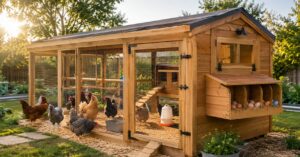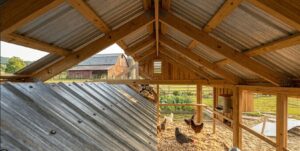
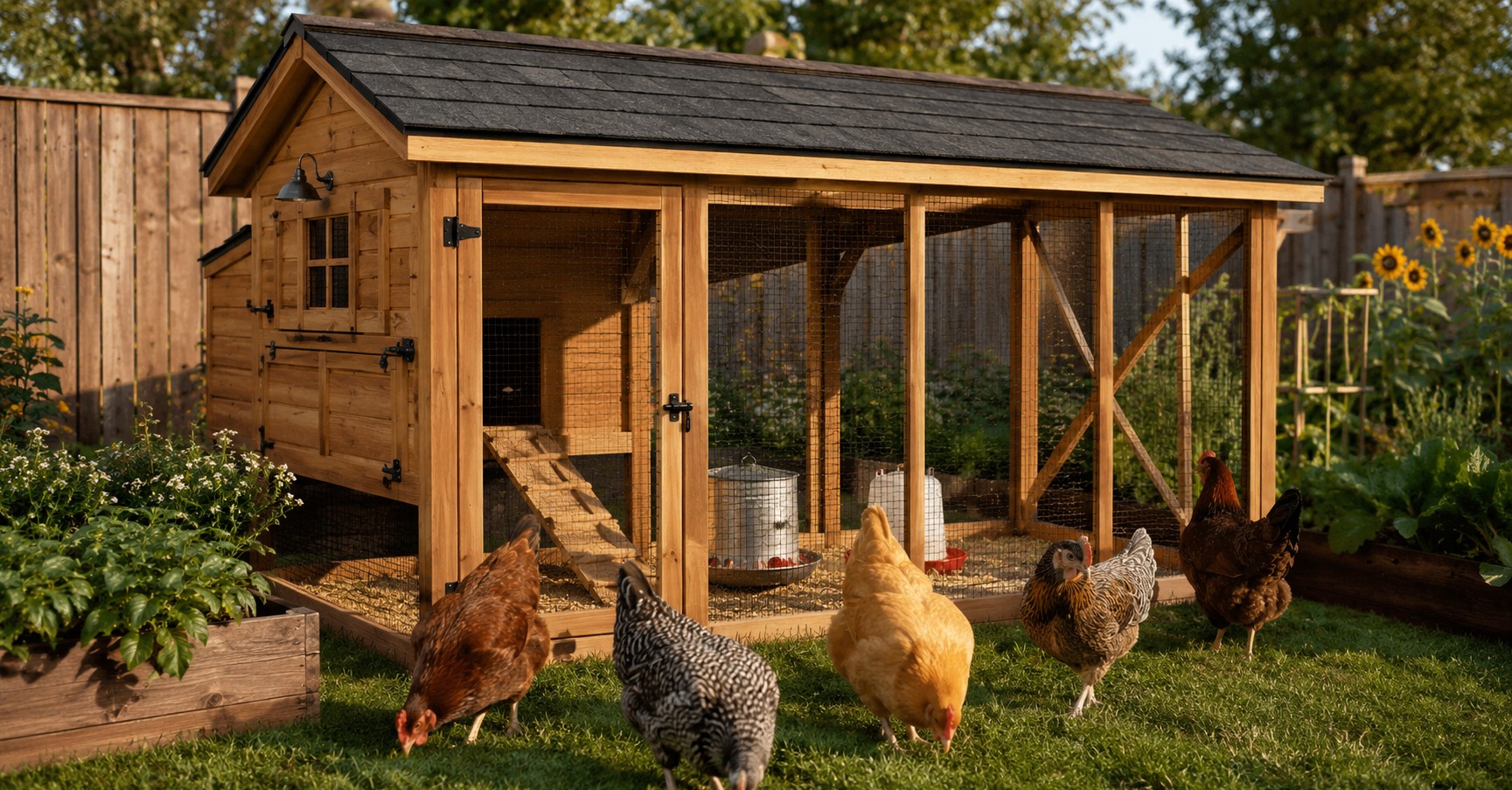
Your chicken coop roof does more than block rain. It protects your flock from moisture, drafts, heat, predators, and long-term wood damage. A dry coop helps chickens stay comfortable, keeps bedding usable longer, supports better coop ventilation, and makes daily flock care much easier.
This guide explains how to build, repair, and maintain a waterproof roof in a practical way. You do not need to be a professional builder. You need the right slope, the right materials, smart sealing, safe airflow, and a simple maintenance routine.
Quick Answer Box
The best way to waterproof a chicken coop roof is to use a sloped roof design, durable roofing material, proper underlayment, sealed edges, drip edges, and enough overhang to move water away from the walls. For most backyard coops, metal roofing, asphalt shingles, or corrugated panels work well when installed correctly. Avoid flat roofs, exposed plywood, open seams, and poor ventilation. A dry coop protects bedding, reduces moisture problems, and helps keep your backyard flock healthier through rain, snow, and humid weather.
Why a Waterproof Coop Roof Matters
A waterproof roof is one of the most important parts of a good backyard chicken setup. Chickens can handle cold better than many beginners expect, but they do not do well in a damp, drafty, poorly maintained coop. Moisture is often the hidden reason behind bad bedding, odor, frostbite risk in winter, and general coop stress.
When rain gets inside, bedding starts to clump. Wet pine shavings or straw hold moisture near the floor. Droppings break down faster in damp bedding, which can increase ammonia smell. That smell is not just unpleasant for people. It can also irritate a chicken’s respiratory system when ventilation is poor.
A strong chicken coop roof also protects the structure itself. Plywood, framing lumber, nesting boxes, roost supports, and wall panels can rot if water keeps entering the same areas. Once rot starts, repairs become harder and more expensive. A roof leak near a nesting box may also make hens avoid laying there, which can lead to eggs in random corners or outside areas.
In many US backyards, weather changes fast. A coop may face heavy spring rain, hot summer sun, fall storms, and winter snow. A roof that works in one season may fail in another if it lacks slope, overhang, flashing, or sealed fasteners. This is why waterproofing should be part of the original build, not only an emergency repair after a storm.
Predator protection also connects to roof quality. Gaps under loose roofing panels can invite rats, snakes, raccoons, or other pests. A strong roof with sealed edges and secure attachment helps close those weak points while still allowing safe airflow through protected vents.
Common Signs Your Coop Roof Is Not Waterproof
Some leaks are obvious. You walk into the coop after rain and see water dripping from the ceiling. Other leaks are slower and easier to miss. A small leak can run along a rafter, drip behind a nesting box, or soak one corner of bedding without making a visible puddle.
Check the coop after steady rain, wind-driven rain, and melting snow. These are the times when roof problems usually reveal themselves. A roof may look fine during a light shower but fail when rain blows sideways under an overhang or through a seam.
| Sign | Likely Cause | Practical Action |
|---|---|---|
| Wet bedding in one corner | Small roof leak, wall leak, or poor overhang | Inspect roof seam above the wet area and check outside drainage |
| Water stains on ceiling wood | Slow leak through fasteners or damaged roofing | Seal fasteners, repair roofing, and replace soft wood if needed |
| Strong ammonia smell | Damp bedding and poor ventilation | Remove wet bedding, improve airflow, and fix moisture source |
| Mold or dark patches | Ongoing moisture problem | Clean safely, dry the area, repair leaks, and increase ventilation |
| Drips near nesting boxes | Roof seam, flashing gap, or poor roof slope | Repair before hens avoid laying in the nesting area |
Also watch your chickens. Hens may avoid a damp corner, refuse a nesting box, crowd one dry area, or spend less time inside the coop during bad weather. These behaviors do not always mean the roof leaks, but they are worth investigating.
If birds show signs of serious illness, breathing problems, weakness, or unusual behavior, contact a poultry vet or your local extension office. A dry coop supports chicken health, but it does not replace professional help when the flock has a real health concern.
Main Causes of Chicken Coop Roof Leaks
Most coop roof problems come from simple design or installation mistakes. The good news is that many of them can be fixed with basic tools and careful inspection.
1. Too Little Roof Slope
A flat or nearly flat roof holds water. Pooled water finds tiny gaps and slowly works into plywood, seams, screw holes, and edges. Snow makes this worse because meltwater can sit for hours or days. A sloped roof sheds water faster and reduces the chance of leaks.
2. No Roof Overhang
Without overhangs, rain runs straight down the walls. Water can enter around windows, doors, vents, and siding seams. Even a few inches of overhang can help protect walls and bedding from wind-driven rain.
3. Exposed Plywood
Plywood alone is not a finished roof. Paint may help for a short time, but exposed plywood usually cracks, swells, and separates when it faces repeated rain and sun. A proper roof needs a waterproof outer layer.
4. Poor Seams and Fasteners
Many leaks start where panels overlap, where screws penetrate roofing, or where roof edges meet walls. Screws without rubber washers, nails that back out, and unsealed seams can all let water enter.
5. Blocked Drainage
Leaves, pine needles, shavings, and debris can trap water on a roof. If the coop sits under trees, roof cleaning matters. Debris can also hold moisture against metal panels or shingles, which shortens roof life.
6. Confusing Waterproofing With Sealing Everything Shut
A coop should be dry, but it should not be airtight. Chickens produce moisture through breathing and droppings. If you seal every gap without adding protected ventilation, moisture stays inside. That can create damp bedding even when the roof itself does not leak.
Best Roof Design for a Dry Chicken Coop
The best roof design depends on your coop size, climate, budget, and building skill. Still, a few principles work for almost every backyard coop.
Choose a Sloped Roof
A sloped roof is usually the safest choice for beginners. A simple shed-style roof slopes in one direction and is easier to build than a complex roof. A gable roof slopes on two sides and can look more traditional, but it requires more framing. Both can work well when built properly.
For small coops, a single-slope roof often makes maintenance easier. You can direct water away from the run, the door, or the nesting box access panel. Try to slope water toward an area where it can drain away from the coop foundation.
Add Overhangs
Overhangs protect walls from rain. They also shade parts of the coop during hot weather. In many backyard builds, small overhangs on all sides make a noticeable difference. Larger overhangs above doors, vents, and nesting box lids are especially helpful.
Use Drip Edges
A drip edge helps guide water off the roof instead of letting it curl back under the roofing material. This is useful on plywood roof decks, shingle roofs, and some panel roof designs. It is a small detail that helps prevent edge rot.
Keep the Roof Easy to Inspect
A beautiful roof that you cannot inspect is not ideal. Backyard coops need regular checks. Make sure you can see the edges, fasteners, vents, and underside of the roof. If your coop is tall, keep a safe ladder nearby and avoid climbing onto lightweight coop roofs.
Best Roofing Materials for Backyard Coops
There is no single perfect material for every coop. The best choice depends on your weather, budget, coop size, and how permanent you want the structure to be.
| Material | Best Use | Pros | Cons |
|---|---|---|---|
| Metal roofing panels | Permanent coops, rainy climates, snowy areas | Durable, sheds water well, long-lasting when installed correctly | Can be noisy in rain, edges can be sharp, may need careful fastening |
| Asphalt shingles | Traditional wood coops with roof decking | Easy to find, familiar installation, good weather protection | Heavier than panels, needs proper underlayment and slope |
| Corrugated plastic panels | Covered runs, light-duty roofs, partial sun areas | Lightweight, can allow light, easy to cut | Can crack over time, may not handle heavy snow well |
| Roll roofing | Budget repairs and simple small coops | Affordable, simple coverage for small roof decks | Shorter lifespan than metal or shingles, needs careful sealing |
| EPDM rubber roofing | Low-slope roofs and specialty builds | Good waterproof layer, flexible, useful for certain designs | Requires clean surface and correct adhesive, may cost more |
Metal Roofing
Metal roofing is a strong choice for many chicken coops. It sheds rain and snow well, resists rot, and can last a long time. Use screws with rubber washers and fasten panels according to the panel style. Overlap panels correctly so wind-driven rain does not enter through the seams.
Be careful with sharp edges. Trimmed metal can cut skin, damage tarps, or create unsafe edges near chickens. Cover or position sharp edges where birds and people will not contact them.
Asphalt Shingles
Asphalt shingles work well when installed over solid roof decking with underlayment. They are common, easy to match with backyard sheds, and familiar to many DIY builders. Make sure the roof has enough slope for shingles to shed water properly.
Corrugated Panels
Corrugated plastic or polycarbonate panels can be useful for a covered run. They let in light and keep the run drier during rain. For the sleeping coop, choose panels strong enough for your climate. In snowy areas, lightweight panels may need extra support.
How to Build a Waterproof Chicken Coop Roof
If you are wondering how to build a waterproof chicken coop roof, start with structure before sealant. Caulk cannot fix a bad roof design for long. Build the roof so water naturally moves away from the coop.
Step 1: Decide Where Water Should Go
Before you attach roofing, look at the coop location. Water should drain away from the door, run entrance, nesting box access, and feed storage area. If water runs into the chicken run, the run can turn muddy. If water runs toward the foundation, the floor may stay damp.
Step 2: Build a Strong Roof Frame
Use sturdy framing that can handle your roofing material and local weather. Snow areas need more strength than warm dry areas. A weak roof can sag, and sagging creates low spots where water collects. Keep the frame square, stable, and well attached to the coop walls.
Step 3: Add Roof Decking if Needed
Shingles, roll roofing, and some rubber roofs need solid decking. Plywood or OSB can work, but it must be covered by a real waterproof layer. Do not leave the deck exposed. If you use metal panels, you may not need full decking, depending on your design and support spacing.
Step 4: Install Underlayment
Underlayment adds a second layer of protection under shingles or some panel systems. It helps protect the roof deck if water gets under the outer roof layer. Install it so upper pieces overlap lower pieces, allowing water to flow down and out instead of under the material.
Step 5: Install the Main Roofing Material
Follow the direction of water. Lower pieces should go on first, and upper pieces should overlap them. This is true for shingles, panels, and most roof layers. If you reverse overlaps, rain can run under the material.
Use the right fasteners. For metal panels, use roofing screws with washers. For shingles, use roofing nails in the correct placement. For plastic panels, use compatible fasteners and avoid overtightening, which can crack the panel.
Step 6: Seal Edges, Seams, and Penetrations
Seal the places where water is most likely to enter. This includes roof edges, screw holes, panel overlaps, vent openings, and places where the roof meets vertical walls. Use exterior-grade sealant made for roofing or outdoor use. Indoor caulk usually does not last outdoors.
Step 7: Add Drip Edge and Flashing
Drip edge helps water leave the roof cleanly. Flashing protects transitions, such as where a raised wall meets a lower roof. These details matter because water often enters at edges, not in the middle of the roof.
Step 8: Test With Water
After installation, test the roof before a major storm does it for you. Use a garden hose on a gentle setting and watch how water moves. Do not blast water upward under seams. Instead, copy natural rain. Check the inside for drips, damp seams, and water stains.
Step 9: Check Again After the First Real Rain
The first real rain is your best inspection. Look inside the coop, under nesting boxes, near roosts, and along wall corners. Touch bedding in suspicious areas. A roof may pass a hose test but show problems during wind-driven rain.
Tools and Materials You May Need
The exact supplies depend on your roof type. A small repair may only require sealant and replacement screws. A full build may require framing lumber, roofing panels, underlayment, drip edge, and safety gear.
- Roofing panels, shingles, roll roofing, or another waterproof roof covering
- Roof decking such as plywood if your roof system needs it
- Roofing underlayment for shingle or decked roofs
- Roofing screws with rubber washers for metal panels
- Roofing nails for shingles
- Exterior-grade roof sealant
- Drip edge and flashing where needed
- Tape measure, straight edge, and pencil
- Drill, driver bits, hammer, and utility knife
- Work gloves and eye protection
- Safe ladder for inspection and installation
Do not choose materials only because they are cheap. A low-cost roof that leaks can cost more later through bedding waste, wood repairs, and flock stress. At the same time, you do not need luxury materials for a backyard coop. The goal is practical, safe, and durable.
For feed storage areas, consider roof coverage that keeps rain from blowing onto feed bags or containers. Wet feed can spoil quickly and attract pests. If feed stays in or near the coop, roof overhang and drainage become even more important.
Waterproofing Without Blocking Ventilation
One of the biggest beginner mistakes is sealing a coop so tightly that moisture has nowhere to go. Chickens release moisture when they breathe. Droppings add more moisture. Waterers can spill. Even with a perfect roof, a coop can become damp if air cannot move.
Good coop ventilation should remove humid air without creating a direct cold draft on roosting birds. Place vents high on the walls, under protected eaves, or in covered areas where rain cannot blow directly inside. Cover all vents with hardware cloth for predator protection.
A dry coop needs both waterproofing and airflow. Think of the roof as the rain shield and the vents as the moisture exit. If you only focus on one, the coop may still have problems.
Vent Placement Tips
- Place vents higher than the roost when possible so warm moist air can escape.
- Protect vent openings with roof overhangs, awnings, or angled covers.
- Use hardware cloth, not weak window screen, for predator resistance.
- Avoid placing large open vents where rain blows directly onto bedding.
- Check vents in winter to make sure they are open but not drafty at roost level.
Mistakes to Avoid
Waterproofing a coop is not complicated, but small mistakes can create long-term trouble. Here are the most common ones to avoid.
Using a Flat Roof in a Wet Climate
A flat roof may look simple, but it often creates drainage problems. If you live where rain or snow is common, slope is your friend. Even a small coop benefits from a roof that sheds water quickly.
Relying Only on Paint
Exterior paint can help protect walls and trim, but it is not a complete roofing system. Painted plywood can still crack and absorb water. Use real roofing material over the roof deck.
Forgetting the Nesting Box Lid
Many coops have an exterior nesting box access lid. This lid often leaks because it opens and closes. Add a sloped top, weather strip where appropriate, and a drip edge or overhang so water does not run into the box.
Letting Roofing Stop at the Wall Edge
If roofing ends exactly at the wall, water can run down the siding and into seams. Extend roofing past the wall with an overhang. Add trim or drip edge to help control runoff.
Blocking Airflow
Sealing every opening may stop rain, but it can trap moisture. A coop with no airflow can still become damp, smelly, and unhealthy. Waterproof the roof while keeping protected ventilation open.
Ignoring Small Leaks
A small drip is not harmless. It can rot framing, soak bedding, attract pests, and create a bad smell. Fix small leaks early before they become structural repairs.
Seasonal Chicken Coop Roof Care
Seasonal care helps your coop roof last longer. A few checks each season can prevent emergency repairs during bad weather.
Spring
Spring often brings heavy rain and mud. Inspect the roof after winter. Look for lifted shingles, loose screws, cracked panels, soft wood, and clogged drainage areas. Clean leaves and branches off the roof. Replace damp bedding and check that the run is not holding water.
Summer
Summer heat can dry and crack sealants. Metal roofs can get hot, so shade and ventilation matter. Make sure the coop does not become a heat trap. Check that vents stay open and protected from rain. If you add shade cloth, do not attach it in a way that traps water against the roof.
Fall
Fall is the time to prepare for winter. Clear leaves from the roof and around the coop. Check overhangs, flashing, and seams before cold weather arrives. Repair leaks before snow or freezing rain makes work harder.
Winter
In cold areas, snow load matters. Do not let heavy snow sit on a weak coop roof. Use safe methods to remove excess snow if needed. Watch for condensation inside the coop. Frost inside the roof area may mean poor ventilation, too much moisture, or both.
Maintenance Checklist
Simple maintenance keeps your chicken coop roof working. You do not need a complicated schedule. You just need to check the right areas often enough to catch problems early.
| Task | How Often | Why It Matters |
|---|---|---|
| Inspect inside ceiling and corners | After heavy rain | Find leaks before bedding stays wet |
| Check roof fasteners | Every 3 to 6 months | Loose screws and nails can let water in |
| Clear leaves and debris | Monthly in fall or near trees | Debris traps moisture and blocks drainage |
| Inspect sealant and flashing | Spring and fall | Cracked sealant can create slow leaks |
| Check bedding near walls | Weekly | Wet bedding may reveal roof or drainage issues |
| Review ventilation openings | Seasonally | Airflow prevents trapped moisture |
Keep a small repair kit near your coop supplies. Include exterior sealant, a few spare roofing screws, gloves, and a flashlight. Quick access makes it easier to fix a small issue before the next storm.
My Practical Recommendation
For most backyard chicken owners, I recommend a simple sloped roof with metal panels or asphalt shingles, proper overhangs, and protected high ventilation. This setup is practical, affordable, and easier to maintain than a complicated roof design.
If you are building a new coop, do not treat the roof as an afterthought. Build the slope first, then choose roofing that matches your climate. If you live in a rainy or snowy state, metal roofing is often a very practical choice because it sheds water quickly. If your coop matches a garden shed or backyard structure, asphalt shingles can also work well when installed over decking and underlayment.
If you already have a coop and the roof leaks, avoid quick fixes that only hide the problem. Do not just smear random caulk over wet wood. First, dry the area, find the water path, repair damaged material, then seal and cover it properly. A good repair should guide water away from the coop, not just block one visible drip.
For beginners, the safest approach is to keep the design simple. A clean shed-style roof with a generous overhang can protect chickens better than a fancy roof with too many seams. The fewer seams you have, the fewer places water can enter.
FAQs
1. What is the best roof for a backyard chicken coop?
The best roof for a backyard coop is usually a sloped roof with durable waterproof material, good overhangs, and protected ventilation. Metal roofing works well for many owners because it sheds rain and snow quickly. Asphalt shingles also work when installed over solid decking with underlayment. Corrugated panels can be useful for covered runs. The best choice depends on your climate, budget, and coop size. The main goal is to keep bedding dry, prevent leaks, and avoid trapped moisture inside the coop.
2. Can I use plywood for a chicken coop roof?
You can use plywood as roof decking, but you should not leave it as the final roof surface. Plywood needs a waterproof covering such as shingles, metal panels, roll roofing, or another suitable roof layer. Exposed plywood can swell, crack, rot, and leak after repeated rain and sun. If you already have a plywood roof, inspect it for soft spots. Cover it properly before water damage spreads into the framing, nesting boxes, or roosting area.
3. How do I stop my chicken coop roof from leaking?
Start by finding the source of the leak. Check seams, fasteners, roof edges, flashing, vents, and any nesting box lid. Remove wet bedding and dry the area. Replace rotten wood if needed. Then repair the roof with proper material, not just temporary tape. Use exterior-grade roof sealant on small gaps, replace loose fasteners, and add drip edge or flashing where water enters. After repair, test the roof with gentle water and inspect again after the next rain.
4. How much roof overhang does a coop need?
Many small coops benefit from at least a few inches of overhang on all sides, with more protection above doors, vents, and nesting box access panels. The goal is to keep rain from running directly down the walls or blowing into openings. Larger overhangs can also provide shade and protect siding. In windy, rainy areas, extra overhang can make a big difference. Make sure overhangs are sturdy enough to handle wind and local weather.
5. Should a chicken coop roof be insulated?
Insulation is not always necessary for backyard coops. Chickens usually need a dry, draft-free, well-ventilated shelter more than a heated or heavily insulated one. In very cold climates, insulation may help if installed safely and protected from pecking, pests, and moisture. However, insulation can trap moisture if ventilation is poor. Before insulating, focus on waterproof roofing, dry bedding, proper roost placement, and high protected vents.
6. Can a leaking roof make chickens sick?
A leaking roof can contribute to unhealthy coop conditions by creating wet bedding, moldy areas, strong ammonia odor, and poor air quality. These problems may stress chickens and can make respiratory irritation more likely, especially in a poorly ventilated coop. A dry roof does not guarantee perfect health, but it supports better flock care. If chickens show serious symptoms such as labored breathing, weakness, swelling, or sudden behavior changes, contact a poultry vet or local extension office.
7. Is metal roofing too hot for chickens?
Metal roofing can get hot in direct summer sun, but it can still work well if the coop has shade, airflow, and enough ventilation. Heat problems usually come from poor coop design, not just the roof material. Use roof overhangs, open protected vents, shade trees, or shade cloth over the run. Avoid trapping hot air inside the coop. In hot climates, check the coop during the afternoon to see whether birds have cool shaded areas and fresh water.
8. What should I do if rain blows into the coop vents?
If rain enters through vents, do not simply close all ventilation. Instead, protect the vents better. Add an exterior hood, angled cover, larger roof overhang, or baffle that blocks rain while still allowing air movement. Make sure hardware cloth remains in place for predator protection. Vents should remove humid air without soaking bedding or creating a direct draft on roosting chickens. After changes, check the coop during the next windy rain.
9. How often should I inspect the roof?
Inspect the roof after major storms, at least once in spring, and again in fall before winter weather. If the coop sits under trees, check more often for leaves, branches, and debris. Inside the coop, look at bedding and ceiling corners weekly during normal chores. Wet bedding is often the first sign of a leak. Regular inspection takes only a few minutes and can prevent bigger repairs later.
10. Can I put a tarp over a chicken coop roof?
A tarp can work as a short-term emergency fix, but it should not replace a proper roof. Tarps can tear, flap in wind, trap moisture, and create gaps where water still enters. If you use a tarp during a storm season, secure it tightly and make sure it drains water away from the coop. Then plan a real repair with proper roofing material. Long-term, a solid waterproof roof is safer and easier to maintain.
Final Checklist
- Choose a sloped roof design that sheds water away from the coop.
- Use real roofing material instead of exposed plywood.
- Add roof overhangs to protect walls, vents, and nesting boxes.
- Install drip edge, flashing, and proper fasteners where needed.
- Seal seams and penetrations with exterior-grade roofing sealant.
- Keep ventilation open, high, and protected from rain.
- Remove wet bedding quickly after leaks or spills.
- Inspect the roof after storms and before seasonal weather changes.
- Watch for mold, strong ammonia smell, or damp corners.
- Contact a poultry vet or extension office for serious flock health concerns.