
Quick Answer
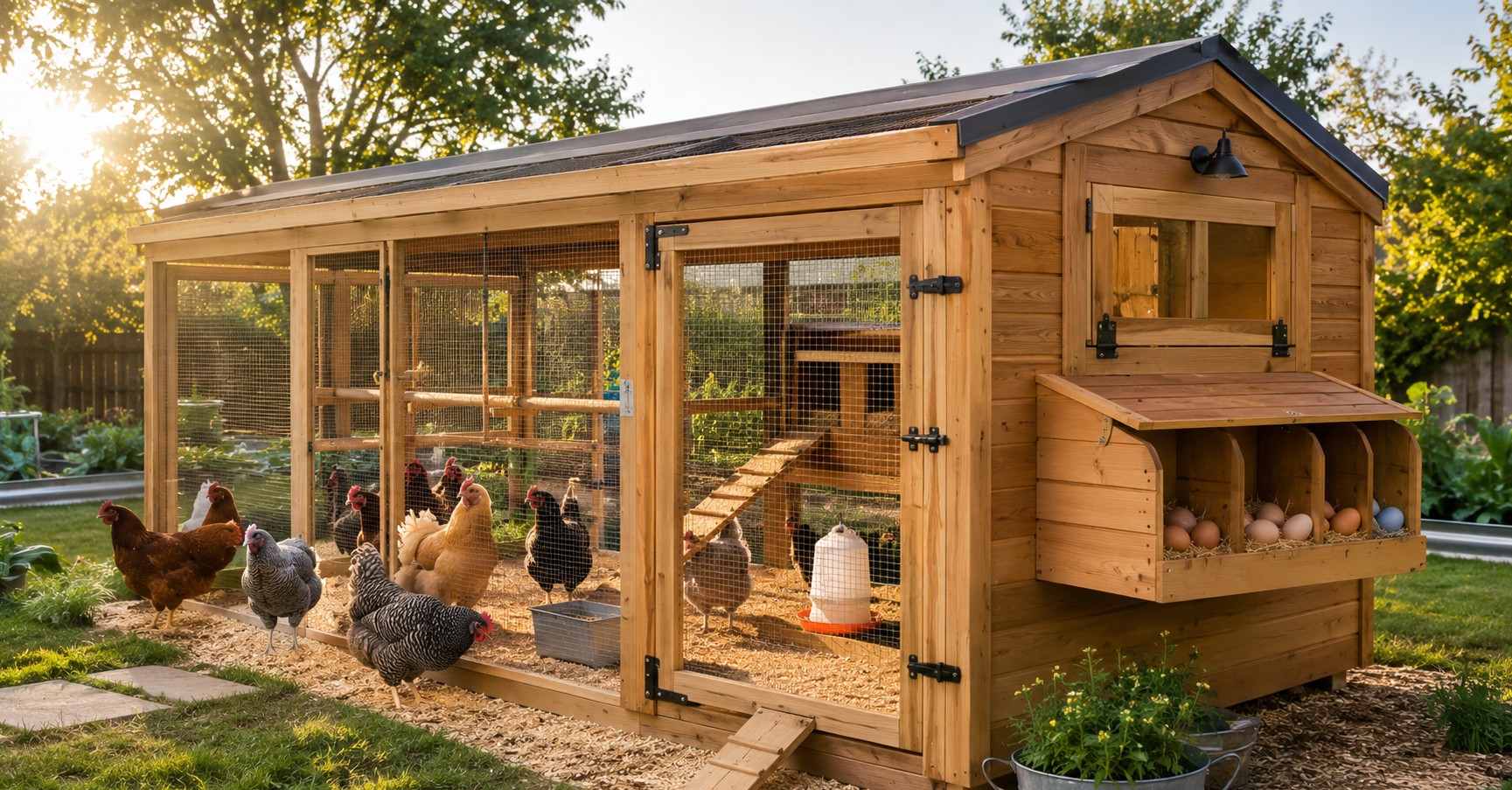
The best chicken coop for 11-20 chickens is usually a walk-in coop with at least 44 to 80 square feet of indoor coop space, plus a secure outdoor run with about 110 to 200 square feet or more. Plan for about 4 square feet per standard-size chicken inside the coop and about 10 square feet per bird in the run. Add strong ventilation, 8 to 10 nesting boxes for 20 hens, 8 to 10 inches of roosting space per bird, predator-proof hardware cloth, dry bedding, and wide doors for easy cleaning.
Why Coop Size Matters for 11-20 Chickens
A flock of 11 to 20 chickens creates a very different coop environment than a small flock of 4 to 6 birds. There are more droppings, more body heat, more dust, more scratching, more competition at feeders, and more traffic around nesting boxes. If the coop is undersized, small problems build quickly.
The right chicken coop for medium flock management gives birds enough space to move away from each other. This helps reduce feather picking, crowding, bullying, dirty eggs, and stress. It also makes your work easier because bedding stays drier, airflow works better, and you do not have to fight your way into a cramped coop with a scoop, rake, or bucket.
For beginners, the biggest mistake is trusting the bird count printed on a cheap prefab coop. Many small coops are advertised for more chickens than they comfortably hold. A coop that says it holds 12 chickens may only be comfortable for 5 or 6 full-size hens in real conditions. When you are shopping for the best chicken coop for 11-20 chickens, focus on square footage, access, ventilation, and durability instead of the marketing number.
Common signs your coop is too small
- Chickens crowd the doorway in the morning or refuse to go inside at night.
- Bedding becomes wet or smelly soon after cleaning.
- Eggs are often dirty, broken, or laid outside the nesting boxes.
- Birds fight over roost space or sleep in nesting boxes.
- There is a strong ammonia smell when you open the coop.
- Hens look restless, stressed, or picked on.
- You cannot easily stand, rake, collect eggs, or replace bedding.
These signs do not always mean you need a brand-new coop, but they do mean the current setup needs attention. Sometimes adding run space, improving ventilation, increasing roost length, or changing the feeder location can solve part of the problem. But if the basic coop footprint is far too small, an upgrade is usually the better long-term choice.
Chicken Coop Size Guide for 11-20 Chickens
The most practical rule for a large chicken coop for backyard flock planning is to allow about 4 square feet of indoor coop space per standard-size chicken. Bantams may need less, and large breeds may need more. For the run, plan about 10 square feet per bird as a minimum starting point. More run space is almost always better, especially if the chickens do not free range.
So, what size chicken coop for 20 chickens should you consider? A comfortable indoor coop for 20 standard hens should be around 80 square feet. That could be an 8 by 10 coop, a 10 by 8 coop, or a similar layout. For 15 chickens, about 60 square feet is a practical target, such as a 6 by 10 coop or an 8 by 8 coop with a little extra room.
| Flock Size | Minimum Indoor Coop Space | Better Indoor Coop Space | Minimum Run Space | Practical Setup Idea |
|---|---|---|---|---|
| 11 chickens | 44 sq ft | 50 to 60 sq ft | 110 sq ft | 6×8 coop with 10×12 run |
| 15 chickens | 60 sq ft | 70 to 80 sq ft | 150 sq ft | 8×8 coop with 10×16 run |
| 18 chickens | 72 sq ft | 80 to 96 sq ft | 180 sq ft | 8×10 coop with 12×16 run |
| 20 chickens | 80 sq ft | 96 to 120 sq ft | 200 sq ft | 10×10 coop with 10×20 run |
These numbers are not about luxury. They are about keeping the coop manageable. A chicken coop for 11 chickens can be smaller than a chicken coop for 20 chickens, but both should still give birds enough room to roost, scratch bedding, avoid conflict, and stay dry during bad weather.
How big should a chicken coop be for 15 chickens?
For 15 standard-size hens, aim for at least 60 square feet indoors. An 8 by 8 coop gives 64 square feet, which works well for many backyard flocks. If your birds are large breeds, your winters are long, or your flock spends many days inside due to storms, more space is better. A walk in chicken coop for 15 chickens should also have enough room for feeders, waterers, roost bars, and nesting boxes without blocking the floor.
What size chicken coop for 20 chickens?
For 20 chickens, 80 square feet indoors is a solid minimum for standard hens. If you can build or buy closer to 100 square feet, daily care becomes easier. The best chicken coop size for 20 chickens also depends on run space. A smaller coop may work better if the flock has a large covered run and access to outdoor space every day. A coop with limited run access should be larger inside.
Best Coop Style for a Medium Backyard Flock
The best chicken coop for 11-20 chickens is usually not a tiny elevated coop. It is normally a walk-in structure with enough headroom for a person to enter, clean, inspect birds, and collect eggs comfortably. A walk-in design is especially helpful when you manage 15 to 20 hens because chores take more space and tools.
A walk-in chicken coop for 15 chickens or more can look like a small shed, a modern homestead coop, a barn-style coop, or a simple rectangular wooden coop with a covered run. The style matters less than the layout and build quality. The coop should protect birds from weather, predators, moisture, and extreme heat while giving you easy access.
Good coop styles for 11 to 20 chickens
- Shed-style coop: Simple, strong, easy to insulate or ventilate, and easy to clean.
- Walk-in barn-style coop: Attractive and practical, especially for larger backyards.
- Coop with attached covered run: Great for predator protection and rainy climates.
- Converted garden shed: Often cost-effective if you add ventilation, roosts, windows, and predator protection.
- Mobile large coop: Useful on acreage, but harder to build strong enough for 20 birds.
For a large backyard chicken coop for 11 to 20 hens, I prefer a simple rectangular layout over a complicated shape. A rectangle is easier to frame, easier to roof, easier to ventilate, and easier to clean. It also makes roost bars, nesting boxes, and storage easier to place.
Best Chicken Coop Layout for 15 to 20 Hens
The best chicken coop layout for a medium backyard flock separates sleeping, laying, feeding, watering, and cleaning zones. This does not need to be fancy. It simply means your coop should not force birds to sleep over feeders, kick bedding into waterers, or crowd nesting boxes.
Practical layout zones
- Roosting zone: Place roost bars away from nesting boxes and above a droppings board if possible.
- Nesting zone: Keep nesting boxes darker, lower than roosts, and easy to access from outside if possible.
- Feeding zone: Put feeders where birds can gather without blocking the door.
- Water zone: Keep waterers away from deep bedding piles and protect them from freezing in winter.
- Cleaning path: Leave enough open floor space for a rake, bedding fork, or wheelbarrow access.
For 20 chickens, two long roost bars along one wall often work better than several short bars placed randomly. Chickens naturally compete for the highest and most comfortable sleeping spots. Keeping roosts at similar height can reduce fighting. Do not place roosts directly above nesting boxes because droppings will make the boxes dirty.
If you are buying a chicken coop with run for 20 chickens, check the access doors before you check the paint color. You need a full-size people door, a large clean-out door, or removable panels. A beautiful coop that is hard to clean will become a problem fast.
Chicken Coop and Run Setup for 20 Chickens
The run is just as important as the coop. A chicken coop and run setup for 20 chickens should give the flock room to scratch, dust bathe, move away from each other, and spend time outside safely. If your chickens stay confined most of the day, the run should be large, secure, and interesting.
For 20 standard chickens, a 200 square foot run is a practical minimum. A 10 by 20 run works, but larger is better. If you can provide 300 square feet or more, the birds will have more room and the ground will recover better. A covered section helps during rain, snow, and extreme sun.
Features of a good run
- Hardware cloth on vulnerable sides, not weak chicken wire.
- A roof or partial roof for rain and hawk protection.
- Shade in summer and wind blocks in winter.
- Dry areas for dust bathing.
- Multiple feeding or treat areas to reduce crowding.
- Logs, stumps, branches, or platforms for enrichment.
- A secure gate with a latch that raccoons cannot open.
A backyard chicken coop for 15 hens may work with a smaller run than a 20-hen setup, but do not cut space too tightly. Chickens are active birds. They scratch, peck, explore, and establish social order. When the run is too small, the flock may turn the ground into mud and start picking at each other.
Predator-Proof Chicken Coop Design
A predator proof chicken coop is essential for medium and larger flocks. The more birds you keep, the more attention your coop may attract from raccoons, foxes, coyotes, neighborhood dogs, snakes, opossums, hawks, owls, and rodents. Predator protection should be planned from the start, not added after a loss.
Chicken wire can help keep chickens in, but it is not strong predator protection. For openings, vents, windows, and lower run walls, hardware cloth is usually the safer choice. Use sturdy framing, secure fasteners, and latches that cannot be flipped open easily.
| Problem | Likely Cause | Practical Solution |
|---|---|---|
| Predators digging under the run | No buried barrier or apron | Add a hardware cloth apron around the run perimeter |
| Raccoons reaching into the coop | Large wire gaps or weak window covering | Cover openings with properly attached hardware cloth |
| Rodents around feed | Spilled feed and open storage | Use sealed feed bins and clean spills daily |
| Birds attacked from above | Open run without overhead protection | Add netting, wire, solid roofing, or a covered section |
| Door opened at night | Weak latch or loose frame | Install secure locks and check door alignment often |
For a predator proof chicken coop for 20 chickens, inspect every gap larger than you think matters. Corners, roof edges, floor seams, and doors are common weak points. Predators are patient. If they find a loose board, soft floor edge, or weak latch, they may keep working at it until they get in.
Ventilation, Moisture Control, and Airflow
Ventilation is one of the most important features in the best chicken coop for 11-20 chickens. A medium flock produces a lot of moisture through breathing and droppings. Without good airflow, the coop can become damp, smelly, and unhealthy.
Good ventilation does not mean cold drafts blowing directly on roosting birds. It means stale, moist air can escape while fresh air enters safely. Vents near the roofline are helpful because warm moist air rises. Windows covered with hardware cloth can improve summer airflow. In hot climates, wide roof overhangs, shade, and high vents are very useful.
Signs of poor ventilation
- Condensation on windows or walls.
- Strong ammonia smell.
- Damp bedding even without spills.
- Frost buildup inside during winter.
- Birds coughing, sneezing, or looking uncomfortable.
If birds show signs of serious illness, contact a poultry vet or your local extension office for guidance. Coop improvements can support a healthier environment, but they are not a substitute for proper veterinary advice when illness is severe or spreading.
For more help with summer comfort, see the guide on best chicken coop cooling system. Heat can be especially stressful for larger flocks, and ventilation is the first part of cooling.
Roosting Space and Nesting Boxes
Roosts and nesting boxes are simple features, but they have a big effect on daily coop life. Chickens want to sleep off the floor, and hens want safe, comfortable places to lay eggs. If these areas are poorly designed, you may deal with dirty eggs, broken eggs, sleeping in nest boxes, and nighttime fighting.
How much roosting space for 20 chickens?
Plan about 8 to 10 inches of roosting space per standard chicken. For 20 chickens, that means about 13 to 17 linear feet of roost space. More is better if you have large breeds. Use roost bars that are comfortable for chickens to grip, such as a smooth 2×4 board with the wide side up. Avoid sharp edges and slippery materials.
How many nesting boxes for 20 chickens?
A practical rule is one nesting box for every 3 to 4 hens. For 20 hens, 6 boxes can work, but 7 to 8 boxes is often more comfortable. Some flocks still choose the same favorite box, but extra boxes reduce pressure during busy laying times. Nesting boxes should be clean, dry, slightly darker than the rest of the coop, and lower than the roost bars.
For a backyard chicken coop for 15 hens, 5 to 6 nesting boxes usually works well. If you notice hens laying eggs in corners, on the floor, or outside, check whether the boxes are clean, private, easy to access, and not occupied by birds sleeping in them.
Best Bedding and Cleaning Routine
A flock of 11 to 20 chickens can turn a poorly managed coop into a mess quickly. Bedding helps absorb moisture, control odor, protect feet, and make cleaning easier. The best bedding depends on your climate, coop design, budget, and cleaning style.
Pine shavings are a popular choice because they are absorbent, easy to find, and simple to remove. Straw can work in nesting boxes, but it may mat down and hold moisture in some coops. Sand can be useful in dry climates or covered runs, but it needs proper drainage and regular sifting. Hemp bedding is absorbent but may cost more.
| Material | Best Use | Pros | Cons |
|---|---|---|---|
| Pine shavings | Coop floor and nesting boxes | Absorbent, common, easy to clean | Can get dusty if poor quality |
| Straw | Nesting boxes and dry runs | Comfortable and natural looking | May hold moisture and mat down |
| Sand | Covered runs or dry coop floors | Easy to sift and drains well when installed correctly | Heavy and not ideal for every climate |
| Hemp bedding | Coop floor | Absorbent and often lower dust | More expensive in many areas |
| Wood chips | Outdoor run surface | Good for mud control and scratching | Needs refreshing over time |
For a 20-chicken coop, spot cleaning is your friend. Remove wet bedding, droppings under roosts, and spilled feed before they become a bigger issue. A droppings board under the roost can reduce bedding waste and make daily cleaning much faster.
A simple routine is to spot clean daily or every few days, refresh bedding weekly as needed, and do a deeper clean on a schedule that fits your flock and climate. For a detailed cleaning plan, read the best chicken coop cleaning routine. For disinfecting after illness, pests, or major messes, see the best chicken coop disinfectant guide.
Best Materials for a Large Chicken Coop
Materials matter more as flock size increases. A small lightweight coop may survive with a few birds, but a chicken coop for 20 chickens needs stronger framing, better roofing, and more durable hardware. Medium flocks create more wear around doors, ramps, feeders, and roosts.
| Coop Part | Recommended Material | Why It Works | What to Avoid |
|---|---|---|---|
| Frame | Pressure-treated base with solid lumber framing | Stronger support and better resistance near the ground | Thin, weak, lightweight frames |
| Walls | Exterior-grade plywood or durable siding | Protects from weather and holds hardware securely | Untreated thin panels that warp quickly |
| Roof | Metal roofing or quality shingles with slope | Sheds rain and protects bedding from leaks | Flat roofs that collect water |
| Windows and vents | Hardware cloth with secure fasteners | Allows airflow while blocking predators | Loose screen or chicken wire alone |
| Floor | Sealed plywood, wood over framing, or durable washable surface | Makes cleaning easier and reduces moisture damage | Raw wood left exposed to wet bedding |
The roof deserves special attention. A leak over roosts or bedding can create odor, moisture, and health problems. If you are building or upgrading, the best chicken coop roof guide can help you compare practical roofing options.
Common Mistakes to Avoid
Choosing the best chicken coop for 11-20 chickens becomes easier when you know what not to do. Many coop problems come from underestimating space, ventilation, cleaning access, or predators.
Mistake 1: Buying by bird count instead of measurements
Always check actual dimensions. A coop advertised for 15 chickens may not provide enough square footage, roost space, or run area for 15 standard hens. Measure the usable floor space, not just the outside footprint.
Mistake 2: Forgetting cleaning access
If you cannot stand or reach into the coop comfortably, you may delay cleaning. That leads to odor, pests, and damp bedding. A walk-in coop is usually worth it for 11 to 20 chickens.
Mistake 3: Poor ventilation in winter
Many beginners close every vent when it gets cold. This traps moisture inside. Chickens need protection from drafts, but they still need fresh air. High vents are especially helpful because they move moist air out without blowing directly on roosting birds.
Mistake 4: Weak predator protection
Predators can exploit small weaknesses. Use secure latches, hardware cloth, strong doors, and a dig barrier. Check the coop often after storms or ground shifting.
Mistake 5: Too few feeders or waterers
In a medium flock, one feeder may create crowding. Consider multiple feeding points or a larger feeder. Make sure lower-ranking hens can eat and drink without being pushed away.
Seasonal Tips for Larger Backyard Flocks
Seasonal care is important for any flock, but it becomes more important when you keep 15 to 20 chickens. More birds create more moisture in winter, more heat in summer, and more ground pressure during rainy seasons.
Spring
Spring is a good time to deep clean, inspect predator barriers, refresh run material, and check for leaks after winter. Egg laying often increases, so keep nesting boxes clean and add extra bedding as needed.
Summer
Heat stress can be dangerous. Provide shade, cool water, airflow, and dry dust bathing areas. Do not rely only on a small window for ventilation. Larger flocks need more air exchange because body heat builds up quickly.
Fall
Fall is the best time to prepare for winter. Seal roof leaks, repair loose hardware cloth, store bedding, and check that doors close tightly. Do not block all ventilation while winterizing.
Winter
Keep bedding dry, prevent water from freezing, and watch for condensation. Chickens handle cold better than dampness and drafts. If your birds seem sick, weak, or are having breathing problems, contact a poultry vet or local extension office.
My Practical Recommendation
For most backyard chicken owners, my practical recommendation is a walk-in coop between 80 and 120 square feet if you plan to keep close to 20 standard hens. For 11 to 15 hens, a walk-in coop around 60 to 80 square feet is usually much more comfortable than a small prefab unit. Add a secure run that gives at least 10 square feet per bird, and go bigger if your chickens will not free range.
The best walk in chicken coop for 20 chickens does not need to be fancy. It needs to be dry, safe, ventilated, easy to clean, and easy to expand. I would rather have a plain 8 by 10 coop with excellent airflow, strong latches, good roosts, and a covered run than a decorative coop that is hard to clean and too small.
If your budget is limited, consider converting a shed or building in stages. Start with the strongest shell you can afford: roof, frame, doors, predator protection, and ventilation. You can upgrade feeders, automatic doors, droppings boards, paint, and storage later. Do not compromise on predator safety, roof quality, or basic space.
FAQ
What is the best chicken coop for 11-20 chickens?
The best chicken coop for 11-20 chickens is usually a walk-in coop with enough indoor space, strong ventilation, secure predator protection, and a large attached run. For standard-size hens, plan about 4 square feet per bird inside and about 10 square feet per bird in the run. The coop should have comfortable roost bars, enough nesting boxes, dry bedding, and doors large enough for easy cleaning. A simple shed-style or barn-style coop often works better than a small decorative prefab coop.
What size chicken coop for 20 chickens is best?
For 20 standard chickens, aim for at least 80 square feet of indoor coop space. A 10 by 8 coop can work, while a 10 by 10 or larger coop gives more comfort and flexibility. You should also provide around 200 square feet of outdoor run space as a minimum. More space is helpful if your chickens do not free range. The coop should include about 13 to 17 linear feet of roost space and around 6 to 8 nesting boxes.
Can 20 chickens fit in a prefab coop?
Some large prefab coops may work, but many small prefab coops overstate their real capacity. Before buying, check the actual floor dimensions, roost length, nesting box count, door size, ventilation, and run space. A coop labeled for 20 chickens may be too tight for 20 standard hens in real backyard use. For a medium flock, a walk-in structure is usually easier to clean, safer to manage, and more comfortable for the birds.
How many nesting boxes for 20 chickens do I need?
For 20 hens, 6 nesting boxes can work, but 7 to 8 boxes is often more comfortable. Many hens will still share a favorite box, so do not be surprised if some boxes are used more than others. Keep boxes clean, dry, and darker than the main coop area. Place them lower than the roosts so birds do not choose them as sleeping spots. Dirty or crowded boxes can lead to floor eggs and broken eggs.
How much roosting space for 20 chickens is enough?
Plan about 8 to 10 inches of roosting space per standard chicken. For 20 chickens, that equals about 13 to 17 linear feet of roost space. Large breeds may need more. It is better to provide extra room than to make birds crowd tightly. Keep roost bars sturdy, smooth, and placed higher than nesting boxes. Avoid placing roosts directly over feeders, waterers, or nesting boxes because droppings will create extra cleaning problems.
Is a walk-in chicken coop better for 15 chickens?
Yes, a walk-in chicken coop for 15 chickens is usually much more practical than a small low coop. With 15 hens, you need room to clean, collect eggs, check birds, manage bedding, and handle feeders or waterers. A walk-in coop also makes it easier to improve ventilation, add roost space, and inspect for pests or predators. It may cost more at first, but it often saves time and frustration over the long term.
What is the best bedding for a 20-chicken coop?
Pine shavings are a practical bedding choice for many 20-chicken coops because they are absorbent, easy to find, and simple to remove. Hemp bedding can also work well but may cost more. Straw is often useful in nesting boxes, but it can hold moisture if the coop is damp. Sand may work in dry, well-drained setups, especially covered runs. The best bedding is the one you can keep dry, clean, and affordable.
How do I keep a large chicken coop from smelling?
Odor usually comes from moisture, droppings, poor airflow, or dirty bedding. Improve ventilation, remove wet bedding, clean under roosts often, prevent water spills, and avoid overcrowding. A droppings board can make a big difference in a coop with 15 to 20 chickens. If you smell strong ammonia, treat it as a warning sign. Add fresh bedding, increase airflow, and check whether the coop is too damp or too crowded.
Do I need a covered run for 20 chickens?
A covered run is highly useful for 20 chickens, especially in areas with rain, snow, hawks, or hot sun. It helps keep part of the run dry, reduces mud, protects feed areas, and gives chickens outdoor space during bad weather. The entire run does not always need a solid roof, but having at least one covered section is practical. Use strong materials and consider overhead predator protection if hawks or owls are common in your area.
How can I predator-proof a chicken coop for 20 chickens?
Use hardware cloth on windows, vents, and vulnerable run areas. Add a buried barrier or outward-facing apron to stop digging predators. Install secure latches on doors and nest box lids, repair gaps quickly, and check the roofline and corners. Store feed in sealed containers to avoid attracting rodents. A predator proof chicken coop should be inspected regularly because weather, soil movement, and daily use can loosen materials over time.
Final Checklist
- Choose a walk-in coop if you plan to keep 11 to 20 chickens.
- Allow about 4 square feet per standard chicken inside the coop.
- Provide about 10 square feet per bird in the outdoor run.
- Use hardware cloth on vents, windows, and predator-risk areas.
- Plan 8 to 10 inches of roost space per chicken.
- Add about 1 nesting box for every 3 to 4 hens.
- Keep bedding dry and remove wet spots quickly.
- Use high vents for airflow without direct drafts on roosts.
- Make sure doors, latches, and clean-out access are easy to use.
- Inspect the coop seasonally for leaks, gaps, pests, and wear.
Conclusion
The best chicken coop for 11-20 chickens is a practical, roomy, predator-resistant setup that keeps birds dry, comfortable, and easy to care for. A medium flock needs more than a cute backyard coop. It needs real space, smart airflow, strong materials, safe roosts, clean nesting boxes, and a run that gives chickens room to behave naturally.
If you are planning for 15 to 20 hens, think long term. Choose a coop you can walk into, clean easily, ventilate properly, and protect from predators. Start with the right size and layout, then improve the details as your flock grows. A well-planned coop makes chicken keeping calmer, cleaner, and more enjoyable for both you and your backyard flock.