
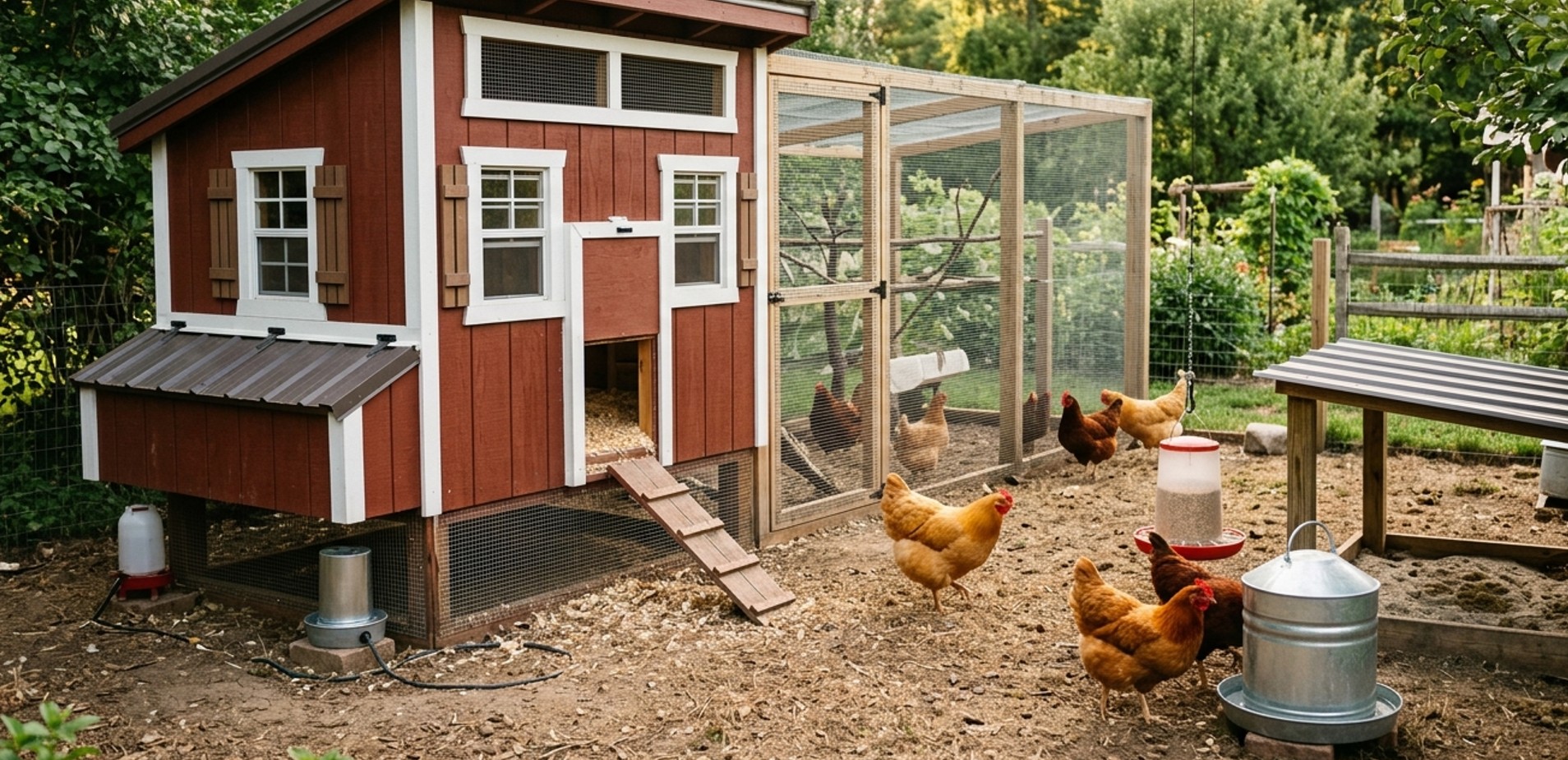
Chicken Coop Seasonal Care: Winter Heating, Summer Cooling, Rainy Weather, and Storm Protection Tips
Backyard chickens can handle a lot more weather than many beginners expect, but that does not mean they should be left to figure out every season on their own. Winter cold, frozen water, summer heat, heavy rain, high humidity, wind, storms, and sudden temperature swings can all affect chicken health, egg laying, bedding quality, coop ventilation, and daily flock comfort. Good Chicken coop Seasonal Care is about preparing the coop before the weather becomes a problem, not rushing outside after the flock is already stressed.
For backyard chicken owners in the United States, seasonal care can look very different depending on location. Coastal and Midwest areas may need better storm preparation. The details change, but the goal is the same: keep chickens dry, hydrated, protected, well-ventilated, and calm through every season.
This complete guide covers the most practical seasonal chicken care topics: how cold is too cold for chickens, safe winter coop heating ideas, how to prevent frozen chicken water, the best chicken water heater options, summer ventilation, chicken heat stress symptoms, rainy season coop tips, storm protection, winter bedding setup, and long-term coop maintenance. It is written for real backyard flock owners who want practical solutions, not confusing advice or risky shortcuts.
Quick Answer Box
The best way to manage chickens through winter, summer, rain, and storms is to focus on dry bedding, clean water, safe ventilation, shade, predator protection, and weather-ready coop maintenance. Most healthy adult chickens tolerate cold better than heat when they are dry, protected from drafts, and have unfrozen water. In summer, shade, airflow, cool water, and reduced stress are more important than fancy products. During rainy weather, prevent mud, leaks, damp bedding, and poor drainage. Before storms, secure loose items, check latches, reinforce the run, and make sure the flock has a safe, dry shelter. For Chicken coop Seasonal Care, avoid unsafe heating shortcuts, sealed-up winter coops, poor ventilation, and overcrowding. If a chicken shows serious illness, heat stress, frostbite concerns, breathing trouble, injury, weakness, or unusual behavior, contact a poultry vet or local extension office for guidance.
Table of Contents
- What Chicken Coop Seasonal Care Really Means
- Why Weather Affects Backyard Chickens
- Winter Chicken Care Basics
- How Cold Is Too Cold for Chickens?
- Best Winter Chicken Coop Heating Ideas
- How to Prevent Frozen Chicken Water
- Best Chicken Water Heater for Winter
- Winter Bedding Setup for Chickens
- How to Keep Chickens Cool in Summer
- Chicken Heat Stress Symptoms
- Best Summer Ventilation for Chicken Coops
- Rainy Weather Chicken Coop Tips
- Storm Protection Tips for Backyard Chickens
- Seasonal Problem, Cause, and Solution Table
- Best Tools, Materials, and Products for Seasonal Care
- Common Seasonal Chicken Care Mistakes to Avoid
- Season-by-Season Coop Maintenance Checklist
- Long-Term Prevention for Weather-Related Coop Problems
- My Practical Recommendation
- Frequently Asked Questions
- Final Checklist
- Conclusion
What Chicken Coop Seasonal Care Really Means
Seasonal chicken care means adjusting your coop, run, feeding routine, water setup, bedding, ventilation, and safety checks based on the weather your flock is facing. It is not about changing everything every month. It is about understanding what chickens need most during each season and making practical improvements before small issues become serious problems.
In winter, chickens need dry housing, draft protection, unfrozen water, proper roosting space, and safe ventilation. In summer, they need shade, airflow, cool water, and protection from heat stress. During rainy seasons, they need dry bedding, good drainage, mud control, and leak prevention. During storms, they need a secure coop, strong fencing, locked doors, and protection from flying debris, flooding, and panic.
Good Chicken coop Seasonal Care starts with one important idea: chickens need protection from weather extremes, but they also need fresh air. Many beginner mistakes happen when owners try to solve one seasonal problem and accidentally create another. For example, sealing a coop tightly in winter may reduce drafts, but it can also trap moisture and ammonia. Adding a heat lamp may feel helpful, but it can create a fire risk if installed carelessly. Spraying chickens with water during summer may seem cooling, but it can stress birds and create damp bedding if done poorly.
A better approach is steady, simple, and practical. Chickens often show signs of discomfort before the situation becomes dangerous.
Seasonal care also protects egg laying. Weather stress can reduce egg production. Summer heat can lower feed intake. Winter darkness can slow laying. Damp bedding can affect chicken health. Predator pressure may increase during harsh weather. A comfortable, stable environment helps your backyard flock stay healthier and more predictable throughout the year.
Chickens are hardy animals, but they are not weatherproof machines. Their bodies respond to temperature, light, moisture, wind, and stress. A hen that is too hot may stop eating enough feed. A hen that is cold and wet may use energy staying warm instead of laying eggs. A flock that cannot drink because water is frozen will struggle quickly. A damp coop can create air quality problems. A muddy run can lead to dirty eggs, foot problems, and more maintenance.
Weather affects chickens in several practical ways:
- Temperature: Heat and cold both change how chickens eat, drink, move, rest, and lay.
- Moisture: Wet bedding and damp air can create unhealthy coop conditions.
- Wind: Strong drafts on roosting birds can increase cold stress.
- Sun exposure: Direct summer sun can cause overheating and reduce comfort.
- Daylight: Short winter days often reduce egg laying naturally.
- Storms: High winds, heavy rain, hail, snow, and flooding can damage coops and stress flocks.
- Predators: Predators may become more active around coops during difficult weather or food shortages.
The goal is not to make the coop feel like a human house. Chickens do not need a warm living room in winter or air conditioning in summer. They need a safe poultry environment designed for their bodies. That means roosts where they can sleep off the floor, bedding that stays dry, ventilation that removes moisture, shade where they can escape direct sun, and clean water they can actually drink.
Weather-related problems often build slowly. A small roof leak becomes damp bedding. Damp bedding becomes odor. Odor means poor air quality. Poor air quality can stress the respiratory system. Stress can affect egg laying and flock behavior. The same pattern happens in summer: a little too much heat, not enough shade, warm water, reduced feed intake, and then the flock starts showing signs of heat stress.
That is why the best seasonal care plan is proactive.
Winter Chicken Care Basics
Winter chicken care is mostly about dryness, ventilation, water, and wind protection. Many healthy adult chickens can handle cold weather better than new owners expect, especially cold-hardy breeds with full feathering. The problem is not usually cold alone. The bigger problems are wet feathers, frozen water, drafts, poor ventilation, and damp bedding.
In winter, chickens fluff their feathers to trap warm air close to their bodies. They also roost together and cover their feet with their feathers while sleeping. This natural insulation works best when birds are dry and out of direct wind. If the coop is damp, drafty, or poorly ventilated, chickens have a harder time staying comfortable.
Winter priorities for backyard chickens
- Keep the coop dry inside.
- Prevent drafts from blowing directly on roosting birds.
- Maintain ventilation near the top of the coop.
- Keep water from freezing.
- Use safe bedding that stays dry.
- Check combs, wattles, feet, and behavior daily.
- Secure the coop from nighttime predators.
- Collect eggs often so they do not freeze.
One common winter mistake is closing every vent because the owner is worried about cold air. This can trap moisture from breathing and droppings. Moisture is a major winter problem because damp air can make frostbite risk worse and create unhealthy conditions. A better setup blocks direct drafts at roost height but allows moist air to escape above the birds.
Another mistake is relying on unsafe heat. A poorly secured heat lamp in a dusty coop with dry bedding is a serious fire concern. If you choose to add heat, use products designed for poultry or outdoor farm use, install them carefully, keep cords protected, and follow manufacturer instructions. Many flocks do not need added heat if the coop is dry, ventilated, and protected from wind.
Winter also changes egg laying. Shorter daylight can reduce production. That does not always mean hens are unhealthy. Some owners use supplemental light, while others allow a natural winter rest. If you use light, keep it safe, consistent, and not excessive. A basic timer and a soft morning light are usually safer than sudden bright light late at night.
How Cold Is Too Cold for Chickens?
There is no single temperature that is too cold for every chicken. Breed, age, feather condition, health, humidity, wind, coop design, and acclimation all matter. A healthy adult cold-hardy hen in a dry, draft-protected coop may handle freezing weather well. A young bird, sick bird, molting hen, small bantam, or chicken with a large single comb may struggle sooner.
Instead of looking only at the thermometer, look at the full situation. Is the coop dry? Are birds out of the wind? Is water available? Are they eating? Is bedding dry? Is there condensation inside the coop? These questions tell you more than temperature alone.
Signs chickens may be too cold
- Birds are hunched, fluffed, and not moving much during normal active hours.
- Chickens are not eating or drinking normally.
- Feet, combs, or wattles show concerning changes.
- Birds avoid leaving the roost even during the day.
- The coop has condensation, wet bedding, or a strong ammonia smell.
- Molting birds have large bare patches during cold weather.
Cold stress deserves attention, but avoid assuming the answer is always heat. Sometimes the better fix is blocking wind, replacing damp bedding, improving roost placement, widening roost boards so chickens can cover their feet, or adding safe ventilation. A dry chicken can tolerate cold much better than a damp chicken.
If a chicken appears weak, has serious frostbite concerns, is not eating or drinking, is injured, or seems unable to stay warm, move her to a safe observation area and contact a poultry vet or extension office. Do not wait too long with serious symptoms.
Best Winter Chicken Coop Heating Ideas
Winter coop heating is one of the most debated topics in backyard chicken care. The safest answer is usually not to heat the whole coop like a house. Most chickens need a dry, wind-protected, ventilated space more than they need warm air. However, there are situations where limited, safe heat support may help, especially for small flocks, injured birds, older birds, extreme cold snaps, or poorly insulated emergency setups.
Safe heating idea 1: Improve the coop before adding heat
The first winter heating idea is not a heater. It is better coop design. A dry, draft-controlled coop with proper ventilation is the foundation. Check for roof leaks, wall gaps, floor moisture, and wind blowing directly across roosts. Add weather stripping around human access doors if needed. Cover large open sides with clear panels or tarps on the windward side, but do not block all airflow.
If your coop is small and drafty, fixing air leaks at roost level may help more than adding heat. If your bedding is damp, replacing it and improving drainage may make the flock more comfortable immediately.
Safe heating idea 2: Use flat-panel radiant heaters carefully
Flat-panel radiant heaters designed for poultry use can provide gentle localized warmth. They do not usually heat the whole coop. Instead, they give birds a warm area if they choose to stand near it. This is generally safer than open-bulb heat lamps, but it still requires careful installation.
Mount the heater securely, keep it away from bedding, protect cords from pecking, and follow instructions. Do not place it where chickens can knock it down or where dust and feathers can build up heavily.
Safe heating idea 3: Heated water solutions instead of coop heat
For many backyard flocks, the most useful winter equipment is not a coop heater. It is a safe heated water base, heated poultry waterer, or heated bowl. Chickens need water every day, and frozen water can become a bigger problem than cold air.
By focusing on water, dry bedding, and wind protection, many owners avoid the risks of heating the whole coop.
Heating idea to be cautious with: Heat lamps
Heat lamps are commonly used but can be risky in coops. Dry bedding, feathers, dust, wood, cords, and active birds create a dangerous environment for a hot bulb. If you use a heat lamp for chicks or emergency care, it must be secured in multiple ways, placed away from bedding, protected from contact, and monitored carefully. For adult winter coops, many owners avoid heat lamps because of fire risk.
When extra heat may be considered
- A bird is sick, injured, or recovering and cannot regulate body temperature well.
- A molting chicken has poor feather coverage during severe cold.
- The flock is very small and cannot roost together for warmth.
- Temperatures are unusually extreme for your region.
- The coop is temporary and not yet properly winterized.
Even then, heat should be a support tool, not a substitute for good housing. If a chicken is seriously ill or weak, contact a poultry vet or local extension office. Warmth alone will not solve a medical problem.
How to Prevent Frozen Chicken Water
Frozen water prevention is one of the most important parts of winter chicken care. Chickens need access to water every day. They may eat less, lay less, and become stressed if water freezes for long periods. In winter, owners often focus on bedding and warmth, but water should be one of the first things checked every morning.
The best solution depends on your climate, coop power access, flock size, and daily schedule. Some owners can swap waterers twice a day. Others need heated equipment because they work long hours or live where water freezes quickly.
Option 1: Heated poultry waterer
A heated poultry waterer is designed to keep water from freezing in cold conditions. It can be convenient, especially for owners who cannot check water many times daily. Choose a model made for outdoor or poultry use, place it on a stable surface, and protect cords from chickens and weather.
Option 2: Heated water base
A heated water base works with compatible metal poultry waterers. It keeps the bottom warm enough to slow freezing. Make sure the base and waterer are designed to work together. Do not use homemade electrical setups unless you truly understand the safety risks.
Option 3: Heated bowl
Heated bowls can work for some flocks, but they may get dirty faster because chickens can scratch bedding into them. They are often better outside the coop in a covered area where spills will not wet bedding. Keep the cord protected.
Option 4: Water rotation
If you do not have electricity near the coop, rotate waterers. Bring one waterer inside to thaw while another is outside. This works best when you are home enough to swap them regularly. Use rubber bowls if you need to knock out ice more easily.
Option 5: Insulated water station
An insulated box or sheltered water area can slow freezing. It may not prevent freezing in very cold climates, but it can help. Keep water out of direct wind and place it where chickens can access it safely.
Winter water safety notes
- Do not let cords sit in standing water.
- Use outdoor-rated extension cords only when appropriate.
- Protect cords from pecking and chewing.
- Keep waterers level to prevent spills.
- Avoid water inside the coop if spills create wet bedding.
- Check heated products daily for damage.
Water management is also connected to egg laying. Hens need water for body function and egg production. If your hens slow down in winter, frozen water may be one of several causes along with short daylight and cold stress.
Best Chicken Water Heater for Winter
The best chicken water heater for winter is the one that fits your flock size, climate, power setup, and safety needs. There is no single perfect option for every backyard coop. A small flock in a mild winter area may only need a rubber bowl and twice-daily checks. A larger flock in a freezing climate may need a heated waterer or heated base.
| Water Heating Option | Best Use | Pros | Cons |
|---|---|---|---|
| Heated poultry waterer | Regular freezing climates with power access | Convenient, designed for poultry, reduces daily thawing | Needs electricity and cord safety checks |
| Heated water base | Metal waterers in cold climates | Reliable when used with compatible waterers | Not for all waterer types |
| Heated pet bowl | Small flocks or covered outdoor stations | Easy to use and widely available | Gets dirty faster and may spill |
| Rubber bowl rotation | No-electricity coops | Simple, low cost, easy to remove ice | Requires frequent checks |
| Insulated water station | Mild freezes or as extra support | Slows freezing and blocks wind | May not work in severe cold alone |
When choosing a chicken water heater, think about cleaning too. A product that is hard to clean may become slimy, dirty, or neglected. Chickens drink more willingly from clean water. A good winter setup should be safe, stable, easy to refill, and practical for your daily routine.
Place water where chickens can access it during daylight. If you keep water inside the coop, prevent spills. Wet winter bedding can create moisture problems quickly. Many owners prefer a covered run water station so spills happen outside the sleeping area.
Winter Bedding Setup for Chickens
Winter bedding should keep the coop dry, comfortable, and manageable. Bedding is not only about warmth. It absorbs moisture, cushions the floor, helps control manure, and affects air quality. The best winter bedding setup depends on coop design, flock size, climate, and how often you clean.
Common winter bedding options
- Pine shavings: Popular, absorbent, easy to manage, and widely available.
- Straw: Traditional and insulating, but can mat down and hold moisture if not managed.
- Hemp bedding: Absorbent and low dust, but often more expensive.
- Sand: Useful in some dry coop setups, but can be cold and heavy in winter climates.
- Deep bedding method: A managed bedding system that builds depth over time, but it must stay dry and be maintained properly.
Dry bedding is more important than deep bedding. A thick layer of wet bedding is not helpful. It can smell, hold moisture, and create poor coop conditions. If bedding is damp, remove wet spots and fix the source. Look for leaks, spilled water, poor drainage, or too many birds in a small area.
Winter bedding setup steps
- Clean out old wet or sour bedding before winter becomes harsh.
- Inspect the floor for leaks, rot, or moisture entry.
- Add a dry bedding material that works for your coop style.
- Keep waterers from spilling into bedding.
- Turn or refresh bedding as needed.
- Watch for ammonia smell, damp spots, or caked manure.
- Keep nesting boxes clean and dry for egg laying comfort.
If you smell strong ammonia when you enter the coop, the bedding and ventilation need attention. Chickens are close to the bedding and roost in that air all night. Fresh air and dry bedding are essential parts of Winter chicken care.
How to Keep Chickens Cool in Summer
Chickens often struggle more with heat than cold. They do not sweat like humans. They cool themselves by panting, holding wings away from the body, drinking water, resting in shade, and reducing activity. Summer heat protection is one of the most important parts of seasonal care in many US states.
Heat can reduce egg laying because hens may eat less feed and use more energy staying cool. Severe heat stress can become dangerous. The best summer plan focuses on shade, airflow, cool water, low-stress routines, and avoiding overcrowding.
Provide deep shade
Shade is not optional in hot weather. Chickens need a shaded area throughout the day, not just in the morning. Watch how the sun moves across your run. A spot that is shaded at 8 a.m. may be full sun by noon.
Good shade options include:
- Shade cloth over part of the run
- Roofed run sections
- Trees or shrubs outside the run
- Covered dust bath areas
- Temporary tarps installed with good airflow
- Open-sided shelters
Do not block all airflow with plastic or solid coverings in summer. Shade should reduce sun exposure while still allowing air movement.
Keep water cool and available
Hot water sitting in the sun is not appealing. Move waterers into shade and refill them often. Use multiple water stations so all birds can drink, including lower-ranking hens. Some owners add ice to water during extreme heat, but clean access matters more than fancy tricks.
Improve airflow
Summer airflow helps remove heat and moisture. A coop that is comfortable in spring can become hot and stale in July. Open secure vents, use hardware cloth for predator-safe airflow, and consider a fan if it can be installed safely. Fans should not blow dust everywhere or create cord hazards.
Reduce afternoon stress
Avoid chasing, handling, transporting, or introducing new birds during the hottest part of the day. Do coop chores early in the morning or evening when possible. Heat-stressed chickens need calm.
Offer cool ground and dust bath access
Chickens like to dust bathe, and a shaded dust bath area can help them stay comfortable. Dampening a shady patch of ground outside the coop area can cool the environment, but avoid creating mud inside the run or wet bedding in the coop.
Summer heat protection is most effective when it is ready before a heat wave. Do not wait until chickens are panting heavily to create shade.
Chicken Heat Stress Symptoms
Heat stress can start subtly and become serious. Every backyard chicken owner should know the warning signs. Some breeds handle heat better than others, but all chickens can struggle in high temperatures, especially with humidity, poor airflow, or lack of shade.
Common chicken heat stress symptoms
- Panting with open beak
- Holding wings away from the body
- Lethargy or standing still for long periods
- Reduced eating
- Increased drinking
- Pale comb or wattles
- Watery droppings
- Reduced egg laying
- Soft-shell or thin-shell eggs during heat stress
- Stumbling, weakness, or collapse in severe cases
If chickens are panting lightly in warm weather but still active, eating, drinking, and moving to shade, they may be managing. If they are weak, unsteady, not drinking, collapsing, or looking severely distressed, that is urgent. Move the bird to a cooler shaded area, offer water, and contact a poultry vet or extension office for guidance.
Do not dunk an overheated chicken into ice-cold water. Sudden temperature shock can be harmful. Gentle cooling, shade, airflow, and access to water are safer. Some owners use cool, not icy, water near the feet or a damp towel nearby, but serious heat stress should be treated with professional guidance.
| Symptom | Likely Cause | Action |
|---|---|---|
| Light panting | Warm weather or mild heat stress | Add shade, cool water, and airflow |
| Wings held away from body | Trying to release body heat | Reduce activity and improve cooling options |
| Reduced egg laying | Heat stress and lower feed intake | Support with water, shade, and morning feeding |
| Weakness or stumbling | Serious heat stress or illness | Move to cool shade and contact a poultry vet or extension office |
| Dirty wet bedding in summer | Spilled water or poor ventilation | Remove wet bedding and fix water setup |
Best Summer Ventilation for Chicken Coops
Summer ventilation is about moving hot, stale, moist air out of the coop while keeping chickens safe from predators. A coop can overheat if it has small windows, poor roof ventilation, or too many birds in a tight space. Chickens need fresh air all year, but summer makes ventilation especially important.
Good summer ventilation features
- High vents that allow hot air to escape
- Low protected openings that allow fresh air in
- Windows covered with hardware cloth
- Roof overhangs that allow vents to stay open during rain
- Open eaves protected from predators
- Cross-ventilation without unsafe drafts at roost height
Do not confuse ventilation with wind blasting. In summer, moving air helps. In winter, direct drafts on roosting birds can be a problem. The best coop design allows flexible seasonal control. You may open more vents in summer and reduce wind exposure in winter while still allowing moisture to escape.
Using fans safely
A fan can help in hot climates, but it must be used safely. Choose a fan appropriate for dusty outdoor or barn conditions if possible. Keep cords away from chickens, moisture, and chewing animals. Do not place a fan where it can fall into bedding or water. Clean dust buildup regularly.
A fan should help move air, not blast chickens all day. Some birds will choose to stand near airflow, while others will avoid it. Give them options.
Ventilation and moisture
Even in summer, moisture matters. Wet bedding, spilled water, humid air, and droppings can create odor and poor air quality. Ventilation helps, but it does not replace cleaning. Remove wet bedding and fix the cause.
Good summer ventilation also helps with egg laying comfort. Hens are more likely to use nesting boxes if the coop is not hot, stale, or full of flies.
Rainy Weather Chicken Coop Tips
Rainy weather creates a different set of problems. Chickens can handle some rain, but constant wet ground, muddy runs, damp bedding, roof leaks, and poor drainage can make a coop unhealthy. Rainy season coop tips are mostly about water control.
Keep rain out of the coop
Check the roof before rainy season. Look for leaks, loose panels, gaps around vents, and areas where water blows in. A sloped roof with an overhang helps keep rain away from walls and run edges. If your coop has windows or vents, make sure rain cannot pour directly through them.
Improve run drainage
A muddy run is hard on chickens and hard on you. If water collects in the run, consider adding drainage, gravel under high-traffic areas, wood chips, sand in appropriate climates, or a roofed run section. The exact material depends on your soil and climate.
Do not simply pile bedding into a muddy run without fixing drainage. Organic material can help in some deep litter run systems, but if the area stays soggy, it may become smelly and unhealthy.
Create a dry outdoor area
Chickens need a place to get out of rain during the day. A covered run, small lean-to shelter, raised platform, or roofed feeding area can help. Keeping feed dry is important because wet feed can spoil and attract pests.
Watch for moisture inside the coop
Rain can increase humidity. If the coop smells damp or musty, improve airflow and remove wet bedding. Check around waterers, doors, and roof edges. Moisture is one of the biggest year-round coop problems because it affects bedding, odor, air quality, and comfort.
Protect eggs and nesting boxes
Wet nesting boxes can lead to dirty eggs and hens avoiding the boxes. Keep nesting bedding dry. If hens track mud into boxes, consider adding a dry landing area near the coop entrance or improving the run surface.
Storm Protection Tips for Backyard Chickens
Storm preparation is different from daily rain care. Storms can bring high wind, heavy rain, hail, lightning, fallen branches, flooding, power outages, and frightened animals. Good Storm preparation protects both the flock and the structure.
Before storm season
- Inspect the coop roof and fasteners.
- Check run panels, fencing, gates, and latches.
- Trim dangerous branches near the coop if safe and appropriate.
- Secure loose tarps, shade cloth, feeders, buckets, and tools.
- Make sure drainage moves water away from the coop.
- Prepare backup water containers.
- Know where you can temporarily move birds if the coop is damaged.
During a storm
Keep chickens in the safest dry area you have. If the run is not secure in high wind, the coop may be safer. Make sure the coop has ventilation, but avoid openings where rain blows directly onto birds. Do not go outside during dangerous weather just to check eggs or do non-urgent chores. Human safety matters too.
After a storm
Inspect the coop before letting chickens roam widely. Look for broken wire, loose boards, standing water, fallen branches, damaged roofing, exposed nails, and predator entry points. Storms can create new gaps that predators find quickly.
Check feed for moisture and discard anything spoiled. Replace wet bedding. Make sure water is clean. Observe the flock for injuries or stress. If a bird is injured or acting seriously abnormal, contact a poultry vet or extension office.
Seasonal Problem, Cause, and Solution Table
Seasonal care becomes easier when you connect the symptom to the likely cause. The table below gives a practical starting point for common weather-related chicken coop problems.
| Problem | Likely Cause | Practical Solution |
|---|---|---|
| Frozen water in winter | Low temperatures and exposed waterers | Use heated waterer, heated base, insulated station, or water rotation |
| Damp winter bedding | Leaks, spills, poor ventilation, or condensation | Remove wet bedding, fix leaks, improve airflow, move waterer |
| Chickens panting in summer | Heat stress, direct sun, poor airflow | Add shade, cool water, ventilation, and reduce handling |
| Dirty eggs during rain | Muddy run and wet nesting bedding | Improve drainage, refresh nesting boxes, add dry entry area |
| Coop smells like ammonia | Wet bedding, poor ventilation, too many birds | Clean bedding, increase ventilation, reduce moisture and crowding |
| Run roof damaged after storm | Wind, weak fasteners, loose panels | Repair immediately and reinforce before the next storm |
| Egg laying drops in hot weather | Heat stress and reduced feed intake | Feed during cooler hours, provide shade and fresh water |
| Egg laying drops in winter | Short daylight, cold stress, frozen water, natural rest | Support basic care, consider safe light plan, keep water available |
Best Tools, Materials, and Products for Seasonal Care
You do not need a complicated setup to manage seasonal chicken care. The most useful products are usually simple, durable, and easy to clean. Choose items that solve real problems in your climate.
Hardware cloth
Hardware cloth is useful all year. It allows ventilation while protecting openings from predators. Use it over windows, vents, and run openings. It is especially important when you open more ventilation in summer or leave vents open during winter.
Shade cloth
Shade cloth helps with summer heat protection. It can reduce direct sun over a run while still allowing airflow. Secure it well so it does not flap dangerously during storms.
Heated poultry waterer or heated base
For freezing climates, a safe heated water setup is one of the best winter investments. It supports flock health and saves time. Always follow safety instructions and inspect cords regularly.
Extra waterers
Extra waterers help in both summer and winter. In summer, multiple water stations reduce crowding and keep timid hens hydrated. In winter, extra waterers allow rotation if one freezes.
Pine shavings or dry bedding material
Dry bedding supports coop comfort. Keep extra bedding on hand before storms or cold snaps. If bedding gets wet, you can replace it quickly instead of waiting for a store trip.
Roof panels or clear weather panels
Run roofing helps during rain, snow, and summer sun. Clear or translucent panels can let light in while blocking rain. Make sure roofing is well supported for wind and snow where needed.
Thermometer and humidity awareness
A simple coop thermometer helps you understand conditions. Humidity matters too. If the coop is damp, smells strong, or has condensation, improve ventilation and bedding management.
Backup supplies
Keep a basic seasonal kit: extra bedding, spare latch, screws, zip ties, safe extension cord if used appropriately, feed container, water containers, flashlight, and first-aid basics for chickens. This helps during storms and sudden weather changes.
| Material or Tool | Best Season | Best Use | Important Note |
|---|---|---|---|
| Hardware cloth | All year | Predator-safe ventilation and openings | Attach securely with screws and washers |
| Shade cloth | Summer | Reducing direct sun over the run | Must be secured against wind |
| Heated waterer | Winter | Keeping drinking water available | Inspect cords and follow safety instructions |
| Pine shavings | All year | Dry absorbent coop bedding | Replace wet bedding quickly |
| Roof panels | Rain, snow, summer | Run protection from weather | Support properly for wind and snow load |
| Coop fan | Summer | Air movement in hot weather | Use safely around dust, cords, and moisture |
Common Seasonal Chicken Care Mistakes to Avoid
Many seasonal problems come from good intentions. Backyard owners want to help their chickens, but some quick fixes create new risks. Avoiding common mistakes is a major part of Chicken coop Seasonal Care.
Mistake 1: Sealing the coop completely in winter
A sealed coop may feel warmer, but it traps moisture. Moist air can cause condensation, damp bedding, and poor air quality. Chickens need ventilation in winter. The goal is to block direct drafts on roosting birds while letting moist air escape.
Mistake 2: Using unsafe heat lamps
Heat lamps can be dangerous in dusty wooden coops with dry bedding. If a lamp falls, overheats, or contacts bedding, the result can be disastrous. Use safer alternatives when possible, and never install heat equipment casually.
Mistake 3: Ignoring water until it freezes
Frozen water is not a minor inconvenience. Chickens need water daily. Plan your winter water system before the first hard freeze.
Mistake 4: Forgetting shade until a heat wave
Shade should be ready before extreme heat arrives. Chickens can become heat stressed quickly in direct sun, especially if water is warm or the coop lacks airflow.
Mistake 5: Letting rainy runs turn into mud pits
Mud creates dirty eggs, wet feet, odor, and more work. Improve drainage, add a roofed section, and manage run material before rainy season becomes severe.
Mistake 6: Blocking summer airflow with tarps
Tarps can help block rain or sun, but if they wrap the run too tightly in summer, they trap heat and humidity. Leave airflow paths open.
Mistake 7: Overcrowding the coop
Overcrowding makes every seasonal problem worse. More birds mean more moisture, more manure, more heat, more competition, and more stress. Match flock size to coop and run space.
Mistake 8: Waiting until storm day to prepare
Storm preparation should happen before the warning. Secure roofing, latches, fencing, and loose items during calm weather. It is much harder and less safe to fix a coop in high wind or heavy rain.
Season-by-Season Coop Maintenance Checklist
A simple seasonal maintenance rhythm keeps the coop from falling behind. You do not need to rebuild the coop every season. You just need to check the right things at the right time.
| Season | Main Risk | Maintenance Tasks |
|---|---|---|
| Spring | Rain, mud, parasites, changing temperatures | Deep clean, inspect roof, refresh bedding, check drainage, inspect for mites |
| Summer | Heat stress, dehydration, poor airflow | Add shade, clean waterers, open vents, check fans, reduce overcrowding |
| Fall | Molting, shorter days, predator activity, winter prep | Repair coop, stock bedding, test heated waterer, reinforce run, inspect latches |
| Winter | Frozen water, damp bedding, drafts, snow load | Check water daily, remove wet bedding, maintain ventilation, collect eggs often |
| Storm season | Wind, flooding, loose panels, power outages | Secure loose items, inspect roof, prepare backup water, check fencing after storms |
Spring maintenance
Spring is a good time for a full reset. Remove old bedding, inspect for winter damage, check for leaks, clean nesting boxes, and look for early parasite activity. Spring rain can create mud quickly, so improve drainage before the run gets messy.
Summer maintenance
Summer maintenance is about heat and hydration. Clean waterers often, keep shade in place, check airflow, and watch flock behavior during hot afternoons. If you use fans, clean dust buildup and inspect cords.
Fall maintenance
Fall is preparation season. Test heated water equipment before the first freeze. Stock bedding. Fix roof leaks. Reinforce run panels. Check predator protection. Hens may molt in fall, so support feather growth and reduce stress.
Winter maintenance
Winter maintenance is daily and simple: water, bedding, ventilation, eggs, and safety. Check for frozen water, damp bedding, blocked vents, snow load, and predator signs. Collect eggs often so they do not freeze and crack.
Long-Term Prevention for Weather-Related Coop Problems
Long-term seasonal success comes from building a coop that handles weather naturally. The better the design, the fewer emergency fixes you need. A well-designed coop drains well, breathes well, blocks predators, provides shade, stays dry, and gives chickens enough space.
Build for your climate
A coop in Maine should not be designed exactly like a coop in Florida. Cold climates need winter water planning, snow load strength, wind protection, and dry bedding systems. Hot climates need shade, airflow, open ventilation, and summer run comfort. Rainy regions need roof overhangs, drainage, and mud control.
Keep the coop raised or well-drained
A coop sitting in a low wet spot will always be harder to manage. If possible, place the coop on higher ground. Direct water away from the structure. Use gutters, gravel, grading, or drainage paths when needed.
Design flexible ventilation
Vents that can be adjusted seasonally are very helpful. You may want more openings in summer and more wind control in winter. Hardware cloth keeps ventilation predator-safe.
Use durable roofing
A good roof protects from rain, snow, sun, and bedding moisture. Roof leaks create year-round problems. Check fasteners and edges before storm season.
Plan safe access for maintenance
If a coop is hard to clean, it will not be cleaned often enough. Make doors large enough to reach bedding, roosts, waterers, and nesting boxes. Seasonal care is easier when the coop is practical.
Keep a seasonal care calendar
A simple calendar helps you remember when to test the heated waterer, add shade cloth, deep clean bedding, inspect vents, trim branches, and prepare for storms. Prevention is easier than emergency repair.
My Practical Recommendation
If I were setting up a backyard coop for all-season use, I would focus on five things before buying anything fancy: dry bedding, safe ventilation, clean water, shade, and strong weather protection. Those five areas solve more seasonal problems than most special products.
For winter, I would avoid heating the whole coop unless there is a specific need. I would make sure the coop is dry, the roosts are out of drafts, the vents are open high above the birds, and the water cannot freeze. A safe heated waterer is usually more useful than a risky heat lamp.
For summer, I would build shade before the heat wave arrives. I would use shade cloth or a roofed run section, keep water in shade, add extra water stations, and improve airflow. Heat stress can become serious quickly, so I would rather overprepare with shade and water than react too late.
For rainy weather, I would focus on drainage and roof coverage. A muddy run creates constant problems. If the run stays wet, I would add a covered section, improve the ground surface, and keep nesting boxes dry.
For storms, I would prepare during calm weather. Secure roof panels, check latches, reinforce fencing, and remove loose items. After storms, I would inspect the run before letting chickens out.
My practical view is simple: good Chicken coop Seasonal Care is not about making chickens delicate. It is about giving hardy birds a safe, dry, well-managed environment so they can handle the seasons naturally.
Frequently Asked Questions
1. How cold is too cold for chickens?
There is no single temperature that is too cold for every chicken. Healthy adult chickens can often handle cold weather well if they are dry, protected from drafts, and have unfrozen water. The real danger is often wet bedding, damp air, direct wind, frozen water, poor health, or exposed combs in harsh conditions. Watch your flock’s behavior. If chickens are weak, not eating, not drinking, showing concerning comb or foot issues, or acting very abnormal, contact a poultry vet or local extension office. A dry, ventilated coop is usually more important than a heated coop.
2. Do chickens need heat in the winter?
Most healthy adult chickens do not need the coop heated like a house. They need a dry, draft-protected, well-ventilated shelter and access to unfrozen water. Extra heat may be considered for sick birds, injured birds, molting hens with poor feather coverage, very small flocks, or unusual extreme cold, but heating must be done safely. Heat lamps can be risky in dusty coops with dry bedding. Many backyard owners get better results by improving bedding, blocking direct drafts, maintaining ventilation, and using a safe heated water system.
3. What is the best way to prevent frozen chicken water?
The best method depends on your climate and power access. In freezing climates, a heated poultry waterer or heated water base is often the most convenient choice. Without electricity, you can rotate waterers, use rubber bowls that are easier to clear of ice, or place water in a sheltered insulated area. Check water at least daily and more often in severe cold. Keep cords safe, dry, and protected if you use electric products. Frozen water prevention is one of the most important parts of winter chicken care because chickens need water every day.
4. How do I keep chickens cool during summer?
To keep chickens cool in summer, provide deep shade, fresh cool water, good airflow, and a low-stress routine. Place waterers in shade and use more than one water station. Add shade cloth, roofed run areas, shrubs, or open shelters. Improve coop ventilation with predator-safe openings covered in hardware cloth. Avoid chasing, handling, or moving birds during the hottest part of the day. Watch for heat stress symptoms such as panting, wings held away from the body, weakness, and reduced eating. Severe heat stress needs fast attention and professional guidance.
5. What are common chicken heat stress symptoms?
Common chicken heat stress symptoms include panting, holding wings away from the body, reduced activity, increased drinking, reduced eating, pale combs, watery droppings, and fewer eggs. More serious signs include weakness, stumbling, collapse, or a bird that cannot respond normally. Move a stressed bird to shade, provide water, and improve airflow. Do not shock the bird with ice-cold water. If symptoms are severe or the chicken does not improve, contact a poultry vet or local extension office. Heat stress can become dangerous quickly.
6. How do I keep a chicken coop dry during rainy weather?
Start by checking the roof, walls, door edges, windows, vents, and run drainage. Fix leaks before they soak bedding. Add roof overhangs, panels, or a covered run section if rain blows into the coop. Keep waterers from spilling and remove wet bedding quickly. Improve drainage around the run so chickens are not standing in mud all day. Use dry bedding in nesting boxes and collect eggs regularly. Rainy season coop tips mostly come down to controlling water before it creates mud, odor, and poor air quality.
7. What is the best summer ventilation for chicken coops?
The best summer ventilation allows hot air to escape and fresh air to enter while keeping predators out. High vents, open eaves, hardware-cloth-covered windows, and cross-ventilation all help. In hot climates, a safe fan may improve airflow if cords and dust are managed carefully. Do not wrap the coop or run so tightly with tarps that heat and humidity become trapped. Ventilation should work with shade and clean water. A hot, stale coop can reduce egg laying and increase stress during summer.
8. What bedding is best for chickens in winter?
Pine shavings are a popular winter bedding because they are absorbent and easy to manage. Straw can work but may mat down and hold moisture if not maintained. Hemp bedding is absorbent but often more expensive. The best bedding is the one you can keep dry, clean, and practical for your coop. Wet bedding should be removed quickly because moisture is a major winter problem. Deep bedding can work in some setups, but it must be managed properly and should never become damp, sour, or ammonia-smelling.
9. How should I prepare chickens for storms?
Before storms, secure roof panels, fencing, gates, latches, shade cloth, tarps, feeders, and loose tools. Check drainage so water moves away from the coop. Have backup water ready in case power goes out or access becomes difficult. During dangerous weather, keep chickens in the safest dry shelter and avoid unnecessary trips outside. After the storm, inspect for broken wire, fallen branches, standing water, damaged roofing, and new predator entry points. Storm preparation works best when done before the forecast becomes urgent.
10. Can weather changes affect egg laying?
Yes, weather changes can affect egg laying. Heat stress may reduce feed intake and cause fewer eggs. Winter daylight changes often slow laying naturally. Frozen water, cold stress, damp bedding, storms, predator activity, and poor ventilation can also affect production. A hen’s body responds to overall conditions, not just feed. Support egg laying by keeping water available, feed balanced, bedding dry, nesting boxes clean, and the coop calm and secure. Some seasonal slowdowns are normal, especially during winter and molting.
11. Should I close coop vents during winter?
You should not close all coop vents during winter. Chickens need ventilation to remove moisture and stale air. The key is to avoid direct drafts blowing on roosting birds while keeping high ventilation open. Moisture trapped inside a winter coop can make conditions worse and may increase frostbite risk. If your coop feels damp, smells like ammonia, or has condensation, improve ventilation and bedding management. Cover vents with hardware cloth for predator protection and adjust wind exposure without sealing the coop completely.
12. What should I do if a chicken looks sick during extreme weather?
If a chicken looks sick during extreme weather, move slowly and observe carefully. Signs such as weakness, collapse, breathing trouble, serious injury, not eating, not drinking, severe heat stress, or concerning frostbite need prompt attention. Place the bird in a safe, calm area appropriate for the weather and contact a poultry vet or local extension office for guidance. Do not assume every problem is just heat or cold. Weather can reveal underlying health issues, and serious symptoms should not be ignored.
Final Checklist
- Keep the coop dry in every season.
- Maintain ventilation without direct winter drafts on roosting birds.
- Prevent frozen water before winter temperatures drop.
- Use safe heated water products if your climate requires them.
- Avoid unsafe heat lamps in adult coops whenever possible.
- Add shade before summer heat arrives.
- Provide multiple clean water stations in hot weather.
- Watch for chicken heat stress symptoms during summer.
- Improve drainage before rainy season creates mud.
- Keep nesting boxes clean, dry, and comfortable.
- Secure roofing, fencing, latches, and loose items before storms.
- Inspect the coop and run after every major storm.
- Keep extra bedding and backup water supplies ready.
- Contact a poultry vet or extension office for serious illness, injury, or distress.
Conclusion
Seasonal weather is one of the biggest challenges in backyard chicken keeping, but it becomes much easier when you prepare the coop before problems appear. Winter cold, summer heat, rainy weather, frozen water, storms, and changing daylight all affect chickens in different ways. A strong seasonal care plan helps protect flock health, egg laying, bedding quality, coop ventilation, and daily comfort.
The most important principles are simple. Provide shade in summer. Block direct drafts in winter. Prevent muddy runs during rain. Secure the coop before storms. Watch your flock’s behavior because chickens often show early signs when something is wrong.
Good Chicken coop Seasonal Care is not about overcomplicating chicken keeping. It is about building steady habits that match your local weather. Start with one walkaround today. Look at the roof, bedding, vents, water setup, shade, drainage, latches, and run security. A few practical improvements now can make every season safer and easier for your backyard flock.