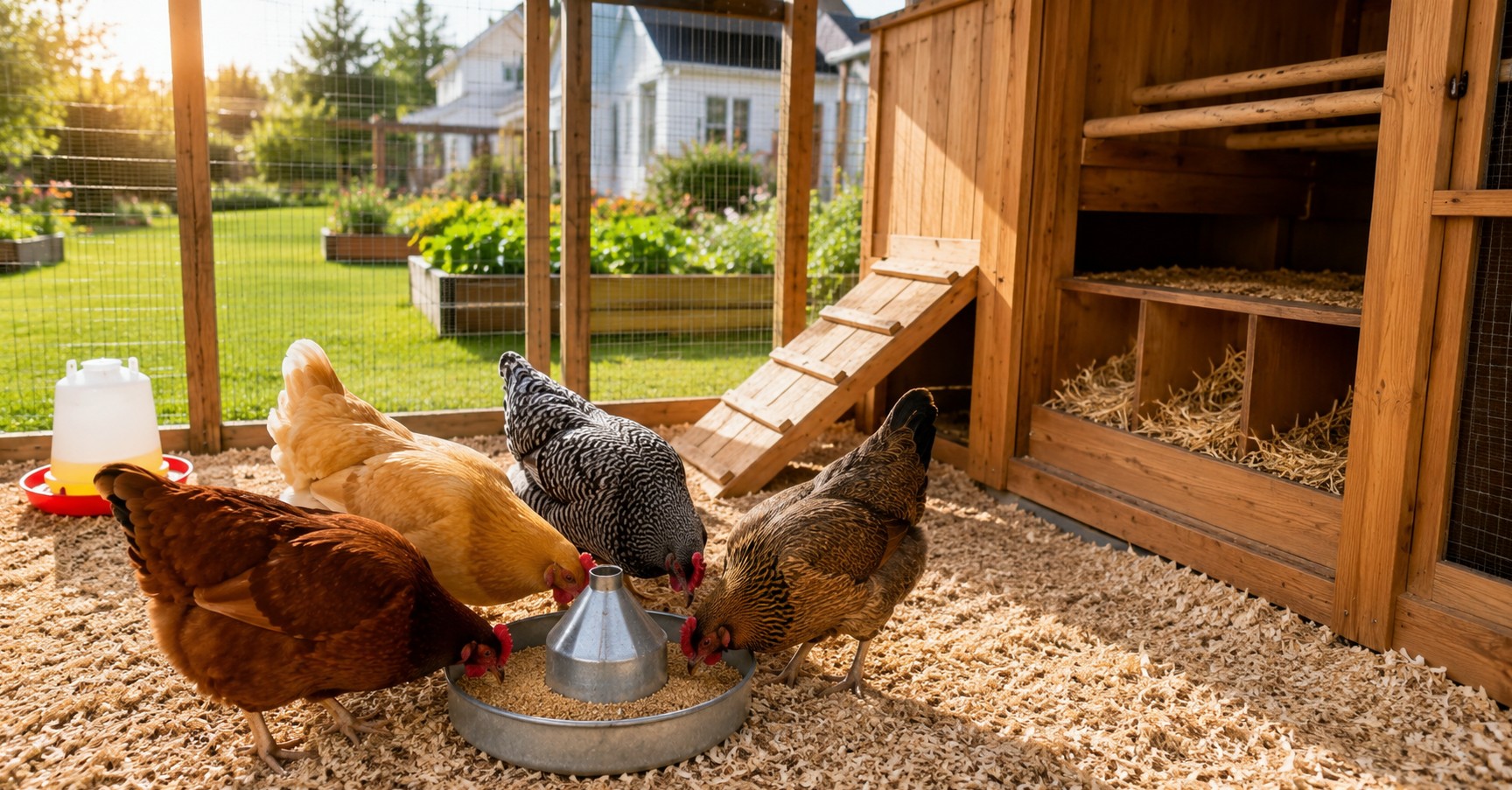
For backyard chicken owners in the United States, choosing feed can feel confusing because farm stores often carry layer pellets, crumbles, organic feed, non-GMO feed, all-flock feed, scratch grains, oyster shell, grit, and supplements all in the same aisle. This guide breaks everything down in simple, practical language so you can feed your flock with confidence.
Quick Answer: Best Chicken Feed for Laying Eggs
The Best Chicken Feed for Laying Eggs is a complete layer feed made for adult hens, usually with about 16% to 18% protein and added calcium for eggshell support. Most backyard flocks do well on layer pellets or layer crumbles, with oyster shell and grit offered separately. Free-range hens still need layer feed because grass, bugs, and kitchen scraps do not provide complete nutrition. Keep feed dry, provide fresh water daily, limit treats, and choose a fresh feed your hens eat well.
What Is Layer Feed and Why Does It Matter?
Layer feed is a complete chicken feed made for hens that are laying eggs or close to laying age. It is designed to support egg production, eggshell strength, feather condition, and daily energy needs. A good layer feed normally contains grains, protein ingredients, calcium, vitamins, minerals, and other nutrients in a balanced formula.
This matters because laying eggs takes a lot from a hen. Every egg requires protein for the egg itself, calcium for the shell, and energy for the hen to keep her body healthy. If she fills up on scratch grains, bread, random kitchen scraps, or low-quality feed, she may not get enough balanced nutrition.
For beginners, the easiest safe choice is a complete commercial layer feed. It removes most of the guesswork and helps prevent common feeding mistakes. Good feed works best when paired with clean water, dry bedding, safe coop ventilation, predator protection, and regular coop maintenance.
Why Laying Hens Need a Different Diet Than Chicks or Meat Birds
Chicks, broilers, and laying hens are not all supposed to eat the same feed. Chicks need starter feed because they are growing bones, organs, feathers, and muscles. Meat birds need feed designed for fast growth. Laying hens need feed that supports long-term health and egg production.
The biggest difference is calcium. Laying hens need more calcium because they are building eggshells. Chicks should not be fed layer feed too early because the extra calcium is not meant for young birds that are not laying. On the other hand, hens that are already laying may struggle with shell quality if they do not get enough calcium.
Most pullets can move to layer feed around the time they begin laying or when the first eggs appear. If your flock has chicks, pullets, roosters, and hens together, all-flock feed with oyster shell offered separately can be a better option.
Best Nutrients Laying Hens Need for Healthy Egg Production
The Best Chicken Feed for Laying Eggs should provide a complete nutrition base. Hens need protein, calcium, energy, vitamins, minerals, clean water, and access to grit when they eat anything beyond commercial pellets or crumbles.
Protein helps with egg formation, feather condition, and muscle maintenance. Calcium supports shells. Fats and carbohydrates provide energy. Vitamins and minerals support digestion, immunity, bone health, and overall chicken health. Water keeps the whole system working. A hen without enough clean water may reduce or stop laying quickly, especially during summer heat.
Good nutrition also prevents a lot of small problems from becoming bigger flock issues. Hens that are underfed or missing key nutrients may become restless, peck feathers, lay fewer eggs, produce weaker shells, or lose body condition.
Protein Requirements for Laying Hens
Most laying hens do well on layer feed containing around 16% protein. Some flocks may benefit from 17% to 18% protein, especially during molting, cold weather, recovery from stress, or heavy laying. The best protein percentage for laying hens depends on breed, age, season, and overall flock condition.
The best high protein chicken feed for egg laying can be useful, but higher protein is not always automatically better. A complete feed with balanced nutrients is more important than chasing one number. Too many high-protein treats can also unbalance the diet if they replace layer feed.
If hens are molting, growing feathers, or looking rough, a temporary boost from quality feed may help. If they are sick, weak, losing weight fast, or breathing poorly, contact a poultry vet or local extension office instead of trying to solve the issue with feed alone.
Why Calcium Is Important for Strong Eggshells
Calcium is one of the most important nutrients for laying hens because every eggshell requires it. The best calcium feed for laying hens is usually a complete layer feed plus free-choice oyster shell. Even if the feed contains calcium, many backyard chicken owners still offer oyster shell separately so each hen can take extra as needed.
Signs that hens may need better calcium support include thin shells, soft-shelled eggs, rough shells, eggs breaking in the nesting box, or hens eating eggs after they crack. Calcium is not the only possible cause, though. Age, stress, heat, disease, poor water intake, and feed spoilage can also affect shell quality.
Do not force large amounts of calcium into all birds. Roosters, chicks, and non-laying pullets do not need the same calcium level as active layers. Separate oyster shell is a simple and practical solution for mixed backyard flocks.
Best Chicken Feed Types for Laying Eggs
When comparing the best layer feed for backyard chickens, you will usually see pellets, crumbles, mash, organic layer feed, non-GMO layer feed, high-protein layer feed, all-flock feed, and local mill mixes. Each can work well when the formula is complete and fresh.
The best commercial feed for laying hens should have a clear feed tag, appropriate protein level, calcium for layers, and a fresh smell. It should not be clumped, moldy, dusty beyond normal feed dust, or old. If the bag smells sour or damp, do not feed it.
| Feed Type | Best Use | Pros | Cons |
|---|---|---|---|
| Layer pellets | Most adult laying hens | Less waste, easy to use, lower dust | Some picky hens may prefer crumbles |
| Layer crumbles | Pullets, bantams, picky hens | Easy to eat and widely available | Can be dusty and easier to waste |
| Organic layer feed | Organic-focused egg production | Matches organic backyard goals | Usually costs more |
| Non-GMO layer feed | Owners avoiding GMO ingredients | Popular middle option | Still needs a balanced formula |
| All-flock feed | Mixed-age or mixed-sex flocks | Flexible and simple for mixed birds | Needs oyster shell for laying hens |
Layer Pellets vs Layer Crumbles: Which Is Better?
Layer pellets are compressed pieces of complete feed. They are usually cleaner, less dusty, and easier to use in many hanging feeders. The best layer pellets for chickens are a good choice when hens are mature enough to eat them comfortably and you want to reduce waste.
Layer crumbles are smaller broken pieces. The best layer crumbles for laying hens are helpful for younger pullets, smaller birds, bantams, and picky eaters. Crumbles are easy to eat, but they can create more dust and may be scratched out of open feeders.
There is no one-size-fits-all winner. If your hens waste crumbles, try pellets. If they ignore pellets, try crumbles. The best option is the one your flock eats well while staying healthy and productive.
Organic and Non-GMO Chicken Feed for Backyard Layers
The best organic chicken feed for laying hens is made with certified organic ingredients and is a good choice for owners who want organic-style backyard egg production. Organic layer feed often costs more, so check freshness, protein level, calcium content, and whether your hens actually eat it well.
The best non GMO chicken feed for layers is made without genetically modified ingredients. Non-GMO can be a practical middle option for many backyard chicken owners. However, non-GMO does not automatically mean the feed is better balanced than regular feed. Always read the feed tag.
Organic layer feed vs regular layer feed comes down to your goals, budget, and local availability. Regular complete layer feed can still support healthy eggs when it is fresh, balanced, and stored correctly.
Best Feed for Free-Range Laying Chickens
Free-range hens still need complete layer feed. Grass, bugs, seeds, worms, and garden scraps can add variety, but they are not consistent enough to replace balanced feed. The best feed for free range laying chickens is usually the same complete layer feed used for confined backyard hens.
Forage changes with season, rainfall, soil, yard size, and how many chickens use the area. In spring, hens may find plenty of greens and insects. In winter or dry summer weather, the same yard may offer very little nutrition. Keep layer feed available and let forage be a bonus, not the base of the diet.
Free-range flocks also face predators, so feeding routines should not attract raccoons, rodents, or wild birds. Clean up spilled feed, secure feed at night, and avoid tossing large amounts of grain around the yard.
How Much Feed Does a Laying Hen Need Per Day?
A practical estimate is that a standard laying hen eats about a quarter pound of feed per day. Four hens may eat roughly one pound per day, but this can vary by breed, weather, age, production level, and how much they forage.
Instead of measuring every bite, watch your flock. Hens should have enough feed during the day without the feeder being empty for long periods. At the same time, feed should not be left scattered around the run because it attracts rodents and moisture problems.
If a flock suddenly eats much less, check for heat stress, spoiled feed, dirty water, bullying, illness, or predator pressure. If they suddenly eat much more, check for cold weather, feeder waste, rodents, or wild birds stealing feed.
Best Feed for Strong Eggshells and Rich Egg Yolks
The best chicken feed for strong eggshells is a complete layer feed with proper calcium, plus oyster shell offered separately. Strong shells also depend on water intake, stress levels, hen age, and overall health. If shells suddenly become thin across the whole flock, check feed freshness, calcium access, water, heat, and coop stress.
The best feed for rich egg yolks often includes access to greens, safe forage, alfalfa, marigold, or other natural pigment ingredients. Rich yolk color can look appealing, but yolk color alone does not prove an egg is healthier. It mostly reflects pigments in the diet.
The best feed for healthy eggshells and the best feed for rich egg yolks both start with the same foundation: complete daily feed, clean water, safe treats in moderation, and good coop care.
Can Chicken Feed Really Increase Egg Production?
The Best Chicken Feed for Laying Eggs can improve production when poor nutrition is the reason hens are laying less. If hens have been eating too much scratch grain, low-protein feed, or unbalanced scraps, switching to a complete layer feed may help restore better laying and shell quality.
However, feed cannot override every natural or environmental reason for fewer eggs. Hens may slow down because of molting, winter daylight, age, broodiness, extreme heat, predator stress, parasites, or illness. A good feed supports healthy hens, but it does not force production beyond what the bird can safely do.
Think of feed as the foundation, not a magic switch. The best feed for chickens to lay more eggs works best when hens also have clean bedding, dry shelter, safe nesting boxes, good ventilation, low stress, and steady access to fresh water.
Common Reasons Hens Stop Laying Eggs
Egg production often drops for reasons that have nothing to do with the feed bag. Short winter days are a common cause because hens respond to daylight. Molting also causes many hens to stop laying while their bodies focus on growing new feathers.
Stress is another major factor. Predator visits, overcrowding, bullying, sudden feed changes, damp bedding, poor coop ventilation, and extreme temperatures can reduce laying. Moisture in the coop can create odor, mold risk, and health stress, so coop maintenance matters as much as feeding.
| Symptom | Possible Cause | Action |
|---|---|---|
| Thin or soft shells | Low calcium, stress, age, poor feed intake | Offer oyster shell and review complete layer feed |
| Fewer eggs in winter | Short daylight and cold stress | Keep feed and unfrozen water available |
| Hens losing feathers | Molting, bullying, parasites, low protein | Check flock health and improve nutrition |
| Feed left uneaten | Spoiled feed, heat, illness, feed change | Check freshness, water, and bird behavior |
| Broken eggs | Weak shells, crowded nests, egg eating | Add bedding, collect eggs often, improve calcium |
Layer Feed vs Scratch Grains, Treats, and Supplements
Layer feed is a complete ration. Scratch grains are treats. This is one of the most important things beginner chicken owners need to understand. Scratch usually contains cracked corn and grains that provide energy, but it does not provide the balanced nutrition hens need for regular laying.
Should Laying Hens Eat Scratch Grain?
Laying hens can eat scratch grain in small amounts. It can be useful for training, encouraging scratching behavior, or giving a small evening treat during cold weather. But hens should not fill up on scratch before eating their complete layer feed.
Best Treats for Laying Hens
The best treats for laying hens include leafy greens, small amounts of fruit, pumpkin, mealworms in moderation, cooked plain eggs, and safe garden weeds. Treats should be fresh, clean, and limited. A good habit is to offer treats later in the day after hens have eaten their main feed.
Best Supplements for Laying Hens
Most healthy hens on complete feed do not need many supplements. Oyster shell and grit are the two most useful add-ons for backyard flocks. Electrolytes may help during heat stress or transport, but they should be used carefully and not as a daily replacement for clean water.
Do Laying Hens Need Oyster Shell?
Yes, most laying hens benefit from oyster shell offered free-choice in a separate container. This is especially helpful for mixed flocks, heavy layers, and older hens.
Do Laying Hens Need Grit?
Hens need grit if they eat whole grains, grass, bugs, or scraps. Grit helps the gizzard grind food. If your hens free range or receive treats, poultry grit is a smart addition.
Best Feed for Chickens During Winter and Summer Egg Production
The best feed for chickens in winter egg production is a complete layer feed with dependable access to unfrozen water. Hens often eat more in cold weather because they use extra energy staying warm. Some owners give a small amount of scratch in the evening, but layer feed should remain the main diet.
The best feed for chickens in summer egg production is still complete layer feed, but summer care must focus heavily on water and shade. Heat can reduce appetite, so hens may eat less feed at the exact time their bodies are under stress. Keep water cool, place feeders in shade, and avoid heavy corn treats during hot weather.
Seasonal chicken care also includes coop maintenance. Dry bedding, safe airflow, clean waterers, and predator protection all support egg laying. In wet weather, keep feed dry and remove any damp feed quickly to prevent mold.
Best Feed for Rhode Island Red, Buff Orpington, Plymouth Rock, and Easter Egger Hens
Most popular backyard breeds do well on the same high-quality complete layer feed. The best feed for Rhode Island Red laying hens is a balanced layer pellet or crumble that supports steady brown egg production. Rhode Island Reds are active layers, so consistency matters.
The best feed for Buff Orpington egg production is also a complete layer feed, but treats should be watched because Buff Orpingtons are heavier birds and can gain extra weight if overfed. Plymouth Rock hens are hardy dual-purpose birds and usually do well on regular layer feed. The best feed for Plymouth Rock laying hens should support both body condition and egg production.
Easter Eggers may lay blue, green, or tinted eggs, but their nutrition needs are similar to other hens. The best feed for Easter Egger hens is not based on shell color. The best chicken feed for brown egg layers and the best chicken feed for white egg layers are generally the same type of complete layer feed. Shell color comes from breed genetics, not a special feed.
What Not to Feed Laying Hens
Laying hens should not eat moldy feed, spoiled scraps, salty junk food, chocolate, alcohol, raw dried beans, avocado pits or skins, large amounts of onion, or anything treated with unsafe chemicals. Avoid unknown yard clippings because some plants can be harmful.
Do not feed hens old damp grain or feed that smells sour. Moldy feed can make chickens seriously sick. Also avoid using kitchen scraps as the main diet. Chickens may enjoy leftovers, but scraps do not provide balanced nutrition for egg laying.
Another mistake is overfeeding treats because the hens seem excited. Chickens will often choose treats over balanced feed, just like people may choose snacks over dinner. Keep treats small and occasional.
Cheap vs Premium Chicken Feed: Which One Is Worth It?
Cheap chicken feed for laying hens can be a good value if it is fresh, complete, and balanced. Premium feed may include organic ingredients, non-GMO grains, higher protein, better packaging, or local mill freshness. The best budget layer feed for backyard chickens is not always the lowest price. It is the feed that gives good results with less waste.
If hens waste half the feed, a cheap bag may become expensive. If a premium feed sits too long and gets stale, it is not a good deal either. Compare feed tags, freshness dates, smell, texture, and how your flock responds.
For many backyard chicken owners, a dependable mid-range complete layer feed is the most practical choice. Spend money on feed quality, secure storage, clean feeders, and good waterers before buying unnecessary supplements.
How to Choose the Best Chicken Feed Brand
The best chicken feed brands for laying hens usually have fresh stock, clear labeling, consistent formulas, and good availability in your area. In the United States, backyard owners often buy feed from farm supply stores, feed mills, local co-ops, or online retailers.
Choose a brand based on practical signs. The feed should smell fresh, pour normally, and not contain clumps, mold, or insects. Your hens should eat it well, maintain body condition, and produce eggs with decent shell quality. If you switch brands, mix the old and new feed gradually for several days to reduce waste and picky eating.
Local mills can be excellent if they make fresh complete layer feed and provide clear nutrition information. Avoid mystery mixes that do not list protein, calcium, or intended use.
How to Store Chicken Feed Safely
Safe storage protects both your feed and your flock. Store feed in a dry, sealed, rodent-resistant container. Metal trash cans with tight lids are popular because they help keep out mice and moisture. Keep feed off damp ground when possible.
Do not store more feed than your flock can use while it is still fresh. Small backyard flocks may not go through large bags quickly, especially in humid climates. Check for clumps, sour odor, mold, insects, or unusual dust before feeding.
Clean up spilled feed around the coop and run. Spilled grain attracts rodents, wild birds, raccoons, and other predators. It can also become wet and moldy, creating health risks.
Signs Your Laying Hens Are Not Getting Proper Nutrition
Signs of poor nutrition may include weak shells, soft eggs, reduced laying, dull feathers, weight loss, low energy, feather picking, and hens acting hungry all the time. You may also notice uneven production across the flock or birds fighting around the feeder.
These signs do not always mean feed is the only problem. Parasites, disease, heat stress, molting, predator fear, poor ventilation, damp bedding, and age can look similar. Review the full coop environment before blaming one thing.
If a hen seems seriously ill, has labored breathing, cannot stand, is losing weight quickly, or has abnormal swelling, contact a poultry vet or your local extension office. Nutrition is important, but serious health situations need experienced help.
Best Feeding Schedule for Laying Hens
A simple feeding schedule works best. In the morning, check water, fill or inspect the feeder, look at the hens, and make sure the coop and run are secure. During the day, hens should have access to complete layer feed. In the afternoon, you can offer a small treat if desired.
In the evening, check for spilled feed, collect remaining eggs, and secure the coop from predators. If rodents are a problem, do not leave open feed where they can reach it overnight. A treadle feeder, hanging feeder, or secured feed station can help.
| Task | How Often | Why It Matters |
|---|---|---|
| Check feed | Daily | Prevents empty feeders and helps spot waste |
| Refresh water | Daily or more in heat | Supports laying and prevents dehydration |
| Offer oyster shell | Keep available | Supports strong eggshells |
| Clean feeder | Weekly or as needed | Reduces mold and pest problems |
| Inspect feed storage | Weekly | Prevents spoilage, rodents, and moisture |
Can Kitchen Scraps or Homemade Feed Replace Layer Feed?
Kitchen scraps should not replace layer feed. Scraps are unpredictable and usually do not contain the right balance of protein, calcium, vitamins, and minerals. They can be offered in small amounts, but they should not be the main diet.
Homemade chicken feed for laying hens can be done, but it is easy to get wrong. A safe homemade feed needs careful formulation, not just corn, oats, sunflower seeds, and leftovers mixed together. Too much of one grain and not enough calcium or amino acids can reduce production and harm long-term health.
If you want to make your own feed, work with a poultry nutritionist, experienced feed mill, or extension office. For most beginners, a complete commercial layer feed is safer, easier, and more reliable.
Best Chicken Feed for Small Backyard Flocks
The best chicken feed for small backyard flock owners is fresh, complete, easy to store, and available locally. Small flocks may not finish a large bag quickly, so freshness matters. Buying smaller bags can be smarter if your feed sits too long.
Small flocks are easier to observe. Watch which hens eat first, which hens get pushed away, and whether one bird is losing weight. If dominant hens guard the feeder, add a second feeding station.
The best feed for happy laying hens is not only about ingredients. It is also about making sure every bird can access feed and water without stress.
My Practical Recommendation
For most backyard chicken owners, I recommend starting with a fresh complete layer feed around 16% to 18% protein. Choose pellets if you want less waste and your hens eat them well. Choose crumbles if your hens are young, smaller, or picky. Keep oyster shell and grit in separate containers, and limit scratch grains and kitchen scraps.
The Best Chicken Feed for Laying Eggs is usually the feed your flock eats consistently while maintaining strong shells, good body condition, and normal behavior. Do not overcomplicate the routine with too many supplements unless there is a clear reason.
Before changing feed because egg production drops, check the full picture: daylight, molt, age, heat, water, predators, coop ventilation, bedding moisture, parasites, and flock stress. Feeding is important, but it works best as part of complete chicken care.
FAQs About the Best Chicken Feed for Laying Eggs
What is the Best Chicken Feed for Laying Eggs?
The Best Chicken Feed for Laying Eggs is a complete layer feed made for adult laying hens. It should include appropriate protein, calcium, vitamins, minerals, and energy for daily egg production. Most backyard hens do well on layer pellets or crumbles. The best choice is fresh, balanced, easy to store, and accepted by your flock. Add oyster shell and grit separately when needed.
Can chickens lay eggs without layer feed?
Chickens can lay eggs without layer feed for a while, especially if they forage, but it is not the safest long-term plan. Egg production requires balanced protein, calcium, minerals, and energy. Free-range food and scraps change too much by season and yard conditions. A complete layer feed gives hens a reliable nutrition base and helps reduce common problems like weak shells and poor body condition.
How much feed does a laying hen need per day?
A standard laying hen often eats about a quarter pound of feed per day, but this is only an estimate. Breed, weather, age, laying rate, and free-ranging all affect intake. The best approach is to provide complete feed during the day and watch your flock. If feed disappears too quickly, check for waste, rodents, wild birds, or cold-weather needs.
Are layer pellets or crumbles better for egg laying?
Both can work well if the feed is complete and fresh. Pellets are often less messy and better for reducing waste. Crumbles are easier for some pullets, bantams, and picky hens to eat. If your hens scratch crumbles out of the feeder, try pellets. If they refuse pellets, crumbles may be the better choice for your flock.
Do laying hens need oyster shell?
Most laying hens benefit from free-choice oyster shell, even when eating layer feed. Hens have different calcium needs depending on age, laying rate, and health. Offering oyster shell separately lets each hen take what she needs. This is especially useful in mixed flocks where roosters or younger birds should not be forced to eat extra calcium.
What feed helps chickens lay more eggs?
The best feed for chickens to lay more eggs is a complete layer feed that corrects poor nutrition. If hens were eating too much scratch, scraps, or low-quality feed, better layer feed may improve production. However, feed cannot fix every issue. Molting, winter daylight, age, broodiness, illness, heat stress, and predator fear can all reduce laying even when feed is good.
Is organic chicken feed better than regular feed?
Organic chicken feed can be a good choice if organic ingredients matter to you, but it is not automatically better for every flock. Regular complete layer feed can also support healthy egg production. Compare protein, calcium, freshness, price, and availability. The most important thing is that the feed is complete, fresh, stored safely, and eaten well by your hens.
Should laying hens eat scratch grain?
Laying hens can eat scratch grain in small amounts, but scratch should be treated as a treat, not a meal. It does not provide complete nutrition for egg production. Too much scratch can reduce protein and calcium intake because hens fill up before eating layer feed. Use it sparingly, especially during training or as a small evening treat in cold weather.
What should I feed chickens during winter?
During winter, keep feeding complete layer feed and make sure water stays unfrozen. Hens may eat more in cold weather, so check feeders often. A little scratch in the evening is fine, but it should not replace layer feed. Also focus on dry bedding, safe ventilation, and predator protection because winter stress can reduce egg production.
What should I feed chickens during summer heat?
During summer, continue feeding complete layer feed but focus strongly on water, shade, and low stress. Heat can reduce appetite, so hens may eat less. Keep waterers clean and cool, place feeders in shade, and avoid heavy corn treats during extreme heat. Small amounts of watery treats can help, but the main diet should still be balanced feed.
Can kitchen scraps replace chicken feed?
Kitchen scraps should not replace chicken feed. Scraps are not balanced enough for laying hens and can reduce egg production if they replace complete feed. Safe scraps can be offered in small amounts after hens have eaten their regular feed. Avoid moldy, salty, greasy, sugary, or unsafe foods, and clean up leftovers before they attract pests.
What is the best feed for beginner chicken owners?
The best chicken feed for beginner chicken owners is a fresh complete layer feed from a reliable local option. Choose pellets or crumbles based on what your hens eat with less waste. Keep the routine simple: layer feed, clean water, oyster shell, grit, and limited treats. Beginners should avoid complicated homemade feed recipes until they understand poultry nutrition better.
Final Checklist for Choosing the Best Chicken Feed
- Choose complete layer feed for adult laying hens.
- Look for about 16% to 18% protein for most backyard layers.
- Use pellets for less waste or crumbles for easier eating.
- Offer oyster shell separately for calcium support.
- Offer poultry grit if hens eat forage, grains, or scraps.
- Keep fresh water available all day.
- Limit scratch grains and kitchen scraps.
- Store feed in a dry, sealed, rodent-resistant container.
- Check for mold, moisture, sour smell, or insects before feeding.
- Contact a poultry vet or extension office for serious illness signs.
Conclusion
Choosing the Best Chicken Feed for Laying Eggs does not have to be complicated. Start with a fresh complete layer feed, provide clean water, offer oyster shell and grit separately, and keep treats under control. Most backyard hens do best with a simple, consistent feeding routine rather than constant changes.
If egg production drops, look beyond the feed bag. Check season, daylight, molting, age, heat, water, stress, predators, bedding, coop ventilation, and general chicken health. With balanced feed and practical daily care, your backyard flock will have a strong foundation for healthy eggs and better long-term laying performance.