
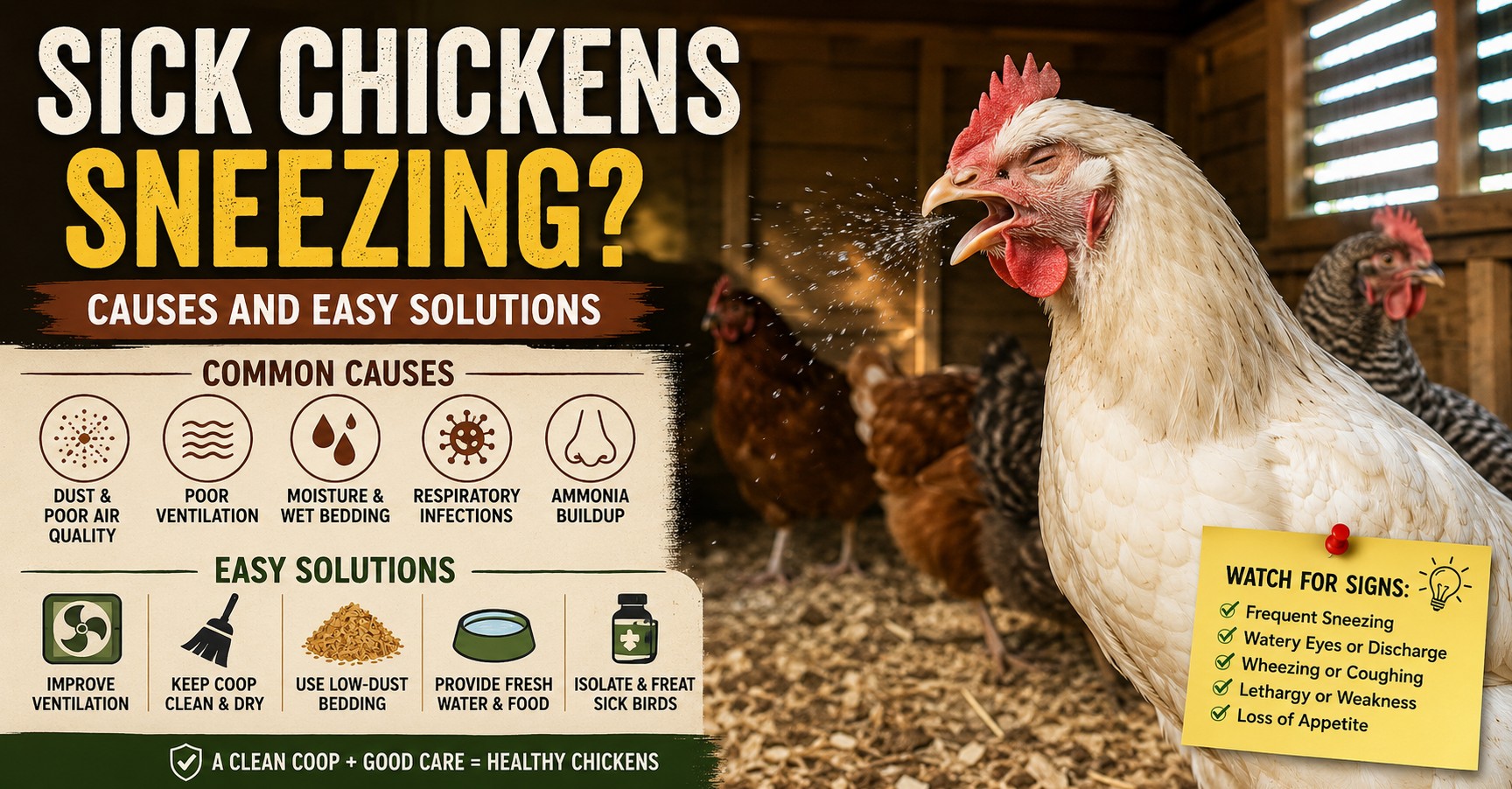
Sneezing can sometimes be caused by mild irritation, but it may also signal respiratory infections, poor ventilation, excessive dust, ammonia buildup, stress, or underlying illness inside your backyard flock.
For beginners, it’s often difficult to tell the difference between normal behavior and serious warning signs. Some chickens sneeze occasionally and recover quickly, while others may become weak, sleepy, stop eating, or isolate themselves from the flock.
Quick Answer
If your chicken is sneezing, the cause may be dust, bedding irritation, poor ventilation, coop moisture, ammonia buildup, allergies, or respiratory illness. Occasional sneezing without other symptoms is often minor, especially after coop cleaning or dusty conditions.
However, repeated sneezing combined with wheezing, swollen eyes, nasal discharge, weakness, reduced appetite, or unusual sleeping behavior may indicate a more serious problem. Start by checking the coop environment, improving airflow, removing dusty or wet bedding, and isolating visibly sick chickens.
Table of Contents
- Why Chickens Sneeze
- When Sneezing Is Normal
- Signs of a Sick Chicken in Backyard Flocks
- Common Causes of Chicken Sneezing
- Respiratory Illnesses in Chickens
- How to Treat a Sick Chicken at Home
- Coop Problems That Cause Sneezing
- Best Bedding and Ventilation Tips
- Seasonal Sneezing Problems
- Frequently Asked Questions
Why Chickens Sneeze
Chickens sneeze for many of the same reasons humans do. Dust, irritation, strong smells, temperature changes, and respiratory infections can all trigger sneezing.
An occasional sneeze is not always a reason to panic. However, repeated sneezing combined with other symptoms often suggests that something inside the coop or the chicken’s body needs attention.
- Dust irritates the airway
- Ammonia affects breathing
- Moisture increases bacteria growth
- Viruses or bacteria may infect the respiratory system
- Poor ventilation traps contaminated air
When Sneezing Is Normal
Not every sneeze means your chicken is seriously ill. Healthy chickens may occasionally sneeze after dust bathing, scratching dry bedding, coop cleaning, windy weather, seasonal pollen exposure, or sudden temperature changes.
If the chicken continues eating, drinking, moving normally, and shows no breathing distress, the sneezing may simply be temporary irritation.
Signs of a Sick Chicken in Backyard Flocks
Many chicken owners search online because they notice sneezing along with unusual behavior. These are some of the most important warning signs seen in sick chickens.
- Frequent sneezing
- Wheezing or rattling sounds
- Nasal discharge
- Watery or swollen eyes
- Open-mouth breathing
- Weakness or sleeping more than usual
- Loss of appetite
- Drooping wings
- Pale comb color
- Reduced egg production
- Isolation from flock
Symptom / Possible Cause / What To Do
| Symptom | Possible Cause | What To Do |
|---|---|---|
| Sneezing only | Dust or mild irritation | Improve airflow and monitor |
| Sneezing with wheezing | Respiratory infection | Isolate chicken and monitor closely |
| Swollen eyes | Infection or ammonia | Clean coop and seek vet guidance |
| Weak and sleepy | Illness or dehydration | Provide supportive care |
| Nasal discharge | Respiratory disease | Separate from flock |
| Open-mouth breathing | Serious respiratory distress | Contact poultry vet |
Common Causes of Chicken Sneezing
1. Dusty Bedding
Fine dust from bedding is one of the biggest causes of sneezing. Dusty bedding materials may irritate sensitive respiratory systems, especially in enclosed coops.
- Dry pine shavings
- Old straw
- Feed dust
- Coop dirt
- Sand dust
2. Poor Ventilation
Backyard coops with trapped air often create respiratory problems. Without airflow, coops accumulate ammonia, moisture, dust particles, mold spores, and bacteria.
3. Ammonia Buildup
Ammonia develops when manure mixes with moisture. Strong ammonia smell can irritate chickens’ lungs and eyes. If your eyes burn while entering the coop, ammonia levels are probably too high.
4. Respiratory Infections
Some respiratory diseases spread quickly between chickens. Not every sneezing chicken has a dangerous disease, but severe symptoms should never be ignored.
- Infectious bronchitis
- Mycoplasma
- Coryza
- Newcastle disease
- Fowl cholera
5. Mold and Moisture
Wet coops often encourage mold growth. Mold spores floating in the air may trigger sneezing and respiratory stress.
Respiratory Illnesses in Chickens
Respiratory infections are one of the most common concerns among owners of sick chickens. Some infections are mild, while others spread quickly through the flock.
Possible Signs of Respiratory Disease
- Wet nostrils
- Bubbling eyes
- Constant sneezing
- Head shaking
- Gurgling sounds
- Reduced activity
- Weight loss
Chickens with severe breathing problems should be evaluated by a poultry veterinarian whenever possible.
How to Treat a Sick Chicken at Home
Step 1: Isolate the Chicken
Separate visibly sick birds immediately. Isolation helps prevent spreading illness, reduce stress, and allow easier monitoring.
Step 2: Improve Coop Conditions
Check for dust buildup, poor airflow, wet bedding, ammonia smell, and mold. Environmental improvements often reduce mild respiratory irritation quickly.
Step 3: Encourage Hydration
Sick chickens may stop drinking enough water. Offer fresh clean water, poultry electrolytes, moist foods, and easy-to-eat treats.
Step 4: Reduce Stress
Keep the recovery area quiet, warm, dry, and predator-safe. Avoid unnecessary handling.
Step 5: Monitor Symptoms Carefully
Track eating, drinking, breathing, energy levels, and stool quality. If symptoms worsen, contact a poultry professional or local extension service.
Coop Problems That Cause Sneezing
Many cases of sneezing actually begin with coop management issues rather than disease.
- Dirty bedding: Old damp bedding traps bacteria and ammonia.
- Overcrowding: Too many chickens increase dust and moisture.
- Poor airflow: Closed coops trap contaminated air.
- Water leaks: Moisture encourages mold and bacteria.
- Lack of cleaning: Waste buildup creates unhealthy air quality.
Best Bedding and Ventilation Tips
| Bedding Type | Dust Level | Best Use | Notes |
|---|---|---|---|
| Hemp bedding | Low | Respiratory-sensitive flocks | Excellent odor control |
| Pine shavings | Moderate | General use | Widely available |
| Aspen shavings | Low | Cleaner airflow | Higher cost |
| Straw | Moderate | Cold weather | Can trap moisture |
| Sand | Low | Dry climates | Easy cleaning |
Ventilation Tips
Good ventilation removes dust, humidity, ammonia, heat, and moisture. Airflow should move stale air upward without creating strong drafts directly on roosting birds.
- Roof vents
- Hardware cloth openings
- High wall ventilation
- Cross airflow windows
- Dry flooring
Seasonal Sneezing Problems
Winter
Winter creates major respiratory risks because owners often seal coops too tightly. This traps humidity and ammonia inside.
- Keep upper vents open
- Remove wet bedding quickly
- Prevent condensation
- Monitor airflow daily
Summer
Summer heat increases bacteria growth. Dust levels also rise during dry weather.
- Increase shade
- Improve airflow
- Reduce dusty bedding
- Clean waterers more often
Rainy Weather
Rain increases moisture and mold risk.
- Improve drainage
- Elevate wet areas
- Replace damp bedding
- Increase ventilation after storms
Beginner Mistakes Backyard Chicken Owners Make
- Ignoring early symptoms
- Keeping sick birds with the flock
- Closing the coop too tightly
- Using extremely dusty bedding
- Overusing random medications
Isolation and Quarantine Tips
Quarantine is one of the safest habits for backyard flock health.
- Separate new chickens for several weeks
- Watch for sneezing or weakness
- Clean equipment regularly
- Wash hands after handling sick birds
- Avoid sharing waterers between groups
Weekly Backyard Chicken Health Checklist
| Task | Frequency | Purpose |
|---|---|---|
| Check breathing sounds | Weekly | Early illness detection |
| Remove wet bedding | Weekly | Reduce bacteria |
| Clean waterers | Weekly | Prevent contamination |
| Inspect ventilation | Monthly | Improve airflow |
| Watch flock behavior | Daily | Spot weak chickens |
| Check droppings | Weekly | Identify illness signs |
Long-Term Chicken Health Prevention
Healthy flocks usually depend on consistent daily habits. Keep the coop dry, improve airflow, avoid overcrowding, feed balanced nutrition, and monitor flock behavior daily.
My Practical Recommendation
If your chicken sneezes only once or twice occasionally, especially during dusty weather, it may not be serious. However, repeated sneezing combined with weakness, swollen eyes, wheezing, or unusual sleeping behavior deserves attention quickly.
The biggest improvements usually come from correcting coop conditions first. Better ventilation, cleaner bedding, lower moisture, and less dust often solve mild respiratory irritation before it becomes severe.
I also recommend isolating sick birds early rather than waiting to see if symptoms spread. Quarantine may feel inconvenient, but it often protects the rest of the flock from larger health problems later.
Frequently Asked Questions
Why is my chicken sneezing but acting normal?
Occasional sneezing without other symptoms is often caused by dust, bedding irritation, or temporary environmental factors. Monitor the chicken closely for changes in breathing, appetite, activity, or eye condition. If symptoms worsen or continue for several days, investigate possible respiratory issues or coop problems.
Can dusty bedding make chickens sneeze?
Yes. Dusty bedding is one of the most common causes of mild sneezing in backyard chickens. Fine particles irritate the respiratory system, especially in poorly ventilated coops. Switching to lower-dust bedding and improving airflow often helps significantly.
Should I isolate a sneezing chicken?
If sneezing becomes frequent or appears alongside weakness, wheezing, discharge, or swollen eyes, isolation is usually a smart precaution. Separating sick chickens can help reduce disease spread and allows closer monitoring of symptoms.
Why is my chicken sick and not moving?
A chicken that becomes weak, sleepy, or inactive may be dealing with illness, dehydration, respiratory infection, parasites, injury, or severe stress. Immediate supportive care and close monitoring are important. Severe symptoms may require veterinary guidance.
What does wheezing in chickens mean?
Wheezing often suggests irritation or respiratory infection affecting the airway. Dust, ammonia, moisture, and infectious diseases can all contribute. Persistent wheezing should not be ignored, especially if combined with nasal discharge or weakness.
Can poor ventilation make chickens sick?
Yes. Poor airflow traps moisture, ammonia, dust, and bacteria inside the coop. Over time, this may irritate chickens’ respiratory systems and increase illness risk. Proper ventilation is one of the most important parts of flock health management.
How do I know if a chicken respiratory infection is serious?
Serious respiratory problems may involve open-mouth breathing, severe weakness, swollen eyes, bubbling discharge, loss of appetite, or multiple sick birds at once. These symptoms deserve immediate attention and professional guidance whenever possible.
What is the best bedding for chickens with respiratory problems?
Low-dust bedding such as hemp bedding or aspen shavings is often easier on sensitive respiratory systems. Wet or moldy bedding should always be removed quickly regardless of bedding type.
Can ammonia smell hurt chickens?
Yes. Strong ammonia can irritate chickens’ eyes and respiratory systems. If the coop smell burns your eyes or nose, ammonia levels are likely too high and airflow needs improvement.
When should I contact a poultry vet?
Contact a poultry veterinarian if chickens develop severe breathing problems, rapid decline, swelling, inability to stand, or multiple flock illnesses at the same time.
Final Checklist
- Check coop ventilation
- Remove dusty or wet bedding
- Watch for swollen eyes or discharge
- Isolate visibly sick chickens
- Clean waterers regularly
- Reduce ammonia smell
- Monitor eating and drinking
- Avoid overcrowding
- Improve coop dryness
- Contact a poultry vet for severe symptoms
Conclusion
Sneezing in chickens is sometimes minor, but it can also be one of the earliest warning signs of illness or poor coop conditions. Paying attention to airflow, bedding quality, moisture control, and flock behavior can help backyard chicken owners catch problems early before they spread.
Most importantly, focus on the entire coop environment instead of only the sneezing itself. Cleaner air, proper ventilation, dry bedding, and reduced stress create healthier chickens and a stronger backyard flock over time.
When in doubt, monitor symptoms carefully and seek professional poultry guidance for severe or worsening illness signs.