
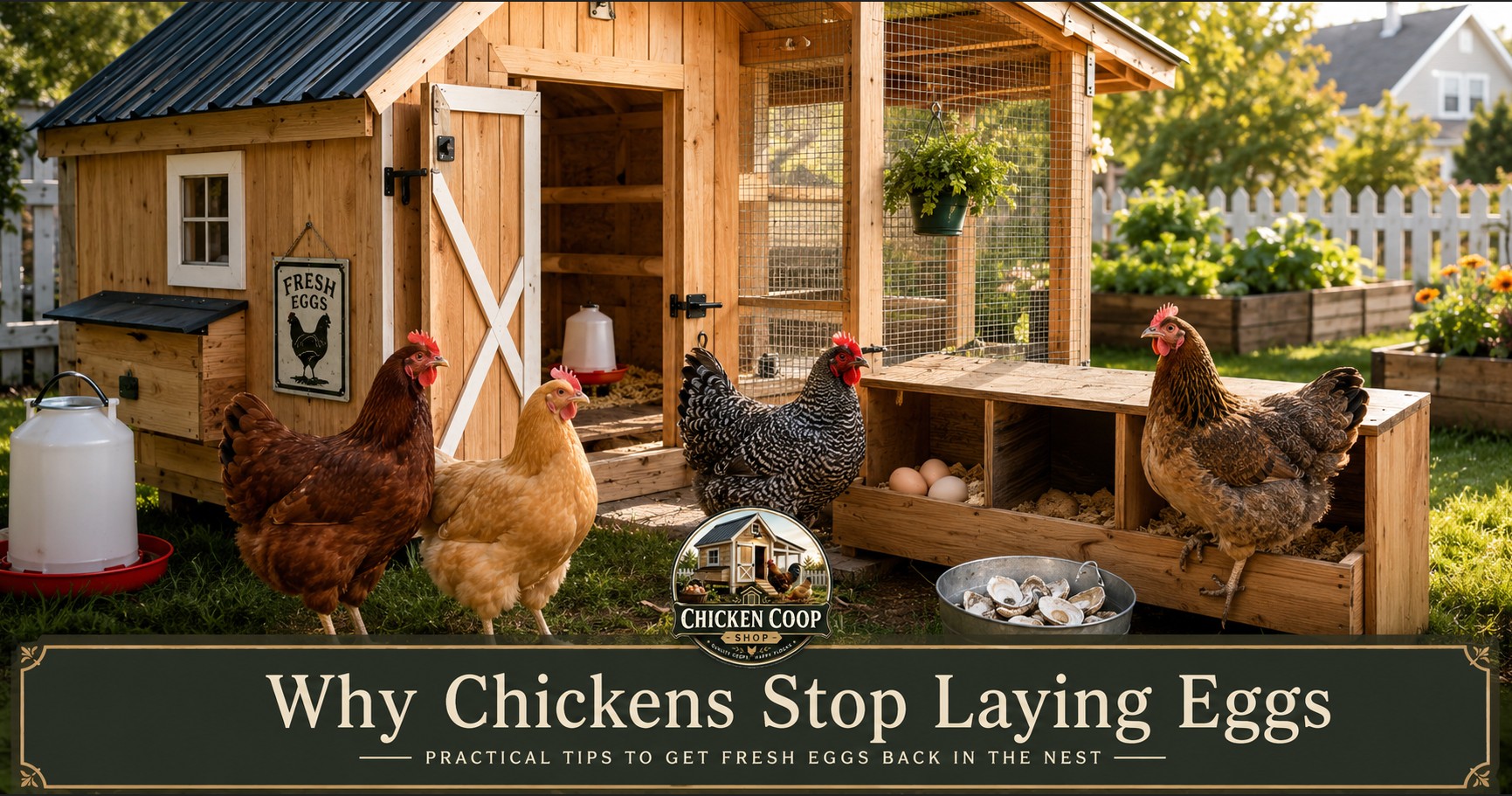
The good news is that many chicken egg laying problems can be improved with practical coop management. Backyard hens are affected by daily routine, flock safety, nutrition, clean water, predator pressure, ventilation, bedding quality, and seasonal changes. A hen that stops laying is not always sick. Sometimes her body is responding normally to shorter days, summer heat, winter cold, or a molt.
This guide explains the most common reasons chickens stopped laying eggs and what you can do first. It is written for beginner and experienced chicken keepers who want realistic, safe, and natural solutions before guessing or wasting money on the wrong fix.
Why Chickens Stop Laying Eggs
Egg laying is a body-demanding process. A hen needs enough light, energy, protein, calcium, water, and safety to lay consistently. When any of those basics are missing, her body may slow down or pause production. That is why hens not laying eggs can be a nutrition issue, a weather issue, a flock stress issue, or a health warning.
Most backyard chicken owners notice the problem in one of three ways. The whole flock slows down, one hen stops laying, or the nesting boxes suddenly become empty after a change in routine. A whole-flock slowdown often points to daylight, weather, feed, stress, or coop conditions. One hen not laying eggs may be molting, aging, broody, hiding eggs, being bullied, or dealing with a health problem.
Before you assume the worst, look at the basics. Has the feed changed? Are the hens getting too many treats? Is the waterer clean and full? Did a predator scare the flock? Are the nesting boxes dirty, damp, crowded, or unsafe? Did summer heat or winter darkness arrive? These simple questions solve many cases where chickens stopped laying suddenly.
Also remember that pullets not laying may not be a problem at all. Young hens often start laying later than expected depending on breed, season, nutrition, weather, and individual maturity. Some birds mature quickly, while others take more time. If pullets look healthy, eat well, and are not yet fully developed, patience is often part of the answer.
Quick Troubleshooting Table
| Problem You Notice | Possible Cause | What to Check First | Practical Fix |
|---|---|---|---|
| Whole flock slows down | Short daylight, heat, cold, feed issue, or stress | Season, feed bag, water access, coop safety | Improve routine, nutrition, water, and coop comfort |
| Thin or soft eggshells | Low calcium or poor mineral intake | Oyster shell, layer feed, age of hens | Offer free-choice oyster shell and balanced layer feed |
| Eggs disappear suddenly | Hidden nests, egg eating, predators, or stress | Nesting boxes, run corners, bedding, predator signs | Clean boxes, collect eggs often, secure the coop |
| One hen stops laying | Molt, age, broodiness, bullying, parasites, or illness | Feathers, weight, behavior, droppings, comb color | Observe closely and separate for care if needed |
| Hens avoid nesting boxes | Dirty, damp, bright, crowded, or unsafe boxes | Bedding, smell, mites, privacy, box height | Refresh bedding and make boxes calm, dry, and private |
Not Enough Daylight
Daylight is one of the biggest reasons chickens stop laying eggs. Hens are naturally sensitive to light. When days get shorter in fall and winter, egg production often drops because the hen’s body receives a seasonal signal to rest. This is normal, especially for small backyard flocks in northern states or areas with long winter nights.
If your hens stopped laying in late fall or winter but still look healthy, eat well, and act normal, reduced daylight may be the main cause. You may see fewer eggs, smaller eggs, or a complete pause from some birds. Older hens often slow more noticeably than young pullets.
What You Can Do
First, decide whether you want to let your hens rest naturally or support more consistent laying with supplemental light. Many backyard chicken owners prefer a natural winter slowdown because it gives the flock a break. Others add a gentle coop light on a timer to extend morning light. If you use light, keep it steady, safe, and moderate. Avoid sudden changes, exposed cords, hot bulbs, or lighting that makes the coop feel stressful.
A common mistake is blaming feed when daylight is the real issue. Good feed matters, but even well-fed hens may slow down when daylight drops. Look at the calendar before changing everything at once.
Poor Nutrition or Low Protein Feed
Poor nutrition is another major answer to why are my chickens not laying eggs. Laying hens need enough protein, calories, vitamins, minerals, and clean water every day. If hens fill up on scratch grains, bread, corn, kitchen scraps, or low-quality feed, they may not have the nutrients needed for regular egg laying.
A balanced layer feed is usually the foundation for adult hens that are actively laying. It is designed to support eggshell formation and egg production better than random grains or mixed treats. If you are unsure what to feed, review a practical guide to the best chicken feed for laying hens and compare it with what your flock eats now.
Signs Feed May Be the Problem
Nutrition-related laying problems may show up as fewer eggs, smaller eggs, weak shells, dull feathers, low energy, or hens constantly acting hungry. Sometimes the feed is fine, but the feeding setup is not. Dominant hens may block weaker birds from the feeder. Wet or moldy feed can also reduce intake and create health risks.
Step-by-Step Fix
Start by making layer feed the main diet for laying hens. Keep treats limited and use them as extras, not the meal. Provide more than one feeder if bullying is a problem. Keep feed dry, fresh, and protected from rodents. Clean old feed dust from the bottom of containers. Make sure water is always available because hens cannot lay well if they are even mildly dehydrated.
During molt, cold weather, or recovery from stress, hens may benefit from a slightly higher-protein routine, but avoid extreme changes. Sudden diet switches can upset the flock and make the laying pause worse.
Lack of Calcium
Calcium is essential for strong eggshells. If a hen does not get enough calcium, she may lay thin-shelled eggs, soft-shelled eggs, misshapen eggs, or stop laying normally. Lack of calcium is especially common when chickens eat too many treats or when the flock does not have free-choice oyster shell.
Layer feed usually contains calcium, but some hens need extra. Free-choice oyster shell lets each hen take what she needs. Do not force every bird to eat extra calcium. Pullets that are not laying yet and roosters do not need the same amount as active layers.
Practical Calcium Setup
Place oyster shell in a small separate container near the feeder, but not mixed into every meal. Keep it dry and easy to reach. If shells are thin, check that the hens are actually eating their layer feed and not filling up on scratch. Also check for stress, heat, and age because weak shells can have more than one cause.
Do not treat calcium like a magic cure for every laying problem. If hens stopped laying eggs completely because of molting, winter daylight, illness, or heat stress, oyster shell alone will not restart production. It is one piece of a complete backyard chicken care routine.
Stress in the Flock
Stress can make hens stop laying quickly. Chickens feel stress from predators, loud construction, dogs chasing the run, sudden coop changes, overcrowding, bullying, new flock members, moving to a new home, or repeated handling. A hen that does not feel safe may put survival ahead of egg laying.
Predator pressure is a common hidden cause. Even if no chicken is injured, raccoons, foxes, coyotes, dogs, snakes, hawks, or opossums around the coop can scare the flock. Signs may include nervous behavior, hens refusing to leave the coop, feathers around the run, damaged hardware cloth, digging near the fence, or sudden changes in roosting habits.
How to Lower Flock Stress
Keep routines steady. Feed and water around the same time each day. Make sure there is enough feeder space, roost space, and nesting space. Provide hiding areas in the run so lower-ranking hens can get away from bullies. When adding new birds, introduce them slowly with a see-but-do-not-touch setup before full mixing.
Check coop security carefully. Hardware cloth is usually safer than thin chicken wire for predator protection. Latches should be secure, run edges should resist digging, and ventilation openings should be covered with strong mesh. A safe flock is more likely to settle back into normal laying.
Molting Season
Molting is one of the most normal reasons hens stopped laying. During molt, chickens shed old feathers and grow new ones. Feather growth takes a lot of protein and energy, so egg production often slows or stops. This commonly happens in fall, but timing varies by hen, breed, stress level, and age.
A molting hen may look rough, patchy, or thinner in feather coverage. You may see feathers all over the coop and run. New pin feathers can be sensitive, so avoid unnecessary handling. Molting can look alarming to beginners, but it is not the same as a predator attack or illness when the hen is otherwise alert, eating, and drinking.
How to Help During Molt
Support the bird with good nutrition, clean water, dry bedding, and a low-stress coop. Keep treats limited so hens eat enough balanced feed. Some chicken keepers offer protein-rich extras in moderation during molt, such as mealworms or cooked egg, but the main diet should still be sensible and balanced.
Do not expect eggs to restart overnight. A hen may need several weeks to finish a molt and rebuild body condition. If a molting hen seems weak, stops eating, has unusual droppings, or shows breathing problems, look beyond molt and consider illness or parasites.
Age of the Hen
Age matters. Young hens often lay more frequently after they mature, while older hens naturally slow down. A hen that laid reliably in her first or second laying season may produce fewer eggs later. This does not mean she is unhealthy. It may simply mean her peak production years have passed.
Breed also matters. Some breeds are known for steady laying, while others are valued more for temperament, hardiness, appearance, or dual-purpose use. Backyard flocks often include mixed breeds, heritage breeds, and pet hens, so egg production will not always look like a commercial laying chart.
Pullets Not Laying Yet
Pullets not laying can be frustrating, especially if you expected eggs by a certain age. But first eggs depend on maturity, daylight, diet, season, and breed. A pullet that reaches laying age in late fall may wait longer because winter daylight is not encouraging production. Signs that a pullet is getting close include a reddening comb, interest in nesting boxes, squatting behavior, and more adult body shape.
Avoid pushing young birds too hard with treats or unnecessary supplements. Give them the right feed for their stage, fresh water, safe housing, and time.
Heat Stress in Summer
Summer heat can reduce egg laying fast. In hot parts of the United States, especially during heat waves, hens may eat less feed, drink more water, pant, hold wings away from the body, and spend more time resting in shade. Because they eat less, they take in fewer nutrients for egg production.
Heat stress can be serious. A hen that is extremely weak, unable to stand, or not drinking needs urgent attention from an experienced poultry keeper, poultry vet, or local extension office. Do not ignore severe heat symptoms.
Summer Egg Laying Fixes
Provide deep shade, cool clean water, and strong ventilation. Place waterers in shade and refill them often. Add extra water stations so every hen can drink. Frozen water bottles near resting areas can help cool the space without soaking bedding. Avoid overcrowding because packed coops trap heat and moisture.
Feed during cooler parts of the day when hens are more likely to eat. Keep nesting boxes from becoming hot, stuffy pockets. If the coop smells damp or ammonia-like in summer, improve cleaning and airflow. A consistent chicken coop cleaning routine helps reduce moisture, odor, flies, and stress.
Cold Weather in Winter
Cold weather can reduce egg laying, but the bigger winter issue is often short daylight. Still, cold, damp, drafty, or poorly ventilated coops can stress hens and make them use more energy to stay warm. When energy goes toward body warmth and survival, egg production may slow.
A winter coop should be dry, draft-protected, and ventilated above roost level. Ventilation matters because moisture from droppings and breathing can build up. Damp air can make chickens feel colder and can contribute to frostbite risk. Do not seal the coop so tightly that moisture has nowhere to escape.
Winter Care Tips
Keep bedding dry. Remove wet patches quickly. Make sure water does not freeze, because hens need steady water for egg production and health. Check that roosts are wide enough for hens to cover their feet comfortably. Avoid unsafe heat lamps unless you fully understand fire risk and have a safer setup. Many cold-hardy chickens handle winter well in a dry, draft-free, well-ventilated coop.
If hens not laying eggs in winter are otherwise active, eating, and social, the slowdown may be normal. Focus on health and comfort rather than forcing production.
Dirty or Unsafe Nesting Boxes
Nesting boxes matter more than many beginners realize. If boxes are dirty, damp, crowded, too bright, full of mites, or placed where hens feel exposed, they may avoid them. Sometimes the hens are still laying, but they hide eggs in corners, under shrubs, behind feed bins, or in deep bedding.
Dirty nesting boxes can also encourage broken eggs, egg eating, bad smells, flies, and bacteria. If your chicken coop smells bad, egg laying may not be the only issue. Odor often points to moisture, droppings buildup, poor ventilation, or wet bedding.
How to Improve Nesting Boxes
Keep boxes dry, calm, and softly bedded. Pine shavings, straw, or nesting pads can work if they stay clean. Remove broken eggs quickly. Collect eggs at least once a day, and more often during very hot or freezing weather. Place boxes in a darker, quieter part of the coop, away from heavy traffic and direct afternoon heat.
Check for mites in cracks, seams, and under bedding. If hens avoid boxes at night or seem restless, inspect the coop after dark with a flashlight. Parasites can make a normal nesting space feel unsafe.
Illness or Parasites
Sometimes chickens stop laying because they are not well. Illness, internal parasites, mites, lice, respiratory problems, reproductive issues, injuries, and poor body condition can all reduce egg laying. A sick hen may hide symptoms at first, so careful daily observation matters.
Warning signs include lethargy, not eating, weight loss, pale comb, swollen abdomen, unusual droppings, dirty vent feathers, coughing, sneezing, wheezing, discharge from eyes or nostrils, limping, or isolation from the flock. If respiratory symptoms are present, read more about chicken sneezing and sickness signs and consider getting help quickly.
What to Do Safely
Separate a visibly sick hen in a safe, calm recovery area with food and water. This helps you monitor intake, droppings, and behavior. Check for mites or lice around the vent, under wings, and near the neck. Look at body weight by gently feeling the breast area. A very thin hen needs attention.
Do not guess with strong treatments or random medications. For serious symptoms, repeated egg laying problems, suspected parasites, or multiple sick birds, contact a poultry vet or local extension office. Safe diagnosis is better than treating the wrong problem.
When to Worry and When It Is Normal
It is normal for hens to slow down during winter, molt, extreme heat, major flock changes, and older age. It is also normal for pullets to take longer than expected, especially during short days. If the birds are bright-eyed, eating, drinking, dust bathing, socializing, and maintaining body condition, you can often troubleshoot calmly.
You should worry more when the laying pause comes with sickness signs. A hen that stops eating, loses weight, breathes noisily, has a swollen belly, seems weak, has bloody droppings, or isolates herself needs closer care. A sudden whole-flock problem with droopiness, respiratory symptoms, or major diarrhea is not just an egg production issue.
Safety note: Egg laying advice is not a substitute for veterinary care. If your hen looks seriously ill, has trouble breathing, cannot stand, or several birds become sick at once, contact a poultry vet, agricultural extension office, or experienced local poultry professional.
The best approach is to separate normal seasonal pauses from health emergencies. Keep a small flock notebook or phone note. Track feed changes, weather, molt, egg count, new birds, cleaning dates, and unusual symptoms. Patterns make troubleshooting much easier.
Seasonal Egg Laying Care Table
| Season or Situation | Why Egg Laying Drops | Best Practical Response | Mistake to Avoid |
|---|---|---|---|
| Fall molt | Energy shifts from eggs to feather growth | Support with balanced feed, clean water, and low stress | Expecting instant egg production during feather regrowth |
| Winter | Short daylight and cold weather reduce laying signals | Keep the coop dry, ventilated, and water available | Sealing the coop tightly and trapping moisture |
| Summer heat | Hens eat less and use energy to stay cool | Offer shade, extra water, airflow, and cooler feeding times | Letting waterers sit in full sun all day |
| New flock members | Pecking order changes create stress | Introduce slowly and provide extra feeder space | Dropping new birds directly into the flock without transition |
| After predator scare | Fear can pause laying even without injuries | Inspect fencing, latches, run edges, and coop openings | Assuming no harm was done because no bird was missing |
My Practical Recommendation
If your chickens stopped laying eggs, do not start with expensive supplements or complicated treatments. Start with the basics for seven to ten days: balanced layer feed, free-choice oyster shell, clean water, secure housing, dry bedding, calm nesting boxes, and a quick health check on each bird.
Most backyard chicken owners should first look at season, feed, water, calcium, and stress. Those are the most common fixable areas. Check whether the whole flock slowed down or only one hen stopped. A whole-flock issue usually points to environment, weather, nutrition, daylight, or stress. A single-hen issue deserves closer observation for molt, age, broodiness, parasites, or illness.
Walk the coop slowly. Smell the bedding. Look for moisture, droppings buildup, feathers, mites, hidden eggs, broken shells, and predator damage. Watch whether every bird can reach the feeder and waterer. A simple, calm inspection often tells you more than guessing from egg count alone.
FAQ
1. Why do chickens stop laying eggs all of a sudden?
Chickens stopped laying suddenly usually because something changed. Common triggers include a predator scare, heat wave, cold snap, feed change, water shortage, new flock members, bullying, molting, or short daylight. First, check whether the whole flock stopped or only one hen. Then inspect feed, water, nesting boxes, coop safety, and signs of illness. If the hens look healthy and the season changed recently, the pause may be normal. If they seem weak, sick, or off feed, take it more seriously.
2. How long can hens stop laying during molt?
Many hens stop laying for several weeks during molt, though timing varies widely. Molting uses protein and energy for feather replacement, so egg production often pauses until the hen rebuilds body condition. Help by reducing stress, keeping bedding dry, providing clean water, and feeding a balanced diet. Avoid handling pin feathers more than necessary because they can be sensitive. If a molting hen is bright, eating, and active, patience is usually reasonable. If she is weak or not eating, look for another problem.
3. Can poor feed make hens not laying eggs worse?
Yes, poor feed or too many treats can make hens not laying eggs more likely. Laying hens need steady protein, calories, calcium, vitamins, and minerals. Scratch grains, bread, corn, and kitchen scraps should not replace a balanced layer feed. Treats can also cause picky eating, where hens ignore the feed that actually supports egg production. Keep layer feed as the main diet, offer oyster shell separately, and make sure every bird can access the feeder without being bullied.
4. Do chickens need extra calcium to lay eggs?
Active laying hens need calcium for eggshells, and many flocks benefit from free-choice oyster shell. It should usually be offered in a separate container so hens can take what they need. Thin shells, soft shells, and broken eggs may point to low calcium, but calcium is not the only possible cause. Heat stress, age, poor feed intake, and illness can also affect shell quality. Do not force extra calcium into every bird, especially birds that are not laying.
5. Are my chickens hiding eggs instead of not laying?
Yes, hidden eggs are common. Hens may avoid nesting boxes if they are dirty, crowded, too bright, damp, or unsafe. They may choose corners of the coop, tall grass, shrubs, under decks, or quiet places in the run. Search carefully before assuming production stopped. Refresh the nesting material, make boxes darker and calmer, collect eggs daily, and consider keeping hens in the run until late morning for a few days so they relearn the proper nesting area.
6. Can stress really stop egg laying?
Stress can absolutely reduce egg laying. Chickens are prey animals, so fear and disruption affect their bodies. Predator visits, barking dogs, loud work, overcrowding, bullying, sudden relocation, or new birds can pause production. Even if no hen is injured, the flock may need time to feel safe again. Improve security, keep routines steady, add hiding spaces, and reduce unnecessary handling. If egg laying slowed after a stressful event, fixing the stress source is more useful than changing feed immediately.
7. When should I worry about a hen not laying eggs?
You should worry when a hen not laying eggs also looks sick or abnormal. Watch for weight loss, pale comb, not eating, not drinking, strange droppings, swollen abdomen, wheezing, coughing, discharge, limping, or isolation from the flock. A healthy-looking hen in winter or molt may simply be taking a normal break. A weak or sick-looking hen needs closer attention. For serious symptoms, contact a poultry vet or local extension office instead of guessing with random treatments.
8. Will adding a light make chickens lay again?
Supplemental light can encourage laying during short winter days, but it should be used carefully. A safe timer, gentle morning light, and consistent schedule matter. Sudden lighting changes or unsafe bulbs can stress the flock or create fire risk. Some backyard chicken owners prefer not to use light and let hens rest naturally through winter. If your birds are molting, sick, poorly fed, or stressed, light alone will not solve the real problem. Check overall flock health first.
9. Why are my pullets not laying yet?
Pullets not laying yet may simply need more time. First eggs depend on breed, maturity, daylight, nutrition, and season. A pullet that matures during shorter days may delay laying. Signs she is close include a redder comb and wattles, squatting, interest in nesting boxes, and more adult behavior. Make sure she is on age-appropriate feed, has clean water, and feels safe in the flock. Avoid comparing every pullet to the fastest-maturing bird.
10. Can a dirty coop reduce egg production?
A dirty coop can contribute to laying problems because it increases stress, moisture, odor, flies, parasites, and nesting box avoidance. Damp bedding and poor ventilation can make the coop uncomfortable in both summer and winter. Dirty nesting boxes can lead to broken eggs, hidden eggs, and egg eating. Keep bedding dry, remove droppings buildup, clean waterers, and refresh nesting material regularly. A clean coop will not force a molting or aging hen to lay, but it supports healthier, calmer production.
Final Checklist
- Check whether the whole flock slowed down or only one hen stopped.
- Look at the season: winter daylight, summer heat, and fall molt are common causes.
- Make balanced layer feed the main diet and reduce low-nutrient treats.
- Offer free-choice oyster shell in a separate dry container.
- Keep waterers clean, full, and easy for every hen to reach.
- Inspect nesting boxes for dirt, mites, broken eggs, moisture, and crowding.
- Search for hidden eggs before assuming hens stopped laying completely.
- Check coop security for predator damage, weak latches, gaps, or digging.
- Improve shade, airflow, and water access during hot weather.
- Keep the winter coop dry, ventilated, and protected from harsh drafts.
- Watch for illness signs such as weight loss, weakness, respiratory issues, or unusual droppings.
- Contact a poultry vet or local extension office if symptoms are serious or several birds are sick.