
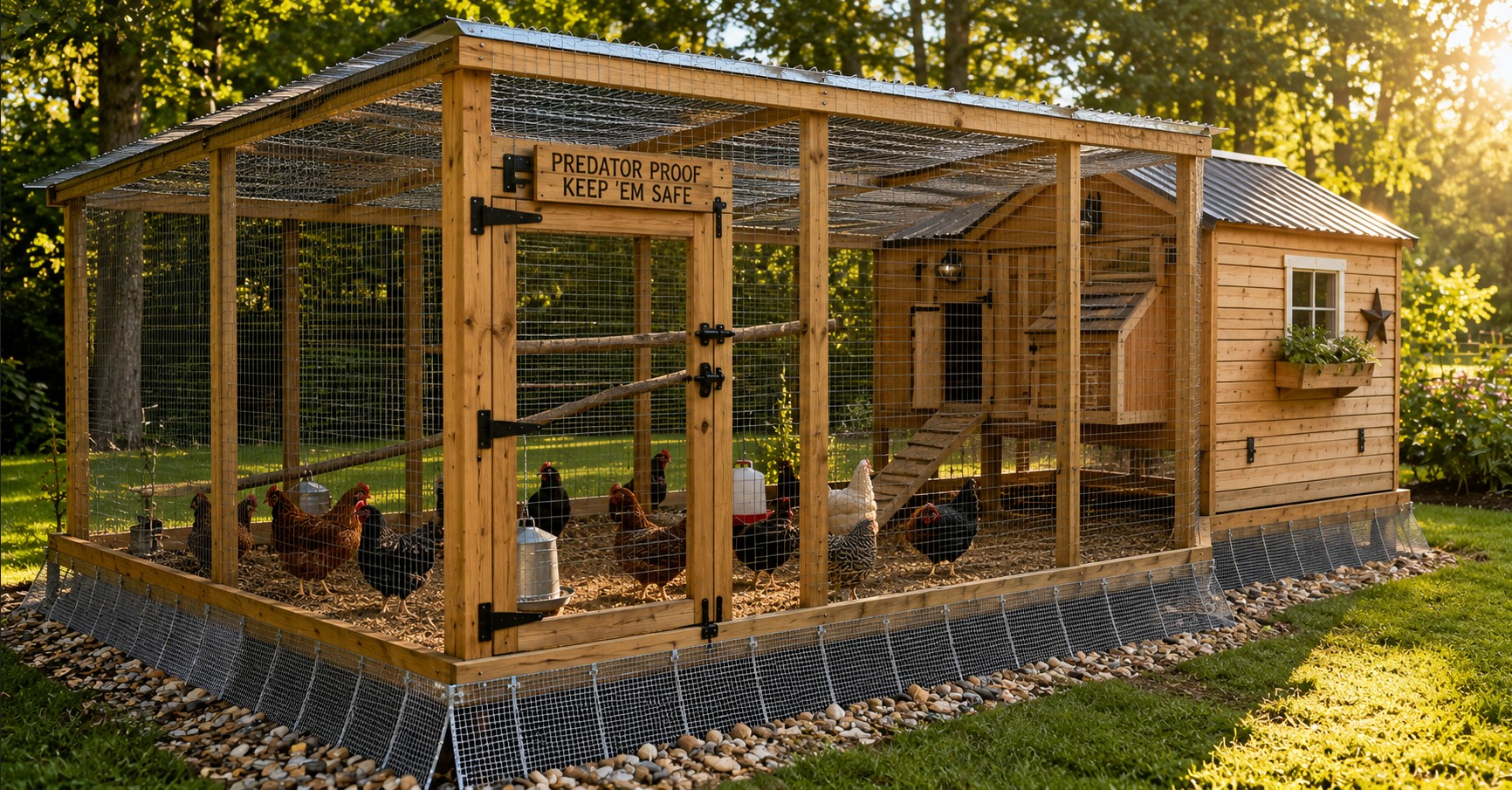
How to Protect Chickens From Hawks and Build the Best Backyard Chicken Fence
Keeping chickens in the backyard is peaceful until you realize how many animals see your flock as an easy meal. Hawks watch from above. Raccoons test weak latches at night. Snakes squeeze through tiny gaps. Neighborhood dogs can break into a run faster than many new chicken owners expect. That is why Predator Protection is not an extra upgrade for a chicken coop. It is one of the most important parts of responsible backyard chicken care.
The good news is that you do not need to turn your yard into a fortress to keep chickens safer. You need the right fence, a covered run, smart coop habits, and regular maintenance. This guide explains how to protect chickens from hawks, how to choose the best fence for backyard chickens, how to handle snake proofing, and how to build a safer long-term setup for a healthy backyard flock.
Quick Answer Box
The best way to protect chickens from hawks and other predators is to combine strong side fencing, overhead cover, a secure coop, and a daily routine. For most backyard chicken owners, the safest basic setup is a chicken run made with 1/2-inch hardware cloth, a covered top or strong netting, buried wire or an apron around the base, and locks that raccoons cannot easily open. Hawks are best prevented with a fully covered run, shade cloth, poultry netting, or a roofed run. Snakes are controlled by closing small gaps, keeping feed cleaned up, and using hardware cloth instead of wide chicken wire. A good chicken fence should protect from digging, climbing, squeezing, and flying predators. Start with the weakest areas first: the run top, the bottom edge of the fence, coop vents, pop door, and latches. Good Predator Protection is really a system, not one single product.
Table of Contents
- Why Predator Protection Matters for Backyard Chickens
- Common Backyard Chicken Predators in the US
- How Hawks Attack Chickens
- Best Hawk Protection Methods for Backyard Flocks
- Best Fence for Backyard Chickens
- Hardware Cloth vs Chicken Wire
- Snake Proofing a Chicken Coop and Run
- Step-by-Step Predator Proofing Plan
- Best Materials and Tools for Chicken Protection
- Common Predator Protection Mistakes to Avoid
- Seasonal Predator Protection Tips
- Chicken Fence and Coop Maintenance Checklist
- My Practical Recommendation
- Internal Linking Suggestions
- Frequently Asked Questions
- Final Checklist
- Conclusion
Why Predator Protection Matters for Backyard Chickens
Backyard chickens are not like wild birds that can easily fly away, hide in trees, or move to a safer area when danger comes. Most domestic chickens are slower, heavier, and more trusting. They spend a lot of time scratching the ground, dust bathing, eating, drinking, laying eggs, and resting. That makes them vulnerable when the coop or run has weak spots.
Predators are not always deep-woods animals either. A suburban backyard can have hawks, raccoons, possums, snakes, rats, stray cats, loose dogs, coyotes, foxes, owls, skunks, and weasels depending on the area. Even a quiet neighborhood can have predator pressure after dark or early in the morning.
Good Predator Protection protects more than the birds themselves. It also helps protect egg laying routines, reduces flock stress, keeps chicks safer, prevents feed theft, and supports better chicken health. A frightened flock may stop laying for a while, hide in the coop, or become nervous and noisy. A poorly protected coop can also attract rodents when spilled feed is left around, which can lead to more predator activity.
Many beginner chicken owners focus first on coop style, nesting boxes, bedding, and egg production. Those things matter, but the fence and run are just as important. A beautiful coop with a weak run is still risky. A simple coop with strong fencing, good ventilation, dry bedding, and secure latches can be much safer than an expensive-looking setup with gaps underneath.
The best approach is to think like a predator for a few minutes. Once you ask those questions, the solution becomes clearer.
Common Backyard Chicken Predators in the US
Different parts of the United States have different predator problems, but many chicken owners deal with the same basic threat categories. Some predators come from the air, some dig, some climb, and some squeeze through small spaces. A good fence needs to address all of those behaviors.
| Predator | Common Risk | Best Protection |
|---|---|---|
| Hawks | Daytime attacks from above, especially in open yards | Covered run, shade cloth, netting, shrubs, supervised free ranging |
| Raccoons | Night attacks, latch opening, reaching through wire | Hardware cloth, secure locks, closed coop at night |
| Foxes and coyotes | Digging, grabbing birds, testing fence edges | Buried wire apron, strong posts, tall fencing |
| Loose dogs | Breaking weak fences, chasing flock, panic injuries | Strong perimeter fence, reinforced run, supervision |
| Snakes | Egg theft, chick danger, entering through small gaps | Snake proofing with small mesh, clean feed area, sealed gaps |
| Owls | Dusk, dawn, and night attacks if birds are outside | Lock birds in coop before dark, covered run |
| Rats | Feed theft, stress, possible chick danger | Feed storage, small mesh, cleanup, dry coop area |
Hawks are one of the biggest concerns for daytime chicken keepers. They can appear quickly, especially when chickens are free ranging in an open yard. Raccoons are often a nighttime problem and are smarter than many new owners expect. Snakes are usually drawn by eggs, chicks, or rodents. Dogs can be the most destructive when they get inside a run because they may chase even if they are not hunting for food.
A smart backyard chicken setup does not rely on one layer of defense. It uses several layers together. The coop protects at night. The run protects during the day. The fence controls the perimeter. Good feed storage reduces attraction. Daily checks catch problems before predators discover them.
How Hawks Attack Chickens
Hawks usually attack from above during daylight. They often watch from trees, poles, rooftops, fence lines, or open sky. A hawk may circle for a while or may suddenly drop into the yard. Chickens often notice aerial danger before humans do. You may hear a sharp alarm call, see hens freeze, or watch the flock rush under cover.
Hawks are especially attracted to open spaces where chickens are easy to see. A flat lawn with no shrubs, no overhead netting, and no covered run gives chickens very little time to hide. Bantams, young birds, smaller hens, and isolated chickens can be more vulnerable because they are easier targets. A rooster may help alert the flock, but a rooster is not a complete safety system.
Hawk pressure can change by season. In some areas, attacks become more common during migration, winter food shortages, or nesting season. If your chickens have been safe for months, that does not mean the yard is always safe. A hawk can discover your flock at any time.
Common signs hawks are watching your flock
- Chickens suddenly run under the coop, porch, shrubs, or run roof.
- The flock gives a loud alarm call and freezes in place.
- You see a hawk sitting nearby more than once.
- Birds seem nervous in an open yard and avoid free ranging.
- There are feathers in the yard with no signs of digging or night entry.
- One chicken disappears during the day while others hide.
Not every feather pile means a hawk attack. Chickens molt, lose feathers during squabbles, and sometimes leave feathers around dust bath areas. But if feathers appear suddenly in one place, especially during daylight, and a bird is injured or missing, you should inspect the whole area carefully.
Best Hawk Protection Methods for Backyard Flocks
The most reliable way to protect chickens from hawks is to stop hawks from reaching the birds. Visual scare items can help sometimes, but they should not be your main strategy. Hawks can get used to fake owls, shiny tape, and scare balloons if the items never move or if the flock remains easy to reach.
1. Use a fully covered chicken run
A fully covered run is the strongest hawk solution for most backyard chicken owners. The cover can be a solid roof, wire roof, strong poultry netting, welded wire, or hardware cloth depending on your budget, climate, and predator pressure. The goal is simple: hawks should not be able to fly directly into the run.
A solid roof gives the best weather protection too. It helps keep bedding dry, reduces mud, protects feed from rain, and gives chickens shade during hot months. A wire or netted roof may be easier and cheaper for a large run, but it should be tight enough that a hawk cannot enter and strong enough that it does not sag into the chickens’ space.
2. Add shade cloth or overhead netting
Shade cloth can reduce aerial visibility and make chickens feel safer. It also helps with summer heat. If you use netting, choose something strong and properly attached. Lightweight garden netting may tear or sag. It can also become a hazard if chickens, wild birds, or small animals get tangled in it. A safer choice is strong poultry netting or a properly installed roof material designed for outdoor use.
3. Create natural hiding spots
If chickens free range, give them places to hide quickly. Shrubs, low evergreen branches, covered pallets, small shelters, covered dust bath areas, and picnic-table-style shade structures can all help. Chickens should not have to run across a wide-open yard to reach shelter.
These hiding spots do not replace a secure run, but they can reduce risk during supervised free range time. Place shelters in different parts of the yard so a chicken is never too far from cover.
4. Free range only when you can supervise
Free ranging is enjoyable, but it comes with risk. If hawks are active in your area, supervised free range time is safer than leaving chickens out all day while you are away. Supervision does not mean staring at chickens every second, but you should be nearby enough to respond if the flock alarms.
Many owners use a routine: secure run during most of the day, free range in the late afternoon when someone is outside, then back to the coop before sunset. This gives chickens enrichment while reducing risk.
5. Avoid leaving single chickens alone in the open
A lone chicken is easier for a hawk to target. If one hen is separated from the flock, injured, broody, young, or low in the pecking order, she may be more vulnerable. Keep the flock together during outdoor time and provide several covered areas so timid birds are not pushed into open spaces.
Best Fence for Backyard Chickens
The best fence for backyard chickens depends on your main predators, your space, and whether the fence is for a run or a larger yard. For a secure chicken run, 1/2-inch hardware cloth is usually the best material because it blocks reaching, squeezing, and many small predators. For a larger daytime yard, welded wire or no-climb fencing can work, but it should be paired with a secure coop and run.
A chicken fence needs to do four jobs:
- Keep chickens inside the safe area.
- Keep predators from pushing through.
- Stop digging predators from entering underneath.
- Reduce access from flying and climbing predators.
Height matters, but height alone is not enough.
Recommended fence height
For a secure chicken run, many owners use fencing around 6 feet tall because it allows easier walking and maintenance. If you use a lower run, make sure you can still access the inside for cleaning, water changes, bedding work, and repairs. For a larger perimeter yard, a taller fence may help keep chickens in and discourage some animals, but it still needs reinforcement at the bottom.
Some chicken breeds fly more than others. Lightweight breeds may fly over short fences, especially if there is a nearby object they can use as a launch point. Clipping one wing can limit flight for some birds, but it is not a predator protection plan by itself. A covered run is safer.
Bottom protection is critical
Many predators do not bother climbing over a fence if they can dig underneath. This is where many backyard setups fail. A strong bottom edge is one of the most important parts of Predator Protection.
You can protect the base in two common ways:
- Buried wire: Bury hardware cloth or welded wire down into the ground along the fence line.
- Wire apron: Lay wire flat outward from the run base and secure it to the ground so predators hit wire when they try to dig.
A wire apron is often easier for beginners because it does not require deep trenching. You attach the wire to the bottom of the run and extend it outward along the ground. Cover it with soil, mulch, gravel, or grass growth. When a fox, dog, raccoon, or coyote tries to dig at the fence line, it hits the apron and usually gives up.
Fence posts and framing matter
The best wire will not help much if the frame is weak. Use solid posts and secure fastening. Staples alone can pull loose if a predator pushes hard or if wood ages. For high-risk areas, use screws with washers, fencing staples made for outdoor use, or wood strips that sandwich the wire tightly against the frame.
Check gates carefully. Gates are often weaker than the fence itself. The gap under the gate, the latch side, and the hinge side should be protected. If you can slide your fingers through a gap, a snake, rat, or small predator may be able to enter too.
Hardware Cloth vs Chicken Wire
Many new chicken owners assume chicken wire is the right material because of the name. Chicken wire can keep chickens in, but it is not the best material for keeping predators out. It is usually thin, flexible, and has openings large enough for small predators to reach through. Raccoons can grab through chicken wire. Some animals can tear or bend it. Snakes may pass through larger openings depending on size.
Hardware cloth is stronger and has smaller openings. For a secure coop and run, 1/2-inch hardware cloth is one of the most practical choices. Around vents, windows, brooder areas, chick spaces, and lower run walls, hardware cloth is much safer than chicken wire.
| Material | Best Use | Pros | Cons |
|---|---|---|---|
| 1/2-inch hardware cloth | Secure run walls, coop vents, windows, bottom edges | Strong, small openings, excellent for predator control | Costs more and takes more effort to install |
| 1/4-inch hardware cloth | Brooders, chick areas, small gap protection, snake proofing | Very small openings, good for tiny pests | Can reduce airflow if overused on large ventilation areas |
| Chicken wire | Temporary daytime barriers, garden protection | Cheap, flexible, easy to use | Weak against many predators |
| Welded wire fencing | Larger chicken yards, perimeter areas | Strong for bigger spaces, good visibility | Openings may be too large near coop or chicks |
| Electric poultry netting | Rotational grazing and supervised pasture setups | Flexible, movable, helpful for ground predators | Requires maintenance, power, training, and caution |
| Solid roof panels | Permanent covered runs | Stops hawks, rain, snow, and sun exposure | Needs proper framing and drainage |
If your budget is limited, use your strongest material where the risk is highest. Prioritize coop windows, vents, run lower walls, gate gaps, and the bottom perimeter. A common practical setup is hardware cloth on the lower 2 to 3 feet of the run, stronger welded wire above, and a covered top. But in areas with raccoons, weasels, snakes, or heavy predator pressure, full hardware cloth is safer.
Snake Proofing a Chicken Coop and Run
Snake proofing is important because snakes do not need a large opening to enter a coop. Many snakes are drawn by eggs, chicks, mice, and feed areas. Adult hens are not usually the main attraction for most snakes, but eggs and young chicks can be at risk. Snakes may also frighten the flock and create stress around nesting boxes.
The first step in Snake proofing is sealing small gaps. Look around the coop at ground level, corners, doors, vents, roof edges, nesting box lids, and feed storage areas. If you see daylight through a gap, inspect it closely. A snake may enter through openings that look too small at first glance.
Use small mesh where snakes may enter
For many backyard coops, 1/2-inch hardware cloth is a strong general choice. In areas with smaller snakes, chicks, rodents, or tiny openings, 1/4-inch hardware cloth can be useful for specific spots. Do not cover all ventilation with overly fine material if it blocks too much airflow. Chickens need good coop ventilation to reduce moisture, ammonia buildup, and respiratory stress. The goal is to block entry while keeping fresh air moving.
Control rodents and spilled feed
Snakes often follow food sources. If mice and rats are attracted to spilled chicken feed, snakes may come looking for them. Keep feed in metal cans or secure containers. Do not leave piles of feed on the ground overnight. Clean under feeders. Use hanging feeders or no-waste feeder styles if your flock spills a lot.
Dry bedding also matters. Damp bedding can attract insects and create unhealthy coop conditions. A clean, dry coop with good ventilation is less attractive to pests and healthier for egg laying hens.
Protect nesting boxes
Eggs can attract snakes. Collect eggs daily, and during hot weather or heavy laying periods, check more than once if possible. Make sure nesting box lids close tightly. Add latches if lids are loose. Inspect corners where the nesting box attaches to the coop wall.
Keep grass and clutter controlled
Tall grass, boards, junk piles, feed bags, and unused equipment around the coop can give snakes and rodents hiding places. Keep the area around the coop trimmed and open. You do not need a bare yard, but the immediate coop perimeter should be easy to inspect.
Step-by-Step Predator Proofing Plan
A good predator proofing plan does not have to be confusing. Start with the most likely entry points and work outward. If you already have chickens, do the highest-risk fixes first, even if you improve the rest over time.
Step 1: Inspect the coop during the day
Walk around the entire coop and run slowly. Look at it from the ground up. Check every corner, seam, vent, window, door, and latch. Push gently on wire panels to see if they move. Look for loose staples, rotting wood, broken boards, rusted wire, and gaps under the frame.
Pay special attention to any area where two materials meet. Predators often exploit transition points: wire to wood, roof to wall, door to frame, nesting box to coop, and fence to ground.
Step 2: Inspect again at night
Night inspection is useful because some gaps are easier to see with a flashlight from inside or outside the coop. You may also notice raccoon tracks, digging marks, or animals moving nearby. Make sure chickens are locked inside before dark. Owls, raccoons, foxes, and coyotes are more active when many owners are not watching.
Step 3: Reinforce vents and windows
Ventilation is necessary, but vents must be covered with strong wire. Do not rely on window screen. Window screen keeps insects out, not predators. Cover vents with hardware cloth and fasten it securely. If you live in a hot climate, do not block airflow with solid boards. Instead, use secure mesh and thoughtful ventilation placement.
Step 4: Secure the pop door
The pop door is the small door chickens use to enter and leave the coop. It should close tightly every night. Automatic doors can be helpful, but they still need checking. Make sure the door cannot be lifted from the outside. Tracks should be clean. Batteries or power should be monitored if the door is automatic.
If you manually close the door, make it part of your daily routine. Chickens should be inside before dark, and the door should be locked before nighttime predators begin moving.
Step 5: Reinforce the run top
If hawks are your concern, the run top is a priority. Use a solid roof, wire roof, or strong netting. Make sure there are no open corners. Hawks do not need a wide gate invitation. If there is enough space to fly or drop through, your chickens may still be at risk.
Step 6: Add a digging barrier
Install a wire apron or buried barrier around the run. This is one of the most important steps for ground predators. Secure the barrier to the run frame, then extend it outward. If using an apron, pin it down well and cover it lightly so it blends into the yard.
Step 7: Upgrade latches
Simple hook latches are often not enough for raccoons. Use two-step latches, carabiners, locking hasps, or predator-resistant locks. Gates, nesting box lids, feed storage doors, and access panels should all be secured.
Step 8: Manage feed and water areas
Feed attracts more than chickens. Store feed securely and clean spills. Keep waterers from leaking because wet ground can create mud, odor, and insect problems. Moisture around the coop can also make maintenance harder and may encourage pests.
Step 9: Create a weekly inspection routine
Predator proofing is not a one-time project. Weather, chicken scratching, soil movement, wood aging, and animal testing can create new weak spots. A weekly walkaround can catch small problems before they become dangerous.
| Problem | Likely Cause | Practical Solution |
|---|---|---|
| Chickens panic and hide during the day | Hawk activity or open yard exposure | Add overhead cover, supervised free range, and hiding shelters |
| Small holes near fence base | Digging predator or rodents | Add wire apron, fill holes, inspect nightly |
| Eggs disappearing | Snake, rat, raccoon, hen behavior, or human error | Collect eggs daily, seal gaps, inspect nesting boxes |
| Wire pulled loose | Weak staples, pushing, chewing, or weather damage | Reattach with screws and washers or wood strips |
| Wet bedding near run edge | Rain blowing in or poor drainage | Add roof overhang, improve drainage, replace wet bedding |
| Birds refuse to leave coop | Predator scare, stress, heat, illness, or pecking order issue | Check for predator signs, observe health, improve shelter |
Best Materials and Tools for Chicken Protection
You do not need every product on the market to protect chickens. Focus on materials that solve real problems. A strong fence, secure fasteners, reliable latches, and good roof coverage are more valuable than decorative accessories.
Hardware cloth
Hardware cloth is one of the best investments for backyard chicken safety. Use it on run walls, coop vents, windows, and lower fence areas. Choose galvanized hardware cloth for outdoor durability. When installing, overlap seams and attach them securely. Small gaps at seams can become entry points.
Screws and washers
Many coops are built with staples holding wire in place. Staples may work for light-duty use, but screws and washers provide a stronger hold. Another good method is to place a strip of wood over the edge of the wire and screw through the wood into the frame. This sandwiches the mesh tightly and makes it harder to pull loose.
Predator-resistant latches
Use latches that require more than a simple lift. Raccoons are clever with basic latches. Carabiners are inexpensive and useful on many coop doors. For access doors and nesting boxes, choose hardware that stays closed even if bumped or pulled.
Roofing or overhead cover
A roofed run is excellent for hawk protection and weather control. Metal panels, polycarbonate panels, wood framing with shingles, or strong wire roofing can all work. Make sure any roof is properly supported for wind, rain, and snow in your climate. In snowy areas, a weak flat roof can sag or collapse. In hot areas, shade and ventilation are important.
Fence apron material
Use hardware cloth or welded wire for the apron. The apron should be attached firmly to the base of the run. It should extend outward far enough that a digging predator cannot simply start at the edge and tunnel under. Cover it with soil, mulch, gravel, or let grass grow through it.
Motion lights and cameras
Motion lights may discourage some nighttime visitors, and cameras can help you identify what is testing the coop. A camera is not a fence, but it can show whether you are dealing with raccoons, foxes, dogs, cats, or other animals. That information helps you choose the right fix.
Secure feed storage
A metal trash can with a tight lid is a simple feed storage solution. Keep feed dry and protected. Damp feed can spoil, and spilled feed attracts rodents. Rodents attract snakes and other predators. Feed management is a quiet but important part of Predator Protection.
Common Predator Protection Mistakes to Avoid
Most predator problems come from small weaknesses, not complete neglect. A coop may look safe from a distance but still have one gap, one weak latch, or one open top that creates risk. Avoiding common mistakes can save you a lot of stress.
Mistake 1: Relying on chicken wire for predator defense
Chicken wire is not enough for serious predator protection. It can keep chickens in a space, but it does not reliably keep raccoons, dogs, foxes, snakes, or strong predators out. Use hardware cloth in high-risk areas.
Mistake 2: Leaving the run uncovered
An open-top run may look fine until a hawk discovers it. If your chickens are in a small fenced area with no overhead protection, they may be trapped when an aerial predator comes. Cover the run or provide strong overhead netting.
Mistake 3: Ignoring the ground edge
Digging is one of the easiest ways for predators to enter. If your fence sits on top of soil with no apron, no buried wire, and no secure base, it is vulnerable. Chicken scratching can also create low spots over time.
Mistake 4: Using weak latches
A latch that a child can flip open may also be easy for a raccoon. Use latches with clips, locks, or two-step mechanisms. Check nesting box lids too. Predators do not only use the main door.
Mistake 5: Forgetting about ventilation
Some owners close every opening because they are worried about predators. That can create moisture and air quality problems inside the coop. Chickens need fresh air, especially at night when they are roosting. The right solution is not to remove ventilation. The right solution is to cover ventilation openings with secure hardware cloth.
Mistake 6: Letting feed attract rodents
Spilled feed may seem harmless, but it can bring mice and rats. Rodents can damage coop materials and attract snakes. Clean feed areas regularly, store feed securely, and avoid leaving open feed piles overnight.
Mistake 7: Free ranging without a plan
Free ranging can be healthy and enriching, but open free range time should match your predator pressure. If you have hawks, coyotes, loose dogs, or foxes nearby, use supervised free range, portable fencing, or limited turnout instead of leaving chickens exposed all day.
Seasonal Predator Protection Tips
Predator behavior changes through the year. Your coop and fence should be checked with the seasons, not only when something goes wrong.
Spring
Spring often brings more wildlife movement. Animals are nesting, feeding young, and searching for easy food. This is also when many chicken owners raise chicks. Chicks need extra protection because they are small, vulnerable, and easier for snakes, rats, cats, and aerial predators to harm.
Check brooder areas, chick pens, and grow-out coops carefully. Use small mesh. Keep chicks in a secure space until they are large enough to move safely into the main flock setup. Watch for wet spring soil around fence lines because soft ground can make digging easier.
Summer
Summer predator protection must balance security with heat safety. Do not close off airflow in the name of safety. Chickens can suffer in hot, poorly ventilated coops. Use hardware cloth over vents, add shade, keep water fresh, and reduce moisture around the run.
Hawks may be active during summer, and snakes may also be more visible in warm weather. Collect eggs regularly and keep grass trimmed around the coop. Watch for feed spoilage in humid weather.
Fall
Fall is a good time to do a full coop inspection before winter. Replace weak wire, repair roof leaks, clean bedding, check latches, and reinforce the run. Predator pressure may increase as natural food sources change. Hawks may be more noticeable in some areas during migration.
Falling leaves can hide holes near fence lines. Clear the immediate run perimeter so you can see digging signs. This is also a good season to add a roof or improve drainage before wet winter weather arrives.
Winter
Winter can bring hungry predators closer to homes and coops. Snow, mud, and frozen ground can damage fence edges or hide tracks. Make sure doors close properly and latches do not freeze open. If you use netting or a roof, check snow load and sagging.
Chickens may spend more time in the coop during winter, so ventilation and bedding matter. Keep bedding dry. Moisture inside the coop can affect chicken health. If birds seem weak, injured, or seriously ill, contact a poultry vet or your local extension office for guidance.
Chicken Fence and Coop Maintenance Checklist
A safe chicken setup needs regular maintenance. Predators are patient. They may test a coop for several nights before finding a way in. A five-minute walkaround can prevent many problems.
| Task | How Often | What to Look For | Action |
|---|---|---|---|
| Check run fence | Weekly | Loose wire, bent mesh, rust, gaps | Repair or reinforce immediately |
| Inspect ground edge | Weekly | Digging, low spots, exposed apron | Fill holes and secure apron |
| Test latches | Weekly | Loose screws, easy-opening hooks, rust | Tighten, replace, or add carabiners |
| Check roof or netting | After storms | Sagging, tears, open corners | Patch and tighten support |
| Clean feed area | Daily or every few days | Spilled feed, damp feed, rodent signs | Clean and adjust feeder height |
| Collect eggs | Daily | Broken eggs, missing eggs, dirty boxes | Clean nesting boxes and inspect gaps |
| Check bedding | Weekly | Moisture, odor, moldy spots | Remove wet bedding and improve airflow |
| Observe flock behavior | Daily | Fear, hiding, injuries, low energy | Inspect for predator signs and health issues |
Maintenance is also how you learn your own yard. You may notice that one corner stays wet, one gate sags, one hen escapes, or one predator keeps visiting the same side of the run. Those details help you improve your setup in a practical way.
My Practical Recommendation
If I were setting up a backyard chicken area for a beginner in the United States, I would not start with the fanciest coop. I would start with the safest daily system. That means a secure coop for night, a covered run for daytime, and a fence that protects from the top, sides, and bottom.
For most small backyard flocks, my practical recommendation is a run framed with sturdy wood or metal posts, covered with 1/2-inch hardware cloth on the lower sections, reinforced gates, a predator apron around the base, and a solid or wire-covered top. If hawks are common, I would not leave the run open overhead. If snakes are common, I would focus on small gaps, egg collection, feed cleanup, and extra mesh around low openings.
I would also keep the setup easy to maintain. A run that is hard to enter will not get cleaned often enough. A latch that is annoying may get left unsecured. A roof that sags will become a future problem. Practical design matters because chicken care happens every day, not just on the day you build the coop.
The balanced approach is simple: build strong, keep it clean, inspect often, and adjust for your local predators. That is better than relying on scare devices, luck, or one expensive product. Real Predator Protection comes from layers that work together.
Frequently Asked Questions
1. What is the best way to protect chickens from hawks?
The best way to protect chickens from hawks is to use a covered run or provide strong overhead protection. Hawks attack from above, so side fencing alone is not enough. A solid roof, wire roof, shade cloth, or strong poultry netting can help block direct access. If your chickens free range, add shelters, shrubs, covered dust bath areas, and supervised outdoor time. Scare devices may help for a short time, but they should not be your main safety plan. A hawk can get used to fake owls or shiny objects if the chickens remain easy to reach.
2. Is chicken wire enough to protect backyard chickens?
Chicken wire is usually not enough for strong predator defense. It can help keep chickens inside an area, but many predators can bend it, tear it, reach through it, or squeeze through larger openings. For a secure coop and run, hardware cloth is a better option, especially around vents, windows, lower run walls, and doors. If you already have chicken wire, you may be able to reinforce high-risk areas with hardware cloth instead of rebuilding everything at once. Focus first on the bottom edge, gate gaps, coop openings, and any area predators can reach.
3. What size hardware cloth is best for chicken coops?
For many backyard chicken coops, 1/2-inch hardware cloth is the most practical choice. It is strong, has small openings, and works well for run walls, coop windows, vents, and predator barriers. For chick brooders, small openings, or areas where snake proofing is a concern, 1/4-inch hardware cloth can be useful. Make sure the mesh is securely attached with screws, washers, or wood strips. Do not rely only on weak staples for important areas. Also remember that ventilation still matters, so do not block airflow with solid materials when mesh can provide both air and safety.
4. How do I stop predators from digging under my chicken fence?
The most practical way to stop digging predators is to install a wire apron or buried barrier. A wire apron is often easier because you attach hardware cloth or welded wire to the base of the run and extend it outward along the ground. Cover it with soil, gravel, mulch, or grass. When a predator tries to dig at the fence line, it hits the wire and cannot easily continue. You can also bury wire downward, but that requires more digging. Check the fence edge regularly because rain, chicken scratching, and soil movement can expose weak spots over time.
5. How can I keep snakes out of my chicken coop?
Snake proofing starts with closing small gaps. Inspect the coop at ground level, around doors, vents, nesting boxes, corners, and roof edges. Use hardware cloth over openings, and consider 1/4-inch mesh for small vulnerable gaps. Keep feed cleaned up because rodents can attract snakes. Store feed in secure containers, collect eggs daily, and keep grass or clutter around the coop under control. Snakes are often looking for eggs, chicks, or rodents, so reducing those attractions helps. If you have venomous snakes in your area, be cautious and contact local wildlife help if needed.
6. Should I lock my chickens in the coop every night?
Yes, chickens should be secured every night. Nighttime is when raccoons, foxes, coyotes, possums, owls, and other predators are more likely to test the coop. Even if your run is strong, the coop should still close securely. Make sure the pop door shuts tightly and cannot be lifted from the outside. Automatic doors can help, but they still need regular checks for battery power, timing, dirt in the tracks, and proper closing. A simple nightly routine is one of the most effective habits for keeping a backyard flock safer.
7. Can a rooster protect hens from hawks?
A rooster may help alert hens to danger, and some roosters will try to defend the flock. However, a rooster is not a complete hawk protection plan. Hawks can still attack, especially if the flock is in an open area with no overhead cover. Some roosters are brave, but they can also be injured or killed. The safer approach is to use covered runs, shrubs, shelters, and supervised free range time. Think of a rooster as an alarm system, not a fence. Physical protection is still needed.
8. What is the safest fence for a small backyard chicken run?
For a small backyard chicken run, a strong frame with 1/2-inch hardware cloth, secure latches, a covered top, and a buried or apron-style bottom barrier is one of the safest setups. The run should be tall enough for easy cleaning if possible, because maintenance is part of safety. The gate should close tightly with no large gaps. If you live in an area with hawks, do not leave the top open. If you have snakes, chicks, or rodents, pay extra attention to small openings and feed cleanup.
9. Do motion lights keep predators away from chickens?
Motion lights may discourage some predators, but they should not be trusted as the main protection. Some animals may avoid sudden light at first, while others may ignore it once they learn food is nearby. Motion lights are best used as an extra layer along with strong fencing, secure latches, and a locked coop. Cameras can also help you identify what is visiting your coop at night. Once you know whether you are dealing with raccoons, foxes, dogs, cats, or other animals, you can make better improvements.
10. What should I do if a chicken is injured by a predator?
Move the injured chicken to a quiet, safe, clean area away from the flock so you can check it calmly. Look for bleeding, shock, breathing trouble, limping, or hidden puncture wounds. Keep the bird warm and protected, but do not make medical guesses if the injury looks serious. Contact a poultry vet, local extension office, or experienced poultry professional for guidance. Predator injuries can be deeper than they appear under feathers. Also inspect the coop or yard immediately so the same predator cannot return through the same weak spot.
11. Can I let chickens free range if hawks live nearby?
You can free range chickens in hawk areas, but it is riskier and should be managed carefully. Supervised free range is safer than leaving chickens out all day. Give the flock multiple hiding places, such as shrubs, low shelters, covered dust bath areas, and access back to the run. Avoid letting chickens spread out alone in open grass. If hawks are actively circling or perching nearby, keep the flock in a covered run. Every yard is different, so match your routine to the predator pressure you actually see.
12. How often should I inspect my chicken fence?
A quick visual check should happen daily when you feed, water, or collect eggs. A more careful fence inspection should happen weekly and after storms. Look for digging, loose wire, rust, sagging netting, broken boards, weak latches, and gaps under gates. Chickens themselves can create problems by scratching near the fence line or pushing bedding into corners. Weather can loosen materials too. Regular inspection is one of the easiest ways to prevent small issues from becoming major predator problems.
Final Checklist
- Use 1/2-inch hardware cloth on high-risk coop and run areas.
- Cover the chicken run to protect from hawks and owls.
- Add a wire apron or buried barrier to stop digging predators.
- Secure all doors, gates, nesting boxes, and access panels with strong latches.
- Seal small gaps for snake proofing and rodent control.
- Store chicken feed in secure containers and clean spilled feed.
- Collect eggs daily to reduce attraction for snakes and pests.
- Keep bedding dry and maintain good coop ventilation.
- Provide hiding spots if chickens free range.
- Inspect the fence, roof, and coop every week and after storms.
Conclusion
Protecting backyard chickens from hawks, snakes, raccoons, dogs, and other predators is not about one magic product. It is about building a smart system. A safe coop, strong fence, covered run, secure latches, clean feed area, dry bedding, and regular inspection all work together.
If you are just starting, focus on the biggest risks first. Cover the run for hawks. Reinforce the bottom edge for digging predators. Use hardware cloth instead of weak chicken wire. Close small gaps for snakes and rodents. Lock the coop before dark. These simple steps create a much safer daily routine for your flock.
Good Predator Protection also makes chicken keeping less stressful. Your hens can scratch, dust bathe, drink, eat, rest, and lay eggs in a calmer environment. You can enjoy your backyard flock with more confidence because you know the coop and fence are built for real-world risks.
Start with one careful inspection today. Walk around your coop, look for gaps, check the run top, test the latches, and study the fence base. The best time to fix a weak spot is before a predator finds it.