
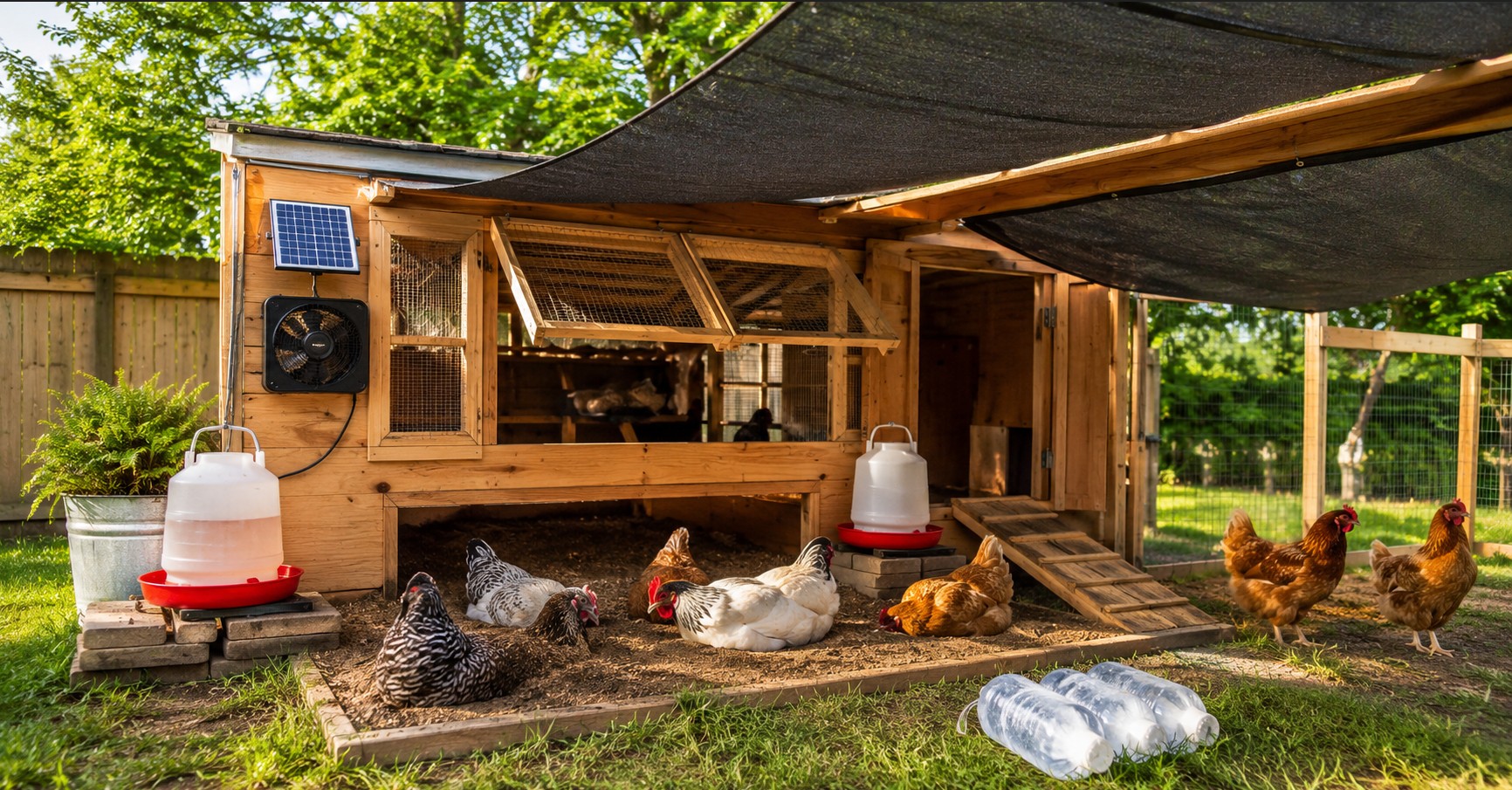
Budget Coop Cooling Hacks: Cheap Ways to Keep Your Chicken Coop Cool in Summer
Introduction
When summer heat settles over the backyard, a chicken coop can become uncomfortable fast. Many new chicken owners do not realize how quickly a small wooden coop can trap hot air, moisture, dust, and ammonia during a long afternoon. That is why learning cheap ways to cool a chicken coop is so important for anyone raising backyard chickens in the United States.
Chickens are hardy animals, but they are not built to handle trapped heat very well. They cannot sweat like people. Instead, they pant, hold their wings away from their bodies, drink more water, slow down, and look for shade. If the coop has poor airflow or sits in direct sun all day, your flock may start showing signs of heat stress before you expect it.
The good news is that cooling a coop does not have to mean buying expensive commercial equipment. Most backyard chicken owners can make a big difference with practical, low-cost upgrades. Better ventilation, shade, cool water, dry bedding, frozen water jugs, and safe fans can all help your flock stay more comfortable.
This guide is written for real backyard chicken owners, especially beginners who want simple answers without wasting money. You will learn how to spot heat problems, what causes a coop to overheat, how to build a simple chicken coop cooling system on a budget, what mistakes to avoid, and how to maintain your setup all summer long.
Table of Contents
Table of Contents
- Why Summer Heat Is Dangerous for Chickens
- Signs Your Chicken Coop Is Too Hot
- Why Chicken Coops Overheat in Summer
- Step-by-Step Budget Coop Cooling Plan
- Best Ventilation Methods for Summer
- Shade Ideas for Hot Weather
- Water and Hydration Solutions
- Frozen Water Bottle and Ice Hacks
- Best Coop Fans and Airflow Options
- Cooling Bedding and Flooring Tips
- Natural Cooling Methods
- Budget-Friendly DIY Cooling Ideas
- Mistakes That Make Coops Hotter
- Daily Summer Coop Routine
- Summer Maintenance Tables
- Long-Term Cooling Strategy
- My Practical Recommendation
- Internal Linking Suggestions
- FAQ
- Final Checklist
- Conclusion
Why Summer Heat Is a Serious Coop Problem
Summer heat is not just uncomfortable for chickens. It can affect their health, behavior, egg laying, and overall flock stability. Chickens carry a natural feather coat all year. That helps them in cool weather, but it makes hot, humid days harder.
In many parts of the United States, summer temperatures can climb quickly. A coop in direct afternoon sun may feel much hotter inside than the outside air. Wood, metal roofing, dark shingles, plastic panels, and poor airflow can all trap heat. By late afternoon, your coop may become stuffy, humid, and stressful for your flock.
Chickens release heat mainly through breathing and behavior.
Heat also affects egg laying. When hens are too hot, they often eat less feed. Since egg production depends on energy, hydration, calcium, and overall body condition, heat stress can reduce laying. You may notice fewer eggs, smaller eggs, thinner shells, or hens spending more time resting instead of foraging.
Moisture makes the problem worse. A damp coop does not just smell bad. It can increase humidity and ammonia, which may irritate your chickens’ respiratory system. In summer, wet bedding plus poor ventilation can create a heavy, stale environment that feels worse than dry heat.
Predator safety also complicates summer cooling. Many owners want to open the coop for airflow, but raccoons, snakes, dogs, coyotes, and other predators can take advantage of weak openings. The goal is not simply to open everything. The goal is to create secure airflow using hardware cloth, proper latches, and safe vent placement.
The earlier you prepare, the better. Waiting until chickens are already panting heavily is not ideal. Budget cooling should begin before the hottest weeks arrive.
Signs Your Chicken Coop Is Too Hot
Chickens usually show warning signs before heat becomes severe. A good flock owner learns to read those signs early.
Panting with Open Beaks
Panting is one of the most common signs of heat stress. A chicken may stand still with her beak open and breathe quickly. Light panting during a warm afternoon can happen, but heavy panting combined with weakness or inactivity deserves attention.
Wings Held Away from the Body
When chickens are hot, they often lift their wings slightly away from their bodies. This helps air move around their skin. If the whole flock is doing this in the coop, the area is probably too warm.
Lethargy and Low Activity
A hot chicken may stop scratching, dust bathing, or exploring. She may sit in one place for a long time. If she seems weak, unresponsive, or unable to stand normally, treat the situation seriously and contact a poultry vet or local extension office for guidance.
Reduced Eating
Chickens often eat less during hot weather because digestion creates body heat. This is normal to a point, but long periods of reduced eating can affect egg laying and condition.
Drinking More Than Usual
Increased drinking is expected in summer. However, if the flock empties waterers very quickly or crowds around one water source, you may need more water stations and more shade.
Reduced Egg Production
Heat stress can lower egg production. If your hens suddenly lay fewer eggs during a heat wave, look at water access, shade, feed intake, and coop airflow before assuming something else is wrong.
Crowding in One Shaded Corner
If every chicken avoids the coop and packs into one shaded spot, that tells you the rest of the setup is too hot or too exposed.
Warm or Stuffy Coop Smell
If you step inside and the coop feels damp, heavy, dusty, or ammonia-heavy, your chickens are breathing that air all night. Better ventilation and dry bedding should be a priority.
Main Causes of an Overheated Chicken Coop
Before spending money, understand why your coop is heating up. Cooling works best when you fix the main cause instead of only treating symptoms.
Poor Ventilation
This is the biggest issue in many backyard coops. A coop may have one small door and one tiny window, but that is not enough during a hot summer. Hot air rises and needs a place to escape near the top. Fresh air also needs a safe way to enter.
Direct Afternoon Sun
Morning sun is usually less harsh, but west-facing afternoon sun can bake a coop. A coop that sits in full sun from noon to evening needs shade support.
Dark Roof or Metal Heat Buildup
Dark roofing absorbs heat. Metal roofs can also radiate heat downward if there is no insulation or air gap. A light-colored or shaded roof can help.
Overcrowding
Too many chickens in a small coop create more body heat, moisture, droppings, dust, and stress. Even a good cooling plan struggles if the coop is overcrowded.
Wet Bedding
Wet bedding raises humidity and odor. Water spills, roof leaks, poor drainage, and droppings can all make bedding damp. Summer bedding should stay dry and easy to clean.
Poor Coop Placement
A coop tucked tightly between a fence, shed, and bushes may not receive natural airflow. Sometimes trimming vegetation or moving temporary barriers helps.
Not Enough Outdoor Shade
If chickens have no shaded run, they may be forced into a hot coop or exposed yard. Shade outside the coop is just as important as airflow inside.
Step-by-Step Budget Coop Cooling Plan
Here is a simple order to follow. This helps you avoid wasting money on products before fixing the basics.
Step 1: Check the Coop During the Hottest Hour
Do not judge the coop only in the morning. Check it between mid-afternoon and early evening when heat is strongest. Stand inside if possible. Notice whether the air feels still, humid, dusty, or hotter than outdoors.
Step 2: Watch Your Chickens
Your flock will show you what is working. Observe before making changes.
Step 3: Improve Air Escape First
Hot air must leave the coop. Add upper ventilation near the roofline if your coop lacks it. Use hardware cloth to keep predators out.
Step 4: Add Shade Before Buying Equipment
Shade is often cheaper than fans and lowers heat before it enters the coop. Shade cloth, tarps, roof panels, and tree shade can all help.
Step 5: Improve Water Access
Add more waterers, move them to shade, and refresh water during the hottest part of the day. Water is one of the cheapest cooling tools you have.
Step 6: Use Frozen Jugs During Heat Waves
Freeze gallon jugs and place them in shaded resting areas. Chickens may sit nearby when they need relief.
Step 7: Add Fans Safely If Needed
Fans help move air, but they must be installed safely. Keep cords protected, avoid wet locations, and do not place fans where chickens can knock them over.
Step 8: Maintain the System
A cooling setup only works if you keep bedding dry, vents clear, water clean, fans dust-free, and shade secure.
Improve Coop Ventilation Without Spending Much
Ventilation is the heart of a summer coop. A fancy chicken coop cooling system will not work well if hot air has nowhere to go.
Use High Vents for Hot Air
Hot air rises. That means vents near the roofline are very useful. They allow heat and moisture to escape while chickens roost lower inside the coop.
Budget options include:
- Cutting small covered vent openings near the roof
- Adding gable vents
- Installing hardware cloth windows
- Using adjustable vent covers
- Creating a protected ridge vent
Create Cross-Ventilation
Cross-ventilation means air can enter from one side and exit from another. One window helps, but two opposite openings usually work better. The goal is moving air, not just open space.
Use Hardware Cloth, Not Chicken Wire
Chicken wire keeps chickens in, but it does not reliably keep predators out. For ventilation openings, use strong hardware cloth secured with screws and washers or sturdy staples.
Do Not Aim Drafts Directly at Roosts All Night
Summer airflow is helpful, but avoid blasting strong wind directly onto birds while they sleep. Place openings so air moves through the coop without creating harsh direct drafts on roosting chickens.
Keep Vents Clear
Dust, feathers, cobwebs, and bedding can block airflow. Check vents weekly during summer. A vent that looks open from far away may be partly blocked up close.
Cheap Shade Hacks That Actually Help
Shade lowers the amount of heat your coop absorbs. It is one of the cheapest and most effective summer improvements.
Shade Cloth Over the Run
Shade cloth is popular because it blocks sunlight while still allowing air to move. Unlike a solid tarp, it usually traps less heat underneath.
You can attach shade cloth to:
- Fence posts
- T-posts
- Coop roof edges
- Run framing
- Temporary poles
Reflective Roof Cover
If your coop roof gets extremely hot, add a light-colored or reflective cover above it. Even a small air gap between the roof and shade cover can reduce radiant heat.
Use Existing Trees
Tree shade is excellent because it cools naturally and allows airflow. If your coop is movable, consider positioning it where it gets afternoon shade.
Temporary Tarp Shade
A tarp can work in an emergency. Just make sure it does not trap hot air like a low ceiling. Angle it so heat can escape and rainwater does not pool.
Shade the West Side
In many yards, the west side gets brutal afternoon sun. If you can only shade one side, start there.
Cool Water Strategies for Hot Days
Water is not optional during summer. Chickens need constant access to clean water, and hot water sitting in the sun is not inviting.
Use More Than One Waterer
One waterer may not be enough during hot weather. Add at least one backup water station so shy hens, younger birds, or lower-ranking flock members can drink without being pushed away.
Keep Water in Shade
Move waterers under shade cloth, trees, or a roofed run area. Water placed in direct sunlight can become warm quickly.
Refresh Water Midday
During heat waves, morning water may be warm by lunch. Refresh water during the hottest part of the day if possible.
Use Larger Containers
Larger water containers heat more slowly than tiny bowls. They also reduce the chance of the flock running out of water.
Clean Slimy Waterers
Summer heat can make waterers slimy faster. Clean them regularly so chickens actually want to drink. Fill clean plastic gallon jugs with water and freeze them. Leave a little space for expansion. Place them in shaded areas of the coop or run. Chickens may lean near them or rest close by.
Frozen Bottles in Front of Fans
Place frozen bottles or jugs in front of a fan to move slightly cooler air through a small area. This is not the same as air conditioning, but it can help during peak heat.
Frozen Waterer Base
Some owners rotate frozen bottles near water containers to keep the surrounding area cooler. Do not block drinking access.
Cold Treat Blocks
You can freeze chicken-safe treats in shallow containers. Use treats lightly. They should support comfort, not replace balanced feed.
Good summer treat options include:
- Watermelon pieces
- Cucumber slices
- Frozen peas
- Small berry portions
- Leafy greens in moderation
Budget Fans and Safe Airflow Options
Fans can be very helpful, especially in still, humid areas. But they need to be used carefully around animals, dust, bedding, and water.
Box Fans
Box fans are affordable and move a lot of air. Place them where chickens cannot knock them over or peck the cord. Never set a fan where rain or spilled water can reach it.
Clip Fans
Clip fans work well in smaller coops. Make sure the clip is secure. A loose fan can fall into bedding or water.
Solar Fans
Solar fans are useful if your coop is far from an outlet. They often run hardest when the sun is strongest, which is exactly when airflow is needed most.
Exhaust Fans
An exhaust fan pulls hot air out of the coop. This can work well if there is also a safe fresh-air intake. Without intake air, an exhaust fan cannot perform properly.
Fan Safety Notes
- Use outdoor-rated cords when needed
- Keep cords out of pecking range
- Protect fans from rain
- Clean dust from fan covers
- Do not overload outlets
- Unplug damaged equipment immediately
Best Bedding Choices for Hot Weather
Bedding affects moisture, odor, dust, and comfort. In summer, dry bedding is more important than deep bedding.
Pine Shavings
Pine shavings are affordable, easy to find, and absorb moisture fairly well. They work for many backyard coops as long as wet spots are removed regularly.
Sand
Sand can stay cooler and dries quickly. It is especially popular in hot climates. However, it is heavy and may not work well in every coop design.
Hemp Bedding
Hemp bedding absorbs moisture well and can help with odor control, but it usually costs more than pine shavings.
Straw
Straw is common in nesting boxes, but it can hold moisture and sometimes becomes musty in humid weather. Use it carefully in summer.
Avoid Wet Deep Litter in Heat
Deep litter can work in certain setups, but warm decomposition may add heat. If your coop already feels hot and damp, reduce bedding depth and clean more often during summer.
Create a Cooler Outdoor Run Area
Sometimes the best cooling improvement is outside the coop. Chickens need a comfortable place to spend the day.
Shaded Dust Bath
Dust bathing is natural chicken behavior. A shaded dust bath gives birds a cooler place to relax, clean feathers, and avoid direct sun.
A simple dust bath mix can include:
- Dry soil
- Sand
- A small amount of wood ash
- Loose dirt
Cool Ground Areas
Grass and shaded soil are usually cooler than concrete, gravel, or dark surfaces. If your run is bare and hot, add shaded natural ground areas when possible.
Low Perches in Shade
Some chickens like resting on low perches off hot ground. Keep them in shaded spots and make sure they are stable.
Safe Plant Shade
Chicken-safe shrubs or vines outside the run can provide natural shade. Protect young plants from scratching until established.
Best Budget Tools and Materials
You do not need everything on this list. Pick what solves your coop’s specific problem.
- Hardware cloth: For predator-safe ventilation openings.
- Shade cloth: For cooling runs, walls, and roof areas.
- Frozen gallon jugs: For emergency heat relief.
- Box fan: For moving air in covered, dry areas.
- Solar fan: For off-grid airflow.
- Light-colored roof paint: For reducing roof heat.
- Extra waterers: For better hydration access.
- Pine shavings or sand: For dry summer bedding.
- Thermometer: For checking coop temperature.
- Zip ties and clips: For temporary shade cloth installation.
Mistakes to Avoid When Cooling a Coop
Mistake 1: Closing the Coop Too Tightly
Some owners worry about predators and close every opening. Predator safety matters, but a sealed coop can become dangerously hot and humid. Use secure ventilation instead of blocking airflow.
Mistake 2: Using Chicken Wire for Security
Chicken wire is not strong enough for many predators. Use hardware cloth for vents and windows.
Mistake 3: Soaking the Coop Interior
Water inside the coop can raise humidity and create wet bedding. If you use misting, keep it outside in the run, not inside the sleeping area.
Mistake 4: Forgetting About Nesting Boxes
Nesting boxes can become hot, still pockets of air. Shade them from direct sun and keep bedding dry.
Mistake 5: Relying Only on Treats
Cold watermelon is nice, but it is not a complete cooling plan. Airflow and water matter more.
Mistake 6: Ignoring Overcrowding
Too many birds in one coop creates heat, moisture, and stress. Cooling hacks cannot fully fix overcrowding.
Mistake 7: Unsafe Electrical Setup
Fans and cords must be protected from water, dust, and chickens. Fire safety matters.
Seasonal Summer Chicken Care Tips
Morning Routine
Start early before the heat builds. Refill waterers, check bedding, open safe vents, and make sure shade cloth is still secure.
Midday Routine
During the hottest part of the day, check for panting and crowding. Refresh water if it feels warm. Add frozen jugs if temperatures are extreme.
Evening Routine
As temperatures drop, let the coop release stored heat. Check that nighttime ventilation is open but predator-safe.
Weekly Routine
Clean waterers, inspect fans, remove dust from vents, replace wet bedding, and check shade materials for damage.
Long-Term Prevention for Future Heat Waves
The best time to improve summer cooling is before the next heat wave. Think of coop cooling as seasonal maintenance, not an emergency project.
Plant Natural Shade
Trees and shrubs take time to grow, but they provide long-term cooling. Place them where they shade the coop or run without blocking all airflow.
Upgrade Roofing
If your roof bakes in the sun, consider a lighter roof color, reflective coating, or a raised shade panel.
Design for Airflow
If you build a new coop, plan ventilation from the beginning. Include high vents, shaded windows, and predator-safe airflow.
Keep Flock Size Realistic
A comfortable flock size is one of the most underrated cooling tools. More birds create more heat and moisture.
Practical Cooling Tables
Problem / Cause / Solution Table
| Problem | Likely Cause | Budget Solution |
|---|---|---|
| Chickens panting inside coop | Poor airflow and trapped heat | Add roofline vents, open secured windows, use a fan safely |
| Hot nesting boxes | Direct sun on coop wall | Add shade cloth or reflective cover on sun-facing side |
| Wet bedding smell | Water spills or poor ventilation | Remove wet bedding, improve airflow, move waterers outside if needed |
| Reduced egg laying | Heat stress and lower feed intake | Improve cooling, provide fresh water, monitor flock health |
| Birds crowding in one corner | Not enough shaded space | Add more shade zones and extra water stations |
Material / Best Use / Pros / Cons Table
| Material | Best Use | Pros | Cons |
|---|---|---|---|
| Shade cloth | Run cover and sunny coop sides | Affordable, breathable, easy to install | Can tear in storms if not secured |
| Frozen gallon jugs | Temporary heat relief | Very cheap and reusable | Needs freezer space and daily rotation |
| Hardware cloth | Vent and window protection | Predator-resistant and durable | Costs more than chicken wire |
| Box fan | Covered airflow support | Moves lots of air | Needs safe electricity setup |
| Sand bedding | Hot dry climates | Dries quickly and feels cooler | Heavy and not ideal for every coop |
Symptom / Cause / Action Table
| Symptom | Possible Cause | Action |
|---|---|---|
| Open-mouth breathing | Heat stress | Move bird to shade, provide cool water, improve airflow |
| Wings spread out | Trying to release heat | Check coop temperature and add shade |
| Weakness or collapse | Serious heat distress | Contact a poultry vet or extension office quickly |
| Dirty warm water | Waterer sitting in sun | Clean and move waterer to shade |
| Strong ammonia smell | Moist bedding and poor ventilation | Clean bedding and increase ventilation |
Summer Maintenance Checklist Table
| Task | How Often | Why It Matters |
|---|---|---|
| Refresh water | Daily, more during heat waves | Supports hydration and heat control |
| Check vents | Weekly | Keeps airflow open |
| Remove wet bedding | As needed | Reduces humidity and odor |
| Inspect shade cloth | Weekly | Prevents sun exposure after wind damage |
| Clean fan covers | Weekly | Improves airflow and safety |
My Practical Recommendation
If I were helping a beginner build a budget summer cooling setup, I would not start with expensive products. I would start with the simplest improvements that solve the biggest problems.
First, I would improve ventilation. If hot air cannot escape, everything else works harder. Add secured upper vents, clean blocked openings, and create cross-airflow. Use hardware cloth so ventilation does not become a predator risk.
Second, I would add shade. Shade cloth over the run and on the west-facing coop side can make a real difference. If the roof gets hot, create a shaded air gap above it or use a lighter covering.
Third, I would improve water management. Add extra waterers, keep them shaded, and refresh them during extreme heat. Water is cheaper than almost every cooling product, and it matters every single day.
Fourth, I would use frozen gallon jugs during heat waves. They are simple, reusable, and affordable. Place them in shaded resting areas or near airflow.
Finally, I would add a safe fan only if natural airflow is not enough. A fan can help, but it must be installed carefully. I would never risk unsafe cords, wet outlets, or unstable equipment around chickens.
The most realistic chicken coop cooling system is not one single gadget. It is a combination of shade, airflow, water, dry bedding, and daily observation.
FAQs
What are the cheapest ways to cool a chicken coop?
The cheapest ways to cool a chicken coop are improving ventilation, adding shade, refreshing water, using frozen water bottles, and keeping bedding dry. You do not need to buy an expensive system first. Start by helping hot air escape through secured upper vents. Then block direct sun with shade cloth or a tarp that still allows airflow. Add extra waterers in shaded spots and rotate frozen gallon jugs during heat waves. These low-cost steps work best when combined.
Do chickens need a fan in summer?
Chickens do not always need a fan if the coop has excellent ventilation and plenty of shade. However, a fan can help a lot in still, humid weather or in coops that do not get natural airflow. If you use a fan, install it safely. Keep cords protected, keep the fan dry, and make sure chickens cannot knock it over. A fan should move air through the coop, not blow dust directly into the birds’ faces all day.
Is misting good for a chicken coop?
Misting can help in an outdoor run, but it should be used carefully. Misting inside the coop can increase humidity and wet bedding, which may create other problems. If you use a mister, place it outside in a shaded run area where chickens can choose to use it or avoid it. Never soak nesting boxes, roosts, or bedding. In humid climates, airflow and shade may be more useful than heavy misting.
Can heat affect egg laying?
Yes, summer heat can reduce egg laying. When hens are hot, they often eat less feed and spend more energy trying to stay cool. This can affect egg production and sometimes shell quality. Make sure hens have cool water, shade, balanced layer feed, and a calm place to rest. If egg laying drops suddenly along with signs of illness, contact a poultry vet or extension office for guidance.
How do I know if my chicken is dangerously overheated?
Warning signs include heavy panting, weakness, collapse, inability to stand, extreme lethargy, or not drinking. A chicken that seems severely distressed needs fast attention. Move her to a shaded, cooler area and provide water, but do not force water down her throat. Serious heat stress can become dangerous quickly, so contact a poultry veterinarian or local extension office if symptoms are severe or do not improve.
Should I put ice in chicken water?
Yes, adding ice to chicken water during extreme heat can help keep it cooler for longer. It is a simple and safe summer trick as long as chickens still have easy access to water. Keep waterers shaded too, because ice melts quickly in direct sun. Clean the waterer regularly, especially during hot weather, because warm water containers can get dirty faster.
What bedding is best for hot chicken coops?
Dry pine shavings and sand are common summer bedding choices. Pine shavings are affordable and easy to replace. Sand can stay cooler and dries quickly, but it is heavy and may not work for every coop. The most important rule is to keep bedding dry. Wet bedding increases humidity and odor, which can make heat stress worse for your backyard flock.
Can I leave coop windows open at night?
You can leave ventilation open at night if the openings are predator-safe. Use hardware cloth, strong fasteners, and secure latches. Do not rely on weak screens or chicken wire. Night ventilation is helpful because it lets trapped heat escape after a hot day. Just make sure airflow does not come at the cost of predator protection.
Are frozen water bottles safe for chickens?
Frozen water bottles and gallon jugs are safe when used properly. Chickens usually sit near them rather than pecking them heavily. Use sturdy containers and place them in shaded resting areas. Do not use containers that leak, crack easily, or have sharp edges. Rotate frozen jugs as they melt during heat waves.
How much shade does a chicken run need?
A chicken run should have enough shade for the whole flock to rest without crowding. If only one tiny corner is shaded, dominant birds may take the best spot while others stay exposed. Shade cloth, trees, roof panels, or tarps can all help. Afternoon shade is especially important because that is often when heat feels strongest.
Can overcrowding make heat stress worse?
Yes, overcrowding makes summer heat much worse. More birds create more body heat, droppings, moisture, and stress. A crowded coop also has poorer airflow around each bird. If your flock seems hot even after adding shade and ventilation, check whether the coop is too small for the number of chickens you keep.
What should I do before a heat wave arrives?
Before a heat wave, clean waterers, freeze gallon jugs, check vents, secure shade cloth, remove wet bedding, and make sure fans work safely. Add extra water stations and inspect the coop during the hottest part of the day. Planning ahead is much easier than trying to fix everything after chickens are already showing signs of heat stress.
Final Checklist
- Check the coop during the hottest part of the day.
- Add secure roofline ventilation for rising hot air.
- Create cross-ventilation with protected openings.
- Use hardware cloth instead of chicken wire on vents.
- Add shade cloth over the run or sunny coop walls.
- Move waterers into shade.
- Refresh water during heat waves.
- Freeze gallon jugs for emergency cooling.
- Use fans only with safe electrical setup.
- Remove wet bedding quickly.
- Watch for panting, lethargy, and reduced activity.
- Contact a poultry vet or extension office for serious illness or severe heat stress.
Conclusion
Cooling a backyard chicken coop does not have to be expensive. The most effective budget solutions are usually simple, practical, and consistent. Better airflow, dependable shade, clean cool water, dry bedding, and frozen water jugs can make a real difference during hot summer weather.
The key is to prepare before your flock is already struggling. Walk through your coop during the hottest part of the day. Look for trapped heat, direct sun, warm water, damp bedding, and crowded resting areas. Then fix the biggest problems first.
A good budget chicken coop cooling system is not about buying every product available. It is about understanding what chickens need: fresh air, shade, hydration, dry bedding, and safe places to rest. Start with one or two improvements, observe your flock, and keep adjusting as the season changes.
With the right setup, your backyard chickens can stay more comfortable through summer heat, and you can feel more confident caring for your flock during the toughest weather of the year.