
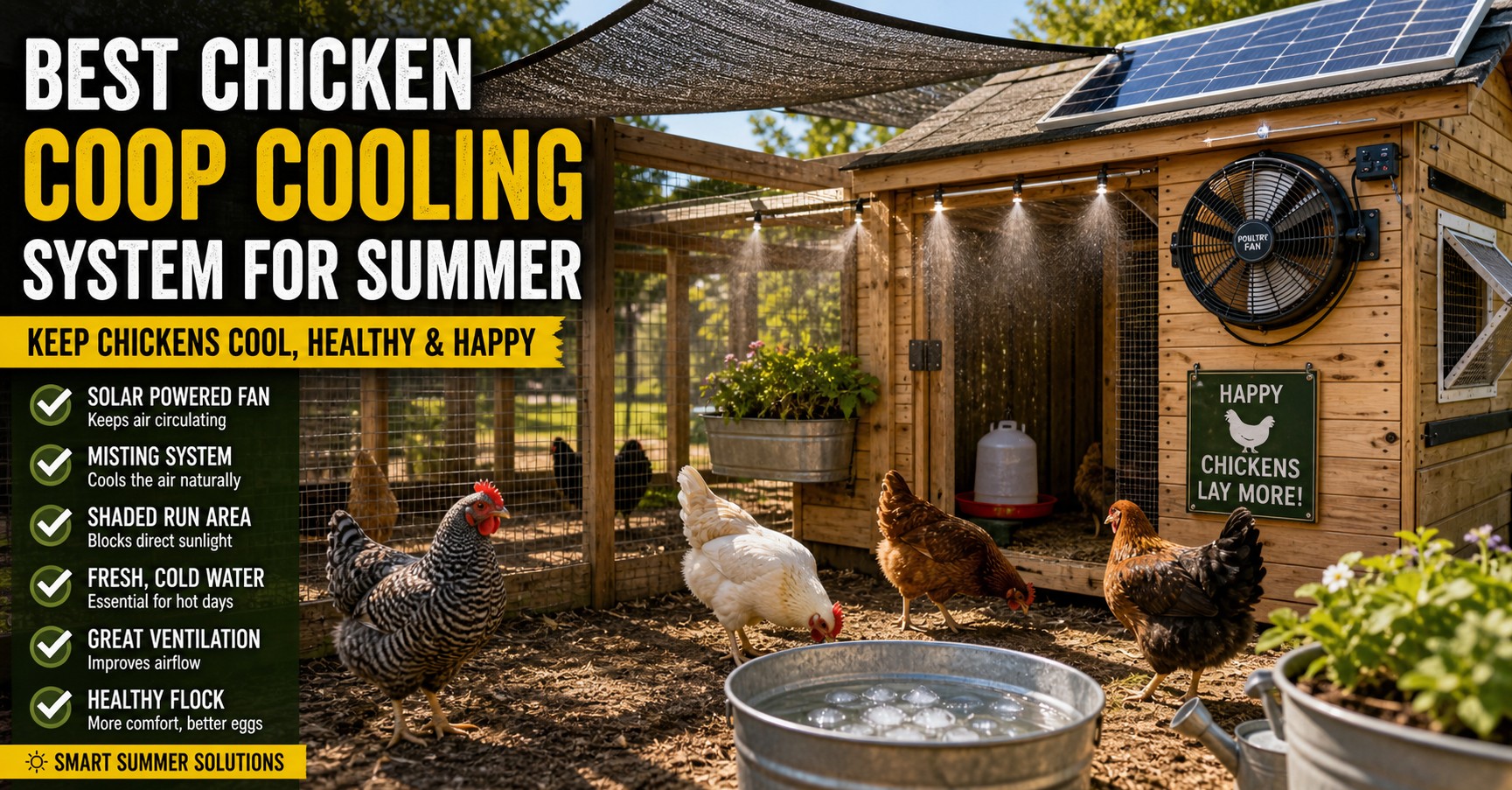
Best Chicken Coop Cooling System for Hot Summer Days
Table of Contents
- Why Summer Heat Is Dangerous for Chickens
- Signs Your Chicken Coop Is Too Hot
- Why Chicken Coops Overheat in Summer
- How Chickens Naturally Cool Themselves
- What Makes a Good Chicken Coop Cooling System?
- Best Ventilation Methods for Summer
- Best Coop Fans and Airflow Options
- Shade Ideas for Hot Weather
- Summer Roof Cooling Tips
- Cooling Bedding and Flooring Tips
- Water and Hydration Solutions
- Natural Cooling Methods
- Budget-Friendly DIY Cooling Ideas
- Mistakes That Make Coops Hotter
- Daily Summer Coop Routine
- Summer Maintenance Table
- Long-Term Cooling Strategy
- My Practical Recommendation
- Internal Linking Suggestions
- FAQ
- Final Checklist
- Conclusion
Why Summer Heat Is Dangerous for Chickens
Summer heat is not just uncomfortable for chickens. It can directly affect their health, behavior, appetite, egg production, and overall flock stability. In hot weather, chickens must work harder to keep their body temperature under control. If the coop holds too much heat, they may not be able to cool down properly, especially during long afternoon heat waves.
The danger becomes worse when heat combines with humidity. Dry heat is difficult enough, but humid air makes it harder for chickens to release heat through panting. In many parts of the United States, summer brings both high temperature and high humidity, especially in the South, Midwest, and coastal areas.
A coop can become hotter than the outside air when it has dark roofing, poor airflow, too many birds, wet bedding, and direct sun exposure. This is why a strong chicken coop cooling system should focus on the whole environment, not just one fan or one frozen water bottle.
Heat stress can cause chickens to slow down, stop laying regularly, eat less feed, drink more water, and spend most of the day trying to escape the sun. In serious cases, overheating can become an emergency. Any chicken that becomes extremely weak, unresponsive, unable to stand, or shows severe breathing distress should receive immediate attention and professional guidance from a poultry vet or local extension office.
Signs Your Chicken Coop Is Too Hot
Before you can fix summer heat problems, you need to recognize the warning signs. Chickens often show heat stress through body language before the situation becomes severe.
Panting or Open-Mouth Breathing
Panting is one of the most common signs of heat stress. Chickens open their beaks and breathe faster to release heat. Occasional panting during warm weather may happen, but constant heavy panting means the bird is struggling.
Holding Wings Away From the Body
When chickens hold their wings slightly away from their sides, they are trying to release trapped body heat. This often happens when the coop or run is too warm.
Reduced Egg Production
Heat stress can reduce laying because the chicken’s body prioritizes survival and hydration over egg production. If your hens suddenly lay fewer eggs during hot weather, the coop environment may be part of the problem.
Low Energy and Lethargy
Overheated chickens may sit still, avoid scratching, stop foraging, or stay in one shaded area for long periods. This is especially concerning if they also stop drinking or eating.
Excessive Water Drinking
Chickens naturally drink more water in summer, but if they are constantly crowding around waterers, the coop may be too hot or the water system may not be adequate.
Pale Comb or Drooping Appearance
A stressed chicken may look weak, pale, or droopy. This can happen from heat stress, dehydration, illness, or a combination of issues. Serious symptoms should not be ignored.
Why Chicken Coops Overheat in Summer
Chicken coops overheat for several reasons. Most problems come from design, location, airflow, and maintenance. Understanding the cause helps you choose the right cooling solution.
| Problem | Common Cause | Cooling Solution |
|---|---|---|
| Hot trapped air | Poor ventilation | Add cross ventilation, vents, or fans |
| Direct sunlight | No shade over coop or run | Use shade cloth, trees, tarps, or roof overhangs |
| Hot roof surface | Dark roofing materials | Use reflective roofing or insulation |
| High humidity | Wet bedding or poor airflow | Remove wet bedding and improve ventilation |
| Extra body heat | Overcrowded coop | Increase space or reduce flock density |
| Warm drinking water | Waterers in sun | Move waterers into shade and refresh often |
A common beginner mistake is thinking that a coop only needs to be safe from predators. Safety matters, but a coop also needs to breathe. A predator-proof coop that is sealed too tightly can become hot, humid, dusty, and unhealthy.
How Chickens Naturally Cool Themselves
Chickens have several natural ways to cool down, but they need the right environment for those methods to work. If the coop is poorly designed, those natural cooling habits are not enough.
Panting
Panting helps chickens release heat, but it also uses energy and moisture. If a chicken pants for too long without enough water, dehydration can become a concern.
Comb and Wattle Heat Release
A chicken’s comb and wattles help release body heat. Breeds with larger combs may handle heat differently than small-combed breeds, but every chicken still needs shade and water.
Dust Bathing
Dust bathing helps chickens stay comfortable and maintain feather health. A shaded dust bath area can be one of the simplest summer cooling improvements.
Seeking Shade
Chickens instinctively move into shade during hot weather. If your run has no shade, they may crowd inside the coop, making the coop even hotter.
Reducing Activity
In hot weather, chickens often move less. This is normal to a point, but extreme inactivity can signal heat stress.
What Makes a Good Chicken Coop Cooling System?
The best cooling system is not always the most expensive one. A good setup works with your coop design, climate, flock size, and daily routine.
A strong summer cooling system should include:
- Fresh airflow moving through the coop
- Shade over the coop and outdoor run
- Dry bedding that does not hold excess moisture
- Cool drinking water available throughout the day
- Roof protection against direct sun
- Safe fan placement where needed
- Predator-safe ventilation openings
- Enough space to prevent overcrowding
Think of cooling as a system, not a single product. A fan helps, but a fan inside a sealed hot coop is not enough. Frozen treats help, but they do not replace shade. Shade helps, but it does not remove stale air. The best results come from combining several simple improvements.
Best Ventilation Methods for Summer
Ventilation is the foundation of summer chicken care. If you only improve one thing, improve airflow first. Proper ventilation removes hot air, moisture, ammonia, dust, and stale air from the coop.
Cross Ventilation
Cross ventilation means air enters from one side of the coop and exits from another. This creates natural airflow instead of trapping heat in one place. For summer, screened windows or hardware cloth openings on opposite walls can make a major difference.
High Wall Vents
Hot air rises. High wall vents allow warm air to escape above the chickens’ roosting level. This is especially helpful at night when chickens are inside the coop.
Roof Ridge Vents
Roof vents are excellent for releasing rising hot air. A ridge vent, gable vent, or protected roof vent can reduce heat buildup near the ceiling.
Hardware Cloth Openings
Ventilation must still be predator-safe. Use hardware cloth instead of weak chicken wire for openings. Chicken wire may keep chickens in, but it is not strong enough against many predators.
Adjustable Vents
Adjustable vents let you increase airflow during summer and reduce direct drafts during winter. This is useful in areas with strong seasonal weather changes.
Best Coop Fans and Airflow Options
Fans can be very helpful, but they must be used safely. A fan should improve airflow, not create fire hazards or blow dust directly into chickens’ faces.
| Fan Type | Best Use | Pros | Cons |
|---|---|---|---|
| Solar fan | Small backyard coops | Energy efficient, useful in sunny weather | Less effective on cloudy days |
| Exhaust fan | Removing hot air | Pulls stale air out | Needs proper installation |
| Box fan | Temporary airflow boost | Strong air movement | Needs safe electrical setup |
| Battery fan | Emergency heat support | Portable and simple | Limited runtime |
| Roof vent fan | Hot roof areas | Removes rising hot air | More difficult to install |
Fan Safety Tips
- Keep cords away from chickens and water
- Use outdoor-rated equipment when needed
- Do not place fans where dust clogs them quickly
- Keep fans secured so they cannot fall
- Avoid blowing strong air directly at roosting birds all night
- Clean fan blades regularly
A fan works best when it supports existing ventilation. For example, an exhaust fan near a high vent can pull hot air out while lower openings bring fresh air in.
Shade Ideas for Hot Weather
Shade is one of the simplest and most effective cooling methods. A shaded coop and run can feel dramatically cooler than one sitting in full afternoon sun.
Shade Cloth
Shade cloth is affordable, easy to install, and allows airflow. It works well over runs, along sunny walls, and on the side of the coop that gets harsh afternoon sun.
Tarps
Tarps provide quick shade but can trap heat if installed too tightly. Leave space for airflow underneath.
Roof Overhangs
Overhangs protect coop walls, windows, and ventilation openings from direct sunlight and rain. They are especially useful above doors and run entrances.
Trees and Natural Shade
Natural shade from trees can cool the entire coop area. If you are planning a new coop location, partial tree shade is a major advantage.
Plants and Vines
Chicken-safe climbing plants or tall landscaping can help create shade, but avoid toxic plants and make sure chickens do not destroy young plants immediately.
Summer Roof Cooling Tips
The roof is often the hottest part of the coop because it receives direct sunlight for hours. Roof design can either trap heat or help release it.
Use Light-Colored Roofing
Light roofing reflects more sunlight than dark roofing. If your coop has a black or dark metal roof, it may absorb a lot of heat during the day.
Add Roof Ventilation
Roof vents let rising hot air escape. This is especially useful in coops with high ceilings or attic-like spaces.
Install an Air Gap
An air gap under metal roofing can reduce heat transfer into the coop. This is a practical upgrade when building or replacing a roof.
Use Insulation Carefully
Roof insulation can help reduce heat transfer, but it must be protected from chickens, moisture, and pests. Exposed insulation can be damaged quickly.
Reflective Roof Coating
Some coop owners use reflective roof coatings to reduce heat absorption. This can help in hot sunny climates.
Cooling Bedding and Flooring Tips
Bedding affects coop temperature, humidity, odor, and cleanliness. During summer, bedding should stay dry and easy to maintain.
Dry Pine Shavings
Pine shavings are popular because they absorb moisture and are easy to replace. In summer, remove wet spots quickly to prevent humidity and odor.
Sand Flooring
Sand can stay cooler and is easy to scoop, but it must remain dry and may not be ideal in every climate. It can work well in covered runs and dry areas.
Hemp Bedding
Hemp bedding absorbs moisture well and can help reduce odor. It may cost more, but some chicken owners like it for summer coop management.
Avoid Wet Straw
Straw can trap moisture and become musty in humid weather. If you use straw, inspect it often and replace it when damp.
Wet bedding increases humidity inside the coop, which can make heat feel worse and encourage bacteria, flies, and ammonia odor.
Water and Hydration Solutions
Water is one of the most important parts of summer chicken care. Chickens need easy access to cool, clean water all day.
Use Multiple Water Stations
One waterer may not be enough during hot weather, especially if dominant birds block access. Multiple water stations reduce crowding and help every chicken drink.
Keep Water in the Shade
Water heats quickly in direct sunlight. Move waterers under shade or inside a shaded run area.
Refresh Water Often
During extreme heat, check water more than once per day. Warm dirty water discourages drinking and increases health risks.
Add Ice During Heat Waves
Adding ice to waterers can help keep water cooler during the hottest hours. Frozen water bottles can also be placed near resting areas.
Offer Hydrating Treats
Watermelon, cucumber, and other water-rich treats can support hydration. Treats should not replace balanced feed, but they can help during hot afternoons.
Natural Cooling Methods
Natural cooling works especially well when combined with ventilation and shade. These methods are affordable and beginner-friendly.
Dust Bath Areas
A shaded dust bath gives chickens a comfortable place to cool down and maintain feather health.
Cool Ground Zones
Moistening a shaded dirt area lightly outside the coop can create a cooler resting zone. Avoid soaking the coop bedding or creating muddy areas.
Frozen Treat Blocks
You can freeze small amounts of fruits or vegetables in water for supervised summer treats. Keep treats simple and avoid overfeeding.
Natural Airflow Design
Positioning the coop where breezes naturally pass through can reduce reliance on fans.
Budget-Friendly DIY Cooling Ideas
You do not need to spend a lot to improve summer comfort. Many affordable upgrades work well for backyard flocks.
- Install hardware cloth windows
- Add shade cloth over the run
- Use frozen gallon jugs near resting areas
- Move waterers to shaded locations
- Add roof overhangs with scrap lumber
- Use a safe solar fan kit
- Create a shaded dust bath
- Paint the roof a lighter color
- Use dry bedding and remove wet spots daily
- Plant future shade trees around the coop area
The cheapest solution is often prevention. A coop placed in the right location with good airflow needs fewer cooling tools later.
Mistakes That Make Coops Hotter
Some well-meaning choices can accidentally make summer coop heat worse.
Closing the Coop Too Much
Some owners close windows and vents at night because they worry about predators. Instead, secure openings with hardware cloth so airflow can continue safely.
Using Dark Roofing Without Ventilation
Dark roofs absorb heat. If you use dark metal roofing, ventilation and insulation become even more important.
Overcrowding the Coop
Too many chickens create more body heat, moisture, droppings, and stress.
Letting Bedding Stay Wet
Wet bedding increases humidity and odor. It also attracts flies.
Putting Waterers in Direct Sun
Hot water discourages drinking. Chickens need cool water during peak heat.
Using Fans Unsafely
Unsafe cords, dusty motors, or unstable fan placement can create hazards. Always prioritize safety.
Daily Summer Coop Routine
A good daily routine helps catch heat problems before they become emergencies.
- Check water early in the morning.
- Open ventilation areas before the heat rises.
- Inspect bedding for wet spots.
- Make sure shade is available in the run.
- Watch chickens during the hottest part of the day.
- Refresh water in the afternoon if needed.
- Check fans and airflow systems.
- Observe chickens again before evening roosting.
Small daily checks are easier than trying to fix a severely overheated coop after problems appear.
Summer Maintenance Table
| Task | Frequency | Why It Matters |
|---|---|---|
| Check waterers | Daily | Prevents dehydration |
| Remove wet bedding | Daily or weekly | Reduces humidity and odor |
| Inspect vents | Weekly | Keeps airflow strong |
| Clean fans | Weekly | Prevents dust buildup |
| Check shade cloth | Weekly | Ensures shade coverage |
| Inspect roof heat | Monthly | Prevents trapped summer heat |
| Clean waterers deeply | Weekly | Reduces bacteria growth |
Long-Term Coop Cooling Strategy
The best long-term solution is to design the coop for summer before the hottest days arrive. Cooling becomes much easier when the structure supports airflow naturally.
Build Taller Coops
Taller coops allow hot air to rise above the chickens. Low cramped coops trap heat near the birds.
Use Open-Air Designs
In warm climates, open-air coop designs with predator-safe hardware cloth walls can work extremely well.
Plan for Seasonal Sun Angles
Watch where afternoon sun hits your yard. The west-facing side of the coop often needs the most shade.
Upgrade Before Heat Waves
Install vents, shade, and fans before summer peaks. Waiting until chickens are already stressed makes the job harder.
My Practical Recommendation
For most backyard flock owners, I would not start with the most expensive cooling equipment. I would start with the basics that solve the root problem.
First, improve ventilation. Add predator-safe openings, high vents, or screened windows so heat can escape. Second, add shade over the coop and run. Third, manage water carefully so chickens always have cool drinking water. Fourth, keep bedding dry and reduce humidity. Only after these basics are in place would I add solar fans or other cooling devices.
In my opinion, the best chicken coop cooling system for summer is a layered system. No single tool does everything. Shade reduces heat. Ventilation removes hot air. Water prevents dehydration. Dry bedding reduces humidity. Fans improve airflow when natural ventilation is not enough.
If you live in a very hot region, build your coop like summer heat is a major design factor, not an afterthought. Your chickens will be healthier, your coop will smell better, and your daily maintenance will be easier.
Internal Linking Suggestions
- Anchor text: chicken coop roof ideas
Suggested link article: Best Roofing Materials for Backyard Chicken Coops
Placement idea: Summer roof cooling section - Anchor text: chicken coop smells bad
Suggested link article: Why Does My Chicken Coop Smell So Bad?
Placement idea: Wet bedding and humidity section - Anchor text: chicken coop disinfectant
Suggested link article: Best Chicken Coop Disinfectant Guide
Placement idea: Summer cleaning routine section - Anchor text: sick chickens sneezing
Suggested link article: Sick Chickens Sneezing? Causes and Easy Solutions
Placement idea: Ventilation and respiratory health section - Anchor text: DIY coop plans
Suggested link article: Best DIY Chicken Coop for Beginners
Placement idea: Long-term coop design section - Anchor text: what to put in chicken coop floor
Suggested link article: Best Flooring Materials for Backyard Chickens
Placement idea: Cooling bedding and flooring section - Anchor text: predator protection
Suggested link article: Predator Proof Chicken Coop Ideas
Placement idea: Ventilation safety section - Anchor text: chicken coop maintenance
Suggested link article: Chicken Coop Cleaning Routine for Beginners
Placement idea: Summer maintenance checklist
FAQ
What is the best chicken coop cooling system for summer?
The best system combines ventilation, shade, cool water, dry bedding, and safe airflow. For most backyard coops, start with predator-safe vents and shaded run areas. Add fans only when natural airflow is not enough. A complete system works better than relying on one product.
Do chicken coops need fans in hot weather?
Fans are helpful when a coop does not get enough natural airflow. They are especially useful in humid climates, enclosed coops, and heat waves. However, fans should be installed safely, kept away from water, and cleaned regularly to prevent dust buildup.
How hot is too hot for chickens?
Chickens can begin showing heat stress during hot summer weather, especially when temperatures rise into the upper 80s and 90s Fahrenheit. Humidity, poor airflow, and lack of shade make the risk worse. Always watch behavior, not just the thermometer.
Can I spray water inside the coop to cool it?
It is usually better to avoid adding moisture inside the coop because wet bedding increases humidity, odor, mold, and bacteria risk. Light misting may help outdoor run areas in dry climates, but the coop interior should stay dry.
What is the cheapest way to cool a chicken coop?
The cheapest methods are shade cloth, better ventilation, moving waterers into shade, removing wet bedding, and using frozen water bottles. These simple changes often improve coop comfort without expensive equipment.
Should I close the coop during hot afternoons?
No. Closing the coop during heat can trap hot air. Instead, keep predator-safe ventilation open and provide shade. If chickens are safer outside in a shaded run, allow access while ensuring predator protection.
Is a solar fan good for a chicken coop?
A solar fan can be a good option for small backyard coops because it works during sunny conditions when heat is usually highest. It should be installed safely and used as part of a larger cooling system that includes shade and ventilation.
What bedding is best for hot weather?
Dry pine shavings, sand in suitable setups, and hemp bedding can all work well when managed properly. The key is keeping bedding dry. Wet bedding increases humidity and makes summer coop conditions worse.
How do I know if my chicken has heat stress?
Signs include panting, wings held away from the body, lethargy, reduced eating, heavy drinking, pale comb, and weakness. Severe symptoms require quick action and may need guidance from a poultry vet or extension office.
Can shade alone keep chickens cool?
Shade helps a lot, but it works best with airflow and fresh water. A shaded but poorly ventilated coop can still become hot and humid. Combine shade with ventilation for better results.
Final Checklist
- Add predator-safe ventilation openings
- Use shade cloth, trees, tarps, or roof overhangs
- Keep waterers full, clean, and shaded
- Refresh water during extreme heat
- Remove wet bedding quickly
- Use safe fans when airflow is weak
- Check chickens for panting and lethargy
- Avoid overcrowding the coop
- Improve roof ventilation and heat protection
- Create shaded dust bath areas
- Inspect the coop during the hottest part of the day
- Contact a poultry vet or extension office for severe symptoms
Conclusion
Building the best chicken coop cooling system for summer does not have to be complicated. The most effective setup usually combines simple, practical improvements: ventilation, shade, cool water, dry bedding, roof protection, and safe airflow.
Start with the basics before spending money on advanced equipment. A shaded, dry, well-ventilated coop will always be healthier than a hot sealed coop with poor airflow. Once your foundation is right, fans, frozen bottles, reflective roofing, and other cooling tools become much more effective.
Summer chicken care is about prevention. Watch your flock, check water often, keep bedding dry, and make sure hot air can escape. With the right cooling system, your backyard chickens can stay healthier, more comfortable, and safer through the hottest days of the year.