
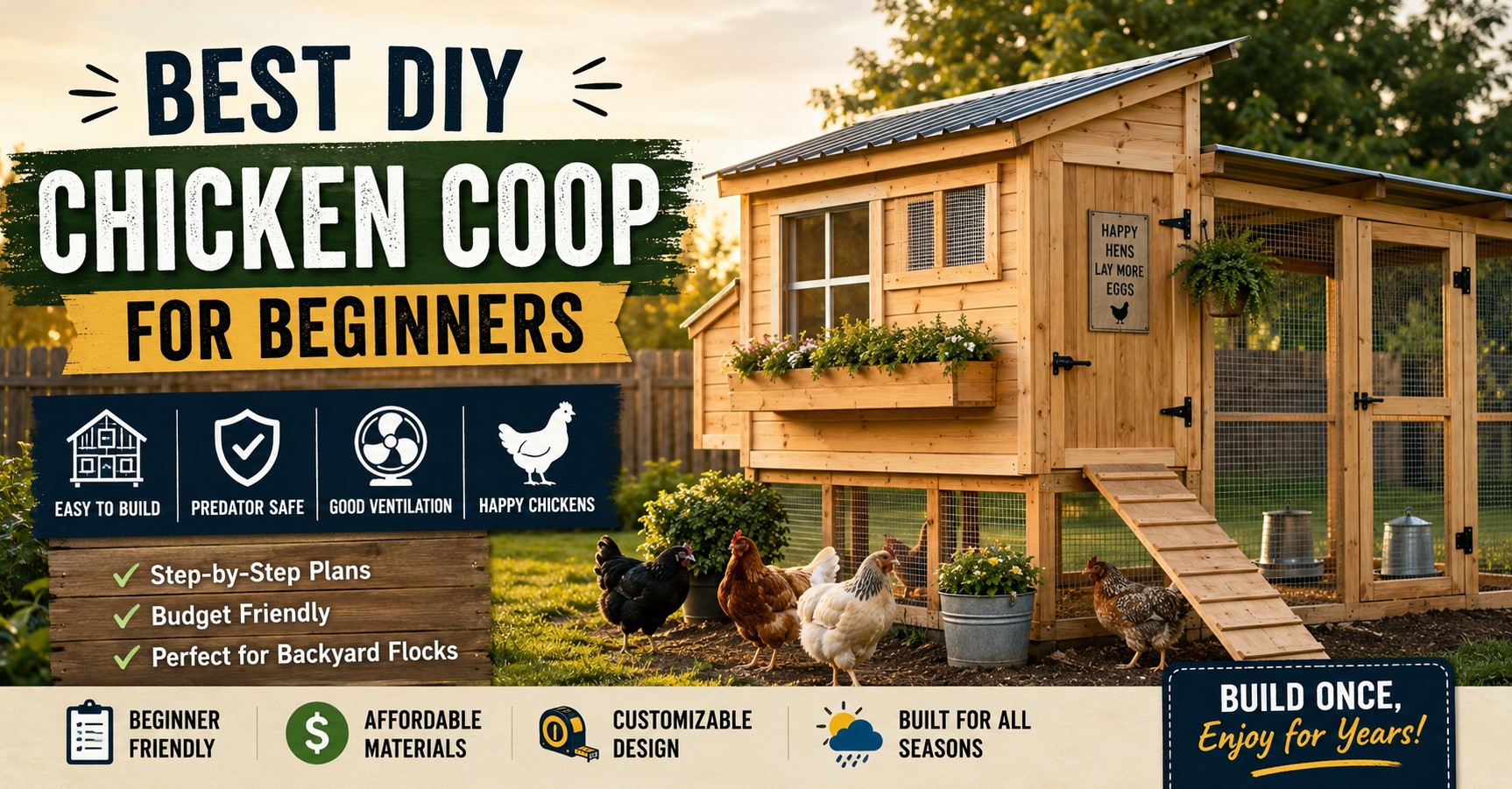
Best DIY Coop Plans for Beginner Chicken Owners
Building your first chicken coop can feel overwhelming at first. Many new backyard chicken owners spend hours searching for DIY coop plans, only to end up confused by complicated designs, expensive materials, or coop layouts that are not practical for real backyard use.
The good news is that beginner-friendly chicken coop building does not need to be complicated. With the right approach, even first-time chicken owners can build a safe, clean, affordable, and practical coop that keeps chickens healthy and comfortable throughout the year.
Whether you want a small backyard coop for a few hens or a simple family-friendly setup with a run, this guide will walk you through everything step by step using realistic advice designed for backyard chicken owners in the United States.
Quick Answer
The best DIY chicken coop for beginners is a simple, well-ventilated, predator-resistant coop with enough space for chickens to sleep, lay eggs, and safely move around. Most beginner chicken owners do best with compact wooden coop designs that are easy to clean and inexpensive to maintain.
Good beginner coop designs focus on practical features instead of complicated layouts. Prioritize airflow, dry bedding, weather protection, secure fencing, nesting boxes, and easy cleaning access. Many diy chicken coop plans for beginners work best when built with basic lumber, hardware cloth, and a covered run.
If you are starting with 4 to 6 chickens, a small coop with attached run is often the easiest setup to manage while learning backyard chicken care.
Table of Contents
- Why Beginner Chicken Owners Need Simple Coop Plans
- Choosing the Right Coop Size
- Best DIY Coop Layouts for Beginners
- Essential Coop Materials
- Step-by-Step Coop Building Guide
- Predator Protection Basics
- Ventilation and Moisture Control
- Best Bedding Options
- Common Beginner Mistakes
- Seasonal Coop Care Tips
- Maintenance and Cleaning
- Practical Recommendations
- FAQ
- Final Checklist
Why Beginner Chicken Owners Need Simple Coop Plans
One of the biggest mistakes new chicken owners make is choosing coop designs that are far too complicated for their experience level.
Large custom coops with advanced roofing systems, multiple rooms, electrical setups, or expensive decorative features often become frustrating projects that take too long and cost far more than expected.
Simple coops are usually easier to:
- Build correctly
- Clean regularly
- Ventilate properly
- Protect from predators
- Repair later
- Expand in the future
Most backyard chicken owners only need a safe, dry, secure, and functional coop for healthy egg production and basic flock care.
Choosing the Right Coop Size
Proper sizing is extremely important when building beginner chicken coops.
Overcrowded coops can quickly lead to:
- Bad odors
- Moisture buildup
- Fighting and pecking
- Poor egg laying
- Respiratory problems
- Dirty bedding
General Coop Space Recommendations
| Number of Chickens | Coop Size | Run Size |
|---|---|---|
| 4 Chickens | 16 sq ft | 40 sq ft |
| 6 Chickens | 24 sq ft | 60 sq ft |
| 8 Chickens | 32 sq ft | 80 sq ft |
| 10 Chickens | 40 sq ft | 100 sq ft |
Many small diy chicken coop plans with run are perfect for families starting with 4 to 6 hens.
Best DIY Coop Layouts for Beginners
A-Frame Chicken Coop
A-frame coop designs are popular because they are compact and easy to build. They work best for small backyard flocks.
Advantages:
- Simple construction
- Budget-friendly
- Portable designs available
- Good rain drainage
Disadvantages:
- Limited standing room
- Can become cramped
- Less storage space
Walk-In Coop
Walk-in coops are easier to clean and maintain. While slightly more expensive, they are often worth it for long-term convenience.
Raised Chicken Coop
Raised coops help improve drainage and reduce mud problems during rainy weather.
They also create shaded space underneath the coop where chickens can cool down during hot summers.
Essential Materials for DIY Coop Plans
| Material | Best Use | Pros | Cons |
|---|---|---|---|
| Pressure-Treated Lumber | Frame base | Durable | Higher cost |
| Plywood | Walls and flooring | Easy to install | Needs weather protection |
| Hardware Cloth | Predator protection | Very secure | More expensive |
| Metal Roofing | Roof covering | Long-lasting | Can become hot |
| Pine Shavings | Bedding | Absorbent | Needs replacement |
Step-by-Step Beginner Coop Building Guide
Step 1: Choose a Dry Location
Avoid low areas where rainwater collects. Wet ground quickly creates mud, odor, and moisture problems inside the coop.
Step 2: Build a Strong Base
The base supports the entire coop. A weak foundation often causes future structural problems.
Step 3: Frame the Coop
Simple square or rectangular framing works best for beginner builders.
Step 4: Install Ventilation
Good airflow is one of the most important parts of healthy coop design.
Poor airflow increases:
- Ammonia buildup
- Moisture
- Respiratory illness
- Bad odors
Step 5: Add Nesting Boxes
One nesting box per 3–4 hens is usually enough.
Step 6: Build the Run
Secure fencing and buried hardware cloth help prevent predator attacks.
Predator Protection Basics
Many backyard chicken owners underestimate predator risks.
Common predators include:
- Raccoons
- Foxes
- Coyotes
- Dogs
- Hawks
- Snakes
- Possums
Strong predator protection is essential for every coop.
Important Safety Tips
- Use hardware cloth instead of chicken wire
- Secure all doors at night
- Bury fencing underground
- Check for gaps regularly
- Use strong locks
Ventilation and Moisture Control
Ventilation is one of the most overlooked parts of beginner coop design.
Without proper airflow, moisture becomes trapped inside the coop, especially during winter.
This can lead to:
- Strong odors
- Mold growth
- Wet bedding
- Respiratory stress
- Frostbite risk
Good airflow should remove moisture without creating direct drafts on sleeping chickens.
Best Bedding Options
Pine Shavings
Pine shavings are one of the most popular bedding materials for beginner chicken owners.
Sand
Sand is easier to clean but may become difficult during cold climates.
Straw
Straw works well for insulation but can trap moisture if not maintained properly.
Common Beginner Mistakes
| Problem | Cause | Solution |
|---|---|---|
| Strong coop odor | Poor airflow | Add ventilation |
| Wet bedding | Roof leaks | Repair roofing |
| Chicken stress | Overcrowding | Increase space |
| Predator attacks | Weak fencing | Use hardware cloth |
| Mud problems | Poor drainage | Raise coop area |
Seasonal Chicken Coop Care Tips
Summer
- Increase ventilation
- Provide shade
- Keep water cool
- Watch for heat stress
Winter
- Keep bedding dry
- Prevent drafts
- Maintain ventilation
- Check for frozen water
Rainy Weather
- Improve drainage
- Use elevated coops
- Replace wet bedding quickly
- Inspect roof leaks
My Practical Recommendation
For most beginner chicken owners, I recommend starting with a simple rectangular wooden coop designed for 4–6 chickens. Avoid overbuilding your first coop.
The best beginner coops are not the most expensive or visually complicated ones. Instead, focus on practical features that improve daily flock care:
- Easy cleaning access
- Good ventilation
- Dry flooring
- Predator protection
- Simple roof design
- Expandable layouts
Many families find that cheap diy chicken coop plans on budget work perfectly when built carefully with quality materials in the right location.
Internal Linking Suggestions
- Anchor text: why chicken coops smell bad
Suggested article: Why Does My Chicken Coop Smell So Bad?
Placement idea: ventilation section - Anchor text: best chicken coop flooring
Suggested article: What to Put in a Chicken Coop Floor
Placement idea: bedding section - Anchor text: predator proof chicken coop tips
Suggested article: Predator Protection for Backyard Chickens
Placement idea: safety section - Anchor text: chicken coop cooling ideas
Suggested article: Chicken Coop Cooling System Guide
Placement idea: summer care section
Frequently Asked Questions
What is the easiest chicken coop to build for beginners?
Simple rectangular wooden coops are usually easiest for beginners because they require basic tools, simple cuts, and fewer complicated roof angles. Small walk-in coop designs also make cleaning easier long term.
How much does a DIY chicken coop cost?
Costs vary depending on size and materials, but many beginner coops for 4–6 chickens can be built on a reasonable budget using plywood, lumber, and hardware cloth.
How many chickens should beginners start with?
Most first-time chicken owners do best starting with 4–6 hens. This size is manageable while still producing enough eggs for many households.
Do chicken coops need insulation?
In many areas of the United States, insulation is not always necessary if the coop has proper ventilation and dry bedding. However, colder climates may benefit from additional weather protection.
Final Checklist
- Choose a dry coop location
- Build proper ventilation
- Use hardware cloth for safety
- Install nesting boxes
- Prevent moisture buildup
- Keep bedding clean and dry
- Allow enough chicken space
- Secure doors at night
- Inspect the coop regularly
Conclusion
Building your first chicken coop does not need to be stressful or expensive. The best beginner-friendly DIY coop plans focus on practical layouts, easy maintenance, proper airflow, and strong predator protection.
By keeping your design simple and prioritizing chicken safety and cleanliness, you can create a healthy backyard environment that supports better egg production, cleaner bedding, and happier chickens throughout the year.
Start with a manageable coop size, use quality materials, and improve your setup over time as your backyard flock grows.