
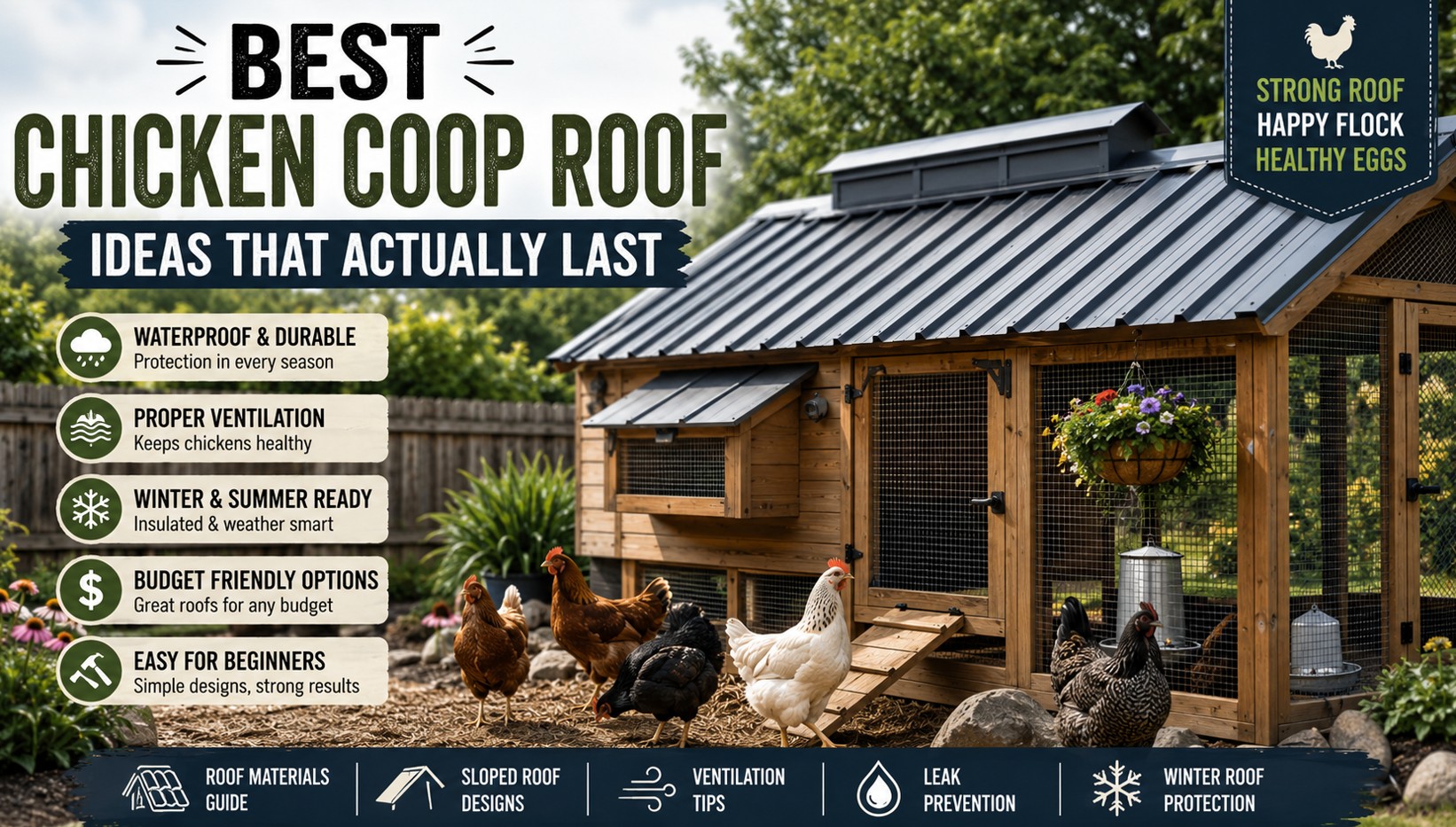
Best Chicken Coop Roof Ideas That Actually Last
A strong and well-designed chicken coop roof can make the difference between a healthy backyard flock and constant coop problems. Many beginner chicken owners focus heavily on feeders, bedding, nesting boxes, and fencing, but overlook one of the most important parts of the coop itself — the roof.
If your chicken coop roof leaks during rain, traps too much heat during summer, or fails during winter storms, your chickens can quickly become stressed, sick, or uncomfortable. Moisture buildup, poor ventilation, mold, and weak structural protection are all common problems caused by bad roofing choices.
Whether you are building your first backyard coop or upgrading an older setup, choosing the right chicken coop roof is one of the smartest investments you can make for long-term flock health and easier maintenance.
In this complete guide, you will learn:
- The best roofing materials for backyard chicken coops
- How to build a waterproof chicken coop roof
- Easy coop roof ideas for beginners
- How to stop roof leaks
- Metal roof pros and cons
- Winter insulation tips
- Roof ventilation strategies
- Budget-friendly roofing solutions
- Long-lasting coop roof designs
Why Your Chicken Coop Roof Matters
Many backyard flock owners underestimate how much the roof affects overall chicken health. Chickens are surprisingly sensitive to moisture, poor airflow, and sudden temperature changes.
A poorly designed roof can create:
- Wet bedding
- Mold growth
- Respiratory problems
- Heat stress
- Frozen coop conditions
- Predator access points
- Rotting wood structures
A good roof protects both your chickens and your investment.
If your coop stays dry and properly ventilated, you will spend less time cleaning, replacing bedding, and dealing with health issues.
Common Chicken Coop Roof Problems
Roof Leaks
One of the biggest complaints among backyard chicken owners is leaking roofs. Small leaks may not seem serious at first, but over time they create major moisture problems inside the coop.
Common causes include:
- Poor roof slope
- Improper sealing
- Cheap roofing materials
- Missing flashing
- Damaged panels or shingles
Heat Buildup
Low-quality roofing materials can trap heat inside the coop during summer.
This is especially dangerous in southern states where temperatures stay high for long periods.
Without proper ventilation, chickens may experience:
- Panting
- Reduced egg production
- Lethargy
- Dehydration
- Heat stress
Poor Ventilation
Even waterproof roofs can create problems if airflow is ignored.
Warm moist air rises naturally inside the coop. Without roof ventilation, condensation builds up and creates damp unhealthy conditions.
Snow and Ice Damage
In colder regions, flat or weak roofs often struggle with snow weight.
Improper winter roof design can cause:
- Roof collapse
- Ice dams
- Water leaks
- Cold drafts
Best Roofing Materials for Backyard Chicken Coops
| Roof Material | Best Use | Pros | Cons |
|---|---|---|---|
| Metal Roofing | Rainy and snowy climates | Durable, waterproof, long lifespan | Can get hot without ventilation |
| Asphalt Shingles | Traditional backyard coops | Affordable and easy to install | Shorter lifespan than metal |
| Polycarbonate Panels | Lightweight small coops | Easy installation | Less durable long-term |
| Wood Roofing | Rustic homestead style | Natural appearance | Requires more maintenance |
| Corrugated Plastic | Temporary coops | Cheap and lightweight | Less weather resistant |
Metal Chicken Coop Roof Pros and Cons
Advantages
Metal roofing has become extremely popular among backyard chicken owners because it lasts a long time and performs well in difficult weather.
- Excellent rain protection
- Long lifespan
- Minimal maintenance
- Strong against snow
- Resistant to rot
- Predator resistant
Disadvantages
- Can become hot in direct sun
- Higher upfront cost
- Needs proper insulation
- Can be noisy during heavy rain
Most of these problems can be solved with ventilation, insulation, and proper roof spacing.
Easy Chicken Coop Roof Ideas for Beginners
Single Sloped Roof
This is one of the easiest roof designs for first-time builders.
Benefits include:
- Simple construction
- Easy rain drainage
- Budget-friendly
- Works well with metal roofing
A-Frame Roof
A-frame roofs provide strong rain and snow protection.
They are ideal for:
- Cold climates
- Heavy rainfall areas
- Larger coops
Lean-To Roof
A lean-to roof works well for small backyard setups attached to fences or sheds.
How to Build a Waterproof Chicken Coop Roof
Step 1: Use Roof Underlayment
Always place waterproof underlayment beneath roofing panels or shingles.
This adds an extra moisture barrier.
Step 2: Create Proper Roof Slope
Flat roofs collect water.
A sloped roof helps rain drain naturally.
Most backyard coops benefit from a roof pitch between 4:12 and 6:12.
Step 3: Install Roof Overhangs
Roof overhangs help keep rain away from walls and ventilation openings.
Step 4: Seal Fasteners Properly
Use roofing screws with rubber washers.
Improperly sealed screws are one of the most common leak sources.
Step 5: Add Flashing
Flashing protects roof joints and edges from water intrusion.
How to Stop Chicken Coop Roof Leaks
| Problem | Cause | Solution |
|---|---|---|
| Water dripping inside coop | Loose roofing screws | Tighten or replace screws |
| Wet bedding near walls | Short roof overhang | Add larger roof extension |
| Leaks after storms | Damaged flashing | Install new flashing |
| Condensation inside roof | Poor ventilation | Add ridge vents |
| Mold growth | Moisture trapped inside | Improve airflow and drainage |
Best Roof Ventilation for Chicken Coop
Ventilation is one of the most overlooked parts of coop roof design.
Even in winter, chickens need airflow.
Without proper ventilation, ammonia and moisture build up quickly.
Best Roof Ventilation Ideas
- Ridge vents
- Soffit vents
- Roof gable vents
- Protected mesh openings
- Adjustable airflow vents
Ventilation Mistakes
- Closing all vents during winter
- Creating direct drafts on roosts
- Ignoring humidity buildup
- Using sealed plastic roofs without airflow
Insulated Chicken Coop Roof for Winter
Winter weather creates major roofing challenges in colder states.
Insulation helps regulate temperatures and reduce condensation.
Best Insulation Materials
- Rigid foam board
- Reflective insulation
- Spray foam
- Fiberglass batts (protected properly)
Winter Roofing Tips
- Use steep roof slopes for snow shedding
- Check for ice buildup regularly
- Seal roof gaps before winter starts
- Maintain ventilation even during freezing temperatures
Budget-Friendly Chicken Coop Roofing Ideas
You do not need expensive materials to build a reliable coop roof.
Many backyard chicken owners successfully use affordable roofing systems.
Budget Roofing Ideas
- Corrugated metal panels
- Recycled roofing materials
- Used shingles
- Pallet wood with waterproof covering
- DIY tarp-supported temporary roofing
However, avoid sacrificing waterproofing quality just to save money.
Durable Chicken Coop Roofing Ideas
Long-lasting roofs reduce maintenance and improve flock safety.
The most durable backyard coop roofs usually combine:
- Metal roofing
- Proper ventilation
- Strong framing
- Weatherproof fasteners
- Roof overhangs
- Moisture barriers
Mistakes to Avoid
- Using flat roofs in rainy climates
- Ignoring ventilation
- Using untreated wood
- Installing weak supports
- Forgetting roof overhangs
- Using indoor materials outdoors
- Skipping waterproof underlayment
- Overcrowding chickens in small coops
Weekly Chicken Coop Roof Maintenance Checklist
| Task | Frequency | Purpose |
|---|---|---|
| Check for leaks | Weekly | Prevent moisture problems |
| Inspect ventilation | Weekly | Improve airflow |
| Remove debris | Weekly | Prevent water pooling |
| Inspect screws and fasteners | Monthly | Prevent roof movement |
| Check insulation condition | Seasonally | Improve temperature control |
My Practical Recommendation
For most beginner backyard chicken owners in the United States, I strongly recommend a sloped metal roof with good ventilation and roof overhangs.
It may cost slightly more upfront compared to temporary roofing options, but it saves money long-term because it lasts longer and reduces moisture problems.
If you live in areas with heavy rain or snow, prioritize waterproofing and structural strength first.
If you live in hotter southern climates, focus heavily on ventilation and reflective roofing materials.
Many coop problems people blame on bedding or chicken health actually start with bad roof design.
A dry coop almost always leads to healthier chickens and easier maintenance.
FAQ
What is the best roof for a chicken coop?
For most backyard setups, metal roofing with proper ventilation is one of the best options because it lasts long, handles rain well, and requires little maintenance.
Should chicken coop roofs be insulated?
In colder climates, insulation helps reduce condensation and improve winter comfort. However, ventilation remains more important than insulation alone.
How do I stop my chicken coop roof from leaking?
Check fasteners, flashing, roof slope, and sealants regularly. Adding waterproof underlayment can greatly reduce leaks.
Can chickens get sick from a leaking roof?
Yes. Excess moisture increases mold, bacteria, ammonia, and respiratory risks inside the coop.
Final Checklist
- Choose waterproof roofing material
- Add proper roof slope
- Install ventilation openings
- Use roof overhangs
- Inspect for leaks regularly
- Maintain clean dry bedding
- Prepare roof for winter and storms
- Use predator-resistant construction
Conclusion
A reliable chicken coop roof protects far more than just the coop structure itself. It protects your chickens from rain, moisture, heat stress, predators, and long-term health problems.
Whether you choose metal roofing, shingles, or a simple sloped beginner design, the key is building a roof that stays dry, ventilated, and durable year-round.
Take time to plan carefully, invest in quality waterproofing, and maintain your roof regularly. Your backyard flock will stay healthier, cleaner, and more comfortable in every season.