
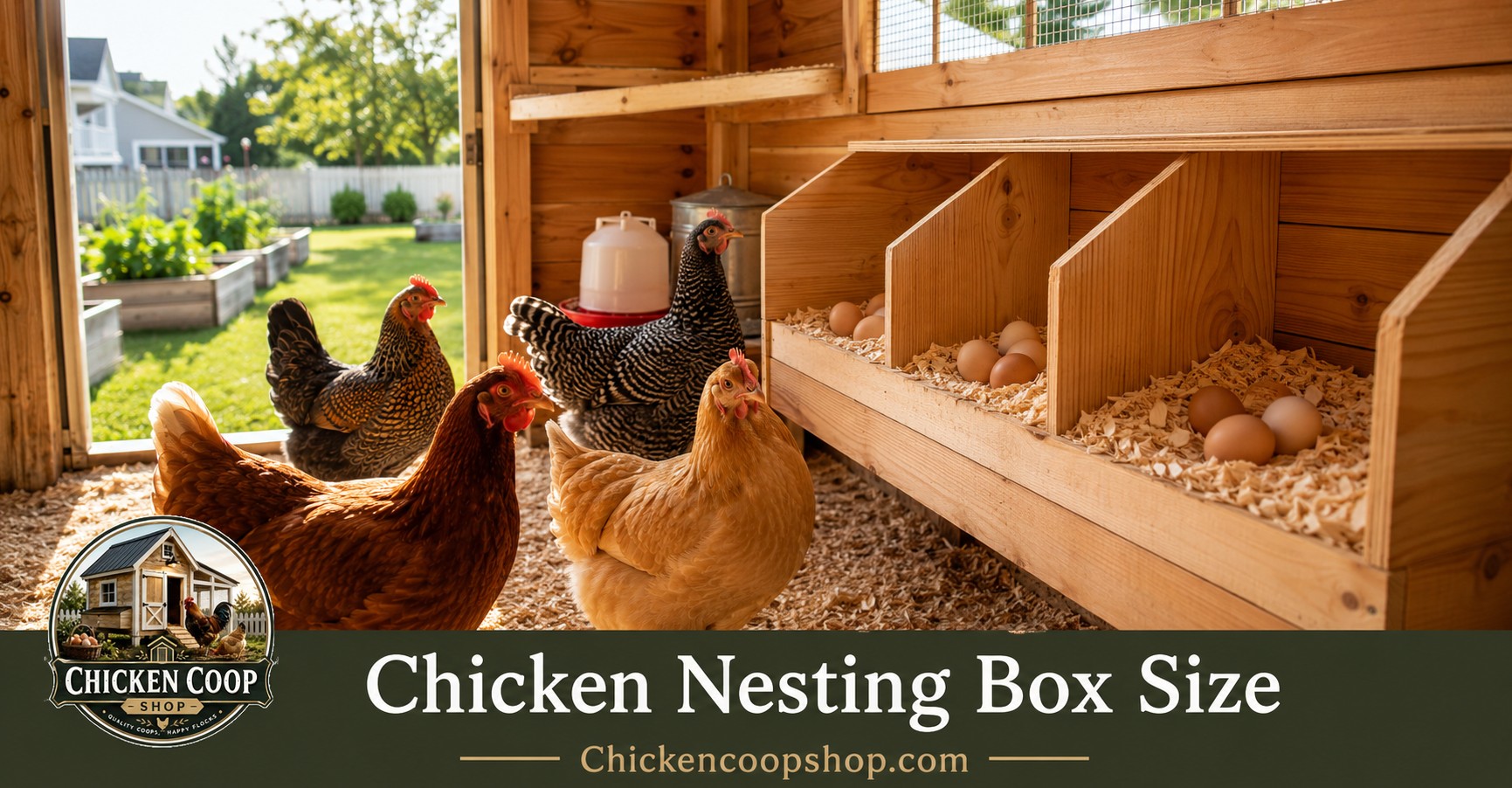
Backyard chicken owners in the United States deal with different coop styles, climates, flock sizes, and breeds. A small flock in a suburban backyard may need only two simple boxes, while a larger homestead flock may need a full nesting area that stays dry through rain, snow, heat, and muddy seasons. The goal is simple: make the nesting box feel safe, quiet, clean, and easy for hens to use.
This guide explains chicken nesting box dimensions, how many nesting boxes per chicken, where to place them, what bedding works best, how to keep them clean, and what to fix when hens avoid them. The advice is beginner-friendly, practical, and built around real coop setup problems that happen in everyday backyard chicken care.
Quick Answer Box
For most laying hens, the best chicken nesting box size is about 12 inches wide, 12 inches deep, and 12 inches tall. Large breeds usually do better with a 14 by 14 inch box. Provide one nesting box for every 3 to 4 hens, place boxes in a quiet, dry, darker area of the coop, and keep them lower than the roosts. Add clean pine shavings, straw, or nesting pads so eggs stay cleaner and hens feel comfortable using the boxes daily.
Standard Nesting Box Dimensions
The standard chicken nesting box size for most backyard flocks is 12 inches wide, 12 inches deep, and 12 inches tall. That size gives an average laying hen enough room to step inside, turn slightly, settle down, and lay an egg without feeling exposed. Hens usually prefer a snug, protected space rather than a huge open area.
When beginners ask, “how big should a chicken nesting box be?”, the answer depends on breed size, coop layout, and how the birds behave. A box that is too small can cause hens to avoid it or break eggs while moving around. A box that is too large can invite multiple hens to crowd together, scratch bedding out, sleep in it, or treat it like a general hangout spot.
Think of nesting boxes for laying hens as quiet egg-laying stations, not bedrooms. Your birds should sleep on roosting bars, eat at feeders, drink from waterers, and use nesting boxes mainly for laying. Clear separation between these areas keeps the coop cleaner and helps reduce broken or dirty eggs.
| Chicken Type | Good Nesting Box Size | Best Use | Practical Tip |
|---|---|---|---|
| Average laying hens | 12 x 12 x 12 inches | Rhode Island Red, Plymouth Rock, Easter Egger, Sussex, Wyandotte | Best all-around size for most backyard chicken coops. |
| Large breeds | 14 x 14 x 14 inches | Buff Orpington, Brahma, Jersey Giant, Cochin | Extra depth helps large hens turn and settle without crushing eggs. |
| Bantams | 10 x 10 x 10 inches | Small bantam hens and compact coops | Keep the box cozy, but do not make it so small that bedding falls out. |
| Mixed flock | 12 x 12 or 14 x 14 inches | Backyard flocks with several breed sizes | Use the larger size if you have even a few heavy breeds. |
Depth matters more than many beginners realize. If the box is shallow, eggs may roll out or get kicked into the coop bedding. If the front lip is too low, hens can drag nesting material out every time they leave. A small front board, usually around 3 to 4 inches high, helps keep bedding and eggs inside the box without blocking the hen from entering.
Nesting Box Size for Regular Hens
For regular laying hens, chicken nesting box dimensions of about 12 by 12 by 12 inches are usually the easiest choice. This includes popular backyard breeds such as Rhode Island Reds, Plymouth Rocks, Easter Eggers, Leghorns, Sussex, Australorps, and Wyandottes. These hens do not need a luxury-sized box. They need a clean, calm, protected space.
A regular hen should be able to step into the box without squeezing through the opening. She should also be able to lower her body onto the bedding and adjust her position. If she has to twist awkwardly, stand halfway out, or push against the walls, the box is probably too tight. If the box is wide enough for two or three hens to sit side by side, it may be larger than necessary.
Good signs the box size is working
You can tell a setup is working when most eggs appear in the same few boxes, eggs are not heavily soiled, bedding remains mostly in place, and hens enter calmly without loud stress or fighting. Some hens will still have favorite boxes, even when every box is the same size. That is normal flock behavior.
It also helps to watch the coop during the morning, because many hens lay earlier in the day. If hens wait in line outside a favorite box but ignore the others, the issue may not be size. It could be lighting, privacy, bedding, or location. Hens are picky about small details, and sometimes one box simply feels safer than another.
Nesting Box Size for Large Breeds
The best nesting box size for large chickens is usually 14 inches wide, 14 inches deep, and 14 inches tall. Heavy breeds such as Buff Orpingtons, Brahmas, Cochins, and Jersey Giants need extra space to step in, turn, and sit without pressing against the sides. A large hen in a small box may crack eggs, kick bedding out, or decide to lay somewhere else.
Large breeds are often calm and steady, but they can be heavy on eggs and bedding. A slightly bigger box gives them room to settle gently. Do not make the box so large that it becomes a sleeping corner, though. If hens start sleeping in the nesting box, droppings build up quickly and eggs become dirty the next morning.
Mixed flock advice
If your backyard flock includes both regular hens and large breeds, choose the larger box size. A 14 inch box is still usable for average hens, but a 12 inch box may feel cramped for very large birds. This is especially important in cold weather when feathers are fluffed up and hens may move more slowly inside the coop.
For walk-in coops or larger DIY builds, you can also create a nesting row with one or two larger boxes at the end. This gives heavier hens a comfortable option without oversizing every box. Keep the box fronts consistent so eggs do not roll out and bedding stays contained.
How Many Nesting Boxes Per Chicken?
A practical rule is one nesting box for every 3 to 4 hens. For example, a flock of 6 hens usually does well with 2 nesting boxes. A flock of 10 to 12 hens may need 3 or 4 boxes. You do not need one box per hen because hens do not all lay at the exact same time, and many will share the same favorite box anyway.
That said, too few boxes can create problems. Hens may crowd, peck, wait too long, lay on the floor, or accidentally break eggs. Too many boxes can also be unnecessary because they take up valuable coop space that could be used for roosting bars, feed storage, ventilation clearance, or easier cleaning access.
| Flock Size | Recommended Boxes | Best Setup | What to Watch For |
|---|---|---|---|
| 3 to 4 hens | 1 to 2 boxes | One box may work, but two gives a backup. | Floor eggs can mean the box is busy or poorly placed. |
| 5 to 8 hens | 2 boxes | Place boxes side by side in a quiet corner. | Make both boxes equally dark and comfortable. |
| 9 to 12 hens | 3 to 4 boxes | Use a nesting row with easy egg collection access. | A favorite box may still get the most use. |
| 13 to 20 hens | 4 to 6 boxes | Allow extra room for traffic in larger flocks. | Watch for crowding during peak morning laying time. |
When planning how many nesting boxes per chicken, think about your daily schedule too. If you can collect eggs once or twice a day, boxes stay cleaner and hens are less likely to step on eggs. If eggs sit all day, especially in hot or freezing weather, stronger box management becomes more important.
Best Height and Placement Inside the Coop
Chicken nesting box height is important because hens prefer safety, but they should not be encouraged to sleep in the boxes. A good height is usually 12 to 24 inches above the coop floor. This keeps boxes off damp bedding, makes hens feel secure, and still allows easy access for heavier breeds. Bantams and older hens may need lower boxes or a small step.
The most important rule is to keep nesting boxes lower than the roosting bars. Chickens naturally like to sleep at the highest comfortable point. If your nesting boxes are higher than the roosts, hens may sleep in them. That leads to droppings in the boxes, dirty eggs, odor, and extra cleaning.
Best location inside the coop
Chicken nesting box placement should be calm, dry, and away from heavy traffic. A darker side wall or rear corner often works well. Avoid placing boxes directly under roosts, beside a busy pop door, or in a spot where rain blows in. Hens prefer privacy when laying, so the best boxes feel slightly tucked away but not hard to reach.
Moisture is one of the biggest enemies of clean eggs and healthy coop conditions. If your roof leaks, the box wall sweats, or wind pushes rain through a vent, hens may avoid that area. A dry nesting zone depends on good roof design, proper overhangs, and smart ventilation. If you are improving your coop structure, review how to build a chicken coop roof, compare a waterproof chicken coop roof, and look at practical chicken coop roofing ideas before finalizing the box location.
A nesting area should be darker than the feed area but not airless. Good coop ventilation helps reduce moisture and ammonia, while the box itself should still feel calm and protected.
Best Bedding for Chicken Nesting Boxes
The best bedding for chicken nesting boxes is dry, soft, easy to replace, and comfortable enough to protect eggs. Pine shavings are a popular choice because they are absorbent, affordable, and simple to clean. Straw can also work well, especially when it is dry and changed often. Nesting pads are useful for keepers who want a reusable or cleaner-looking setup.
Avoid bedding that stays wet, smells musty, or becomes dusty enough to irritate the birds. Wet nesting material can stain eggs and make hens less interested in using the box. Very fine or dusty material may bother respiratory comfort, especially in a closed coop. If birds show ongoing coughing, swelling, serious breathing problems, or sudden illness signs, contact a poultry vet or local extension office for guidance.
How much bedding to use
Use enough bedding to cushion the egg, usually a few inches depending on the material. Too little bedding can lead to cracked eggs. Too much bedding can be scratched out, especially if the front lip is low. A small front rail helps keep the nesting material in place.
| Bedding Type | Best Use | Pros | Cons |
|---|---|---|---|
| Pine shavings | Everyday backyard nesting boxes | Absorbent, easy to replace, widely available | Can be kicked out if the box has no front lip |
| Straw | Traditional nesting material | Soft, familiar, easy for hens to shape | Can hold moisture if not changed regularly |
| Nesting pads | Cleaner egg collection setups | Reusable options, neat appearance, helps reduce scattered bedding | Needs regular shaking, washing, or replacement depending on type |
| Hay | Occasional use only if clean and dry | Soft when fresh | Can mold more easily than many keepers expect |
Whatever you choose, the bedding must stay dry. A beautiful nesting box is not useful if rain leaks through the wall or condensation drips from the roof. Keep feeders and waterers away from nesting boxes so spilled water does not soak bedding or attract pests.
How to Keep Nesting Boxes Clean
Clean nesting boxes help reduce dirty eggs, odors, flies, and bad habits. You do not need to deep clean every box every day, but you should check them often. Quick daily attention is easier than dealing with a box that has become damp, smelly, or full of droppings.
Start by collecting eggs regularly. Eggs left in the box may get stepped on or encourage curious pecking. Then remove obvious droppings, broken egg material, wet bedding, feathers, or mud clumps. Replace bedding as needed, and do a deeper clean when the box starts to smell or the bedding no longer feels dry.
| Maintenance Task | How Often | Why It Matters | Beginner Tip |
|---|---|---|---|
| Collect eggs | Daily, or twice daily when possible | Reduces broken eggs, dirty eggs, and egg pecking habits | Morning and late afternoon checks work well for many flocks. |
| Remove dirty bedding | As needed | Keeps eggs cleaner and boxes more inviting | Keep a small bucket or scoop near the coop. |
| Refresh nesting material | Weekly or when flattened | Maintains cushion and dryness | Add only enough to cushion eggs without overflowing. |
| Deep clean boxes | Monthly, seasonally, or after messes | Helps control odor, pests, and buildup | Let boxes dry fully before adding new bedding. |
If you find droppings every morning, the hens are probably sleeping in the boxes. Fix the roosting setup first. Make sure roosts are higher than the boxes, wide enough for comfortable footing, and not drafty. Block access to nesting boxes at night for a short training period if necessary, then open them again before laying time in the morning.
Why Hens Avoid Nesting Boxes
When hens avoid nesting boxes, do not assume they are being stubborn. Chickens respond to comfort, safety, light, flock pressure, and habit. If the box feels too bright, too exposed, too crowded, too dirty, or too hard to enter, hens may choose another location that feels better to them.
Common signs include eggs on the floor, eggs under shrubs, hidden eggs in the run, hens pacing around the coop, or several hens fighting over one box while ignoring others. Sometimes pullets also need time to learn. Young hens may lay odd-shaped first eggs in unexpected places before settling into a routine.
| Problem | Possible Cause | What to Do |
|---|---|---|
| Eggs on coop floor | Boxes are too bright, too high, busy, or hard to enter | Add bedding, reduce glare, lower access, and place fake eggs in the box. |
| Dirty eggs | Hens sleep in boxes or bedding is damp | Raise roost appeal, clean boxes, replace wet bedding, and check for leaks. |
| Broken eggs | Thin bedding, crowding, or rough box edges | Add cushion, collect eggs more often, and smooth sharp surfaces. |
| Only one box used | One box feels darker, safer, or better bedded | Make the unused boxes match the favorite box as closely as possible. |
| Hens lay outside | Coop boxes are uncomfortable or hens free range early | Keep hens in the coop/run until late morning for a short retraining period. |
Training hens to use nesting boxes
Place a fake egg, ceramic egg, or clean golf ball in each nesting box. This signals that the location is safe for laying. Keep boxes ready before pullets reach laying age so the habit forms early. If hens free range, leave them inside the coop and secure run until most morning laying is finished for a few days. This helps reset the routine without stressful handling.
Common Nesting Box Mistakes
The most common mistake is treating nesting boxes like simple storage cubbies instead of behavior-based spaces. Hens want privacy, dryness, safety, and easy access. A box can look nice to people but still fail if it is in a drafty, wet, noisy, or overly bright location.
Mistake 1: Placing boxes higher than roosts
This is one of the fastest ways to create dirty eggs. Chickens want to sleep high. If boxes are higher, hens may roost there overnight. Keep roosts higher and more comfortable than the boxes.
Mistake 2: Building boxes too large
Bigger is not always better. Oversized boxes can encourage crowding, scratching, sleeping, and broken eggs. A standard nesting box size is meant to feel secure, not spacious like a run.
Mistake 3: Ignoring water leaks
Even the right chicken nesting box size will not work if bedding stays damp. Check roof edges, wall seams, windows, and ventilation openings after rain. A dry coop is easier to manage and healthier for the flock.
Mistake 4: Putting boxes in a busy traffic zone
Boxes beside the pop door, feeder, or main walkway may feel too exposed. Hens are more likely to use a quiet wall or corner where other birds are not constantly bumping into them.
Mistake 5: Not cleaning after broken eggs
Broken egg residue can attract pests and teach birds to investigate eggs. Clean the mess quickly, remove wet bedding, and add a deeper cushion. If egg eating becomes a pattern, look at nutrition, shell strength, crowding, and egg collection frequency.
Safety note: Wear gloves when cleaning heavy messes, wash hands after handling bedding or eggs, and avoid harsh fumes inside a closed coop. If birds show serious illness signs, contact a poultry vet or your local extension office.
Simple DIY Chicken Nesting Box Tips
DIY chicken nesting boxes can work very well when they are sturdy, easy to clean, and sized correctly. You do not need expensive materials. Many backyard chicken keepers build boxes from plywood, wood crates, plastic bins, or repurposed shelves. The key is making sure the box is safe, dry, stable, and free from sharp edges.
If you are building from scratch, start with your flock size and breed size. Use 12 inch boxes for regular hens and 14 inch boxes for large breeds. Add a 3 to 4 inch front lip to hold bedding. Make the top slanted if birds try to perch on it. Keep the surface easy to wipe or scrape. Avoid cracks that trap mites, moisture, or old bedding.
Simple DIY setup steps
First, choose a quiet wall inside the coop. Second, measure the box row so hens have comfortable access. Third, add a front board to hold bedding. Fourth, add dry nesting material. Fifth, place a fake egg inside. Sixth, watch your hens for a week and adjust if they avoid the boxes.
If you are still planning the whole coop, look through DIY chicken coop plans for beginners before you install boxes permanently. It is much easier to plan nesting boxes, roosts, ventilation, cleaning doors, and egg collection access before the coop is finished.
For easy egg collection, place nesting boxes where you can reach them without stepping through droppings or disturbing the whole flock. An outside access door can be helpful, but it must close tightly to keep predators and rain out.
Seasonal Nesting Box Care
Seasonal chicken care matters because nesting boxes face different problems in summer, winter, spring, and fall. A box that works perfectly in dry weather may become damp during storms or too hot during a humid summer. Watch how the box feels at the time of day your hens actually lay.
Winter care
In cold climates, keep boxes dry and draft-protected, but do not seal the coop so tightly that moisture builds up. Damp bedding can chill birds and dirty eggs quickly. Collect eggs more often during freezing weather because eggs can crack if they freeze. Do not rely on heat lamps in nesting boxes; they can create fire risk in dusty bedding areas.
Summer care
In hot weather, ventilation becomes more important. A stuffy nesting corner may cause hens to avoid the boxes and lay somewhere cooler. Shade, airflow, and dry bedding help. Keep waterers clean and full, but do not place them where spills can soak the nesting area.
Rainy and muddy seasons
During rainy periods, hens may track mud into the coop. Add dry bedding near entrances and check the nesting boxes more often. If eggs are suddenly dirtier after storms, the issue may be muddy feet, wet bedding, or water entering through the roof or side wall.
Spring pullet training
Spring is a common time for new pullets to start laying. Have boxes ready before the first egg appears. Fake eggs, clean bedding, and a calm location can help young hens understand where to lay. Do not wait until pullets are already laying in corners before setting up proper boxes.
My Practical Recommendation
For most backyard chicken owners, I recommend starting with 12 x 12 x 12 inch nesting boxes and one box for every 3 to 4 hens. If your flock includes Buff Orpingtons, Brahmas, Jersey Giants, Cochins, or other heavy breeds, use 14 x 14 x 14 inch boxes instead. Keep the boxes 12 to 24 inches off the floor, lower than the roosts, and in a quiet, dry wall area.
Use pine shavings or a quality nesting pad if you want the easiest maintenance. Add a front lip, place a fake egg in each box during training, and collect eggs daily. Before changing the whole design, observe what your hens already prefer. If one box gets all the eggs, copy its privacy, darkness, bedding depth, and entry height for the other boxes.
Most problems do not require a complicated rebuild. Start by fixing moisture, bedding, height, and privacy. Those four details solve many nesting issues for beginner backyard flocks.
FAQs
What is the best chicken nesting box size for most hens?
The best chicken nesting box size for most hens is about 12 inches wide, 12 inches deep, and 12 inches tall. This size works well for many common backyard breeds because it feels secure without being cramped. Hens usually like a cozy space when laying eggs, not a wide open compartment. If the box is too large, hens may crowd together, scratch bedding out, or sleep inside. If it is too small, larger birds may avoid it or crack eggs while moving. For mixed flocks, choose the size that fits your largest hens comfortably.
How many nesting boxes do I need for 6 chickens?
For 6 chickens, two nesting boxes are usually enough. The common rule is one box for every 3 to 4 hens, but flock behavior matters too. Some hens will all prefer the same box even when another one is empty. That is normal. Make both boxes equally comfortable, dark, dry, and easy to enter. If you see floor eggs, fighting, or hens waiting too long, check placement and bedding before adding more boxes. A small flock often does better with fewer well-designed boxes than with many poorly placed ones.
Can a nesting box be too big?
Yes, a nesting box can be too big. Hens like privacy and a protected feeling when laying. A very large box can invite multiple hens to pile in together, which may cause broken eggs or stress. Oversized boxes can also become sleeping areas, especially if they are higher or more comfortable than the roosts. When hens sleep in nesting boxes, droppings build up and eggs get dirty. A snug 12 inch box for regular hens or a 14 inch box for large breeds is usually more practical than an oversized open compartment.
How high should chicken nesting boxes be off the ground?
Chicken nesting boxes are usually best placed about 12 to 24 inches off the coop floor. This height helps keep boxes away from damp bedding and gives hens a more secure laying spot. However, the boxes should remain lower than the roosting bars. If nesting boxes are the highest comfortable place in the coop, hens may sleep in them. Heavy breeds, older hens, or injured birds may need lower access or a small step. The goal is easy entry, dry bedding, and clear separation between laying areas and sleeping areas.
What is the best bedding for nesting boxes?
Pine shavings, straw, and nesting pads are all common choices. Pine shavings are easy to replace and absorb moisture well. Straw gives hens a traditional material they can shape, but it must stay dry. Nesting pads can be neat and reusable depending on the type. The best bedding for chicken nesting boxes is the one you can keep clean, dry, and comfortable. Avoid moldy, wet, or overly dusty material. If eggs are dirty or cracked, add more cushion, replace damp bedding, and check whether hens are sleeping in the boxes.
Why are my chickens laying eggs on the floor?
Chickens may lay eggs on the floor when the nesting boxes feel uncomfortable, bright, crowded, dirty, too high, too low, or hard to enter. Young pullets may also need time to learn where to lay. Add clean bedding, place fake eggs in the boxes, reduce glare, and make the nesting area quieter. Keep hens in the coop and secure run until later in the morning for a few days if they are hiding eggs outside. If the behavior changes suddenly, inspect for mites, leaks, bullying, or a predator scare.
Should nesting boxes be dark?
Nesting boxes should be somewhat dark and private, but not damp or airless. Hens usually prefer a calm, shaded laying area over a bright, exposed box. You do not need complete darkness. Instead, place boxes away from direct sunlight, the pop door, and busy feeder areas. A darker corner helps hens feel safer and can reduce floor laying. Make sure the coop still has good ventilation so moisture and ammonia do not build up. Dry, quiet, and lightly shaded is better than a sealed, stuffy box.
Do chickens sleep in nesting boxes?
Chickens should not sleep in nesting boxes, but they sometimes do when the boxes are higher, warmer, or more comfortable than the roosts. This creates dirty bedding and dirty eggs. To fix it, make sure roosting bars are higher than the boxes and comfortable enough for the flock. Clean the boxes thoroughly and remove droppings each morning. You can temporarily block the boxes in the evening and open them early in the morning for laying. Do not block them during normal laying hours, or hens may start laying elsewhere.
Can I use plastic bins as DIY chicken nesting boxes?
Yes, plastic bins can work as DIY chicken nesting boxes if they are stable, safe, and easy for hens to enter. Choose a size close to 12 x 12 inches for regular hens or 14 x 14 inches for large breeds. Add a front lip or bedding depth that keeps eggs from rolling out. Secure the bin so it cannot tip when a hen steps inside. Drill drainage or ventilation holes only where they will not let rain or drafts hit the bedding. Smooth any sharp edges and keep the bin clean.
When should I ask a vet or extension office for help?
Most nesting box problems are setup issues, but some flock problems need expert help. Contact a poultry vet or local extension office if hens show serious breathing trouble, swelling, severe weakness, sudden major egg production changes, repeated soft-shell eggs with other health signs, or signs of injury. Nesting box advice cannot diagnose illness. Good coop management supports chicken health, but medical concerns should be handled by a qualified professional. When in doubt, separate clearly sick birds safely and get local poultry guidance quickly.
Final Checklist
- Use 12 x 12 x 12 inch boxes for most regular laying hens.
- Use 14 x 14 x 14 inch boxes for large chicken breeds.
- Provide one nesting box for every 3 to 4 hens.
- Keep nesting boxes lower than the roosting bars.
- Place boxes in a quiet, dry, darker area of the coop.
- Add a small front lip to keep bedding and eggs inside.
- Use clean pine shavings, straw, or nesting pads.
- Collect eggs daily to reduce broken and dirty eggs.
- Fix leaks, drafts, and damp bedding quickly.
- Use fake eggs to train pullets and redirect floor laying.
- Clean boxes often and deep clean after broken eggs or heavy messes.
- Watch your hens and adjust size, bedding, privacy, or height when needed.