
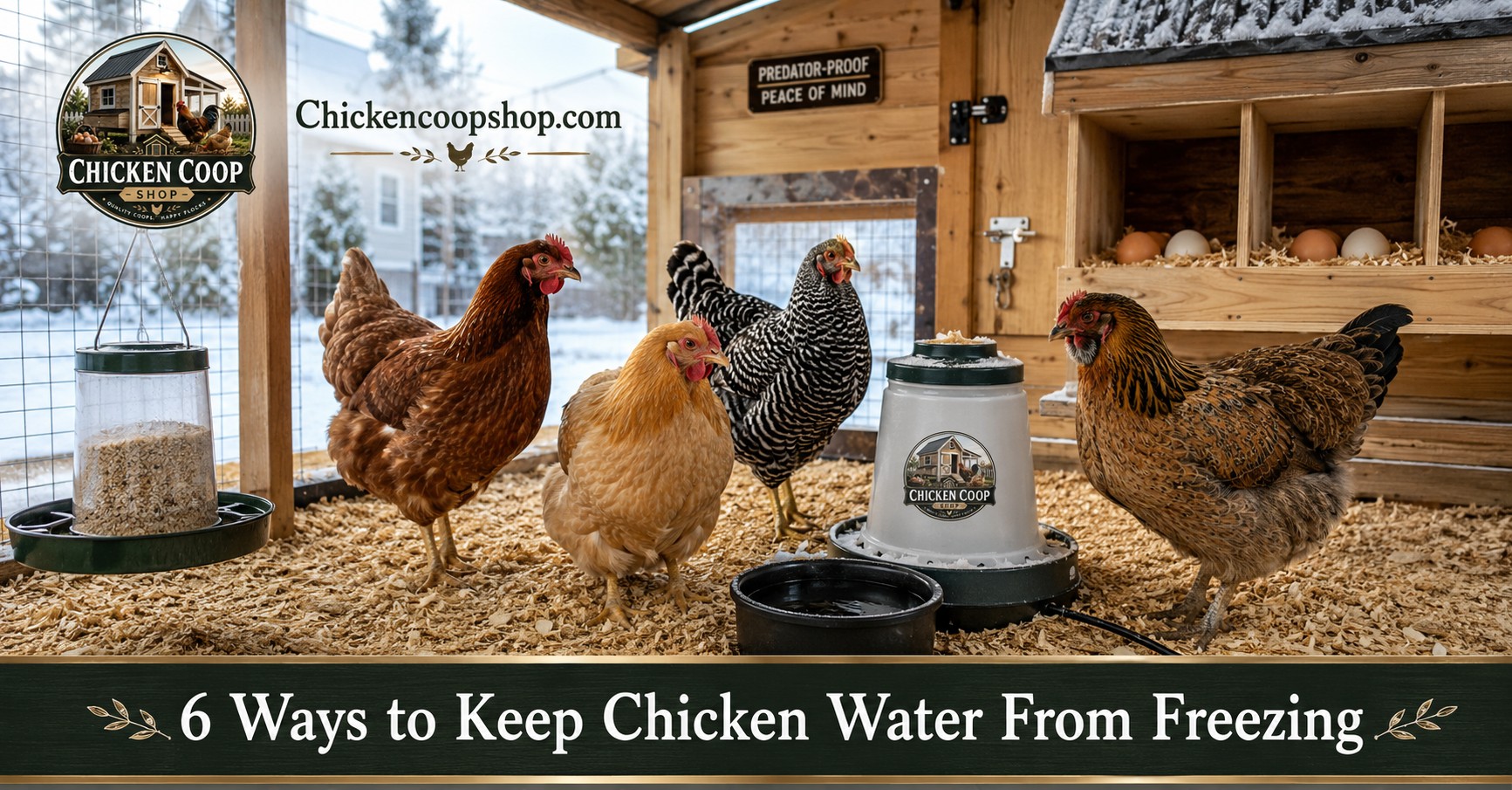
The problem is that chicken water can freeze quickly in a coop, run, barn, shed, or open backyard setup, especially overnight. A waterer that looked fine at dusk may be a block of ice by sunrise. Beginners often try quick fixes, but not every method is safe around dry bedding, wood coops, extension cords, and curious chickens.
This guide focuses on practical, safe, beginner-friendly winter chicken water tips for US backyard flocks. You will learn how to use heated waterers, heated bases, better placement, insulation, black rubber bowls, frequent refreshing, and non-electric options without creating unnecessary fire risks or unsafe coop conditions.
Why Chicken Water Freezes So Quickly
Chicken water freezes fast because most backyard waterers hold water in a shallow lip or small drinking channel. That exposed area chills quickly when cold air, wind, snow, and freezing nighttime temperatures hit it from multiple sides. Even if the main tank still has liquid water inside, the drinking tray may freeze first and stop your chickens from drinking.
Wind is a major factor. A waterer inside a run can freeze much faster when cold air blows across it all night. A wet, muddy, or snowy run also pulls heat away from the waterer base. If the waterer sits directly on frozen ground, concrete, or a metal surface, it loses warmth even faster.
Waterer material matters too. Thin plastic waterers chill quickly. Metal waterers can become extremely cold and may freeze faster in some setups. Large open bowls expose more surface area to cold air. Small nipple waterers can freeze in the nipples or lines, even when the container itself is partly thawed.
Your coop design also affects winter water management. A dry, well-ventilated coop with a weather-resistant roof is easier to manage than a damp coop with leaks and drafts. If melting snow drips into the run or bedding, the whole water station becomes colder and messier. Good roof planning, such as learning how to build a chicken coop roof, can help keep winter moisture away from the flock area.
Beginner tip: Chickens do not need warm water all day, but they do need access to drinkable water during active hours. The goal is not to make the coop hot. The goal is to stop the drinking area from freezing solid.
1. Use a Heated Chicken Waterer
A heated chicken waterer is often the easiest solution for cold climates. These waterers are built with a heating element that helps keep the water from freezing. For many backyard chicken owners in northern states, a heated chicken waterer is the most convenient way to keep chicken water from freezing during long stretches of winter weather.
Look for a model designed for poultry use, outdoor use, and freezing temperatures. The label should clearly say it is made for livestock or poultry water. Choose a size that matches your flock. A small backyard flock may not need a huge waterer, but it should hold enough water that the birds do not run out between checks.
How to use a heated chicken waterer safely
Place the waterer on a level surface where it cannot tip over. Keep it away from deep loose bedding, straw piles, shavings, and anything that can become wet and messy. Run the cord where chickens cannot peck it, scratch it, or wrap themselves around it. Many owners use cord protectors, elevated cord routes, or a secure outlet area to reduce risk.
Do not assume a heated waterer is maintenance-free. Check it every day. Make sure the water is clean, the cord is not damaged, and the base is not packed with ice, bedding, or droppings. In very cold weather, some heated models may still develop ice around the edges, especially if wind hits the waterer directly.
Best use case
A heated chicken waterer is best for owners who have safe electrical access near the coop or run. It is especially helpful if you work early mornings, travel for part of the day, or cannot refresh water every few hours. If you use one, treat it as a winter tool that still needs regular checks, not a set-it-and-forget-it solution.
2. Use a Heated Base Safely
A heated base is another popular chicken water heater for winter. Instead of heating the whole waterer, it warms the bottom enough to slow or prevent freezing. This can work well with certain metal or compatible plastic waterers, depending on the product instructions.
The most important rule is compatibility. Not every waterer should be placed on every heated base. Some bases are made for metal waterers only. Some are safe with certain plastic waterers. Always follow the manufacturer instructions because the wrong combination can damage the waterer or create safety issues.
Step-by-step heated base setup
First, choose a flat and dry place that is protected from rain, blowing snow, and scratching chickens. Second, place the heated base on a stable surface such as a concrete paver, level platform, or secure stand. Third, set the compatible waterer on top and fill it before plugging in the base. Fourth, route the cord safely and plug it into a properly protected outdoor outlet. Finally, check it at least once daily for leaks, ice buildup, cord damage, and bedding contact.
A heated base works best when the waterer is not exposed to direct wind. If the base is fighting heavy drafts all night, it may not keep the drinking tray open. Pair the base with better placement and a dry run cover for better results. A waterproof chicken coop roof can also reduce leaks and dripping moisture that make winter water problems worse.
Safety note: Never use a heated base with a waterer that the product instructions do not approve. Do not place electrical equipment directly in wet bedding, puddles, or loose straw. Winter water safety is about preventing both frozen water and fire hazards.
3. Move Water to a Protected Location
Sometimes the best way to keep chicken water from freezing is not a new product. It is better placement. A waterer in the wrong spot will freeze faster, spill more often, and create icy patches where chickens walk. Moving it a few feet can make a real difference.
Place the waterer where it is protected from wind, roof drip lines, blowing snow, and direct contact with frozen ground. A covered run, sheltered corner, attached shed, enclosed feeding station, or small weather-protected water area can help. The spot should still be easy for chickens to access during daylight hours.
Should water go inside the coop?
Many backyard owners wonder whether to put water inside the coop. It depends on your setup. Water inside the coop may freeze more slowly if the coop is protected, but it can also increase moisture if chickens spill it. Extra moisture in winter can contribute to damp bedding, frost, odor, and poor air quality. If you keep water inside, raise it slightly, use a stable waterer, and check bedding often.
For many small flocks, a covered run is better than the sleeping area. Chickens can drink after leaving the roost, and the coop bedding stays drier. Good roof overhangs, run covers, and drainage help prevent frozen puddles. If you are improving your setup, reviewing chicken coop roofing ideas can help you think about water control, shade, snow load, and run protection together.
4. Insulate the Waterer Area
Insulation can help slow freezing, especially when you do not have electricity or when temperatures hover near freezing. The goal is to protect the water station from wind and direct cold contact while keeping the area dry, breathable, and safe.
You can place the waterer inside a simple wind-blocking station, use a covered corner, or set it on an insulated platform. A concrete paver, wood platform, or thick rubber mat can reduce direct contact with frozen ground. Some owners use a larger tub, crate, or shield around the waterer to block wind while leaving enough open space for chickens to drink comfortably.
What not to do with insulation
Do not wrap the drinking lip so tightly that chickens cannot access water. Do not use materials that soak up water and freeze, such as loose towels left in the run. Avoid foam pieces or insulation scraps that chickens might peck and eat. Also avoid creating a closed, damp space with poor airflow. Moisture control matters in winter chicken care.
Insulation works best as part of a bigger system. A protected location, dry bedding, good coop ventilation, and a reliable winter routine all work together. For new flock owners building or upgrading a setup, DIY chicken coop plans for beginners can help you avoid common design problems before winter arrives.
5. Use Black Rubber Bowls for Easier Ice Removal
Black rubber bowls are simple, cheap, and useful for keeping chicken water thawed in winter routines, especially when you cannot safely use electricity. They do not magically stop water from freezing in hard winter weather, but they make ice removal much easier.
When water freezes in a rigid plastic container, the container may crack. When water freezes in a flexible rubber bowl, you can usually twist the bowl, pop out the ice, refill it, and move on. The black color may also absorb a little warmth from sunlight on bright winter days, especially in a protected sunny spot.
Best way to use rubber bowls
Use two or three bowls in rotation. Keep one in the run, one thawing indoors, and one ready as a backup. In the morning, dump the ice, refill with fresh water, and place the bowl where chickens can reach it easily. In the evening, repeat the process before the birds go to roost.
Choose a bowl that is heavy enough to resist tipping but shallow enough that chickens can drink safely. Keep it out of high-traffic scratching areas so bedding and droppings do not fill it quickly. For small chicks or young birds, avoid deep open water bowls that could create drowning risks.
6. Refresh Water More Often in Freezing Weather
Refreshing water more often is one of the most reliable options when chicken waterer freezing overnight becomes a daily issue. It is also the most realistic non-electric method for many backyard owners. Chickens usually drink most during daylight hours, especially after leaving the roost and before settling down in the evening.
In cold weather, check water at least morning and late afternoon. During extreme cold, you may need a midday check too. Bring warm, not boiling, water from the house to help slow freezing for a while. Boiling water is not necessary and can create burn risks, steam, and cracked containers.
Build a simple winter water routine
Start the day by bringing fresh water before or shortly after the flock comes off the roost. Check that every bird can access it. Look for ice around the rim, dirty water, tipped bowls, and wet bedding. In the afternoon, refresh again before temperatures drop. If you use bowls, rotate frozen ones indoors so you are not fighting ice outside in the dark.
This routine is not fancy, but it works. It also forces you to inspect the flock daily. You may notice signs of stress, reduced activity, dirty bedding, predator damage, frozen eggs, or coop leaks before they become bigger problems.
Options Without Electricity
Many chicken keepers search for how to keep chicken water from freezing without electricity because their coop is far from the house, they do not have a safe outdoor outlet, or they do not want cords in the run. Non-electric methods require more manual work, but they can still be effective for small flocks.
The best non-electric strategy is usually a combination of rubber bowls, protected placement, insulation, sunlight, and frequent refreshing. A single trick rarely works all winter. In mild freezes, insulation and placement may be enough. In deep cold, you will likely need to rotate water more often.
| Non-Electric Option | Best Use | Pros | Cons |
|---|---|---|---|
| Black rubber bowl | Small flocks and daily manual water changes | Easy ice removal, low cost, simple backup | Still freezes in hard cold |
| Protected sunny location | Runs with winter sunlight and wind protection | Can slow freezing during the day | Limited help overnight |
| Insulated water station | Windy runs and exposed coop corners | Blocks drafts and reduces ground chill | Must stay dry and safe |
| Two-waterer rotation | Owners who can check morning and afternoon | Reliable and simple | Requires consistent routine |
| Warm water refill | Short-term thawing during daily checks | Encourages drinking and delays freezing | Not a full-day solution in extreme cold |
Avoid adding salt, sugar, alcohol, or random antifreeze-style ingredients to chicken water. Chickens need clean drinking water, not risky additives. If you are worried that birds are not drinking, check the waterer design, location, temperature, and flock behavior. If a chicken seems sick, weak, or dehydrated, contact a poultry vet or your local extension office for guidance.
Safety Warnings About Heat Lamps and Extension Cords
Heat lamps are one of the riskiest ways to deal with frozen water. A lamp may seem like an easy fix, but dry bedding, dust, feathers, wood, plastic, and active chickens can turn it into a serious hazard. Chickens fly, bump, scratch, and knock things loose. A heat lamp that looks secure at night may not stay secure after a flock moves around the next morning.
Using a heat lamp just to keep water thawed is usually not worth the risk for a backyard coop. A safe heated chicken waterer or approved heated base is a better choice when electricity is available. If you use any electrical product, follow the product instructions, keep it dry, and inspect it often.
Extension cord safety basics
Use only outdoor-rated extension cords that match the load of the device. Keep plug connections off the ground and away from puddles, snow, wet bedding, and curious birds. Do not run cords through doors or windows where they can be pinched. Do not connect multiple cheap cords together across the yard.
For a permanent winter setup, consider having a proper outdoor outlet installed by a qualified electrician. It may cost more upfront, but it is safer than improvising with long cords every winter. When in doubt, choose a non-electric method until your electrical setup is safe.
Important: Do not use homemade heaters, exposed bulbs, damaged cords, indoor-only power strips, or loose electrical parts around chickens. A winter water system should protect the flock without adding fire, shock, or trip hazards.
Winter Water Problem and Solution Table
The table below can help you match the problem you see in the coop or run with a practical fix. Most frozen water issues are caused by a mix of cold temperature, wind exposure, poor placement, and inconsistent routines.
| Problem | Likely Cause | Better Choice | Practical Tip |
|---|---|---|---|
| Drinking tray freezes first | Small exposed water lip chills quickly | Heated waterer or protected location | Block direct wind from the drinking area |
| Water freezes overnight | Long cold hours with no refresh | Heated base or morning and evening rotation | Keep a spare thawed waterer indoors |
| Bedding gets wet near water | Waterer is too low or unstable | Raise on a level paver or platform | Keep water outside the sleeping area if possible |
| Chickens avoid the waterer | Ice, dirty water, bad placement, or crowding | Clean and move to an easy-access spot | Watch birds drink after you refill |
| Cord is exposed to chickens | Poor cord routing | Secure outdoor-rated cord protection | Check cords daily for pecking or damage |
My Practical Recommendation
For most backyard chicken owners, the best way to keep chicken water from freezing is to use a poultry-safe heated waterer or compatible heated base in a protected location, then keep a simple backup routine with black rubber bowls. That combination gives you convenience, safety, and a plan for power outages or extra-cold nights.
If you are new to chickens, start with placement before buying more equipment. Move the water away from wind, snow, and roof drip lines. Raise it slightly so bedding does not get kicked into it. Then decide whether electricity is safe and practical for your coop. If it is not, use rubber bowls and a two-waterer rotation.
Do not try to heat the entire coop just to solve a water problem. Chickens are generally more comfortable in a dry, draft-reduced, well-ventilated coop than in a damp coop with risky heat sources. Focus on dry bedding, safe water access, predator protection, and daily winter checks.
Common Mistakes to Avoid
Using a heat lamp over the waterer
This is one of the biggest mistakes. A heat lamp can fall, shift, overheat, or contact dust and bedding. It may also warm the wrong area while still leaving the drinking lip frozen. Use equipment designed for poultry water instead.
Putting water where it creates damp bedding
Damp winter bedding can make the coop smell bad and increase moisture problems. If water spills inside the coop, move it to a covered run or raise it on a stable surface. Replace wet bedding quickly.
Depending on one method only
Winter conditions change. A method that works at 30 degrees may fail during a windy 10 degree night. Have a backup plan, especially if you rely on electricity. Keep a spare bowl or waterer ready.
Using unsafe additives
Do not add salt, alcohol, or questionable ingredients to stop freezing. These can be harmful and are not a good backyard chicken care practice. Fresh, clean water is the safest choice.
Forgetting about predators and nighttime routine
Winter water chores should not distract from locking the coop and checking predator-proof latches. Raccoons, weasels, and other predators still look for opportunities in winter. Keep your water routine simple so you do not skip flock security.
Frequently Asked Questions
What is the best way to keep chicken water from freezing?
The best way for most cold-weather backyard flocks is a poultry-safe heated chicken waterer or a compatible heated base placed in a protected location. This works better when the waterer is out of direct wind, snow, and roof runoff. If you do not have safe electricity, use black rubber bowls, warm water refills, and a two-waterer rotation. The right method depends on your winter temperatures, coop location, flock size, and how often you can check water during the day.
How do I keep chicken water from freezing without electricity?
To keep chicken water from freezing without electricity, use a combination of black rubber bowls, wind protection, insulation, and frequent refreshing. Place the bowl in a sunny protected spot during the day if possible. Bring fresh water in the morning and again in the afternoon. Keep a second bowl thawing indoors so you can swap quickly. This method takes more effort than a heated waterer, but it can work well for small backyard flocks when you follow a consistent winter routine.
Can I put warm water in the chicken waterer?
Yes, warm water can help delay freezing and may encourage chickens to drink during cold weather. Use warm water, not boiling water. Very hot water can damage plastic, create steam, or become a burn risk during handling. Warm water is most useful during morning and afternoon refreshes, especially when temperatures are below freezing. It is not a complete solution during extreme cold, but it is a simple tool that works well with rubber bowls or a protected water station.
Should chicken water be kept inside the coop in winter?
It can be kept inside the coop if you manage moisture carefully, but it is not always the best choice. Water inside the coop may freeze more slowly, but spills can wet bedding and raise humidity. Damp bedding and poor ventilation can create winter coop problems. Many owners prefer to keep water in a covered run or sheltered feeding area so the sleeping area stays dry. If you place water inside, use a stable waterer, raise it slightly, and remove wet bedding right away.
Are heated chicken waterers safe?
Heated chicken waterers can be safe when they are designed for poultry use, used according to instructions, and checked daily. Choose a product rated for outdoor or livestock use. Keep cords protected, plug connections dry, and electrical parts away from wet bedding. Do not use damaged cords, indoor power strips, or homemade heating setups. A heated waterer should make winter chores easier, but it still needs regular cleaning and inspection to protect your flock and coop.
Can chickens eat snow instead of drinking water?
Chickens should not be expected to rely on snow as their water source. Some birds may peck at snow, but that does not replace steady access to clean liquid water. Eating snow requires body energy, may not provide enough water, and can reduce normal drinking. Chickens need water for digestion, egg production, and general health in winter. Always provide drinkable water during active hours, even if snow is on the ground around the coop.
How often should I check chicken water in freezing weather?
In freezing weather, check chicken water at least twice a day: once in the morning and once in the late afternoon. During extreme cold, windy conditions, or storms, a midday check may be needed too. If you use a heated waterer, still check it daily for ice, dirt, leaks, and cord safety. If you use non-electric bowls, plan on more frequent swaps. Your routine should match the weather, flock size, and how fast your waterer normally freezes.
Why is my heated chicken waterer still freezing?
A heated waterer may still freeze if it is exposed to strong wind, extreme cold, poor placement, or an underpowered heating element. The drinking tray can freeze before the main container if cold air hits the lip directly. Check that the outlet works, the cord is undamaged, and the waterer is being used correctly. Move it to a more protected location, block drafts, and remove ice buildup. If the unit seems unreliable, stop using it until you can inspect it safely.
Can I use salt water bottles to stop chicken water from freezing?
Some people place a sealed bottle of salt water inside a larger water container, but results are limited and it is not a dependable deep-winter solution. The bottle must stay sealed because chickens should not drink salty water. It may slightly slow freezing in some conditions, but it will not keep an exposed drinking lip open during hard freezes. For most backyard owners, protected placement, a heated waterer, rubber bowls, and regular water changes are more practical.
What should I do if a chicken seems weak in winter?
If a chicken seems weak, isolated, very inactive, or unable to drink, do not assume frozen water is the only issue. Offer access to clean drinkable water, check the bird for obvious stress, and look at the coop conditions. Cold weather, dehydration, illness, parasites, injury, or bullying can all affect behavior. For serious symptoms, contact a poultry vet or your local extension office. Quick professional guidance is better than guessing, especially when a bird is declining.
Final Checklist
- Choose a heated chicken waterer or heated base only if it is rated for poultry or outdoor livestock use.
- Place the waterer where wind, snow, and roof drips cannot hit it directly.
- Keep cords protected, dry, and away from chickens, bedding, and puddles.
- Use black rubber bowls as a simple backup for power outages or non-electric setups.
- Refresh water at least morning and late afternoon during freezing weather.
- Remove wet bedding quickly so the coop stays dry and healthy.
- Do not use heat lamps, unsafe homemade heaters, salt, alcohol, or risky additives.
- Check the flock daily for drinking behavior, stress, frozen eggs, leaks, and predator damage.
- Keep a spare thawed waterer or bowl ready before severe winter nights.
- Ask a poultry vet or local extension office for help if a bird appears seriously ill or weak.